
The most important feature of your child's daycare isn't the bright playground or the modern toys; it's the specific certification level of the educator who guides their day. You want a professional who understands your child's developmental needs, not just someone to watch the clock. Understanding daycare staff qualifications in Alberta is the essential foundation for ensuring your child receives high-quality care that supports their growth.
It's natural to feel overwhelmed by technical terms like Level 1, 2, or 3 ECE. This guide will help you evaluate educator certifications and provide the right questions to ask during your tour. We'll break down the provincial standards for 2026, explain what each certification level means for your child, and provide a concrete checklist to give you total confidence in your chosen centre.
Key Takeaways
- Learn how to verify daycare staff qualifications in Alberta and why the provincial certification timeline is critical for maintaining high standards of care.
- Understand the distinct differences between Level 1, 2, and 3 Early Childhood Educators to better evaluate the expertise of your child's teachers.
- Discover how professional training translates into high-quality play-based learning that actively stimulates your child's cognitive and social development.
- Access a practical checklist of questions for your daycare tour, covering mandatory safety requirements like Criminal Record Checks and First Aid.
- Realize how licensed centres use the latest provincial funding to prioritize educator growth and maintain a nurturing environment for every child.
Decoding Alberta’s Early Childhood Educator (ECE) Certification Levels
The safety and developmental progress of your child depend on the standards set by the provincial government. In Alberta, the Early Learning and Child Care Act provides the legislative framework that ensures every licensed centre maintains a high level of professional care. This act dictates that anyone working directly with children must hold a valid certification or be in the process of obtaining one. ECE certification is the provincial validation of an educator’s professional training. It serves as a guarantee that the person caring for your child understands the complexities of early brain development and physical safety protocols.
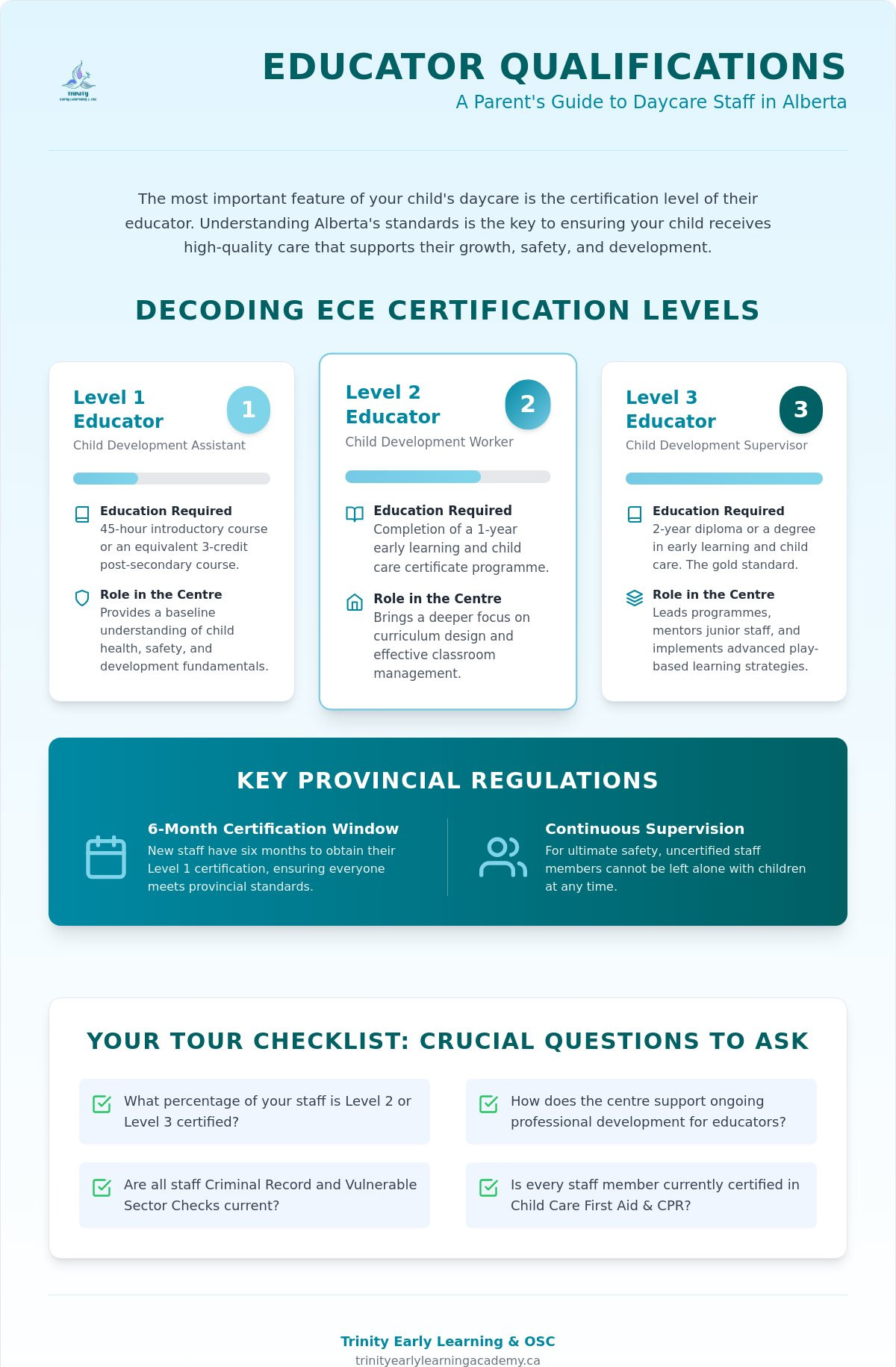
When you begin researching daycare staff qualifications Alberta, you'll notice a mandatory six-month window for new hires. The province allows new staff members this time to complete their initial certification. It's a period of transition that allows passionate individuals to enter the field while ensuring they meet rigorous standards. Crucially, during these first six months, uncertified staff cannot be left alone with children. This regulation is a vital component of Early Learning and Child Care in Canada, as it prioritizes child safety while the workforce develops its professional skills.
Level 1, 2, and 3: What the Numbers Mean
Alberta classifies educators into three distinct levels based on their post-secondary education. Level 1 educators, formerly known as Child Development Assistants, represent the foundation of the workforce. They must complete a 45-hour introductory course or an equivalent three-credit college course. This level ensures every staff member has a baseline understanding of child health and development.
Level 2 educators have completed a one-year certificate program. They bring a deeper focus on curriculum design and classroom management. Level 3 educators, often called Child Development Supervisors, represent the gold standard in the field. These professionals hold a two-year diploma or a degree in early learning. Their advanced expertise allows them to lead entire programmes, mentor junior staff, and implement sophisticated, play-based learning strategies that actively stimulate a child's cognitive growth. A centre with a high percentage of Level 3 staff often demonstrates a more robust commitment to educational excellence.
This emphasis on elite qualifications is a global priority; for instance, families seeking highly personalized educational support often consult specialists like Royal Family Concierge to find private educators who meet these same high standards of professional training and expertise.
The Role of the "Orientation Course" for New Educators
The 45-hour Alberta orientation course is the first step for many entering the profession. It isn't just a simple introduction; it's a focused training program that covers essential health, safety, and developmental milestones. Parents should realize that even entry-level staff have undergone this formal training before they are eligible for Level 1 certification. This course prepares educators to handle emergency protocols and recognize the unique emotional needs of different age groups. It ensures that the transition from a "babysitter" to a professional educator is clear and documented, providing families with the peace of mind they deserve.
Why Educator Qualifications Impact Your Child’s Daily Experience
The quality of your child's daily interactions is directly linked to the depth of their educator's training. While basic care covers physical needs, professional daycare staff qualifications Alberta ensure that every moment in the classroom is an opportunity for growth. Highly trained educators don't just supervise; they actively curate play-based environments that stimulate neural pathways and encourage critical thinking. By referring to Alberta's official certification guide, you can see the rigorous educational standards required to move beyond basic supervision into true developmental support.
Qualified educators are trained to recognize subtle developmental milestones that might otherwise go unnoticed. They understand the nuances of emotional regulation, helping children navigate social conflicts with empathy and patience. This professionalism creates a stable learning environment where children feel safe to take risks, explore new concepts, and build self-confidence. A centre that prioritizes these qualifications demonstrates a commitment to the holistic growth of every child in its care.
Cognitive and Social-Emotional Benefits
Level 3 educators possess the expertise to design complex learning environments that cater to the specific needs of preschoolers. Their advanced training emphasizes language acquisition and early literacy, ensuring that your child is building the vocabulary necessary for future academic success. These professionals focus on intentional interactions, turning a simple block-building session into a lesson on physics or social cooperation. For parents seeking a deeper understanding of these methods, our guide to early childhood education St. Albert offers more insights into how curriculum design impacts growth.
The Importance of Low Staff Turnover
A significant benefit of high daycare staff qualifications Alberta is the professional stability it brings to a centre. When educators view their role as a lifelong career rather than a temporary job, they are more likely to stay with a single centre for years. This consistency is vital for a child's sense of security. Having a "Trusted Nurturer" who knows your child's unique personality allows for a more personalized daycare experience. Centres that invest in their staff's professional development often see higher retention rates, ensuring your child maintains those essential emotional bonds. If you are looking for a team that values long-term educator growth, you might consider visiting trinityearlylearningacademy.ca to see how we support our staff.
The Tour Checklist: Crucial Questions to Ask About Daycare Staff
Touring a prospective centre is your opportunity to move beyond brochures and see how daycare staff qualifications Alberta translate into actual care. While a certificate on the wall is a legal requirement, the way an educator interacts with a toddler during a difficult transition tells you much more about their professional training. You want to see that the staff aren't just present but are actively engaged in nurturing each child's curiosity. Observing these real-time interactions helps you distinguish between a centre that simply meets the minimum standards and one that truly excels in early childhood education.
A high-quality centre views education as an ongoing journey rather than a one-time achievement. When you speak with the director, inquire about their commitment to professional development. Do they provide time or financial support for staff to advance from Level 1 to Level 3? A centre that invests in its team is a centre that invests in your child. We advise parents to ask: "What is the average tenure of your lead educators?" Long-term tenure often indicates a supportive work environment and a team of dedicated professionals who truly care about their students' long-term success.
Direct Questions for the Director
A transparent director will welcome your curiosity about daycare staff qualifications Alberta and their team's specific credentials. Use these specific questions to gauge the level of expertise in the building:
- "What percentage of your staff hold a Level 3 ECE certification?"
- "How do you support your educators in completing their Level 2 or 3 training?"
- "What is your process for background checks and criminal record screenings for new hires?"
- "How do you ensure every staff member is up-to-date with current Alberta licensing standards and safety protocols?"
Observation Points During Your Visit
While the director provides the administrative context, your own observations will confirm the quality of the environment. Watch how educators move through the room. Are they at the child’s eye level during interactions? This simple practice is a hallmark of professional training in social-emotional support. Notice if the staff seem calm and organized during transition periods, such as moving from lunch to nap time. These moments are often the most telling about an educator's ability to manage classroom dynamics.
Check if certificates of qualification are displayed in a public area of the centre. This is a provincial requirement and a sign of professional pride. For a more detailed look at vetting the physical environment alongside staff expertise, you can review our daycare safety checklist St. Albert. This resource will help you ensure that the educators have the safe, well-organized space they need to provide the highest standard of care for your family.
Looking Beyond Certification: Safety, Background Checks, and Ratios
Provincial regulations also dictate specific staff-to-child ratios that are a critical part of daycare staff qualifications Alberta. These ratios ensure that each child receives the attention and supervision they require for their age group. For infants up to 12 months, the ratio is a tight 1:3. This increases to 1:4 for toddlers aged 12 to 19 months, and 1:6 for those up to 3 years old. As children grow and become more independent, the ratios shift to 1:8 for preschoolers and 1:10 for those over 4.5 years. Understanding these numbers helps you realize how much direct support your child will receive throughout their day.
Safety Protocols and First Aid
Every educator in a licensed Alberta centre must hold valid First Aid and CPR certification specifically tailored for childcare. This isn't a one-time requirement; recertification is a regular part of their professional life. Educators receive specialized training to handle severe allergies, administer emergency medication like EpiPens, and manage diverse medical emergencies. Beyond medical care, staff participate in regular emergency evacuation drills. This ongoing training ensures that if the unexpected happens, the team is prepared to act calmly and decisively. If you want to see how these safety measures are integrated into daily life, you can learn more about our licensed daycare services and our commitment to child security.
The "Trusted Nurturer" Persona
While certificates prove technical knowledge, "soft skills" like patience and empathy are what truly define a "Trusted Nurturer." The best educators possess high emotional intelligence, allowing them to manage peer-to-peer conflicts with grace and teach children how to navigate their own big feelings. They strike a delicate balance between providing structured learning and offering the warm, nurturing support a child needs when they're tired or frustrated. When you evaluate daycare staff qualifications Alberta, look for educators who speak to children with kindness and respect. A compassionate heart, combined with professional certification, creates the most stable and joy-filled environment for early childhood development.
Quality Care in St. Albert: The Trinity Early Learning Standard
At Trinity Early Learning & OSC, we don't just meet the baseline for daycare staff qualifications Alberta; we strive to exceed them. Our approach blends the authoritative clarity of provincial regulations with the emotional warmth your child needs to thrive. We realize that the best environment is one where highly trained professionals act as knowledgeable advocates for your child’s development. This commitment ensures that every interaction in our centre is purposeful, stable, and designed to support holistic growth.
Maintaining this high standard requires a strategic investment in our team. We utilize the daycare affordability grant Alberta to ensure our centre remains accessible to local families while still prioritizing competitive compensation for our educators. This provincial support allows us to focus on quality recruitment and retention. By securing these funds, we ensure that financial accessibility never comes at the cost of your child’s early learning experience or the expertise of the staff who guide them.
Investing in Our Educators
We prioritize hiring educators who hold Level 2 and Level 3 certifications to lead our classrooms and design our curriculum. Our leadership team takes an active role in mentoring junior staff, fostering a culture of continuous learning that keeps our team ahead of early education trends. This focus on internal development ensures that our staff are not just employees, but career professionals dedicated to the field. By reflecting the values of the St. Albert community, we create a stable and nurturing atmosphere where children feel a genuine sense of belonging and security.
Your Next Steps to Secure Quality Childcare
Choosing the right centre is a significant decision that impacts your child's future. We invite you to book a private tour of our St. Albert facility to see our qualified staff in action and observe the "Trusted Nurturer" philosophy first-hand. During your visit, feel free to bring a copy of the questions we've discussed to evaluate our team's expertise. We are always happy to provide transparent answers about our specific staff credentials and how we align with your child's unique development goals. For more information on our enrollment process and our commitment to excellence, please visit our guide on licensed daycare St. Albert. Contact us today to secure a space where your child can grow with confidence.
Empowering Your Choice for a Brighter Future
Selecting the right environment for your child is one of the most significant decisions you'll make. By understanding the nuances of daycare staff qualifications Alberta, you move from a place of uncertainty to one of informed confidence. You now know that Level 3 certifications represent advanced expertise and that rigorous background checks are the bedrock of a safe classroom. These standards ensure your child isn't just supervised but is actively nurtured by professionals who understand their unique developmental path.
At Trinity Early Learning & OSC, we take pride in being a licensed daycare provider that follows all Alberta Early Learning and Child Care Act standards. Our experienced team of certified Early Childhood Educators is dedicated to serving the St. Albert community with high-quality, affordable care. We believe every family deserves a partner who is as invested in their child's joy and growth as they are. Book a tour today to meet our qualified educators in St. Albert and see our standards in action. We look forward to welcoming your family into our community and supporting your child's journey with the professional care they deserve.
Frequently Asked Questions
Do daycare staff in Alberta need a university degree?
No, a university degree is not a mandatory requirement for all daycare staff qualifications Alberta, though it is one path to achieving the highest certification level. Educators can enter the field with a 45-hour introductory course to earn Level 1 status. A one-year certificate leads to Level 2, while a two-year diploma or a university degree in early childhood education is required for Level 3. This tiered system ensures a professional baseline while welcoming diverse educational backgrounds.
Can someone work in an Alberta daycare without any certification?
Yes, individuals can begin working in a licensed centre without prior certification, but they have a strict six-month window to obtain their Level 1 ECE status. During this introductory period, the employee is never permitted to be left alone with children. This regulation ensures that every person in the building is either fully qualified or actively working toward provincial standards under the direct supervision of a certified, experienced professional.
What is the difference between a Level 1 and a Level 3 ECE?
The primary difference lies in the depth of educational training and the scope of classroom responsibility. A Level 1 educator has completed foundational training in child development, typically through a 45-hour orientation course. In contrast, a Level 3 educator holds a two-year diploma or degree and possesses the advanced expertise required to lead programs and supervise other staff. This higher level of training focuses on complex curriculum design and sophisticated developmental support.
How often do daycare staff need to renew their criminal record checks?
In Alberta, criminal record checks and vulnerable sector searches must be updated every three years to remain compliant with provincial licensing regulations. However, many high-quality centres choose to require these updates more frequently to ensure the highest level of safety. At the time of hire, these documents must be no more than six months old, providing a current and transparent safety profile for every educator entrusted with your child's care.
Are staff-to-child ratios different for preschoolers and out of school care?
Yes, the provincial government sets different ratios based on the age and developmental needs of the children. For preschoolers aged 3 to 4.5 years, the mandatory ratio is 1:8 to ensure close supervision and emotional support. In out of school care for children aged 6 to 12 years, the ratio shifts to 1:15. These specific daycare staff qualifications Alberta standards ensure that educators can effectively manage classroom dynamics while providing personalized attention to every student.
How can I verify if a daycare staff member is actually certified?
You can verify an educator's status through the Government of Alberta's online ECE lookup tool, which allows parents to check certification levels. Additionally, licensed centres are required to display staff qualification certificates in a public area for parents to see. If you have questions about a specific educator, a transparent centre director will be happy to discuss their team's credentials and how their professional training supports your child's specific growth goals.
Is First Aid training mandatory for all daycare employees in St. Albert?
Yes, valid Childcare First Aid and CPR certification is a mandatory requirement for all staff members who work directly with children in a licensed centre. This training is specifically designed for early learning environments and must be kept current through regular recertification. This ensures that every educator in the building is prepared to handle medical emergencies and maintain a safe, secure environment for the children in their care at all times.
What happens if a staff member’s certification expires while they are working?
If an educator's certification expires, they can no longer be counted toward the mandatory staff-to-child ratios required by provincial law. The individual must renew their credentials immediately to continue working in a professional capacity. Licensed centres monitor these expiry dates closely to ensure they remain in full compliance with the Early Learning and Child Care Act, maintaining the stability and safety of the learning environment for all families.


