What if the most important thing to look for during a preschool tour isn't found in a textbook or on a colourful wall display? As a parent, you want to ensure your child is safe, happy, and fully prepared for the transition to kindergarten. However, the conflicting labels of "play-based" versus "academic" programs often leave families feeling more confused than confident. It's completely natural to worry about whether a centre truly meets Alberta's rigorous licensing standards while providing the stable, nurturing care your child deserves.
Finding the right fit doesn't have to be a guessing game. This guide identifies the 15 essential signs of a good preschool program, giving you the clarity needed to choose a high-quality early childhood education in St. Albert. We will walk through exactly what to observe during your visit, from emotional engagement to safety protocols and curriculum design. By the end of this checklist, you'll feel empowered to select a program that aligns with your family's values and supports your child's holistic growth.
Key Takeaways
- Learn how to evaluate the physical learning environment to ensure it features accessible, age-appropriate materials that promote independence and curiosity.
- Identify the specific teacher-child interactions, such as eye-level engagement and calm communication, that foster a nurturing and safe atmosphere for your child.
- Understand why play-based learning is the gold standard for early development and how it serves as one of the most critical signs of a good preschool program.
- Gain peace of mind by knowing how to verify Alberta licensing standards and review recent inspection reports to ensure the highest safety protocols are met.
- Discover the communication channels and partnership strategies that a high-quality centre uses to keep you fully connected to your child's daily progress.
Evaluating the Learning Environment and Physical Space
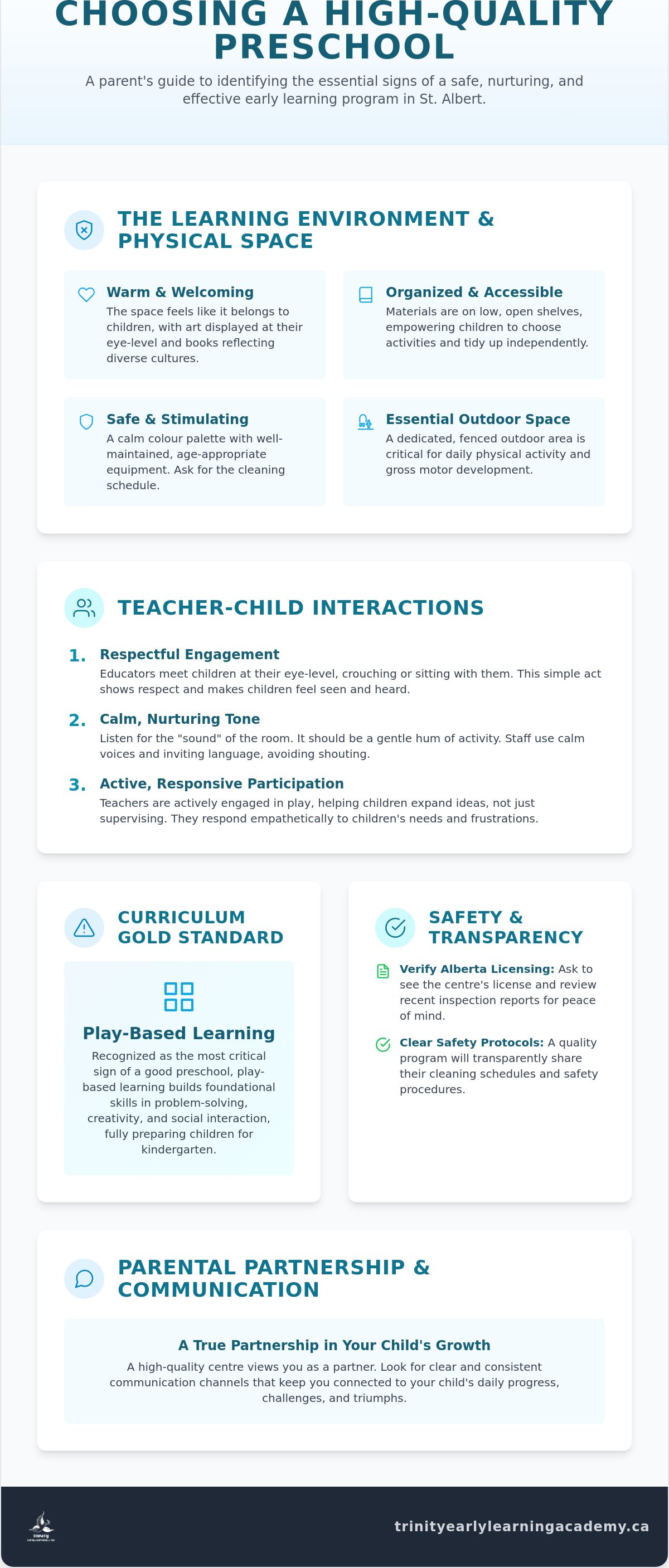
A child's surroundings dictate their comfort and willingness to explore. When you step into a potential centre, the first impression often tells you the most about the program's quality. You want a space that feels professional yet warm. Identifying the signs of a good preschool program starts with observing how the environment balances cleanliness with a sense of "lived-in" creativity. A room that is too sterile might discourage play, while one that is disorganized can overwhelm a young child's developing senses.
Look for a facility that uses a thoughtful colour palette. High-quality programs often choose soft, neutral tones for walls to provide a calming backdrop, using bright colours sparingly in specific play zones to stimulate engagement. This intentional design reflects foundational early childhood education principles by creating a predictable, secure atmosphere where children feel safe to take risks. Every piece of furniture, from the tiny chairs to the low-profile bookshelves, should be scaled to the child's size to promote autonomy and physical comfort.
The 'Vibe' Check: Warmth and Welcome
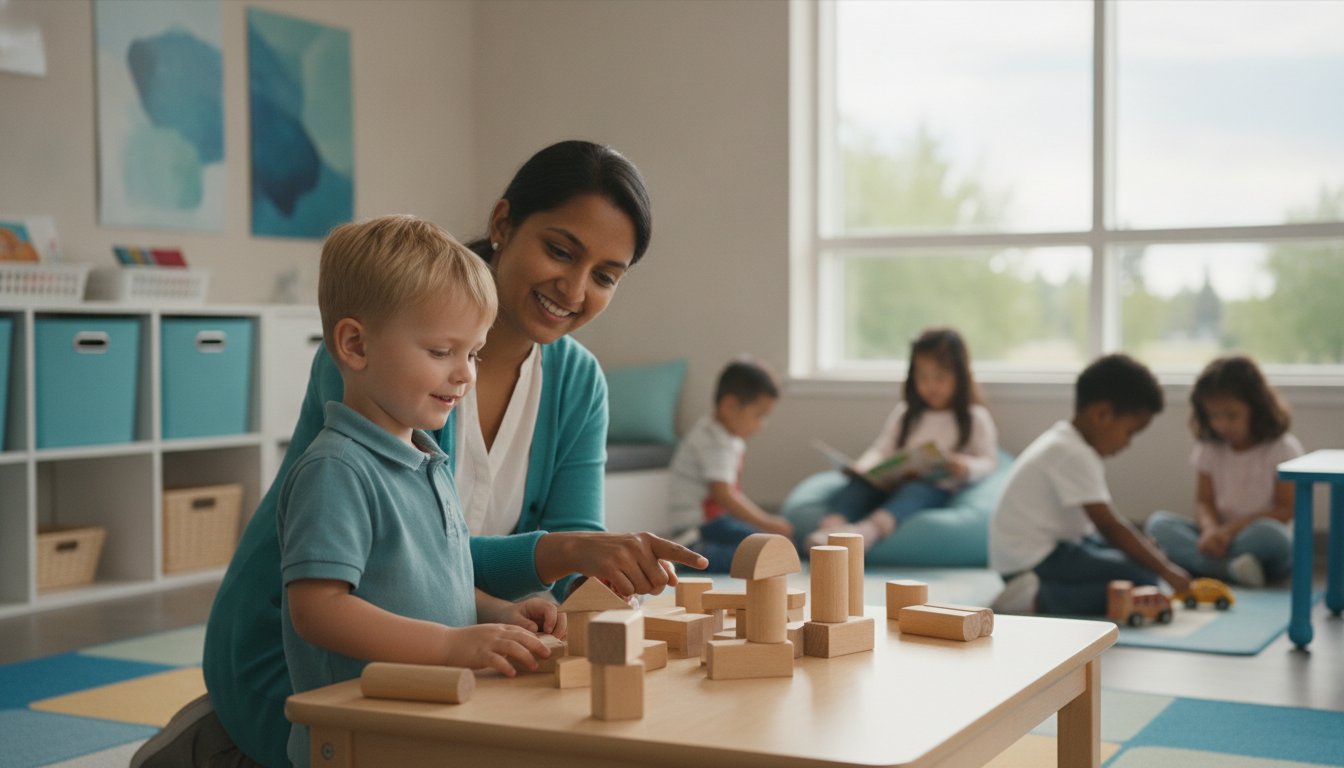
Does the room feel like it belongs to the children? Observe if art projects are displayed at the children's eye level rather than high up for adults to admire. This simple detail shows that the program respects the child's perspective. A quality centre also reflects the local St. Albert community and diverse cultures through its books, decor, and toys. You should see the space divided into clear "learning centres," such as a quiet reading nook, a block-building station, and a dedicated art area. These zones help children understand expectations and transition smoothly between different types of play.
Organization and Accessibility
Independence is a major goal of early childhood. Materials should be organized on low, open shelves so children can realize their own potential by choosing activities and tidying up afterwards. Check that equipment is well-maintained and free from safety hazards. In 2026, health standards remain a top priority for Alberta parents. Don't hesitate to ask how often high-touch surfaces and toys are sanitized. A transparent program will gladly share their cleaning schedule. These environmental factors are reliable signs of a good preschool program that values both safety and developmental growth.
A commitment to hygiene also includes the integrity of the facility's infrastructure. For example, ensuring that wet areas like bathrooms and kitchenettes are properly sealed against leaks and mould with professional systems like TeleSeal reflects a high standard of building maintenance. These technical details contribute to a healthier indoor air quality for children and staff alike.
Finally, look beyond the four walls. A dedicated, fenced outdoor play space is essential for gross motor development. Whether it's a garden for digging or a structured playground, children need daily opportunities to move their bodies in the fresh air. A safe, inviting outdoor area is just as important as the indoor classroom for a child's holistic well-being.
Teacher-Child Interactions: The Heart of Quality Care
While a well-designed classroom provides the foundation for learning, the relationship between the educator and the child is the true engine of development. When you visit a centre, pay close attention to the non-verbal cues and the atmosphere of the room. One of the clearest signs of a good preschool program is seeing an educator crouched on the floor or sitting in a tiny chair to meet a child at eye level. This simple posture demonstrates respect and ensures the child feels seen and heard rather than towered over by an authority figure.
Listen carefully to the "sound" of the classroom. You should hear a gentle hum of activity and calm, nurturing tones from the staff. High-quality educators avoid shouting or issuing barked commands. Instead, they use inviting language that encourages cooperation. Experts at the Harvard Graduate School of Education suggest that what to look for in a preschool often comes down to these meaningful, back-and-forth interactions that stimulate a child's language and social skills. You want to see teachers who are actively engaged in play, helping children expand their ideas, rather than just supervising from a distance.
Educator Engagement and Responsiveness
A child's emotional well-being depends on how quickly and empathetically their needs are met. Observe how a teacher responds when a child becomes frustrated with a puzzle or upset during a transition. Do they offer a comforting word and a helping hand immediately? Quality programs use positive reinforcement to guide social-emotional growth, helping children name their feelings and find solutions. It's helpful to ask the staff about their philosophy on conflict resolution. A professional team will have a clear, compassionate strategy for helping children navigate peer disagreements without shame or punishment.
Staff Stability and Professionalism
Consistency is vital for a preschooler's sense of security. High staff turnover can be a red flag, as it disrupts the bonds children have formed with their caregivers. Inquire about how long the educators have been with the centre and what specific Early Childhood Education (ECE) certifications they hold. Low staff turnover is a hallmark of a licensed daycare in St. Albert that values its team and invests in professional development. When teachers feel supported and respected, they are better equipped to provide the stable, high-quality care your child needs to thrive.
Taking the time to observe these interactions firsthand at a quality childcare centre can provide the peace of mind every parent needs during the selection process. These daily connections are what truly prepare a child for the social world of kindergarten and beyond.
Curriculum Standards: Play-Based vs. Structured Learning
Choosing a curriculum often feels like a choice between fun and "real" school. However, high-quality early learning actually bridges this gap. A well-rounded curriculum is one of the most significant signs of a good preschool program. In Alberta, the best programs follow a structured framework that remains flexible enough to follow a child's natural curiosity. This approach ensures that learning isn't a chore. Instead, it becomes a natural extension of a child's day, fostering a lifelong love for discovery.
The curriculum must support holistic growth across cognitive, social, emotional, and physical domains. You should observe a daily schedule that balances high-energy active play with moments of quiet reflection. This variety is essential for helping young children learn to regulate their energy levels and focus. When a program prioritizes this balance, it demonstrates a professional understanding of developmental needs.
The Benefits of Play-Based Learning
Play-based learning is the gold standard for early childhood development. It isn't just about "free time." It's about "purposeful play." For example, when children build a bridge with blocks, they learn physics and spatial awareness. When they set a table in a play kitchen, they practice counting and social roles. This method is central to early childhood education in St. Albert, where educators use play to teach foundational literacy and numeracy skills. Ask the staff for an example of how a child's interest in a specific topic, like gardening or space, was turned into a collaborative learning project. This ability to adapt shows a deep commitment to the child's individual journey.
Kindergarten Readiness Goals
Readiness for kindergarten involves much more than knowing the alphabet. It requires "soft skills" like following multi-step directions, sharing materials, and managing emotions. A strong program tracks these developmental milestones carefully. When researching preschool programs in St. Albert, inquire about how they prepare children for the transition to a formal school environment. Look for programs that emphasize independence and social problem-solving. These skills ensure your child enters the elementary system with the confidence and resilience needed to succeed in a more structured setting. These indicators are reliable signs of a good preschool program that values long-term educational success.
Licensing, Safety, and Administrative Transparency
Trust is the foundation of any childcare relationship. While the curriculum and environment are essential, the administrative backbone of a centre ensures those elements remain stable and safe. Confirming Government of Alberta licensing is a non-negotiable step when evaluating the signs of a good preschool program. This status guarantees that the facility is held to provincial standards regarding health, safety, and staff qualifications. A reputable program will always have their most recent inspection report available for parents to review upon request. This level of openness demonstrates a commitment to excellence that goes beyond the classroom walls.
Safety protocols should be clearly documented and easily accessible. When you tour a facility, look for posted emergency exit routes and inquire about the staff's first aid training. A professional centre will have an organized system for tracking everything from daily attendance to allergy alerts. These administrative details might seem small, but they are the systems that protect your child's well-being every single day. Seeing these systems in action provides the peace of mind parents need to feel confident in their choice.
Alberta Licensing and Standards
A licensed program is significantly more reliable than an unlicensed one because it undergoes regular, unannounced inspections. These visits ensure the centre continues to meet or exceed provincial regulations for physical space and staffing ratios. To help you during your search, we recommend reviewing our daycare safety checklist for St. Albert. It provides a detailed look at the specific hazards and standards you should verify before enrolling your child. Choosing a licensed provider means you have the weight of provincial oversight supporting your family's safety.
Financial Transparency and Grants
Modern families need more than just quality care; they need financial predictability. Transparent centres clearly explain their participation in provincial funding programs and provide written policies for all fees. A knowledgeable advocate will help parents navigate the Daycare Affordability Grant in Alberta to ensure they receive the support they are entitled to. Ask the director how they communicate changes in provincial funding or tuition. Clear, written communication regarding deposit policies and extra costs is one of the most important signs of a good preschool program in 2026. If you are looking for a provider that prioritizes this level of professional integrity, we invite you to learn more about our licensed daycare services in St. Albert today.
Parental Partnership and Community Integration
High-quality early learning does not happen in a vacuum. It requires a sturdy bridge between the home and the classroom to be truly effective. One of the final yet most telling signs of a good preschool program is how the staff treats you, the parent. You should feel like a valued partner in your child's educational journey rather than just a client. This partnership ensures that the values and learning goals you establish at home are reinforced during the day, creating a stable and predictable environment for your child's development.
Look for a centre that utilizes multiple channels to keep you informed and involved. Modern programs often use dedicated apps to share real-time photos and daily reports, but these digital tools should never replace face-to-face chats. Regular newsletters and community bulletin boards also help you stay connected to the monthly curriculum. When a centre prioritizes these updates, it demonstrates transparency and a deep commitment to your child's specific progress and daily joy.
Open Communication and Portfolios
How does the staff share "wow moments" or significant developmental wins? A quality program often maintains digital or physical portfolios that track your child's growth over time. This formal process for parent-teacher conferences or developmental reviews ensures that you are never in the dark about your child's milestones. During your tour, ask the staff about the best way to reach the director or teacher during the day. Whether it is a quick phone call or an in-app message, you need to know that your questions will be addressed with professional clarity and warmth. These open lines of communication are essential for your peace of mind.
Building a Supportive Community
A nurturing environment extends beyond the classroom walls to support the whole family unit. Does the centre host family events, such as seasonal celebrations or educational workshops? These gatherings help you connect with other St. Albert families, building a local support network that can last for years. Integration into the broader St. Albert community is another indicator of a robust and healthy program. Local field trips to the public library, fire station, or nearby parks teach children about their role in the world around them. These experiences are reliable signs of a good preschool program that values community, social connection, and the holistic well-being of every child in its care.
Choosing the right preschool is a significant milestone. By looking for a program that treats you as a partner and engages with the local community, you ensure your child feels secure, connected, and ready to thrive in their first formal educational setting.
Choosing the Best Foundation for Your Child's Future
Selecting the right early childhood environment is one of the most impactful decisions you will make for your child's development. By prioritizing nurturing interactions, a purposeful play-based curriculum, and transparent safety standards, you ensure your child enters kindergarten with confidence. These core signs of a good preschool program provide the stability and security every family needs during these formative years. A high-quality centre should feel like a natural extension of your home, where professional care meets emotional warmth.
At Trinity Early Learning & OSC, we are dedicated to providing holistic early childhood development in St. Albert. Our centre is fully licensed by the Government of Alberta and proudly participates in the Affordability Grant program to ensure quality care remains accessible for local families. We invite you to experience our supportive community and professional standards firsthand during a personal visit to our facility.
Book a Tour at Trinity Early Learning & OSC to see our quality standards in action and discover how we can partner with you to support your child's growth. We look forward to welcoming your family into our nurturing and secure environment.
Frequently Asked Questions
What is the most important thing to look for during a preschool tour?
The most important element is the quality of interactions between educators and children. Observe if teachers are engaged, warm, and responsive to each child's individual needs. A nurturing emotional climate is one of the primary signs of a good preschool program because it creates the psychological safety necessary for a child to take risks and learn. Pay attention to whether the children appear happy, busy, and comfortable in their surroundings.
Is a play-based preschool program better than an academic one?
Play-based programs are widely considered the gold standard for early development because they integrate learning into natural exploration. While academic programs focus on rote memorization, play-based learning builds critical thinking, social skills, and a genuine love for discovery. This approach ensures children are developmentally ready for the complexities of kindergarten without the stress of rigid desk work. It allows children to learn through experience rather than just instruction.
How can I tell if a preschool in Alberta is properly licensed?
You can verify a centre's status by looking for their physical Government of Alberta license, which must be displayed in a prominent area near the entrance. Additionally, parents can use the Alberta Child Care Lookup tool online to view a facility's compliance history and recent inspection reports. A reputable centre will always be transparent about their licensing status and provincial standing. They should gladly answer any questions regarding their last inspection.
What should the teacher-to-child ratio be for a good preschool program?
For children aged 30 months to 5 years, the National Association for the Education of Young Children suggests a best practice ratio of one teacher for every ten children. In Alberta, licensed centres must adhere to provincial staffing regulations that ensure adequate supervision and safety. Lower ratios are often signs of a good preschool program as they allow for more personalized attention and stronger emotional bonds between the educator and your child.
How do I know if my child is emotionally ready for preschool?
Readiness is often marked by a child's ability to handle brief periods of separation and their interest in playing with peers. If your child can follow simple two-step directions and expresses curiosity about new environments, they are likely ready for a group setting. Emotional readiness is a gradual process. A supportive preschool environment will help nurture this transition through gentle routines and consistent care from trusted educators.
Do good preschool programs in St. Albert accept the Alberta Affordability Grant?
Yes, high-quality licensed preschool programs in St. Albert typically participate in the Alberta Affordability Grant system. This provincial funding is provided directly to the centre to reduce monthly tuition fees for all eligible families. It is important to confirm participation with the director during your initial tour to understand how this grant is applied to your specific fees. This financial transparency is a hallmark of a professional and accessible program.
What are some 'red flags' I should watch out for in a childcare centre?
One major red flag is a high rate of staff turnover, which can disrupt a child's sense of security and consistency. You should also be cautious if a centre is hesitant to show you their recent inspection reports or if the environment feels disorganized and poorly supervised. A lack of clear, written communication regarding safety policies or daily schedules is another sign that the program may lack the necessary professional standards for quality care.
How does a good preschool program handle discipline and behaviour?
A quality program focuses on positive reinforcement and redirection rather than punishment or shame. Educators should use "co-regulation" techniques, helping children identify their emotions and find constructive ways to solve peer conflicts. This approach builds essential self-regulation skills and ensures the classroom remains a safe, respectful space for every student. Ask for specific examples of how they manage difficult moments to ensure their philosophy aligns with your family's values.


