

Daycares commonly close for major holidays, and some also schedule extra days around winter holidays, for staff training, or for maintenance. There is no shared calendar, so planning family vacations around daycare closures starts with checking your own program’s annual schedule.
Coordinating closure dates with work, school breaks, and family travel can be challenging. Planning ahead helps you spot gaps early and decide whether to travel during a closure or arrange alternative care.
This guide covers common daycare holiday closures, how daycare calendars may align with school breaks, and what to consider when planning summer and festive-season care. It also explains how to assess backup care options so your family can make plans with greater confidence.
Key Takeaways
- Use your daycare’s annual calendar as the starting point, since holiday and program-specific closure dates vary.
- Compare daycare dates with school breaks to spot gaps, especially during summer and the winter holidays.
- Plan alternative care early; camps, sitters, and workplace benefits may each suit different closure periods.
- Coordinate vacation dates with scheduled closures and give your childcare program advance notice of absences.
Aligning daycare closures with school district breaks
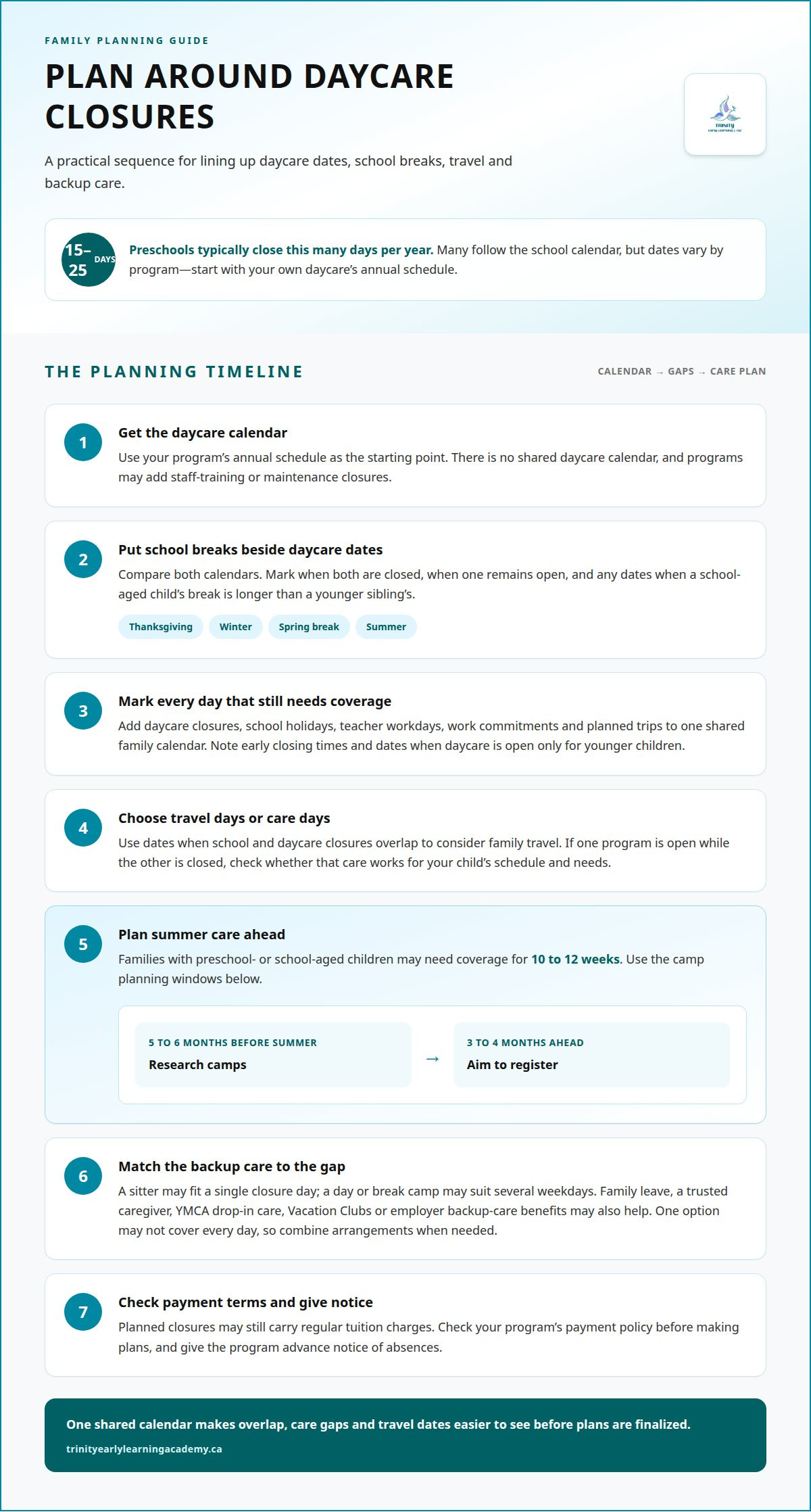
Preschools typically close for 15 to 25 days per year, often following the school calendar. Comparing both calendars helps parents see where school breaks and daycare closures overlap or leave care gaps.
Budgeting for Breaks and Closures
Budgeting for breaks and closures means setting aside money for care or travel when daycare and school are closed. A scheduled closure can affect family plans and regular childcare charges, so account for both before making arrangements.
Start with the daycare’s annual calendar and the school district’s break dates. Mark days when both programs are closed, then distinguish travel days from days that need childcare. Planned closures may still carry regular tuition charges, so include those costs in your household budget before booking a trip.
Seasonal Breaks, Summer Closures, and Camps
Seasonal planning means matching Thanksgiving, winter, spring, and summer breaks with daycare dates, family leave, or camp schedules. This is especially useful when school-aged children have a longer break than their younger siblings.
Compare Thanksgiving and winter closure dates with the school calendar before arranging travel. Add spring break and any teacher workdays to the same schedule. For summer, families with preschool- or school-aged children may need to cover 10 to 12 weeks. Research camps 5 to 6 months before summer, then aim to register 3 to 4 months ahead.
Knowing when schedules overlap helps you choose when to travel and when to arrange care. If daycare closes during a school break, for example, you could plan your vacation then instead of paying for separate care as well as travel. If school closes while daycare remains open, daycare may cover some days, but may not meet every child’s full-day needs.
Use one shared calendar for daycare closures, school breaks, work commitments, and planned trips. Mark dates that still need coverage, such as a school holiday when daycare is open only for younger children. This makes gaps visible before you book travel or reach camp registration deadlines.
Alternative care during festive-period closures
Festive-season closures can leave children without their usual care while parents still have work commitments. Consider combining family leave, care from a trusted person, or a short program with the daycare calendar.
For a single closure day, a backup sitter may offer more flexibility than a week-long camp. A day or break camp may suit families needing care across several weekdays. Compare each option’s schedule with work hours, travel time, and your child’s needs. Also consider lost wages: unpaid time away from work can affect the household budget, even when no childcare payment is due.
YMCA drop-in care and Vacation Clubs are program-based alternatives to consider during festive breaks. They may suit families seeking structured activities for a defined period, while a sitter may fit a shorter gap better. A program’s schedule may not cover every day of an extended closure, so you can combine options rather than rely on just one arrangement.
Employer backup-care benefits may reduce out-of-pocket costs for occasional closures. They can help cover unexpected gaps, but may not replace a full holiday or summer plan. Review the number of days available and whether the benefit covers the type of care your family needs.
For example, a parent could use an employer benefit for a few workdays, then take family leave for the rest of the closure. Another household might use a weekday camp and arrange separate care for a holiday when the camp is closed. Plan payment and pickup arrangements in advance to avoid last-minute conflicts. A community contact may help you identify a trusted backup caregiver, and a written schedule can keep everyone informed.
Common holidays and program-specific closure days
Daycare calendars commonly include closures for Christmas Day, Boxing Day, and New Year’s Day, as well as other observed holidays. Some programs also close for teacher training, professional development, or maintenance, so the holiday list alone may not show every day you need to cover.
Licensed centres often publish an annual closure calendar, while home daycares may include the provider’s vacation weeks in their schedule. Typical market ranges are 10 to 20 closure days per year for centres and 10 to 15 days for home daycares, in addition to a home provider’s vacation weeks.
Don’t assume a fee reduction or credit applies when a centre closes. Planned holiday closures may still be charged at the regular rate, depending on the program’s payment policy and agreement.
Holiday closure letters help turn a calendar date into a clear care plan. A useful letter gives closure dates and times, explains whether regular payment continues, and reminds families to arrange alternative care. Annual calendars may be shared before or during fall enrolment, with reminders sent 1-2 weeks before each planned closure.
Staffing can affect which programs operate on a holiday, but use the published schedule rather than assume reduced hours. If your workplace uses shift lotteries to assign holiday coverage, compare your shifts with daycare dates before confirming travel. This can show whether a parent can cover the closure or separate care is needed.
Mark Christmas Day, Boxing Day, New Year’s Day, and each program-specific closure on one family calendar. Add any early closing times. Seeing work shifts and closures together gives parents time to decide who can provide care.
Policies vary by program, so use its annual calendar and payment terms as the basis for planning. Recording both together helps distinguish a day the centre is closed from an absence you choose to schedule.
Planning family vacations around daycare schedules
Travel plans work best when you consider daycare dates, work leave, and school schedules together. Planning family vacations around daycare closures also means timing bookings around your program’s operating calendar.
Planning Ahead for Closure Dates
Planning ahead means confirming closure dates before committing to travel, so families can match bookings with actual care availability. Daycare programs should give families several months’ notice of planned closures, leaving time to coordinate leave and travel arrangements.
Use the annual schedule as the basis for decisions, then note when work leave must be submitted and travel payments are due. If the schedule changes, compare the new dates with booking conditions before making another commitment. Early planning leaves more room to adjust your budget and arrangements.
Coordinating Leave, Breaks, and Closures
Coordinating schedules means matching adult leave with school breaks and daycare closures so children’s care and travel dates align. This matters when siblings follow different calendars or adults have limited flexibility at work.
Compare school breaks, daycare operating days, and each adult’s available leave. One parent might take leave during a daycare closure, while the other saves leave for school days when care is unavailable. This can help avoid using both adults’ leave on days when one program remains open.
Families should plan vacations several months ahead, allowing time to coordinate closure dates, leave, and travel. Give the daycare advance notice of planned absences, as its policies may request notice before a child misses scheduled days. Settle outstanding daycare accounts before a holiday closure to keep payment tasks from competing with travel arrangements.
Booking non-refundable travel before confirming closure dates can leave you paying for a trip that conflicts with care or work schedules. Changing plans may also require extra leave or alternative care. Compare daycare, school, and work dates before choosing non-refundable flights or accommodation.
Review your family’s care needs alongside the travel calendar, then explore local childcare options for ongoing scheduling needs.
Trinity Early Learning & OSC
Trinity Early Learning & OSC is a licensed daycare in St. Albert, providing childcare and out-of-school care for local families. Its programs can help families coordinate ongoing care with school calendars, planned vacations, and daycare closures.
Trinity also offers Affordability Grant Daycare, which may be relevant when planning your household’s childcare needs. Compare school and work schedules with your regular care arrangements to identify where support fits your routine and where gaps may arise during breaks.
If you’re organizing family travel, use the closure calendar and planned dates to guide your care decisions. Contact Trinity Early Learning & OSC to discuss childcare for your family in St. Albert.
Make your next family calendar work for you
Planning family vacations around daycare closures is easier when the calendar becomes a shared decision-making tool, not just a list of unavailable days. Once travel dates are settled, use it to coordinate drop-offs, pickups, and any remaining care arrangements. A clear plan helps each family member know what to expect before routines change.
Leave room for adjustments as work commitments and children’s needs shift. Agreeing on a preferred travel window and a backup option gives your household a practical starting point for future breaks. You can also review how regular childcare fits your family’s schedule as plans change.
For help considering childcare arrangements in St. Albert, contact Trinity Early Learning & OSC. A thoughtful plan can make the next family break easier to organize and enjoy.
Frequently Asked Questions
What holidays do most daycares close for?
Christmas Day, Boxing Day, and New Year’s Day are common daycare closure dates. Some programs also close for other holidays or add professional development and maintenance days. For example, a closure notice may list an early closing time on Christmas Eve separately from a full-day holiday closure. Treat each date and time as a separate scheduling detail when arranging work coverage or travel.
How do you handle unexpected daycare closures?
For an unexpected closure, arrange a safe care option and adjust work or travel plans for the day. Keep a short list of trusted people who could help, along with details of any employer backup-care benefit. If the closure affects a planned trip, contact the travel provider about changing arrangements and review your booking terms. A shared family message can clarify who is handling care and pickup.
How much notice should a daycare give for closures?
Daycare programs should give families several months’ notice of planned closures. That lead time helps parents coordinate work leave, travel bookings, and alternative arrangements before calendars fill. For an unexpected closure, families should ideally receive notice several hours before the program’s scheduled opening time. Keep current contact details on file and watch for program messages, especially when severe weather could interrupt normal operations.
How do daycare closures and holidays vary by province and childcare provider in Canada?
Closure schedules vary by province, school calendar, and provider policy, so one Canadian family’s dates may not match another’s. A centre may publish annual holiday and training dates, while a home daycare’s schedule may also reflect the provider’s planned vacation. In Alberta, use your own program’s calendar and payment terms rather than assuming another province’s rules apply.
Where can parents find daycare closure calendars and annual holiday schedules?
Start with the daycare’s annual calendar, parent handbook, or enrolment materials. Programs are advised to share the full closure calendar before or during fall enrolment, then send reminders 1-2 weeks before each planned closure. Save the dates in a shared digital calendar and keep the original notice for details such as early closing times. School calendars can then be compared against the daycare schedule.
What are typical daycare closure dates in Canada, including statutory holidays and summer breaks?
Common dates listed by daycare programs include December 25 for Christmas Day, December 26 for Boxing Day, and January 1 for New Year’s Day. Other observed holidays and summer closures depend on the program’s calendar; there is no single schedule that applies to every Canadian provider. A summer vacation may span weekdays when school is also closed, so compare the dates before arranging travel or care.


