
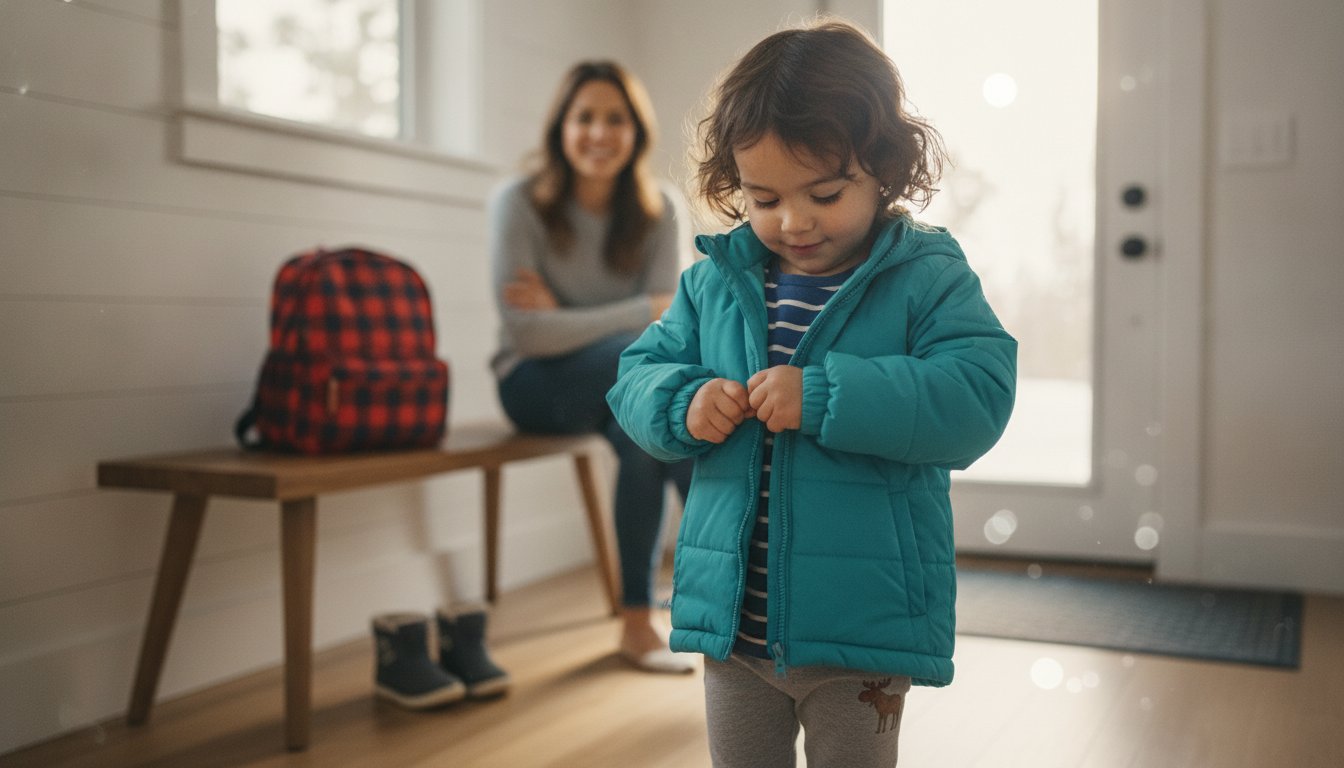
Your child's ability to zip their own jacket or open a lunch container is often more vital for their first day of Kindergarten than knowing the entire alphabet. While academic milestones matter, the real secret to a successful start lies in emotional resilience and physical independence. It is completely natural to feel a mix of pride and a heavy heart as you look for preschool to kindergarten transition tips for parents to help manage this milestone. You might be worried about separation anxiety or feeling overwhelmed by the logistical shift to a new school schedule. We understand these feelings because we see them every year.
This guide offers heart-centred strategies to help you navigate the 2026 school year with confidence. You will realize that a little preparation goes a long way in fostering the social skills your child needs to thrive in a larger classroom. We also provide a clear checklist of routines to practice at home to ensure peace of mind for both of you, whether your child is coming from a local preschool centre or home care. From managing out of school care logistics to emotional preparation, we are here to help you build a stable foundation for your child's bright future.
Key Takeaways
- Learn why mastering self-help skills like zipping coats and opening lunch containers is essential for fostering your child's independence in a larger classroom setting.
- Discover practical preschool to kindergarten transition tips for parents that prioritize emotional resilience and confidence over academic memorization.
- Prepare for the logistical shift by establishing school-year routines early and visiting the new school grounds to build familiarity and reduce anxiety.
- Understand how a structured preschool program and Out of School Care (OSC) provide the stable foundation needed to navigate new schedules in St. Albert.
- Gain peace of mind by learning how to establish clear communication with new teachers and manage your own emotional transition as a parent.
Understanding the Shift: How Kindergarten Differs from Preschool
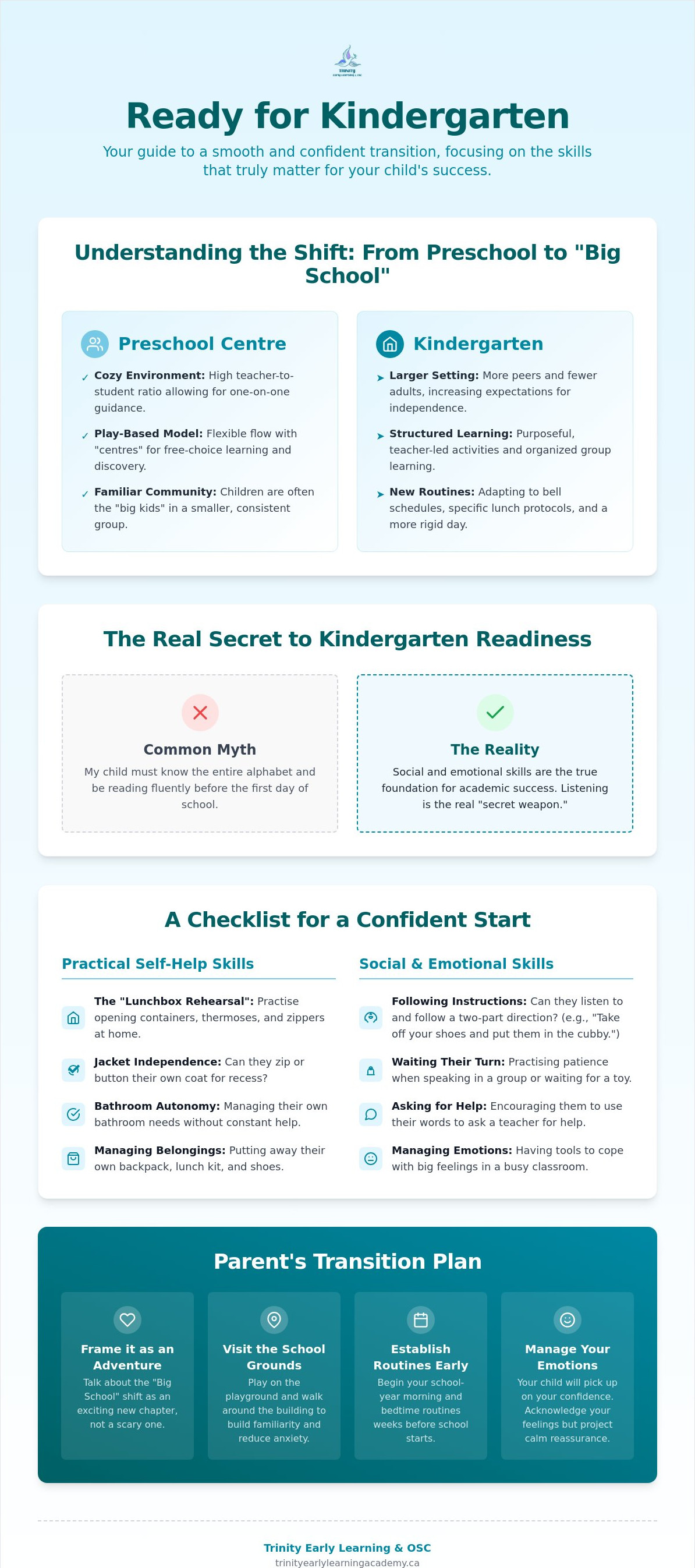
Moving from a cozy preschool environment to a public school hallway is a significant milestone for any family. In a licensed preschool or daycare setting, children often enjoy a high teacher-to-student ratio that allows for frequent one-on-one guidance. Kindergarten changes this dynamic. Your child will likely enter a classroom with more peers and fewer adults, which naturally increases the expectations for independence. Framing this "Big School" shift as an exciting adventure rather than a daunting hurdle is one of the most effective preschool to kindergarten transition tips for parents. Using these strategies helps bridge the gap between the familiar and the new.
The Structural Change in Your Child’s Day
The daily rhythm in a St. Albert elementary school looks quite different from the flexible flow of a childcare centre. Many local schools operate on half-day cycles or specific full-day alternating schedules. This shift requires children to adapt to a strict bell schedule and specific lunch protocols, such as eating within a set timeframe. While preschool classrooms often use "centres" for free-choice play, Kindergarten classrooms introduce more organized group learning. Independence is the goal. Your child will need to manage their own belongings and follow a more rigid sequence of events throughout the morning or afternoon. Understanding these logistics early helps you prepare your child for the physical realities of their new environment.
Academic Expectations vs. Social Readiness
Many parents worry that their child must be reading fluently before the first day of school. This is a common myth. The Alberta Education milestones for five-year-olds prioritize holistic growth across social, physical, and intellectual domains. Understanding what kindergarten readiness means involves recognizing that listening skills are the real "secret weapons" for success. Can your child follow a two-part instruction? Can they wait their turn to speak in a group? These social-emotional skills provide a much stronger foundation for future academic achievement than memorizing flashcards ever could. Focusing on these soft skills ensures your child feels capable and confident when they finally walk through those big school doors.
Social-Emotional Skills to Practice Before the First Bell
While many families focus on academic drills, the most effective preschool to kindergarten transition tips for parents often centre on "soft" skills. A child who can manage their own needs feels empowered. This confidence reduces anxiety when they are part of a larger group of twenty or more students. Practising self-regulation helps them manage big feelings when the classroom gets loud or busy. It is about giving them the tools to navigate their day without constant adult intervention. When a child knows how to wait their turn or ask a teacher for help, they spend less time feeling frustrated and more time learning.
Self-help skills are the quiet foundation of a happy student. Teachers in a Kindergarten setting must divide their attention among many children. A student who can zip their own coat or manage their own bathroom needs experiences a sense of mastery. These small tasks might seem minor, but they prevent the "bottleneck" of frustration that occurs during transitions like recess or lunch. Encouraging your child to advocate for themselves by saying, "I need help with this zipper, please," is a vital skill that fosters a positive relationship with their new teacher.
The "Lunchbox Rehearsal" and Other Physical Skills
Independence starts with the gear they carry. We recommend a "lunchbox rehearsal" at home before the 2026 school year begins. Have your child practise opening their thermos and unzipping their backpack using the actual items they will bring to school. Choose a "Kindergarten wardrobe" with elastic waistbands and velcro shoes to eliminate frustration during gym class. Fine motor development is also key. Encourage your child to use safety scissors and hold pencils correctly through simple art projects. If you are looking for a licensed preschool program that prioritizes these independence milestones, starting early makes all the difference.
Building Emotional Resilience for Separation
The emotional shift is often a significant hurdle for both child and parent. A successful entry into kindergarten depends heavily on how you frame the departure. Create a "Goodbye Ritual" that is short, sweet, and consistent. A special handshake or a quick phrase followed by a confident exit tells your child that they are safe. Use "Social Stories" to help them visualize the day. Talk through the sequence of events: drop-off, circle time, snack, and then pick-up. Validating their nerves is important, but try not to magnify them. When you project a sense of calm, your child mirrors that security. They learn that while the environment is new, their ability to handle it is already within them.
Practical Preparation: 5 Steps for a Smooth Logistics Transition
The move to a new school involves more than just emotional readiness; it requires a practical plan to manage the physical shift in your daily life. Transitioning from a familiar childcare setting to a large elementary school can feel like a major logistical puzzle. By breaking the process into manageable steps, you can reduce first-day chaos and help your child feel secure in their new environment. These preschool to kindergarten transition tips for parents are designed to create a predictable rhythm that supports the whole family. Taking action in the weeks leading up to September ensures that the first bell is a moment of excitement rather than stress.
- Step 1: Start the "School Routine" early. Begin mirroring school hours at home at least two weeks before the first day. This includes waking up, getting dressed, and having breakfast at the times required for your new schedule.
- Step 2: Visit the school grounds. Spend time on the school playground during the summer. Familiarity with the play structure and the physical building helps the school feel like "their" space before they ever step inside a classroom.
- Step 3: Organize a "School Station." Dedicate a specific spot near the door for backpacks, shoes, and school notices. Having a consistent "home base" for school items prevents morning searches for missing library books or mittens.
- Step 4: Label all belongings. Use durable, waterproof Canadian-made labels for everything from water bottles to indoor shoes. In a busy Kindergarten classroom, items easily go astray; clear labelling is a teacher's best friend.
- Step 5: Attend orientation events. Make every effort to attend "Meet the Teacher" nights or school tours. Seeing the classroom and meeting the staff helps demystify the experience for your child.
Adjusting Sleep and Meal Schedules
Sleep is the foundation of a successful school day. Most five-year-olds require 10 to 13 hours of sleep to function at their best. We recommend the "15-Minute Shift" starting in mid-August. Gradually move bedtime 15 minutes earlier every few days until you reach the desired school-year sleep schedule. It is also helpful to align your child's snack times with the school's designated nutrition breaks. This helps their internal clock adjust to eating at specific times, ensuring they aren't distracted by hunger during instructional periods.
The "Dry Run" Walkthrough
Conducting a full rehearsal of the morning commute can significantly lower anxiety. Drive or walk the route at the actual drop-off time to account for traffic and school zone speed limits. Identify the specific door or gate where your child will enter the building. Practise the "Goodbye Ritual" you developed at the actual school gate. For St. Albert parents navigating new school hours, our Out of School Care (OSC) at Trinity Early Learning & OSC provides a stable, familiar environment that bridges the gap between the school bell and the end of your workday.
The Parent’s Transition: Navigating Your Own Emotions
While much of the preparation focuses on the student, the move to a new school is often just as significant for the family. You might feel a sense of disconnection when you realize you can no longer walk your child directly into the classroom or chat with the teacher at the cubbies. This shift from being an active participant in their daily environment to a supportive observer is a major milestone. Acknowledging these feelings is one of the most important preschool to kindergarten transition tips for parents. It is normal to feel a mix of pride and a little bit of grief as your child gains this new level of independence.
Establishing clear communication with the new teacher early in the year helps bridge this gap. Since you won't have the same "face time" as you did in preschool, learn which communication channels the school prefers. Most teachers use specific apps or email to share updates. By respecting these professional boundaries while staying engaged, you build a partnership that benefits your child's growth. You can also find a new sense of community by connecting with other parents at the school gate or joining the school's parent-teacher association. These connections provide a valuable support network as you all navigate the same developmental shifts together.
Trusting the Foundation You’ve Built
Remind yourself that your child is ready for this leap. Trusting that your child’s early childhood education has provided them with a strong foundation is vital for your own peace of mind. Reframing "growing up" as a success rather than a loss of closeness allows you to celebrate their progress. Your emotional state acts as a compass for your child; when you remain steady and positive, they feel safe to explore their new environment. If you find yourself feeling overwhelmed, remember that our team is here to support your family through our out of school care programs designed specifically for this transition.
Managing the "Information Gap"
When your child comes home, the standard "How was your day?" often results in a one-word answer like "good" or "fine." This can be frustrating for parents used to detailed daily reports from daycare. Try asking more specific, open-ended questions to spark a conversation. Ask about who they sat with during their nutrition break or what made them laugh during recess. Use the school's newsletters and digital platforms to stay informed about classroom themes without feeling the need to hover. If you have a specific concern, reach out to the teacher professionally to advocate for your child’s needs. This proactive but respectful approach ensures you stay connected to their learning journey while fostering their growing independence.
Bridging the Gap with Quality Support in St. Albert
Navigating the move to elementary school is a journey that requires a reliable community of support. While the preschool to kindergarten transition tips for parents we have shared focus on home routines and emotional readiness, the external support system you choose is equally vital. A high-quality structured preschool program serves as a deliberate launchpad for this success. It provides a safe environment where children can practice the independence and social skills required for the 2026 school year. By choosing a program that aligns with local educational standards and utilizes resources from sector specialists like Canavan Byrne, you ensure your child feels capable when they finally walk through those school doors.
Consistency is a powerful tool for reducing childhood anxiety. For many working families, the end of the school day creates a logistical challenge that can lead to "double transition" stress. Maintaining care with a familiar provider helps minimize this pressure. Our out of school care services allow children to return to a known, nurturing environment after their day at Kindergarten. Additionally, local families should remember to utilize Alberta affordability grants. These financial supports make high-quality, licensed care more accessible. This ensures your child receives the stability they need during these formative years without adding undue financial strain to the household. Following these preschool to kindergarten transition tips for parents will help you create a seamless experience for your little learner.
Why OSC is Essential for St. Albert Families
St. Albert school boards often have unique schedules, including early dismissal days and professional development (PD) days. These shifts can disrupt a child's sense of routine if a plan is not in place. Our out of school care program is specifically designed to solve this puzzle for parents. We provide a balanced afternoon that includes time for relaxation after a busy school day, alongside engaging activities that stimulate curiosity. This "home base" approach ensures that your child feels secure even when their school schedule changes. It allows them to decompress in a familiar setting with educators who understand their unique needs.
Preparing for the Next Chapter Together
We invite you to tour our facility and see how our transition-focused curriculum prepares children to soar. Our team works closely with local St. Albert schools to align our goals with their expectations. We believe that a collaborative approach between parents, preschools, and elementary schools creates the best outcomes for every child. We are committed to being your partner in this exciting new chapter. Contact Trinity Early Learning & OSC to discuss your child’s transition!
Preparing for a Bright First Day in 2026
The transition to Kindergarten is a journey of growth for the entire family. By focusing on essential self-help skills and establishing consistent routines early, you give your child the confidence to navigate their new environment with ease. Remember that your emotional steady hand is just as important as the contents of their backpack. By implementing these preschool to kindergarten transition tips for parents, you are setting the stage for a smooth and joyful start to formal schooling. You've done the work to build a strong foundation; now it's time to watch them soar.
As licensed St. Albert childcare providers, we are dedicated to helping families bridge the gap between preschool and elementary school. Our nurturing, family-run environment provides the stability children need during this significant change. We are also proud to be Alberta affordability grant eligible, ensuring high-quality care remains accessible for our community. We invite you to visit our centre and see how our programs support holistic development. Book a Tour to See How Our Preschool Prepares Your Child for Success today. Your child’s bright future starts with a supportive community, and we are honoured to be part of yours.
Frequently Asked Questions
How do I know if my child is socially ready for Kindergarten?
Social readiness is typically marked by a child's ability to follow two-step instructions and manage their emotions within a group setting. Your child should be able to share materials with peers and wait their turn during structured activities. If they can express their needs verbally and show basic empathy toward others, they are likely prepared for the social dynamics of a larger classroom. These soft skills are often more indicative of success than academic milestones.
What academic skills should my child have before starting school in Alberta?
In Alberta, Kindergarten focuses on holistic development, so your child does not need to be a fluent reader before the first day. Basic skills like recognizing their own written name, counting to ten, and identifying primary colours are helpful foundations. Teachers prioritize a child's ability to engage with stories and follow classroom routines. Focus on fostering a curiosity for learning rather than drilling complex academic concepts at home.
How can I help my child with separation anxiety on the first day?
Helping your child manage separation anxiety starts with a brief, consistent goodbye ritual that projects your own confidence. Keep your departure short; lingering often increases a child's distress. One of the most effective preschool to kindergarten transition tips for parents is to use "Social Stories" to talk through the drop-off process in advance. When you stay calm and positive, your child realizes that the new environment is a safe and exciting place to be.
What should I pack in a Kindergarten lunch for a picky eater?
Pack a lunch with familiar, bite-sized foods in containers your child can open without adult assistance. For picky eaters, a bento-style box with small portions of diverse items like crackers, cheese, and fruit often works better than a single large sandwich. Ensure you have tested the thermos or lids at home first. This independence prevents frustration during the short nutrition breaks and ensures they actually eat enough to stay energized.
How do I manage childcare if my child is in half-day Kindergarten?
Managing childcare for half-day cycles is one of the most common preschool to kindergarten transition tips for parents seeking to maintain a stable work schedule. Many families utilize licensed out of school care (OSC) programs that provide transportation to and from the local elementary school. These programs offer a seamless bridge between the school bell and the end of the workday, providing a familiar "home base" where children can relax and play.
What happens if my child isn’t fully potty trained before school starts?
Most Alberta schools expect children to be independent in the bathroom, but teachers realize that accidents can happen during the first few weeks. It is a good idea to pack a complete change of clothes in a labelled bag inside your child's backpack. If your child has specific developmental needs regarding toileting, it is best to communicate with the teacher before the school year begins to establish a supportive plan.
How can I stay involved in my child’s learning once they start "big school"?
Stay involved by regularly checking the school’s digital communication platforms and reading the weekly newsletters. You can also join the school council or volunteer for field trips if your schedule allows. Asking your child specific questions about their day, such as "What was the funniest thing that happened at recess?", helps you stay connected to their experiences. Building a respectful partnership with the teacher ensures you are informed about your child's progress.
Are there grants available for after-school care in St. Albert?
Yes, families in St. Albert can access the Alberta Affordability Grant if they choose a licensed childcare or out of school care provider. This grant is applied directly to your fees, making high-quality care more accessible for local families. Depending on your household income, you may also be eligible for additional provincial subsidies. We recommend checking with your chosen centre to confirm their licensing status and how these financial supports are applied to your monthly statement.


