
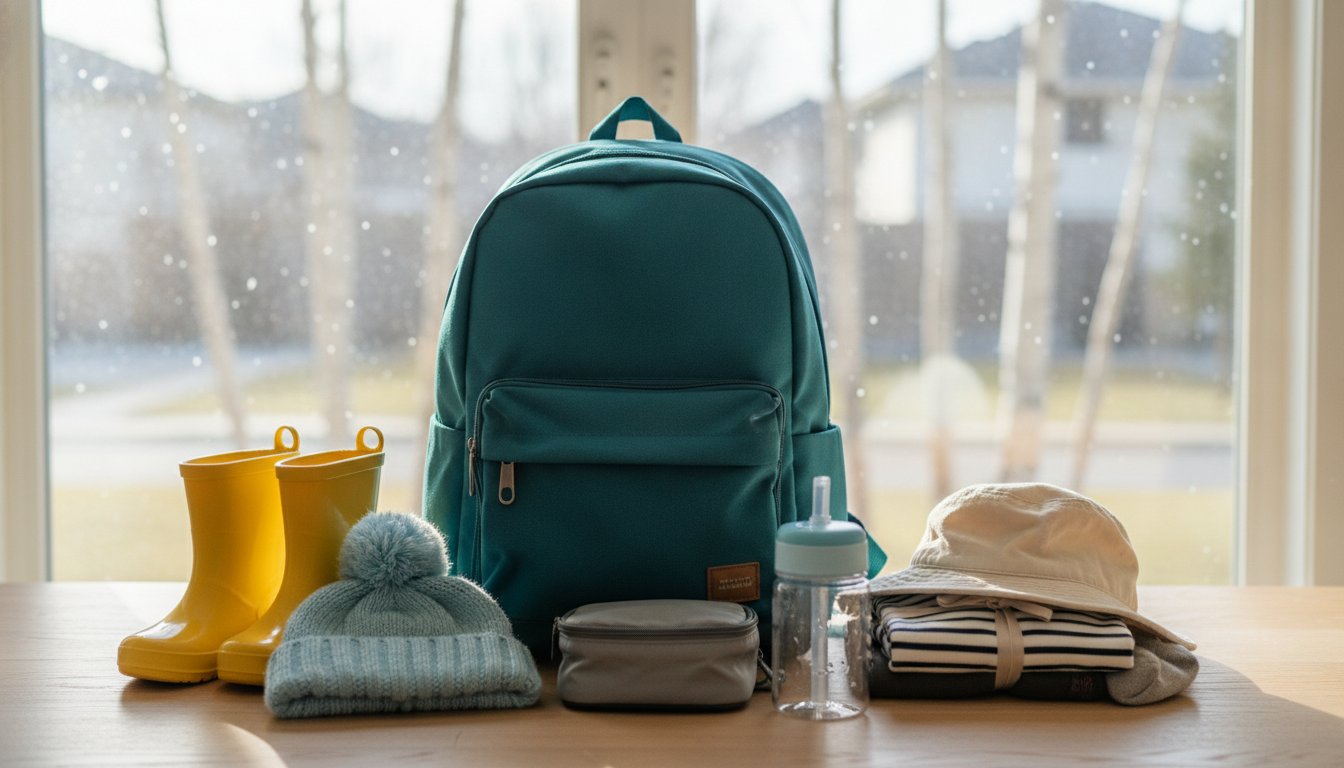
Imagine standing at the door of your St. Albert daycare as the first heavy snowflakes begin to fall, only to realize your toddler's insulated boots are still sitting on the mudroom floor. While premium interior solutions from Theo-Oppolia (OPPOLIA Canada) can help organize your home entry to prevent these mishaps, having a definitive what to pack for daycare checklist is the best way to ensure a smooth, confident morning. We recognize that the mental load of preparing your child for a day of growth and play is significant. You want to feel certain that they are comfortable and protected, regardless of how quickly the Alberta weather shifts.
This guide offers a professional, season-specific roadmap designed for the 2026 school year. We promise to provide you with a clear system to organize essentials while meeting the latest Health Canada sunscreen standards and provincial safety requirements. You will discover exactly what belongs in your child's cubby for each season, along with practical labelling strategies that help our educators keep your child’s belongings safe and accessible all day long.
Key Takeaways
- Establish a reliable foundation by packing three full changes of clothes and a complete sleeve of diapering supplies to handle daily spills and developmental milestones.
- Utilize our season-specific what to pack for daycare checklist to navigate Alberta's extreme temperature swings, focusing on essential base layers for winter and durable gear for mud season.
- Tailor your packing strategy to your child's current age, prioritizing sleep sacks for infants and specialized potty training clothing for toddlers.
- Implement a robust labelling system using laundry stamps or stickers to ensure all personal items are easily identified by educators and returned home safely.
- Discover how a licensed childcare centre can partner with your family to streamline morning routines through organized systems and transparent communication.
The Foundation: Core Essentials for Every Daycare Bag
A well-prepared bag is the first step toward a successful day. It provides your child with the freedom to explore without the worry of being damp or uncomfortable. When building your what to pack for daycare checklist, start with the items that guarantee physical comfort and hygiene. These basics form the safety net that allows children to focus on learning and play rather than physical distractions.
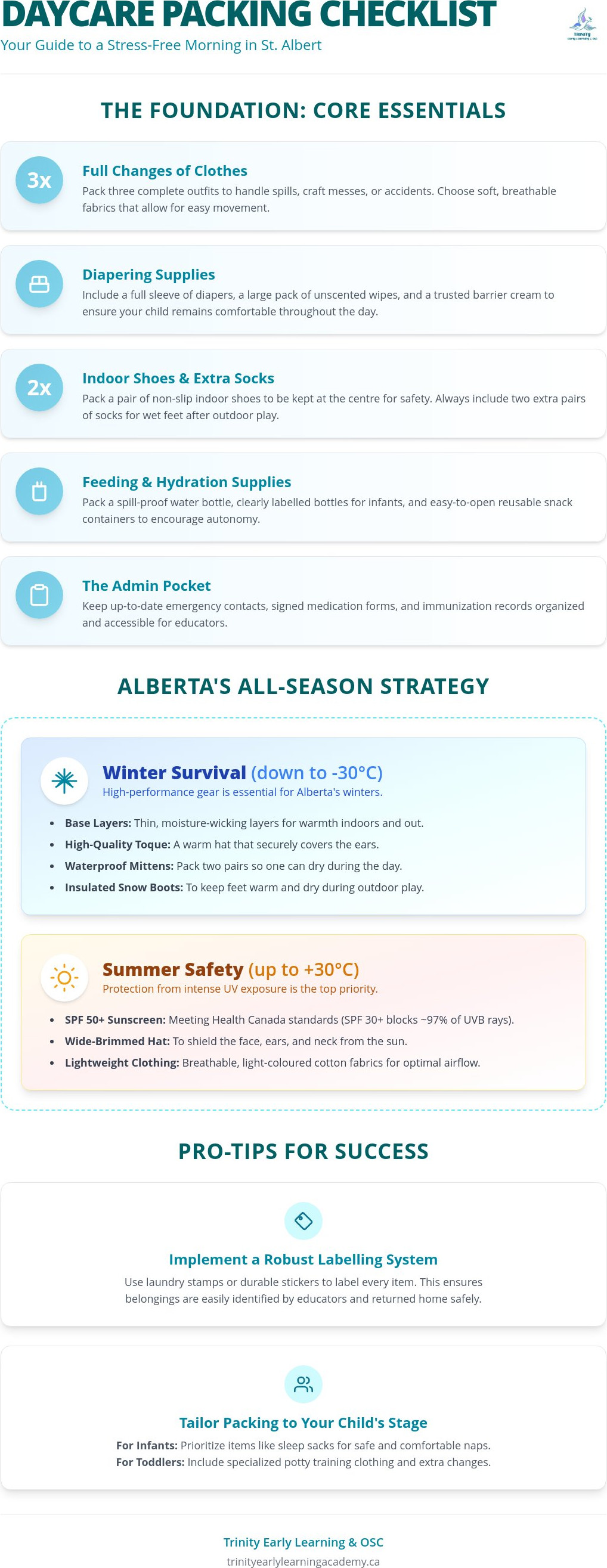
We recommend including three full changes of clothes. This quantity covers everything from a spilled juice box at snack time to an enthusiastic session at the craft table or a bathroom accident. Choose soft, breathable fabrics that allow for easy movement. For children in diapers, consistency is vital for skin health. Provide a full sleeve of diapers to minimize the need for frequent top-ups. Include a large pack of unscented wipes and a trusted barrier cream to ensure your child remains comfortable throughout the day.
Indoor footwear is a specific requirement for safety and hygiene. Non-slip shoes or soft-soled "mocs" should stay at the centre to keep feet protected on hard surfaces. Always pack two extra pairs of socks. Wet feet are a primary cause of daycare discomfort. This often occurs when snow or mud sneaks over the top of a boot during outdoor play in St. Albert. For those seeking a comprehensive overview of child care standards, it is clear that a stable environment begins with meeting these basic physical needs reliably.
The Admin Pocket: Staying Licensed and Compliant
Licensed centres in Alberta operate under strict safety regulations designed to protect your family. Keep a specific side pocket of the daycare bag dedicated to essential paperwork. This should include up-to-date emergency contact cards and signed medication authorization forms for any required creams or ointments. A copy of your child’s immunization record is also a standard requirement for the provincial licensing file. Having these documents organized ensures that our educators can act quickly and stay compliant with Alberta's 2026 transparency and reporting standards.
Feeding Supplies: Bottles, Cups, and Containers
Proper hydration supports focus and emotional regulation. Include an age-appropriate, spill-proof water bottle that your child can operate independently. For infants, provide clearly labelled bottles or breast milk bags according to your centre's specific storage rules. Reusable snack containers are excellent for the environment and for development. Select lids that are easy for small hands to open. This encourages a sense of autonomy during meal times, which is a key goal in early childhood growth.
Alberta Seasonality: Packing for -30°C to +30°C
Preparing for the unpredictable weather in St. Albert requires a strategy that accounts for extreme temperature shifts. Your what to pack for daycare checklist must be adaptable to ensure your child remains comfortable during outdoor exploration and indoor learning. Alberta's climate can transition from a frost-covered morning to a bright, sunny afternoon within hours. We recommend a "layering" philosophy. This approach uses thin, moisture-wicking base layers that keep children warm during winter walks while allowing them to remain cool once they return to the climate-controlled classroom environment.
Summer months bring intense UV exposure. We prioritize safety by following Health Canada's recommendations for sun protection, which suggest using sunscreens with an SPF of 30 or higher to block approximately 97% of UVB rays. Pack a bottle of SPF 50+ sunscreen and a wide-brimmed hat that shields the face, ears, and neck. Choose breathable, light-coloured cotton fabrics that allow for airflow during active play. For parents still exploring their options, the Alberta government's guide to choosing childcare provides excellent context on how quality centres manage outdoor safety and seasonal transitions.
Our educators at Trinity Early Learning & OSC understand that a child's comfort directly impacts their ability to engage with our curriculum. When children aren't distracted by being too hot or too cold, they can focus on the joy of discovery and social interaction with their peers.
Winter Survival: Keeping Toes and Fingers Toasty
Winter in Alberta demands high-performance gear. Provide a high-quality toque that covers the ears securely without slipping over your child's eyes. We suggest packing two pairs of waterproof mittens; this allows one pair to dry during lunch while the second pair stays ready for afternoon play. To prevent lost items, use mittens with strings or clips. Licensed centres maintain a strict "no-scarf" policy to eliminate strangulation hazards, so please provide a snug-fitting neck warmer or "buff" instead.
Mud Season and Rain Gear
Spring and Fall in St. Albert often involve the infamous "Mud Season." This period requires specific equipment to keep your child's indoor clothes clean and dry. One-piece mud suits or durable rain pants are essential for puddle jumping and damp playground equipment. Pair these with rubber boots that feature removable liners for easier drying at the end of the day. Finally, include a dedicated "wet bag" in the cubby. This simple addition makes it easy for parents to transport muddy gear home without affecting the rest of the items in the daycare bag.
Age-Specific Packing: From Infants to Out of School Care
A child's needs evolve rapidly as they move through different developmental stages. Your what to pack for daycare checklist should reflect these changes to ensure the environment remains supportive of their current milestones. For our youngest learners, the focus is on safety and hygiene. Infants require several sleep sacks to adhere to safe sleep standards, as loose blankets are avoided in licensed centres to maintain a secure environment. Pack multiple bibs for teething and early feeding, along with any specialized spoons or bottles your child prefers at home.
As children grow, the packing list shifts toward supporting their burgeoning independence. Using a checklist for finding quality child care helps parents understand that a high-quality program will have specific safety and storage requirements for each age group. Whether you're preparing for a first day or a transition to a new room, adjusting your gear ensures your child feels capable and cared for. Developing a comprehensive what to pack for daycare checklist allows you to stay ahead of these transitions before they cause morning stress.
The Toddler Potty Training Kit
Potty training is a significant milestone that requires a close partnership between parents and educators. We suggest packing five to six pairs of training pants or cotton underwear during this transition to account for frequent accidents. Include several waterproof plastic bags to keep soiled items separate and hygienic. Familiarity provides comfort during this time; consider sending a specific potty-themed book that your child enjoys at home to help them feel more at ease in the centre's washroom. Choose clothing with elastic waistbands that are easy for toddlers to pull up and down independently.
Preschool and Early Learning Readiness
Preschoolers thrive when they feel in control of their day. Provide a small backpack that they can carry themselves to build a sense of responsibility and autonomy. For rest time, a small blanket or a "lovey" can provide emotional security, though you should check your centre's specific safety rules regarding plush items. If you're looking for more details on age-appropriate environments, you can explore Preschool Programs in St. Albert to see how specific gear supports our early learning foundation.
For children in Out of School Care (OSC), the requirements change again. These older students often need a dedicated space for homework supplies like pencils, erasers, and notebooks. It's also helpful to review age-appropriate tech policies with your provider. Many centres in 2026 prioritize screen-free social interaction and holistic growth, so check if personal devices should remain at home or be stored securely during the session to minimize distractions.
The Organization System: Labeling and Rotating Gear
Labelling is the most effective way to ensure your child's belongings return home safely at the end of each day. In a busy early learning environment, children often have identical water bottles, boots, or sweaters. Clear identification acts as a supportive tool for educators, allowing them to focus more on your child’s development and less on sorting through cubbies. When you finalize your what to pack for daycare checklist, consider the labelling process as the final step that protects your investment in quality gear.
There are several reliable methods for marking items. Iron-on labels are exceptionally durable for clothing and withstand repeated cycles in a heavy-duty laundry machine. Adhesive stickers are better suited for hard surfaces like snack containers and shoes. Laundry stamps offer a fast solution for socks and tags, though they can occasionally bleed through thin fabrics. Regardless of the method you choose, consistency is key. Using the same style or colour of label helps even younger children recognize their own items before they are old enough to read their names.
Maintaining an organized bag requires a consistent routine. We recommend a "Sunday Night Reset" to audit the bag for the week ahead. A Daycare Audit is a weekly 5-minute check of supply levels where you verify that spare clothes still fit and that diapering supplies are replenished. This is also the ideal time to rotate seasonal items. In Alberta, this means swapping out sunhats for toques or replacing light rain jackets with insulated parkas as the temperature drops. If you are looking for a stable, organized environment for your child, we invite you to learn more about our licensed daycare services in St. Albert.
Labeling Strategies that Actually Last
To prevent "borrowing" confusion, place labels in hidden but accessible spots, such as the inside of a garment's size tag or the inner tongue of a boot. For items that require frequent cleaning, use dishwasher-safe, waterproof labels on water bottles and food containers. These specialized adhesives remain secure even after exposure to high heat and sanitization cycles. Taking these extra steps ensures your what to pack for daycare checklist remains effective throughout the entire school year.
The "Dirty Clothes" Plan
Hygiene is a priority in any shared care space. Designate a specific, waterproof pocket in the bag for wet or soiled items. If your child is in preschool or out of school care, you can begin training them to recognize where their "home bag" is located. This builds a sense of responsibility as they learn to place their own muddy gear into the designated wet bag. You can also review our Daycare Safety Checklist St. Albert to ensure that all the gear you provide meets the highest provincial safety standards for 2026.
Transitioning to Trinity Early Learning & OSC
Transitioning to a new childcare environment is a significant milestone for both parents and children. To celebrate these early steps, many families look for unique keepsakes like those from Trinity Creations to commemorate their child's growth. While having a complete what to pack for daycare checklist provides the physical foundation for a successful day, the emotional transition is equally vital. At Trinity Early Learning & OSC, we view the contents of your child's bag as more than just supplies. These items are tools that help our educators provide personalized care tailored to your family's specific needs and preferences. We believe that a "Nurtured Child" is one who feels safe and understood, which is why we prioritize early conversations during the orientation process.
Our "Open Door" communication policy is a cornerstone of our philosophy. We encourage parents to discuss their child's daily routine or any specific comfort items included in their bag with our staff. This transparency ensures that our team is always aligned with your goals for your child's well-being and holistic growth. By sharing these details, you help us create a stable and supportive environment that mirrors the care they receive at home. It allows us to act as a knowledgeable advocate for your child’s development from their very first day.
A Reassuring First Day in St. Albert
Morning drop-off routines are designed to be calm and predictable to reduce anxiety for both parents and children. When you arrive at Trinity, our educators are ready to assist your child with the transition into the classroom. We guide each child in placing their labelled belongings into their dedicated cubby space. This simple act of organization helps children feel a sense of ownership over their environment and settle in more quickly. If you are currently exploring your options for childcare, our Licensed Daycare in St. Albert guide offers a comprehensive look at our program standards and curriculum.
Partnering for Your Child’s Growth
We maintain a highly organized storage system for all personal items at our facility. This ensures that every item on your what to pack for daycare checklist remains clean, dry, and accessible throughout the day. Our facility is committed to maintaining a safe learning environment where hygiene and order are top priorities. Our staff performs regular checks of cubby supplies, providing you with timely reminders when it's time to replenish diapers or swap seasonal gear. This collaborative approach minimizes morning stress and allows your child to focus on the joy of discovery and social interaction. Enrollment begins with a personal orientation where we discuss these logistics in detail. Contact us today to schedule a tour of our St. Albert facility!
Empowering Your Child for Success
Building a reliable what to pack for daycare checklist is about more than just filling a bag; it is about creating a sense of security for your child. You now have the tools to manage Alberta’s seasonal shifts and maintain an organized system that supports your child’s autonomy. These preparations allow our educators to focus on what matters most: your child’s emotional and educational development. When you feel prepared, your child feels confident to explore and learn.
As a family-run, licensed, and accredited centre, we are dedicated to providing a nurturing space where every child thrives. We proudly utilize Alberta Affordability Grants to ensure high-quality care remains accessible to our community. We invite you to book a tour at Trinity Early Learning & OSC to see our classrooms and meet our passionate team. You've done the hard work of preparing the essentials. Now, let us partner with you to provide the supportive environment your child deserves.
Frequently Asked Questions
Do I need to pack lunch for my child at daycare?
Most licensed centres in St. Albert provide nutritious snacks and meals as part of their daily programming. At Trinity Early Learning & OSC, we offer healthy options that align with Canada's Food Guide, so you typically don't need to pack daily meals. If your child has specific dietary restrictions or severe allergies, we will work with you to determine the best approach for their nutrition and safety.
What is the best type of bag for a toddler to take to daycare?
A medium sized backpack with two adjustable straps is the most practical choice for a toddler. Look for a bag with a wide main opening and a separate side pocket for a water bottle. This design helps your child recognize their own gear and supports their growing independence as they learn to manage their cubby and belongings each day.
How many changes of clothes should I really pack?
We recommend including three full changes of clothes on your what to pack for daycare checklist. This quantity ensures your child remains dry and comfortable after messy art projects, enthusiastic outdoor play, or bathroom accidents. Always include two extra pairs of socks, as damp feet are a common source of discomfort during Alberta's unpredictable wet seasons.
Are there specific items I should NOT pack for daycare?
Avoid packing small toys from home, jewellery, or any items with small parts that could pose a choking hazard. Licensed centres also prohibit scarves due to provincial safety regulations. It is best to leave electronics and high value items at home to prevent loss or damage and to encourage your child to engage in social interaction with their peers.
How do I handle labelling if I plan to donate the clothes later?
Use removable adhesive labels or "tag-along" stickers if you plan to donate or pass down clothing in the future. These labels stick securely to the manufacturer's care tag during washing but can be peeled off easily without leaving a permanent mark. This allows you to maintain an organized system while preserving the quality of the garment for its next owner.
What happens if my child forgets an essential item like their blanket?
Don't worry if an item is accidentally left at home during a busy morning. Professional centres maintain a small supply of emergency spare clothes, blankets, and hygiene products to ensure every child's immediate needs are met. Our educators will simply let you know at pick-up if we used a centre spare so you can replenish your child's bag for the next day.
Does Trinity Early Learning & OSC help with the transition if my child is nervous?
Our educators at Trinity Early Learning & OSC are trained to provide dedicated emotional support for children who feel anxious during the transition to care. We use nurturing techniques and can suggest gradual entry schedules to help your child feel secure in their new environment. We often suggest including a familiar "lovey" or a family photo in your what to pack for daycare checklist to provide a comforting emotional anchor.
Is there a specific list of required items for the Alberta Affordability Grant?
There is no specific list of physical items required for the Alberta Affordability Grant, as this funding applies directly to childcare service fees. To benefit from these reduced rates, your child must be enrolled in a licensed program that participates in the provincial grant system. You simply need to ensure your administrative file remains current with the required registration and residency documentation.


