
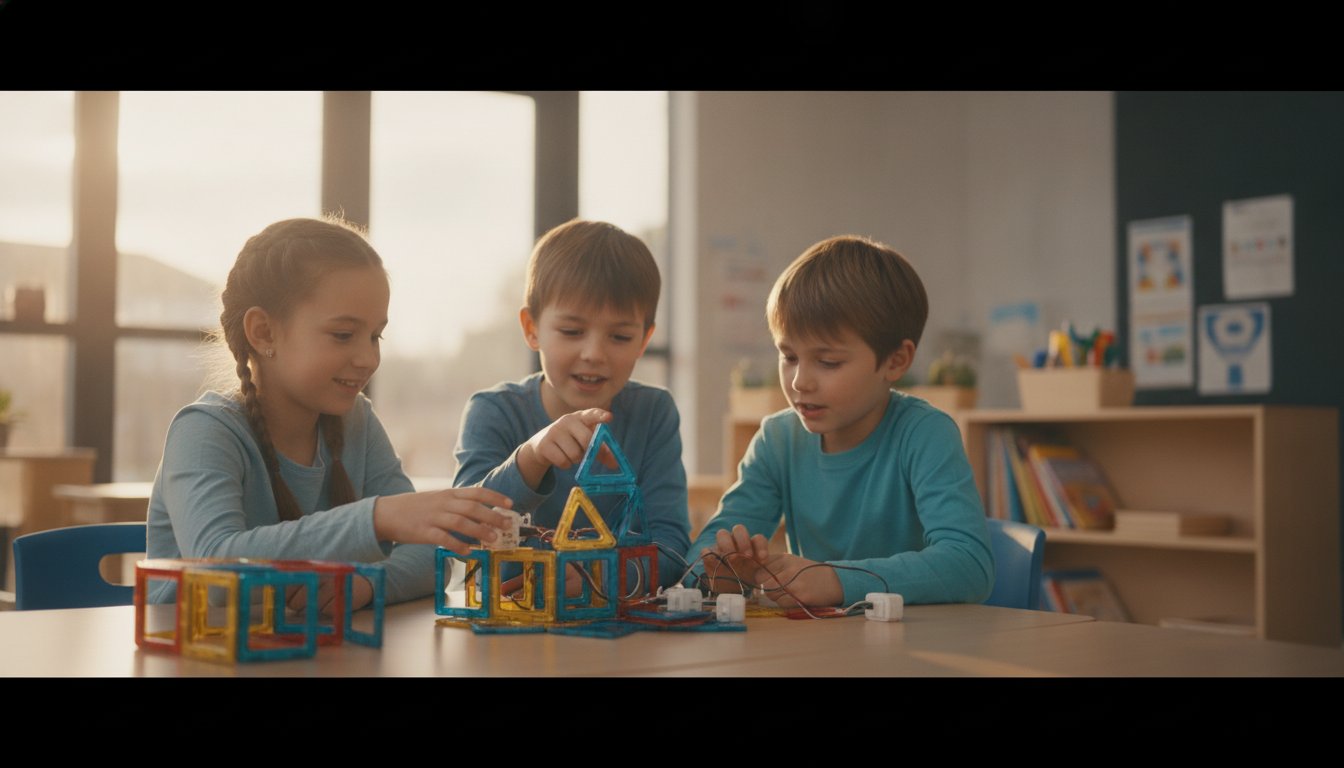
What if the hours between the final school bell and your arrival home weren't just a gap to fill, but the most creative part of your child's day? Many St. Albert parents feel a pang of guilt when they can't be at the school gates right at dismissal. It's natural to worry that your child might be bored, stuck in front of a screen, or simply waiting for the clock to tick down. You've likely asked yourself: what do kids do in out of school care when they're not in a formal classroom setting?
We understand that you want your child to feel safe, nurtured, and genuinely engaged. The truth is that quality out of school care acts as a vital developmental bridge where play-based learning transforms downtime into an opportunity for life-skill building. This article will help you discover the reality behind these programs by busting five common myths that often cause parental stress. We will preview how a professional environment supports your child's growth, provides a healthy balance of rest and enrichment, and ensures they're learning in a way that complements their school day.
Key Takeaways
- Understand that licensed out of school care is a purposeful learning environment designed to support growth, rather than just a place for supervision.
- Discover exactly what do kids do in out of school care, from hands-on STEM projects to creative arts that encourage holistic development.
- Learn how a predictable afternoon routine including snacks and quiet time helps reduce transition anxiety for children after a busy school day.
- Find out how quality programs balance the need for homework support with essential social-emotional opportunities and active play.
- Gain a practical checklist to help you evaluate St. Albert facilities and realize the differences between standard licensing and high-quality programming.
What Do Kids Actually Do in Out of School Care? Debunking the Babysitting Myth
Out of School Care (OSC) is a licensed, structured environment designed specifically for school-aged children. It's often misunderstood as a simple childcare stopgap or a place where kids just wait for their parents to finish work. However, it serves as a critical "third space"; a unique environment that exists between the formal expectations of school and the total relaxation of home. Parents frequently ask, "what do kids do in out of school care?" and the answer is far more complex than just waiting for a pickup. It is a place where early childhood education St. Albert principles continue to guide children's social and cognitive growth long after the final bell has rung.
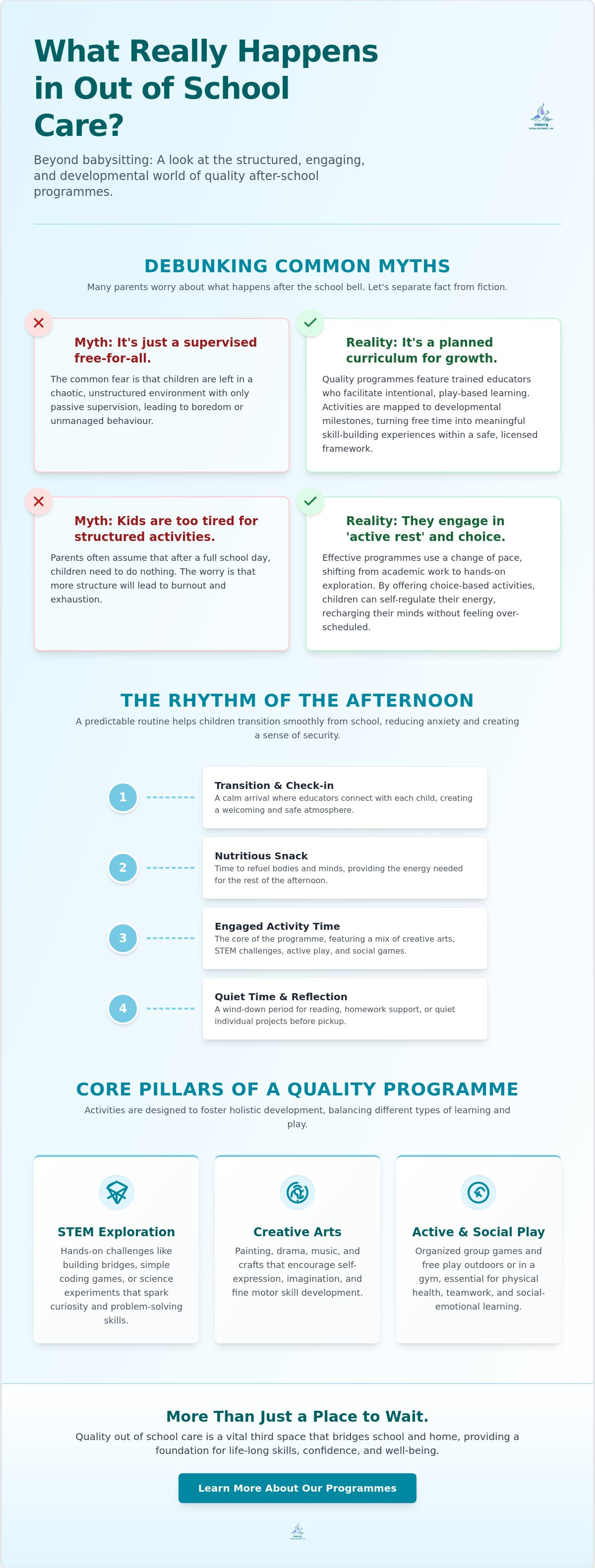
Myth #1: It Is Just Supervised Free-for-All
Many families worry that OSC is just a room full of kids running wild while an adult watches from the sidelines. This is a common misconception. In a licensed setting, trained educators facilitate intentional play rather than providing passive supervision. These professionals follow an organized program that prioritizes safety and quality. Alberta licensing standards ensure that the environment is not only secure but also conducive to learning. Educators actively engage with children; they don't just stand back. They help resolve conflicts, spark new ideas, and ensure that every child feels included in the group. This active engagement creates a stable atmosphere where children can relax without the day becoming chaotic.
The Reality: A Planned Curriculum for Growth
A high-quality OSC program doesn't happen by accident. The reality of what do kids do in out of school care involves a deliberate mix of physical activity, social connection, and cognitive exploration. Activities are carefully mapped to developmental milestones to ensure children are constantly building new skills. This structure supports a comprehensive child development program St. Albert families can trust. The curriculum balances child-led interests with educator-guided projects. If a group of children shows interest in building, the educator might introduce a complex bridge-building challenge using recycled materials. This approach allows kids to explore their passions while meeting age-appropriate challenges that build confidence and resilience. It's about turning "free time" into a series of meaningful experiences that help children realize their full potential.
The Balance of Structure: Why OSC Is More Than Just Free Play
A common concern for parents is that their child might feel over-scheduled after a full day of classroom instructions. However, a predictable routine is actually the foundation of a calm and secure afternoon. When children transition from school to a care setting, they often carry the mental fatigue of their academic day. A consistent schedule helps reduce this anxiety by providing clear expectations for what comes next. In a professional setting, the afternoon is typically divided into four key stages: a smooth transition and check-in, a nutritious snack to refuel, a period of engaged activity, and a final quiet time for reflection or reading. This methodical approach aligns with the early learning program Alberta framework, which prioritizes holistic well-being over rigid academic pressure.
Myth #2: Kids Are Too Tired for Structured Activities
It's easy to assume that a tired child just needs to sit down and do nothing. In reality, "active rest" is often more effective for recharging a young mind. By changing the type of brain activity from formal desk work to hands-on exploration, children find a second wind. When considering what do kids do in out of school care, it's important to realize that these activities are choice-based. This flexibility allows children to self-regulate their energy levels. A child who is physically tired might choose a quiet building project, while one with pent-up energy might head to an active play zone. This transition from formal classroom learning to informal exploration ensures that the child remains engaged without feeling burnt out.
Designing an Environment for Choice
Professional educators organize their centres into specific interest areas to foster independence. These might include cozy reading nooks, complex building zones, or creative art stations. Instead of forcing a single activity on everyone, educators use a technique called an "invitation to play." This involves setting up materials in an appealing way that sparks natural curiosity and invites children to explore at their own pace. This level of autonomy is crucial because it helps improve social and emotional skills like decision-making and collaborative problem-solving. When children have the power to choose their own path, they build the confidence needed to tackle new challenges. If you are looking for a program that respects your child's need for both rest and growth, you might consider visiting a licensed childcare centre to see these interest areas in person.
By providing this balance, out of school care becomes a supportive environment where children can unwind while still participating in meaningful experiences. It's not about adding more work to their day; it's about providing the right kind of structure to help them thrive after school hours.
STEM, Creative Arts, and Active Play: The Core Pillars of Quality Programs
There is a persistent myth that out of school care is merely a place for "colouring and crafts" to pass the time. While creative expression is important, modern programs are built on much sturdier foundations. When parents investigate what do kids do in out of school care, they discover a sophisticated blend of activities designed to keep young minds and bodies moving. These programs provide structured environments where young people can engage in enrichment that goes far beyond simple supervision. Every project and game is selected because it supports holistic early childhood development, ensuring that children grow socially, emotionally, and cognitively during their time at the centre.
STEM and Problem-Solving Challenges
Physical Literacy and Outdoor Adventure
Physical activity is a non-negotiable pillar of a healthy afternoon. Quality programs focus on physical literacy, which involves building the confidence and competence to move in various ways. Organized group games like tag or collaborative sports help children develop teamwork and gross motor skills. Daily outdoor time is essential for well-being, even during our brisk Alberta winters. Educators are trained to manage "risky play" safely. This concept allows children to test their physical limits; perhaps by climbing a little higher or running a bit faster; within a controlled environment. This managed risk is vital for building resilience and spatial awareness. By providing these diverse outlets, the program ensures that every child can find a way to stay active and engaged that suits their personality and energy level.
Building Life Skills: Homework Support and Social-Emotional Development
Balancing the afternoon is a priority for busy families. Parents often wonder how their child will manage their school assignments while still having time to relax. When asking what do kids do in out of school care, many worry that the environment is too loud for concentration. In reality, these programs are designed to be a "social laboratory" where children learn to navigate complex peer relationships while still finding time for their academic responsibilities. This setting provides a unique opportunity for children to practice interpersonal skills that are just as vital as their classroom lessons. It's a supportive space where growth happens naturally through interaction and reflection.
Myth #4: Homework Never Gets Done in Care
The idea that OSC is too chaotic for schoolwork is a common misconception. Professional centres provide designated quiet zones equipped with comfortable seating and appropriate lighting where children can focus on their assignments without distraction. Educators are available to offer gentle guidance and support, ensuring that kids stay on track without doing the work for them. This structure is incredibly beneficial because it often means that homework is completed before the child even gets home. Completing these tasks in a supportive environment frees up your evening for genuine quality time as a family, rather than a stressful scramble to finish projects before bedtime. It's about finding a healthy balance between academic support and the child's legitimate need for a mental break after a long day of learning.
Social-Emotional Learning (SEL) in Action
Beyond academics, the most significant growth often happens during social interactions. Quality out of school care St. Albert programs utilize multi-age grouping, which allows younger children to learn from older peers while older children develop leadership skills and patience. Educators act as mentors and conflict-resolution coaches rather than just passive supervisors. They guide children through big emotions and help them develop empathy, sharing skills, and self-regulation. These daily social challenges are where children learn to communicate effectively and build strong, lasting peer bonds. Understanding what do kids do in out of school care helps parents realize the immense social value provided by these programs, as children learn to resolve disagreements through active listening and compromise.
If you want to ensure your child has a supportive space to develop these essential life skills, you can learn more about our licensed programs today. This nurturing approach ensures that every child feels valued while they learn to navigate the world around them. Our educators are dedicated to fostering an environment where growth and joy go hand in hand, giving you the peace of mind that your child is thriving. By choosing a program that prioritizes these pillars, you are investing in your child's long-term social success and emotional well-being.
Choosing the Right Environment: What to Look for in St. Albert
Selecting a care provider in St. Albert is about more than just finding a convenient location. It's about finding a partner that aligns with your family's values and your child's personality. Many parents fall into the trap of Myth #5: believing that all out of school care programs are the same because they all hold a provincial license. While licensing ensures that a centre meets essential health and safety regulations, it's merely the baseline. The true quality of a program lies in its curriculum, its staff, and its community atmosphere. When you visit a potential facility, your main goal is to observe what do kids do in out of school care at that specific location and how the educators facilitate those moments.
The Quality Indicators of a Nurturing Centre
A high-quality centre should feel vibrant and child-centred. As you tour, look for displays of child-led work rather than identical, pre-cut crafts. This shows that the program values individual expression and creativity. Pay close attention to how educators interact with the children. Are they standing at the back of the room, or are they down at the child's level, actively participating in a game or project? This distinction marks the difference between passive supervision and active engagement. Don't be afraid to ask about their specific philosophy regarding play-based learning. A professional program will be able to explain how their activities support development and why they choose certain materials over others. This transparency is a hallmark of a nurturing environment.
Administrative Clarity and Family Support
A stable and organized environment is often reflected in its administrative transparency. A trustworthy centre will be open about its licensing status, safety protocols, and staff qualifications. It's also important to ask about staff turnover; consistent faces help children build the secure attachments they need to thrive. Communication is another vital pillar. Ask how the centre shares updates about your child's day and how they handle feedback. Finally, ensure the provider is knowledgeable about the Alberta Affordability Grant. This grant can significantly reduce your monthly fees, and a "Knowledgeable Advocate" will guide you through these financial details. By looking for these indicators, you can find a program that provides both the enrichment your child deserves and the peace of mind your family needs. Realizing that you have choices allows you to select an environment that feels like a natural extension of your home.
Empowering Your Child's After-School Journey
Choosing the right program is about more than just finding a safe place for your child to stay. It's about providing an environment where they can build resilience, explore new interests, and develop lasting social bonds. Quality care acts as a bridge between school and home; it offers a unique blend of structured support and creative freedom. When you realize the depth of what do kids do in out of school care, you can move past the guilt of not being home and embrace the developmental benefits your child is gaining. From STEM challenges to social-emotional coaching, these programs ensure every afternoon is meaningful.
We provide licensed childcare with high safety standards and a community-focused environment in the heart of St. Albert. Our experienced educators are dedicated to nurturing growth and ensuring your child feels valued every day. You don't have to make this choice on your own. We invite you to Discover the Trinity difference—book a tour of our St. Albert out of school care centre today! You deserve the confidence that comes from knowing your child is in a stable, nurturing, and professional environment where they can truly thrive.
Frequently Asked Questions
Is out of school care better than a private babysitter?
Licensed programs provide a more structured and social environment than a private babysitter can typically offer. While a babysitter provides one-on-one supervision, a professional centre gives your child access to diverse peer groups and trained educators. This setting helps parents understand what do kids do in out of school care to build essential social skills and resilience. It's a professional partnership that supports your child's holistic development through organized activities and community engagement.
What is the teacher-to-child ratio in Alberta out of school care?
In Alberta, the staff-to-child ratio for school-aged children is 1 educator for every 15 children. This requirement is set by the Early Learning and Child Care Regulation to ensure that every child remains safe and well-supervised. These ratios allow educators to maintain an organized environment while still providing individual attention during complex projects or social challenges. It ensures a stable balance between group activities and personal support for every child in the centre.
Will my child have screen time during after-school care?
Most high-quality programs prioritize active play and hands-on learning over screen time. While some centres may use technology for specific educational projects, the majority of the afternoon is dedicated to physical literacy, creative arts, and social interaction. Professional educators focus on keeping children engaged with their environment and their peers. This approach ensures that children have a healthy break from digital devices after a long day of classroom learning.
How do OSC programs handle different age groups playing together?
Educators use multi-age grouping to create a supportive, family-like atmosphere where children learn from one another. Older children often step into leadership roles and act as mentors, while younger children benefit from watching their more experienced peers. Activities are designed with multiple entry points so that every child can participate at a level that matches their developmental stage. This diversity helps children learn empathy and realize how to collaborate with people of different ages.
Can my child get help with their homework in out of school care?
Yes, children can receive guidance on their school assignments within designated quiet zones. Educators provide a calm environment where kids can focus on their tasks away from the busier play areas. When parents ask what do kids do in out of school care, they are often encouraged to find that homework support is a key pillar. Finishing these assignments during care hours helps families reclaim their evenings for genuine quality time together.
What happens if my child doesn’t want to participate in an activity?
Participation is based on choice and "invitations to play" rather than strict requirements. If a child is feeling tired or simply isn't interested in a specific group game, educators provide alternative options like reading, drawing, or independent building. This flexibility allows children to self-regulate their energy levels and choose activities that suit their current mood. It ensures that the environment remains nurturing and respectful of each child's individual needs and boundaries.
Are snacks provided in out of school care programs?
Nutritious snacks are a standard component of licensed afternoon programs in St. Albert. These snacks are carefully selected to provide the energy children need for physical play and cognitive engagement after school. Educators ensure that the food provided is healthy and follows established nutritional guidelines. This snack period also serves as an important social time where children can sit together, refuel, and talk about their school day in a relaxed setting.
How does out of school care benefit my child’s social skills?
The program acts as a "social laboratory" where children learn to navigate peer relationships in a safe, supervised space. Educators act as coaches who guide children through conflict resolution, sharing, and effective communication. By interacting with a consistent group of peers, children develop deep friendships and a strong sense of belonging. These daily experiences help them build the emotional intelligence and confidence needed to succeed in their social lives both inside and outside of school.


