
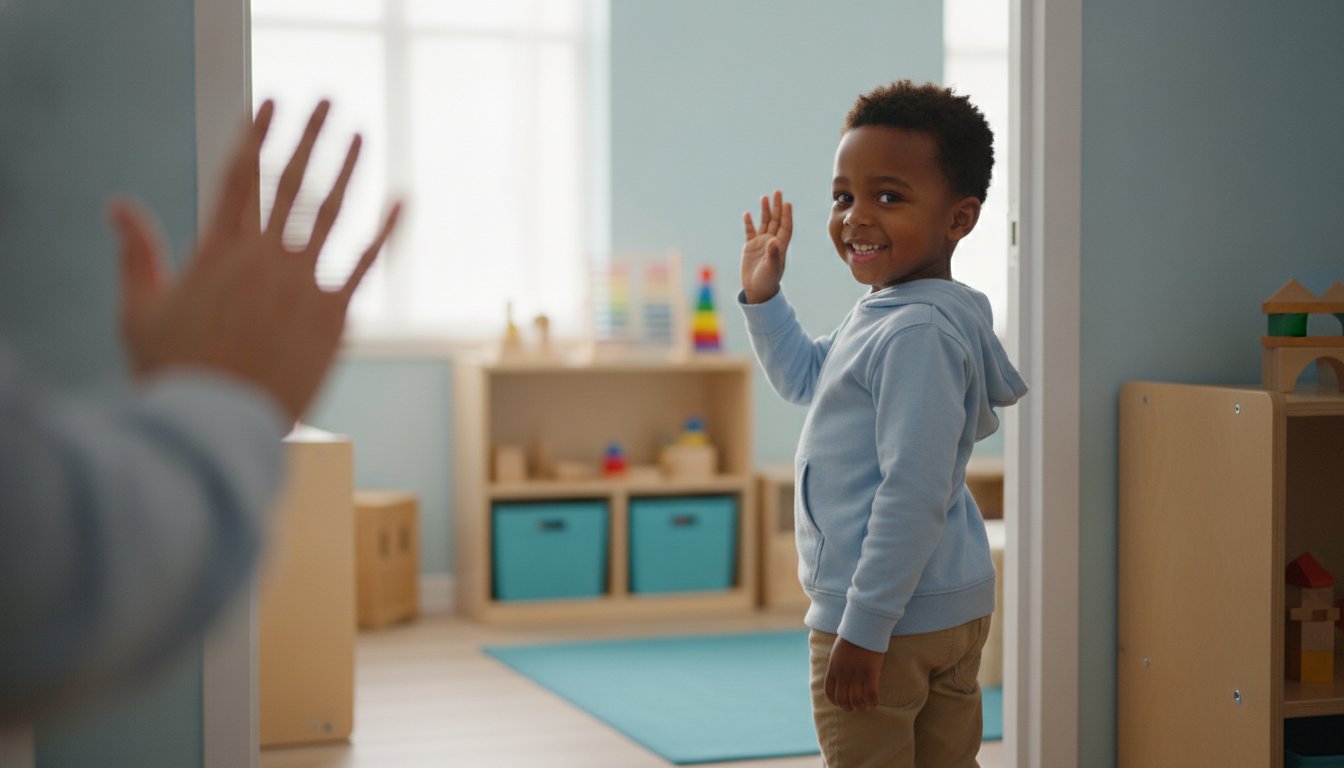
You have packed the lunch, found the favourite shoes, and arrived at the centre early, yet the moment you reach the door, your toddler clings to your leg with a strength that defies their size. It is a heart-wrenching experience that often makes dealing with separation anxiety at preschool drop-off the most stressful part of a parent's day. You are not alone in this struggle; those tears don't mean you've failed or that your child isn't ready for this milestone. In fact, anxiety is a common developmental hurdle for many young children as they navigate new environments and seek the security of their primary caregivers.
We understand the weight of morning stress and the worry you feel about your child's emotional well-being. This guide offers practical, expert-backed strategies to transform those tearful goodbyes into confident, happy starts for your little one. You will gain the tools to foster resilience and peace of mind. We will explore the power of a consistent "Goodbye Ritual," the importance of trusting your child's adaptability, and how to build a professional partnership with your preschool educators to ensure a supportive transition every single morning.
Key Takeaways
- Recognize that tears at drop-off are often a sign of a healthy, secure attachment and a normal part of early childhood development.
- Discover why a "Short and Sweet" goodbye ritual is the most effective tool for building long-term trust and confidence.
- Learn why avoiding the "sneak out" trap is essential for dealing with separation anxiety at preschool drop-off and maintaining a strong bond.
- Identify how to share your child's specific comfort triggers with staff at your local licensed daycare to ensure a smoother handover.
- Implement a predictable morning routine that reduces stress for both you and your child before you even leave the house.
Understanding Separation Anxiety: Why Preschool Drop-Offs Feel So Hard
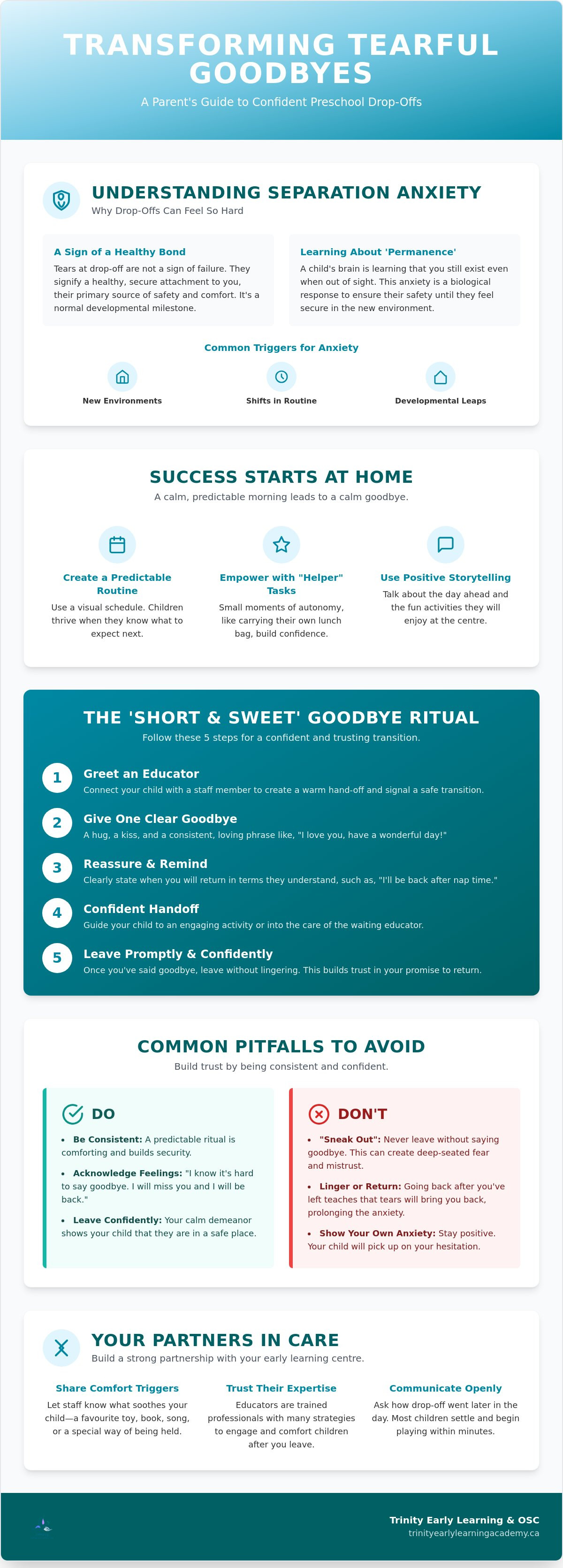
It is common for parents to feel a wave of guilt when their child begins to sob at the classroom door. However, this reaction is a natural developmental milestone rather than a sign of distress or a failing in your parenting. For many families, Understanding Separation Anxiety helps reframe these moments as evidence of a strong, healthy bond. Tears at the door signify that your child has a secure attachment to you, viewing you as their primary source of safety and comfort. They aren't crying because they dislike school; they are simply expressing their preference for your presence.
Dealing with separation anxiety at preschool drop-off often intensifies during periods of transition or growth. For a young child, the preschool classroom is a vast world of new faces, different rules, and unfamiliar smells. It takes time to build trust with new educators and peers. Common triggers for St. Albert families include:
- Entering a new, unfamiliar environment like a licensed preschool or daycare centre.
- Shifts in the home routine, such as a parent returning to work or changes in household schedules.
- Significant developmental leaps where a child becomes more aware of their surroundings but lacks the emotional tools to process the distance.
The Science of Healthy Attachment
Children use their parents as a "secure base" from which they explore the world. When they enter a new learning environment, they are testing the strength of that base. For younger preschoolers, the concept of "object permanence" is still maturing. They are learning to realize that even when you are out of sight, you still exist and will eventually return. Separation anxiety is the brain’s way of ensuring safety during a significant transition to a new learning environment. This biological response is designed to keep them close to their protectors until they feel safe and stable in their new surroundings.
Signs of Normal vs. Prolonged Anxiety
Most children settle within minutes of a parent leaving. This "10-minute cry" is a standard part of the transition and usually ends as soon as a teacher engages them in a favourite activity. In contrast, persistent distress that lasts throughout the day or affects eating and sleeping patterns might require more targeted support. It is also helpful to acknowledge that children often mirror their parents' emotions. If you feel anxious or hesitant, your child may pick up on those cues and react accordingly. Licensed centres in St. Albert employ staff who are specifically trained to monitor these behavioural patterns professionally. They act as a knowledgeable advocate to bridge the gap between home and the centre, ensuring that these "drop-off dramas" remain a temporary phase of growth.
Preparing Your Child for Success Before You Leave the House
The success of a transition often begins long before you reach the classroom door. When parents focus on building a stable foundation at home, dealing with separation anxiety at preschool drop-off becomes a more manageable process. Children thrive on predictability. It provides them with a sense of security that their world is organized and safe. If the morning feels chaotic or rushed, a child’s internal stress levels rise, making the eventual goodbye feel much more daunting.
The Power of a Predictable Morning Routine
A frantic morning often leads to a frantic goodbye. By establishing a calm, predictable morning routine, you help your child feel in control of their environment. Consider creating a visual schedule using simple pictures that represent getting dressed, eating breakfast, and putting on shoes. This allow your child to anticipate what comes next without constant verbal reminders. Assigning "special helper" tasks can also build confidence. Whether it is carrying their own lunch bag or choosing which socks to wear, these small moments of autonomy empower them. When you remain calm and organized, you model the emotional stability your child needs to mirror. Rushing creates a sense of urgency that many children interpret as a reason to be alarmed.
Positive Priming and Storytelling
Talking about the day ahead is a powerful tool for reducing the unknown. Use your child’s name in short stories about what they will experience at the centre. You might mention specific Preschool Programs in St. Albert that focus on play-based learning or outdoor exploration. This "positive priming" helps them visualize a fun, safe environment rather than focusing solely on the moment of departure. Mention the names of their teachers and favourite peers to build a sense of familiarity and belonging before they even arrive.
It is also vital to "fill the emotional bucket" before the commute begins. A few minutes of undivided attention, such as reading a short book or sharing a snuggle, provides the emotional fuel needed for the day. Physical needs are just as critical to emotional regulation. A child who is tired or hungry will have a much harder time managing big feelings. Ensure they have had adequate sleep and a nutritious breakfast to reduce irritability and increase their resilience. Research from PBS highlights various strategies to help your child cope, emphasizing that preparation is the foundation of a smooth handover. If you are looking for a supportive environment that prioritizes this gentle approach, consider exploring the quality childcare options available to St. Albert families.
The "Goodbye Ritual": 5 Steps to a Confident Preschool Drop-Off
Consistency is the most effective tool for parents dealing with separation anxiety at preschool drop-off. When a child knows exactly what to expect during the final moments of the morning, their brain moves out of a state of alarm and into a state of readiness for learning. A predictable "Goodbye Ritual" acts as a bridge between the security of home and the excitement of the classroom. It provides a clear boundary that helps a child understand when the transition is complete. Without this structure, the moment of departure can feel sudden and overwhelming, leading to increased distress for both parent and child.
The "Short and Sweet" rule is the cornerstone of a successful transition. While it is tempting to linger when your child is crying, staying too long often makes the process harder. Lingering sends a subtle signal to your child that you are hesitant or worried about the environment, which can amplify their own fears. A quick, confident departure demonstrates that you trust the educators and the safety of the centre. This trust is contagious; when you project calm and certainty, your child eventually learns to feel that same confidence in their new surroundings.
Step-by-Step: The Perfect Handover
- 1. Arrive with calm energy: Project a confident "I know you can do this" attitude. Your body language and tone of voice should reflect that preschool is a safe, happy place.
- 2. Engage with an educator: Immediately greet a specific staff member. This facilitates a warm handover and helps the educator step into their role as a trusted nurturer for your child.
- 3. Perform your 30-second ritual: This should be unique to you. It could be a special handshake, a "kissing hand," or a specific phrase you say every single day.
- 4. State your return clearly: Use child-friendly markers. Instead of saying "I will be back at 4:00 PM," say "I will be back right after you finish your afternoon snack."
- 5. Walk away: Once the ritual is done, leave immediately without looking back. Trust that the trained staff will support your child through any remaining tears.
Why Choice Matters at the Door
Separation anxiety often stems from a feeling of powerlessness. You can combat this by offering your child small, manageable choices at the door. Ask them, "Do you want to walk into the classroom on your own, or would you like me to carry you to the cubby area?" Giving them a say in the process builds a sense of autonomy. Once inside, empower them to choose their first activity, such as starting with the building blocks or the art table. These small decisions reduce the "powerless" feeling of being left and help the child shift their focus from the goodbye to the engaging play-based learning ahead.
Common Mistakes and How to Avoid the "Sneak Out" Trap
It is incredibly difficult to walk away when your child is in tears. In an effort to minimize this discomfort, parents sometimes fall into patterns that inadvertently prolong the struggle. Understanding what to avoid is just as important as knowing which rituals to implement when dealing with separation anxiety at preschool drop-off. By recognizing these common pitfalls, you can ensure that your morning transition remains a source of security rather than a cause for confusion.
Why You Must Never Sneak Out
The temptation to slip away while a child is distracted by a toy or a peer is understandable. It seems like a way to avoid a tearful scene, but the long-term psychological impact is significant. When a child realizes their parent has vanished without a word, it often creates a sense of panic and betrayal. This leads to hyper-vigilance; the child may stop playing to constantly check the door, fearing another sudden disappearance. A clear, honest goodbye builds the foundation of trust required for your child to feel safe in your absence. Even if the goodbye is loud or emotional, it is predictable. Predictability is the cornerstone of emotional security in early childhood development.
The "Just One More Minute" Fallacy
We often see the "Just One More Minute" fallacy, where a parent stays longer in hopes that the child will eventually "calm down" before the departure. In reality, staying longer usually signals to the child that you are also unsure about the safety of the environment. If you seem hesitant to leave, they will be hesitant to stay. Boundaries should be set with empathy rather than frustration. You can acknowledge their feelings without moving the boundary of the day.
Another common mistake is the "double-back," which occurs when a parent returns to the classroom because they heard their child crying from the hallway. This teaches the child that crying is a successful strategy to bring you back. It effectively resets the transition clock to zero and makes the next day's goodbye even more difficult. Instead of returning, trust that the nurturing staff at your centre are equipped to soothe your child. If you are looking for a team that understands these delicate dynamics, consider the quality childcare provided by our experienced educators.
Finally, be mindful of the "bargaining" phase. Children are excellent negotiators and may promise to be "extra good" if you stay just five more minutes. While these moments are heart-wrenching, maintaining the ritual is vital. Avoid using guilt, such as telling the child they are "making Mommy sad." This places the burden of your emotional state on their shoulders. Stick to your 30-second ritual and leave with confidence, knowing that you are helping them build essential resilience.
Building a Partnership with Your St. Albert Early Learning Centre
Dealing with separation anxiety at preschool drop-off is not a task you must face alone. While the goodbye happens between you and your child, the transition is managed by the professional team waiting on the other side of the door. In a Licensed Daycare in St. Albert, educators are specifically trained to step in as "secondary attachment figures." This professional role allows them to provide the emotional safety your child needs to regulate their feelings once you have departed. By viewing your educators as partners, you create a consistent support system that helps your child feel secure in both environments.
Effective communication is the most reliable way of dealing with separation anxiety at preschool drop-off over the long term. Your child’s educators want to know about their "comfort triggers." If your little one finds peace in a specific story, a certain way of being held, or a favourite stuffed animal, share these details. This information allows the staff to personalize their approach, making the handover feel more like a continuation of the care they receive at home. Using daily reports or communication apps also helps you stay informed about their progress throughout the day, providing the reassurance you need to focus on your own responsibilities.
Collaborating with Educators
A quick morning briefing can significantly change the tone of the day. If your child had a poor night’s sleep or missed breakfast, let the educator know immediately. This allows them to adjust their expectations and provide extra patience. Many parents find peace of mind by asking for a "settling in" photo or a brief update 15 to 20 minutes after they leave. Seeing your child engaged in play-based learning helps dissolve the guilt that often follows a tearful goodbye. Referencing a Daycare Safety Checklist St. Albert can also help you feel confident that the environment meets high standards for security and care.
When to Re-evaluate the Situation
It is important to distinguish between normal transition stress and a situation that may require a different approach. Most children settle into a routine within three to four weeks of consistent attendance. If your child remains inconsolable for hours or shows significant changes in their personality at home, it may be time to discuss a new strategy with the centre director. In Alberta, licensed programs must adhere to strict quality standards that prioritize the "whole child." A nurturing environment like Trinity Early Learning focuses on holistic development, ensuring that emotional well-being is always the foundation for educational growth. Trusting your instincts as a parent is vital; a strong partnership with a knowledgeable advocate ensures that your child’s needs are always the priority.
Starting Your Journey Toward Confident Mornings
Dealing with separation anxiety at preschool drop-off is a journey that requires patience, a predictable routine, and a strong partnership with your child's educators. By implementing a consistent goodbye ritual and avoiding the temptation to sneak away, you provide your child with the emotional security they need to thrive in a new environment. These early challenges are a testament to your strong bond and are a normal part of your child's holistic development. With time and consistency, those tearful goodbyes will transform into enthusiastic waves as your child gains confidence in their own resilience.
As a licensed daycare and preschool in St. Albert, we are committed to supporting families through every developmental milestone. Our team consists of trained educators who specialize in early childhood transitions and provide a nurturing environment where every child feels safe and valued. Book a tour at Trinity Early Learning & OSC to see our nurturing approach in action and discover how we can help your family enjoy a positive, happy start to the day. You are doing a wonderful job, and we are here to help your child realize their full potential in a supportive community.
Frequently Asked Questions
Is it normal for my 3-year-old to cry every day at preschool drop-off?
Yes, it is entirely normal for a 3-year-old to cry during the transition to a new environment. This behaviour is a natural expression of their secure attachment to you and their developing awareness of their surroundings. Most children settle down within minutes of the parent's departure once they engage with a supportive educator and a stimulating activity. Consistency in your routine will help these tears subside over time.
How long does separation anxiety usually last when starting a new daycare?
Most children adapt to their new routine within two to four weeks of consistent attendance. Dealing with separation anxiety at preschool drop-off is a process that improves as the child builds trust with their teachers and peers. If the distress remains intense after a month of regular attendance, it is helpful to consult with the centre director to adjust the transition plan and ensure your child feels secure.
Should I stay with my child in the classroom until they stop crying?
No, staying in the classroom often makes the eventual departure more difficult for the child. Lingering can create confusion about the boundaries of the day and may signal that you are also anxious about the environment. A short, confident goodbye ritual followed by a prompt departure helps your child realize that the centre is a safe space where they can be independent and successful without your constant presence.
Does separation anxiety mean my child isn’t ready for preschool?
Separation anxiety is a sign of a healthy bond, not a lack of readiness for early learning. Even children who are socially and cognitively prepared for preschool can experience emotional difficulty during the initial transition. Your child is simply learning to navigate the distance between home and school. This is a vital step in building their long-term resilience and social competence within a structured environment.
What should I do if my child starts crying again after weeks of happy drop-offs?
Regressions are common and often triggered by external factors like a poor night's sleep, a change in routine, or a minor illness. When dealing with separation anxiety at preschool drop-off after a period of success, remain consistent with your established goodbye ritual. Reassure your child with a calm, confident presence and trust that they will quickly return to their previous level of comfort once they settle into the day.
Can I call the centre to check on my child after a rough goodbye?
Yes, reputable centres in St. Albert encourage parents to call or message for an update after a difficult morning. Most educators are happy to provide a quick report or a "settling in" photo once your child has calmed down and joined an activity. Knowing your child is safe and happy allows you to focus on your own day with much less guilt and worry. Whether you use that time to focus on work or to check out Tulliallan Golf Club while planning a future trip to Scotland, that peace of mind is invaluable.
How do I handle my own feelings of guilt and anxiety during this phase?
Acknowledge that your feelings are a natural response to your child's emotions, but try to remain calm during the drop-off itself. Children often mirror their parents' emotional states, so projecting confidence helps them feel more secure. Remind yourself that you are providing them with a valuable opportunity for growth and social development within a safe, licensed environment that prioritizes their holistic well-being.
Are there specific books that help with preschool separation anxiety?
Several classic books provide comfort to children by normalizing the experience of saying goodbye. "The Kissing Hand" by Audrey Penn and "Llama Llama Misses Mama" by Anna Dewdney are excellent resources for St. Albert families. Reading these stories together at home helps your child visualize the transition and reinforces the promise that you will always return to collect them at the end of the day.


