
Last Tuesday, a mother in our St. Albert community realized she didn't know if her son’s quiet nature was being overlooked during group activities. She wondered if his teacher truly saw the creative spirit he shows at home. This feeling of uncertainty is common for many families starting early education. It's natural to want to feel more connected to your child's daily life and developmental progress. Establishing strong parent-teacher communication in preschool is the most effective way to ensure your child's unique personality and behaviour are understood and nurtured by their educators.
We believe that a trusting partnership between families and educators is the foundation of a successful learning experience. Research from 2025 shows that preschool children whose teachers report high-quality communication with parents are more engaged in the classroom, leading to better learning outcomes. This guide will help you discover how effective communication fosters your child’s development and ensures a smooth transition into early learning. We will preview practical ways to receive clear, consistent updates on learning and behaviour, helping you feel like a valued member of a supportive learning community and creating a stable bridge between home and the childcare centre.
Key Takeaways
- Learn how consistent parent-teacher communication in preschool bridges the gap between home and the classroom to support your child’s emotional stability.
- Explore modern digital tools that provide real-time updates on your child’s nutrition, sleep, and daily learning milestones.
- Discover how shared observations between families and educators foster holistic development and kindergarten readiness.
- Identify effective strategies to manage the "time crunch" and approach sensitive discussions regarding your child’s behaviour with confidence.
- Understand the benefits of a community-centred approach that prioritizes transparency and a nurturing environment for families in St. Albert.
Why Parent-Teacher Communication in Preschool is Essential for Success
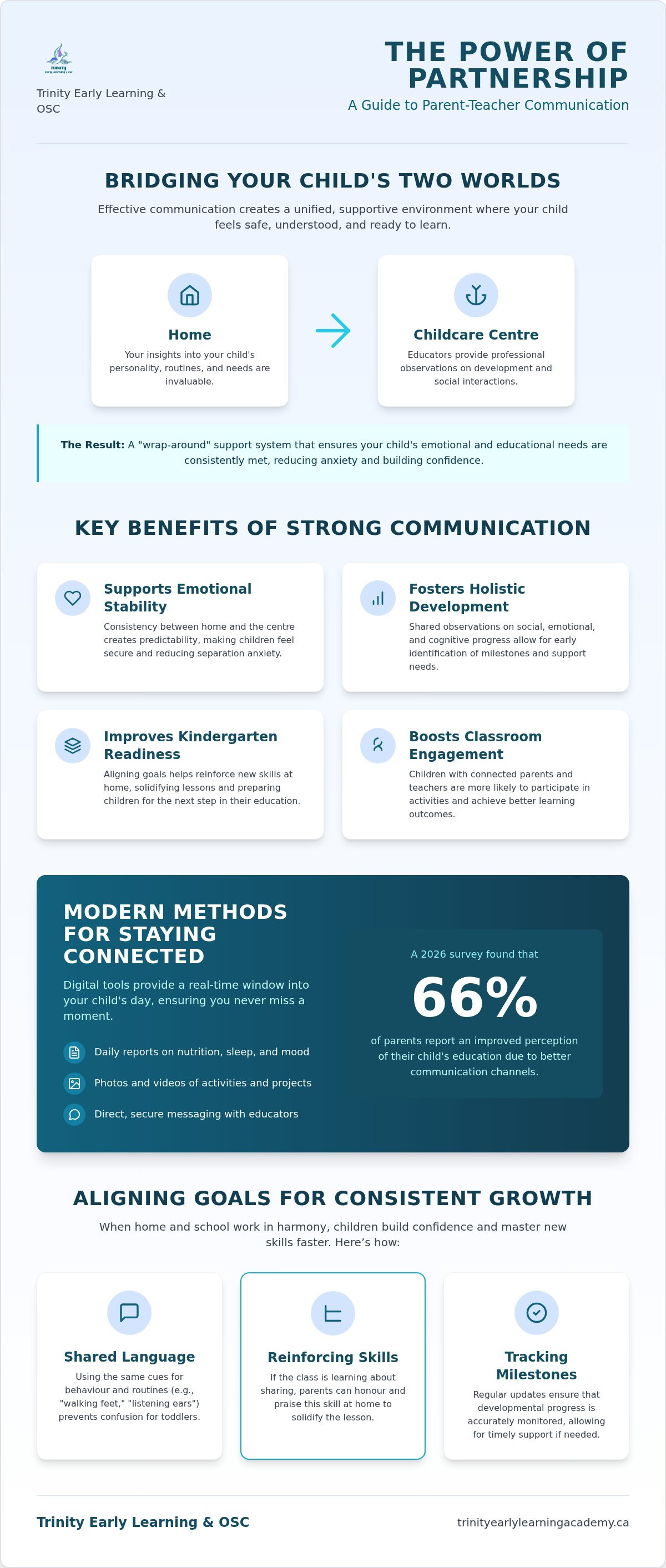
Effective parent-teacher communication in preschool serves as a vital bridge between a child’s two most influential worlds. It isn't just about logistical updates. It's about creating a unified environment where a child feels safe to explore and learn. When educators and families share insights, they build a "wrap-around" support system that ensures no developmental need goes unnoticed. This collaborative approach provides a sense of security for the child, as they see the adults in their life working together toward a common goal. A "wrap-around" support system means that the child’s emotional and educational needs are met consistently, regardless of where they are. This holistic approach is especially beneficial for preschoolers who are still learning to regulate their emotions. When a teacher knows about a poor night's sleep or a change at home, they can adjust their care to provide extra comfort.
Building Trust Between Families and Educators
Trust is the cornerstone of any early learning programme. By viewing your child’s teacher as a professional partner, you create a collaborative atmosphere that benefits everyone involved. Open dialogue allows you to feel secure during your workday, knowing your child is in the hands of a knowledgeable advocate. This transparency is essential for peace of mind. The impact of using professional, respectful vocabulary sets a tone of mutual respect that simplifies future discussions. Part of this ongoing process involves understanding parent-teacher conferences and daily check-ins, which provide structured opportunities to discuss your child’s holistic growth and well-being. When parents and teachers trust one another, the child senses this stability, which directly reduces anxiety during drop-offs.
Aligning Developmental Goals at Home and School
Consistency between environments is a powerful tool for building confidence. When the routines and expectations at home mirror those at the preschool centre, children experience a sense of predictability that encourages risk-taking in their learning. Strong parent-teacher communication in preschool ensures that play-based learning goals are reinforced in both settings. This alignment ensures that your child’s unique personality is understood in every context.
- Shared language: Using the same cues for behaviour and routines helps toddlers transition between spaces without confusion.
- Reinforcing skills: If the classroom is focusing on specific social-emotional skills, parents can honour these goals at home to help solidify the lesson.
- Identifying milestones: Regular communication ensures that early developmental milestones are tracked accurately. If a child needs extra support in a specific area, the feedback loop allows for early intervention.
When everyone is on the same page, the child feels supported, seen, and ready to thrive. This partnership is what transforms a simple childcare service into a true community of care. By staying connected, you ensure that the progress made in the classroom continues to flourish at home, creating a seamless educational journey for your little one.
Modern Methods for Staying Connected with Your Child’s Learning
The way we share information in the early learning environment has changed significantly. We've moved past the days of crumpled paper notes left in cubbies or lost in backpacks. Today, parent-teacher communication in preschool is often instantaneous and highly detailed. A May 2026 survey found that 66% of parents say their perception of their child's education has improved over the past year, largely due to better communication channels. High-quality programmes now use digital platforms to provide a real-time window into the classroom. These tools allow you to see photos of your child’s creative projects or videos of their social interactions with peers as they happen, ensuring you never feel disconnected from their daily routine.
Digital Communication Tools and Privacy
Using a dedicated app for daily reports provides essential data on nutrition, sleep, and specific learning activities. This level of detail helps you transition from the workday to home life with a clear understanding of your child’s mood and physical needs. When choosing a licensed daycare St. Albert families should prioritize centres that utilize secure, private data-sharing practices to protect their family's information. It’s also helpful to set personal boundaries for notifications. While 85% of parents in 2026 agree technology makes engagement easier, managing notifications is key to avoiding information overload. A steady stream of updates is beneficial, but it shouldn't distract from your own focus or your quality time with your child in the evenings.
The Importance of Face-to-Face Interaction
While technology is efficient, it cannot replace the nuance of face-to-face interaction. Tone of voice and body language are vital when discussing sensitive developmental topics or behavioural milestones. Small "doorstep chats" during drop-off or pick-up offer a chance for quick, informal check-ins that foster a stronger sense of community. These brief moments allow you to share a quick update about a rough morning or a weekend win. For more in-depth conversations, formal parent-teacher conferences are essential. These sessions are your dedicated time to focus entirely on your child’s holistic growth. Success in these meetings starts with building a partnership with your child's teacher through regular, respectful contact. Making the most of a scheduled 15-minute check-in requires preparation, so come ready with specific questions about your child's social and academic progress.
Balancing digital convenience with personal connection ensures you stay fully informed. This dual approach creates a transparent environment where you feel like a true partner in your child's education. If you are looking for a programme that values this level of transparency and community, consider exploring our quality childcare services to see how we keep families connected every day.
How Effective Communication Supports Holistic Child Development
Children thrive when they perceive that the adults in their lives are a unified team. This sense of collaboration creates a secure environment that allows a child to focus on exploration and learning rather than navigating conflicting expectations. Establishing high-quality parent-teacher communication in preschool ensures that the child’s home life and school life are not two separate islands but a continuous landscape of support. By sharing daily observations, we can better support early childhood education in St. Albert, ensuring that every child receives the tailored guidance they need to flourish during these foundational years.
Social and Emotional Milestones
The preschool years are a critical time for developing peer interaction skills and conflict resolution styles. When teachers share insights about how a child navigates a disagreement over a toy or how they offer comfort to a friend, parents gain a clearer picture of their child's emerging social identity. This feedback loop is essential for supporting the transition from home life to a structured preschool program Alberta. It allows parents to celebrate small wins in confidence and independence that might otherwise go unnoticed. For instance, if a child who was previously hesitant to join group activities starts leading a game, this milestone should be celebrated in both environments to reinforce their growing self-esteem.
Cognitive and Literacy Foundations
Communication also plays a vital role in academic readiness. Educators can update families on new vocabulary, emerging interests, or specific cognitive challenges discovered during play-based activities. Holistic growth is the integration of physical, social, and cognitive health. To support this, teachers often suggest home activities that complement current classroom themes, such as reading a specific book or practicing a fine motor skill like using safety scissors. This alignment ensures that learning doesn't stop at the classroom door. Effective parent-teacher communication in preschool allows families to act as an extension of the classroom, providing a rich, consistent educational experience.
Perhaps the most significant benefit of this partnership is early intervention. Regular dialogue helps spot developmental challenges before they become hurdles. Whether it is a speech delay or a sensory processing need, early identification is key to providing the right resources at the right time. When parents and teachers communicate openly, they can identify patterns in behaviour or learning that might be missed in isolation. This proactive approach ensures that every child has the support they need to reach their full potential, creating a path toward long-term success in kindergarten and beyond.
Navigating Common Challenges in Parent-Teacher Communication
Establishing effective parent-teacher communication in preschool isn't always a seamless process. Real-world hurdles like busy schedules and differing perspectives on behaviour can sometimes create friction. For many families in St. Albert, the daily commute or demanding work hours make it difficult to find time for lengthy discussions during drop-off. It is also natural to experience "parent guilt" or anxiety regarding your child’s performance or social adjustments. A 2025 report indicated that 87% of teachers believe increasing support for families would have the greatest impact on closing learning gaps. By acknowledging these challenges, we can work together to find practical solutions that keep the focus on your child's well-being and growth.
Strategies for Busy Families
When you are balancing a career and family life, every minute counts. Utilizing email or secure messaging apps for non-urgent updates allows you to stay informed without the pressure of an immediate face-to-face meeting. To help your child's teacher, consider providing a brief "cheat sheet" during the morning transition. This could be a quick note about a restless night or a skipped breakfast. This proactive step helps the teacher adjust their approach to suit your child's needs for the day. During the evening pick-up, prioritize the most critical information regarding your child’s emotional state, saving deeper developmental discussions for a more appropriate, scheduled time.
Constructive Conflict Resolution
Differing opinions on a child’s behaviour or developmental progress can feel personal. However, approaching these conversations with a "curiosity first" mindset is the most effective way to resolve tension. Instead of feeling defensive, ask questions to understand the teacher's observations in the classroom setting. Maintaining a professional and calm dialogue ensures that the child’s benefit remains the primary focus. If a resolution isn't reached through direct conversation, involving the centre director can provide additional support and a fresh perspective. This structured approach helps overcome language or cultural barriers by ensuring all parties feel heard and respected in a safe environment.
Managing the complexities of early education requires a stable partner who understands the practical needs of modern families. If you are looking for a supportive learning community that prioritizes transparency and professional care, we invite you to learn more about our licensed daycare services in St. Albert.
The Trinity Approach: A Nurturing Community in St. Albert
Trinity Early Learning and OSC operates as a family-run, licensed daycare and preschool in St. Albert. We understand that choosing a childcare provider is one of the most significant decisions a family makes. Our approach is built on the belief that a nurturing, stable environment is essential for a child's success. We prioritize child-centred care that focuses on kindergarten readiness and early childhood development. By maintaining a community-focused atmosphere, we ensure that every child feels safe and supported. This commitment to stability extends beyond our preschool programs to our out of school care in St. Albert, where we continue to foster holistic growth and strong social connections. Effective parent-teacher communication in preschool is the heartbeat of our daily operations, ensuring that the values you hold at home are reflected in our care.
Transparency as a Core Value
We believe that parents are the primary educators of their children. Our role is to act as a knowledgeable advocate and partner in your child’s upbringing. Transparency is not just a policy; it is a core value that guides every interaction within our centre. We provide regular developmental updates and utilize modern digital tools to keep you connected throughout the day. This consistent flow of information ensures you are never left wondering about your child’s progress, nutrition, or emotional well-being. Every family deserves to feel heard, respected, and valued within our learning community. Our open-door policies encourage ongoing dialogue, allowing us to address questions or concerns as they arise. This collaborative spirit helps us maintain the high standards of safety and growth that define our programme.
Joining the Trinity Family
Our St. Albert location supports local families through shared values of safety, growth, and accessibility. We project the persona of a "Trusted Nurturer" because we are equally invested in the joy and the developmental milestones of the children in our care. We invite you to experience our nurturing environment firsthand by scheduling a visit. Meeting our educators allows you to see how we prioritize emotional well-being alongside educational stimulation in a family-run setting. We act as a guide for parents navigating the complexities of early education and the logistical aspects of childcare. Our goal is to provide a stable, organized, and compassionate partnership that understands the practical needs of modern families. Contact Trinity Early Learning today to see how we partner with families!
Building a Brighter Future Together
Establishing consistent parent-teacher communication in preschool is more than just a logistical necessity; it's the foundation of your child's early success. When we align the routines of the home with the learning goals of the classroom, we create a predictable environment where children feel secure enough to thrive. We've explored how modern digital tools provide transparency, while face-to-face interactions build the deep trust required for a supportive learning community.
At Trinity Early Learning & OSC, we are committed to being your professional partner in this journey. As a family-run, licensed daycare and preschool in St. Albert, we prioritize nurturing care and holistic development. We also offer affordability grant options to ensure quality childcare remains accessible to our local families. Our team acts as a knowledgeable advocate for every child, ensuring their unique personality is celebrated and understood.
Book a tour at Trinity Early Learning & OSC to experience our community-first approach!
We look forward to welcoming your family into our nurturing community and working together to support your child's growth and joy during these foundational years.
Frequently Asked Questions
How often should I expect updates from my child’s preschool teacher?
You can expect daily updates regarding your child's basic needs and weekly insights into their developmental progress. Most licensed centres in Alberta use digital platforms to provide these real-time reports on nutrition, sleep, and activities. This consistent flow of information ensures you stay connected to their routine without feeling overwhelmed. For more significant milestones, educators typically provide more detailed monthly summaries or formal reviews during your scheduled check-ins.
What is the best way to share information about my child’s health or mood?
The most effective way to share health or mood updates is through a brief morning chat or a quick note in the centre’s digital app. Providing a brief update about a restless night or a skipped breakfast helps our educators adjust their care to suit your child's emotional needs for the day. This proactive exchange ensures that the transition from home to the learning environment is as smooth and supportive as possible.
How do parent-teacher conferences work in a preschool setting?
Conferences are structured, 15-minute meetings designed to focus on your child’s social, emotional, and cognitive growth. These sessions allow for a deep dive into developmental milestones that aren't always covered in daily reports. High-quality parent-teacher communication in preschool relies on these formal check-ins to ensure that home and school environments remain aligned. It's a dedicated time to review progress and set collaborative goals for your child's upcoming learning journey.
What should I do if I have a concern about my child’s behaviour at school?
If you have concerns about your child's behaviour, you should schedule a private discussion with the teacher to share observations from both home and school. Approaching these conversations with a "curiosity first" mindset allows for a calm, professional dialogue that benefits your child. We work together to identify patterns and implement consistent strategies across both environments. This collaborative effort ensures your child feels supported and understood as they navigate new social challenges.
Can I request a meeting with the teacher outside of scheduled conferences?
Yes, you can certainly request a meeting outside of the standard calendar if you have specific concerns that require more time than a doorstep chat. We value our role as a professional partner in your child's upbringing and maintain an open-door policy for our families. Simply reach out via the centre's messaging system or email to find a mutually convenient time. This flexibility ensures that important developmental topics are addressed promptly and thoroughly.
How does the center handle communication for children in out-of-school care?
For children in out-of-school care, communication focuses on their social interactions and their transition from the formal school day to our nurturing environment. Educators provide updates on how your child is decompressing and engaging with peers in a less structured setting. We ensure that any significant events from their school day are shared so that you have a complete picture of their well-being when you arrive for the evening pick-up.
Will I receive photos or videos of my child’s activities during the day?
You will receive photos and videos through our secure digital platform, providing a window into your child's creative projects and social play. These visual updates are a vital part of parent-teacher communication in preschool, helping you feel like part of our supportive learning community. We prioritize private data-sharing practices to ensure your family's information remains secure while giving you the joy of seeing your child's daily discoveries and growth in real-time.
How can I support my child’s preschool learning at home?
You can support learning at home by using the same language and cues for routines that your child experiences in the classroom. Ask your child's teacher for specific activities or books that complement the current curriculum themes. Reinforcing social-emotional skills like turn-taking or conflict resolution helps solidify the lessons learned during the day. This alignment between home and school ensures a seamless educational journey that promotes holistic growth and long-term confidence.


