

Imagine it is 2:30 PM on a Tuesday in St. Albert, and while your workday is still in full swing, your child’s school bell is already ringing. You aren't alone if you feel a pinch of logistical stress or even a bit of guilt about those hours between school dismissal and your commute home. Balancing a professional career with your child's need for a stable, nurturing environment often feels like a complex puzzle for many Alberta families.
This guide explains exactly what is out of school care and how it serves as a vital developmental bridge for your child. It is much more than just a safe place to wait for a pickup; it is a structured environment where children build social skills and explore new interests beyond the classroom. We will walk you through Alberta’s 2026 licensing standards, the specific social benefits of these programs, and the latest financial grants available to help your family find the clarity and peace of mind you deserve.
Key Takeaways
- Define what is out of school care as a licensed, supportive environment for children aged 5 to 12 that balances before and after-school schedules.
- Discover how quality programs prioritize social-emotional development and unscripted play to complement the school curriculum.
- Navigate the 2026 Alberta childcare landscape with clear information on licensing standards, staff ratios, and available affordability grants.
- Use our practical checklist to evaluate a centre’s safety inspections and transportation options for a stress-free daily commute.
- Learn why choosing a licensed St. Albert centre provides the stability and professional care necessary for your child’s holistic growth.
Understanding Out of School Care (OSC) in Alberta
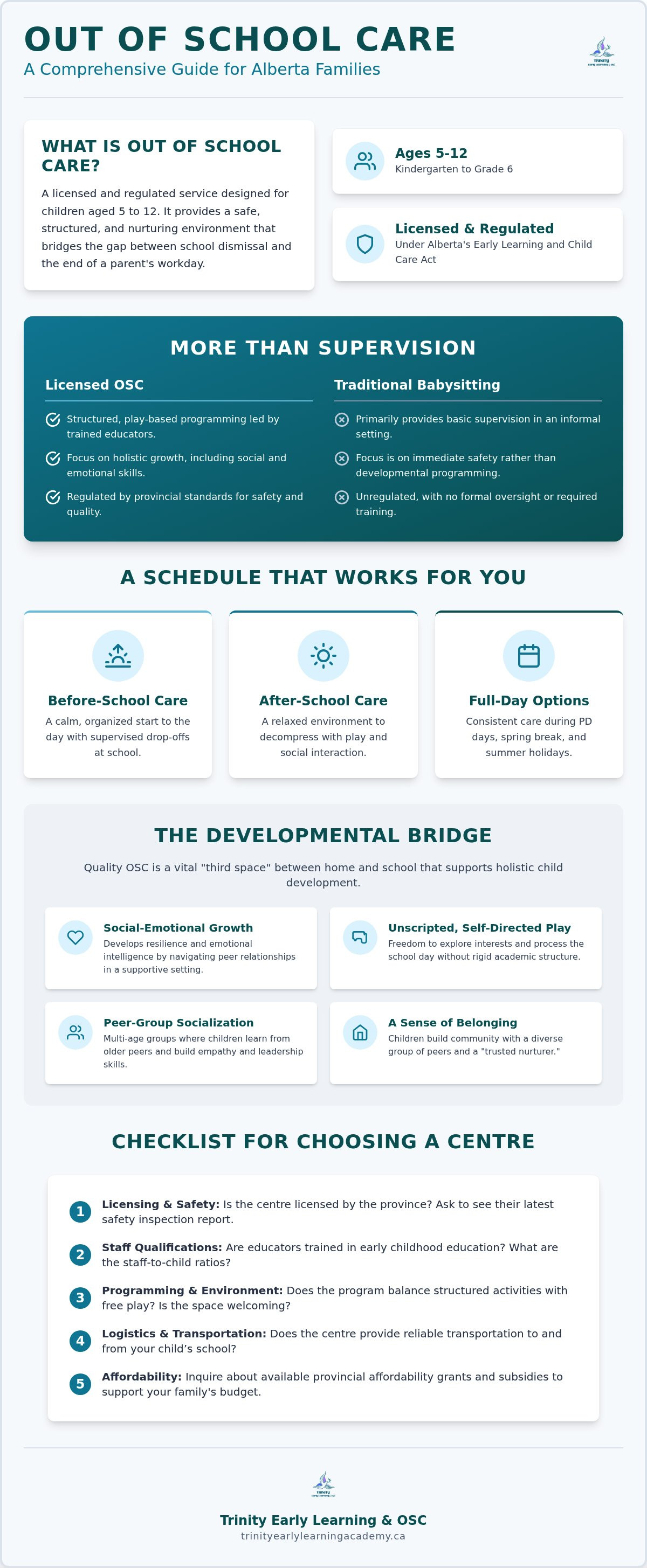
For many families in St. Albert, the standard school day doesn't quite align with the demands of a modern work schedule. This gap is where professional support becomes essential. When parents first ask what is out of school care, it's helpful to view it as a licensed service specifically designed for children aged 5 to 12. Unlike informal arrangements, these programs are regulated under the Alberta Early Learning and Child Care Act. This ensures every facility meets strict provincial standards for safety, staffing, and programming quality.
There is a significant difference between a licensed centre and traditional babysitting. While a babysitter provides basic supervision, a licensed out of school care program offers a structured environment led by trained professionals. These educators focus on the holistic growth of your child, ensuring their time away from the classroom is both productive and restorative. An after-school activity or program in this context serves as a purposeful extension of the child's day, providing a stable routine that families can rely on.
For parents of younger children, many Alberta centres also provide "Kindercare." This specialized service supports children in half-day kindergarten programs, offering care and enrichment during the hours they aren't in their primary classroom. It bridges the gap between preschool and full-time grade school, helping children adjust to a longer day with ease and confidence.
The Core Components of an OSC Program
A comprehensive program is built around the logistical needs of the family and the emotional needs of the child. When you enroll in what is out of school care, you are typically accessing three main tiers of support:
- Before-school care: This provides a calm, organized start to the morning. Educators ensure children are ready for the day and provide safe, supervised drop-offs at their respective schools.
- After-school care: After a long day of academic focus, children need a place to decompress. This time is dedicated to a relaxed, supportive environment where students can transition from school life to home life through play and social interaction.
- Full-day care options: Reliability is a core value for working parents. Licensed centres often remain open during PD days, spring break, and summer holidays, ensuring your child has a consistent place to go when school is not in session.
Age Ranges and Eligibility
The standard eligibility for these programs covers children from Kindergarten through Grade 6. This age range is a period of rapid development, and high-quality programs adapt their approach to meet these changing needs. A 6-year-old child requires more direct guidance and sensory-based play, while a 12-year-old benefits from leadership opportunities and more complex social projects. For families seeking to further customize this support, Singapore Home Tuition provides personalized online one-to-one guidance that can help students reach their specific academic potential.
One of the greatest benefits of this multi-age setting is peer-group socialization. Younger children often learn by observing older peers, while older children develop empathy and responsibility by interacting with the younger ones. This community-focused atmosphere helps every child feel like they belong to a supportive group, which is a key factor in building long-term confidence and social-emotional health.
The Developmental Benefits: Why OSC is More Than Supervision
Many parents assume that after the school bell rings, their child simply needs a place to wait. However, understanding what is out of school care requires looking deeper than mere supervision. High-quality programs act as a developmental bridge. They provide a space where children engage in unscripted play, which is essential for building social resilience. Unlike the rigid structure of a classroom, these environments allow for self-directed exploration. This freedom helps children process their day while developing the emotional intelligence needed to navigate complex peer relationships.
These programs are governed by Alberta's Early Learning and Child Care Regulation, which ensures that the care provided is not just safe, but also supportive of a child's holistic growth. This framework encourages providers to create environments that complement the Alberta school curriculum without feeling like "more school." Instead of structured lessons, children learn through discovery and social interaction.
While these programs focus on discovery, some students benefit from the additional structure of specialized academic support. For instance, the Learning Voyage Education Centre offers targeted science and mathematics tuition that can complement the broader developmental goals of an out of school care program.
An OSC centre serves as a vital "third space." It is a community hub that exists between the home and the school. Here, children build a sense of belonging with a diverse group of peers. They interact with a "trusted nurturer," an educator who offers guidance and emotional support without the academic pressure of a teacher or the familial dynamics of a parent.
Social and Emotional Growth
When children play freely, disagreements naturally occur. In a supervised OSC setting, these moments become learning opportunities. Educators guide children through conflict resolution, helping them find their voice and respect the boundaries of others. This practice builds independence and self-regulation, skills that are just as important as any academic lesson. Having a consistent mentor outside of the home provides children with an additional layer of security, fostering confidence as they navigate their middle-childhood years.
Cognitive and Creative Stimulation
The best programs offer a variety of activities that spark curiosity. You might find a child deep in a STEM project, exploring a bin of "loose parts" like wooden blocks and fabric, or finding a quiet corner for reading. Homework support is also a key feature. Educators provide a structured time for school assignments, offering help when needed so that family time at home remains stress-free. If you are looking for a program that treats your child’s development with this level of care, you might consider how licensed childcare services in St. Albert can support your family's unique needs.
After spending several hours at a desk, children have a physiological need for movement. OSC programs prioritize outdoor time and physical play. This release of energy is crucial for mental clarity and physical health. It ensures that when you pick up your child, they are energized and ready to engage with you at home.
Navigating Licensing, Safety, and Affordability
Selecting the right environment for your child requires looking beyond the daily activities to the administrative standards that ensure their well-being. When parents ask what is out of school care from a regulatory perspective, they are looking for a commitment to safety and transparency. In Alberta, any program providing care for seven or more children must be licensed under the Early Learning and Child Care Act. This legal requirement is your assurance that the facility undergoes regular inspections and meets provincial health and safety benchmarks.
Alberta Licensing Standards
Licensing is more than just a permit; it is a framework for quality. For a licensed daycare St. Albert families can trust, this includes adhering to strict staff-to-child ratios. For children aged 4.5 years and older, the province mandates a ratio of one staff member for every ten children. This ensures that every child receives the attention and supervision they need to thrive in a group setting.
Transparency has also increased with new regulations effective June 1, 2026. Licensed providers are now required to post on-site notices of any high-risk or potentially criminal incidents within one business day of the report. This ensures that you are always informed about the safety of the environment where your child spends their time. Choosing a licensed program is also the only way to access provincial funding, which significantly reduces the financial burden on your family.
Financial Support for St. Albert Families
The 2026 financial landscape for Alberta families is designed to make high-quality care more accessible. It is important to distinguish between the two main types of support. The Daycare Affordability Grant Alberta provides direct funding to licensed centres for children in kindergarten. For full-time care of 100 or more hours per month, this grant results in a predictable flat-rate parent fee of $326.25.
For children in Grades 1 through 6, financial clarity comes through the Alberta Child Care Subsidy. This is an income-tested program available to families with a household income of up to $90,000. For example, a family earning between $85,000 and $89,999 may receive up to $161 per month toward their fees. This financial aid, combined with research on the benefits of after-school programs, confirms that professional care is both a sound developmental choice and a manageable financial commitment. Applying for these subsidies is a straightforward process through the provincial portal, and a knowledgeable provider can act as an advocate to help you through the steps.
Choosing the Right Program: A Checklist for St. Albert Parents
Finding the right fit for your family involves more than just checking a box on a list. It requires a balance of practical logistics and an emotional "gut feeling" about where your child will spend their afternoons. When you are determining what is out of school care that suits your specific lifestyle, a methodical approach helps narrow down the options and reduces the stress of the decision-making process.
Start by verifying the basics. A reputable centre should have their provincial license and most recent inspection report clearly displayed. These documents are public records and reflect the centre's commitment to the safety standards discussed in the previous section. Beyond the paperwork, pay attention to the atmosphere. You are looking for a "vibe" that feels organized but not rigid. A high-quality environment offers a balanced mix of rest, social play, and structured activity, ensuring children don't feel overwhelmed after a full day of classroom learning.
Questions to Ask During a Tour
A tour is your best opportunity to see the "Trusted Nurturer" persona in action. Don't hesitate to ask specific questions that reveal the educators' approach to daily care and their ability to handle the unique needs of school-aged children:
- "How do you handle transitions from the school bus to the centre?"
- "What is your policy on screen time and technology use?"
- "How do you support children who need quiet time after a busy school day?"
The answers to these questions will help you realize if the program's values align with your own parenting style. If you are ready to see how these standards are put into practice, we invite you to book a tour of our St. Albert facility today.
Logistics and Transportation
In a community like ours, the commute is often the biggest hurdle for working families. It is essential to find out of school care St. Albert parents can access without adding hours of travel to their child's day. Check if the centre aligns with local school bus routes or if they offer a "walking bus" for nearby schools. Some centres also provide dedicated van transportation, which adds a layer of convenience and safety for busy parents.
Finally, review the schedule for non-instructional days. Since schools have frequent PD days and seasonal breaks, you need a partner that remains open and provides a full day of enrichment. Clear communication is the final piece of the puzzle. Ask how the staff shares updates or handles concerns. A transparent, steady flow of information ensures you never have to guess about your child's well-being. Understanding what is out of school care at its best means finding a provider that acts as a true extension of your home community.
Trinity Early Learning & OSC: Quality Care in St. Albert
At Trinity Early Learning & OSC, we understand that finding the right partner for your family is a deeply personal decision. When you ask what is out of school care, we believe the answer should encompass both professional expertise and the warmth of a community-focused environment. As a family-run centre in St. Albert, we prioritize the emotional well-being and joy of every child in our care. We position ourselves as a stable, organized partner for modern families who need reliable support during the school year and beyond.
Our programs are designed around the concept of holistic growth. We don't just supervise; we nurture. For our younger school-age children, we integrate elements of our preschool curriculum to ensure a steady transition into the grade school years. This approach ensures that their time with us is filled with educational stimulation and purposeful play, rather than just waiting for the day to end. We want parents to realize the benefits of a centre that treats every child as an individual with unique developmental needs.
Our Approach to School-Age Care
We believe that a high-quality OSC program St. Albert families can rely on must offer a balanced daily rhythm. Our educators facilitate structured activities like creative projects and group games while protecting essential free-choice time. This allows children to follow their own interests and build independence in a safe, stimulating environment. Because we are a licensed facility, you can feel confident that our standards meet or exceed provincial requirements for safety and quality. We maintain a steady, transparent flow of communication with parents, ensuring you are always an informed partner in your child's development.
Enrollment and Next Steps
Choosing the right care is a significant step, and we are here to act as your knowledgeable advocate. Navigating the complexities of the Alberta childcare grants and subsidies can be overwhelming, but our team is prepared to help you understand how these financial supports apply to your family. Whether you are inquiring about current openings or looking to join our waitlist, we welcome the opportunity to connect with you. We encourage you to visit our centre in person to experience our nurturing atmosphere and meet the educators who will support your child's journey. By choosing a local, community-focused partner, you are ensuring your child has a stable and joyful space to grow, learn, and thrive.
Secure Your Child’s Spot in a Nurturing St. Albert Community
Understanding what is out of school care is the first step toward reducing the logistical stress of the school year. As we have explored, these programs offer far more than just supervision; they provide a vital "third space" where children develop social resilience and pursue their own interests. By choosing a licensed facility, you ensure your child benefits from high provincial safety standards while accessing essential financial support through Alberta’s affordability grants and subsidies.
At Trinity Early Learning & OSC, we take pride in being a licensed and accredited St. Albert facility that truly understands the needs of modern families. Our team acts as a knowledgeable advocate to help you navigate provincial funding, ensuring your child receives nurturing, community-focused care without the financial confusion. We invite you to Book a Tour at Trinity Early Learning & OSC Today and realize the peace of mind that comes with professional, compassionate childcare. We look forward to welcoming your family into our supportive and organized environment.
Frequently Asked Questions
Is out of school care the same as daycare?
Out of school care is distinct from daycare because it serves older children who are already enrolled in the formal education system. While daycare focuses on early childhood learning for infants and toddlers, what is out of school care provides a bridge between the school day and the workday for children in Kindergarten through Grade 6. These programs are specifically designed to meet the social and developmental needs of school-aged youth through a mix of play and structured activities.
How much does out of school care cost in Alberta with the grant?
For children in kindergarten, the Alberta Affordability Grant reduces the parent fee to a flat rate of $326.25 per month for full-time care of 100 or more hours. For children in Grades 1 through 6, there is currently no universal grant, but families can access financial support through the provincial subsidy program. This ensures that quality childcare remains accessible for families across different income levels while maintaining high standards of care.
Do OSC programs provide care during summer holidays and PD days?
Most licensed centres provide full-day care during professional development (PD) days, spring break, and summer holidays to support working parents. This consistent schedule is a core feature for parents trying to understand what is out of school care and how it supports their work-life balance throughout the year. These full-day sessions often include special field trips or themed projects that differ from the standard before and after-school routine.
What age does out of school care go up to?
These programs typically serve children from Kindergarten through Grade 6, which usually covers the ages of 5 to 12. Once a child enters Grade 7, they are often considered old enough for junior high transition programs or independent activities. The 5 to 12 age range allows educators to focus on the specific developmental milestones of middle childhood, such as building complex social bonds and personal independence.
How do I know if an OSC program is licensed in Alberta?
You can verify a program's status by looking for their provincial license, which must be prominently displayed in the facility by law. Additionally, parents can use the Alberta Child Care Lookup tool online to check for a centre’s licensing history and recent inspection reports. Any program caring for seven or more children is required to be licensed and must follow strict provincial health and safety regulations under the Early Learning and Child Care Act.
Can I get a childcare subsidy for after-school care?
Yes, a provincial childcare subsidy is available for families with children in Grades 1 through 6 who have an annual household income under $90,000. Unlike the universal grant for younger children, this subsidy is income-tested and requires an application through the Alberta government portal. The amount provided is based on a sliding scale, helping to significantly offset the out-of-pocket costs for after-school care and school break programming.
What activities are typically included in an OSC program?
Programs offer a diverse mix of activities including STEM projects, creative arts, outdoor physical play, and quiet reading zones. Many centres also provide a dedicated time and space for homework completion, where educators are available to offer guidance and support. This variety ensures that children can choose between high-energy social play and restorative quiet time after a demanding day in the classroom.


