

What if the most significant factor in your child's early development isn't just the classroom equipment, but the strength of the bond between you and their educator? For many families in St. Albert, the morning drop-off often comes with a side of guilt or the nagging worry that you're disconnected from your child's daily rhythm. You want to ensure your little one is thriving, yet you might feel anxious about bringing up concerns or asking for updates. It's vital to recognize that you and your child's educators are partners in their growth.
Building a good relationship with daycare teachers is the foundation of a successful and stable early learning journey. This guide provides practical strategies to foster a supportive, trusting partnership with your child's educators for a more positive experience. We will discuss how to establish clear communication lines and use collaborative problem-solving to create a seamless transition between home and the centre. By the end, you'll have the tools to ensure your child remains in a nurturing, collaborative environment that supports their holistic growth and emotional well-being.
Key Takeaways
- Understand how a collaborative partnership between home and daycare reduces your child's stress and supports their holistic development.
- Learn to utilize "Golden Moments" and digital communication tools effectively to stay connected with your child's daily routine without causing delays.
- Master the art of building a good relationship with daycare teachers by approaching concerns early with a professional, problem-solving mindset.
- Identify practical ways to show appreciation and respect for centre policies to foster a more positive and supportive learning environment for everyone.
- Discover the benefits of choosing a family-run, licensed childcare centre in St. Albert that acts as a knowledgeable advocate for your family's unique needs.
Why the Parent-Teacher Partnership is Vital for Early Development
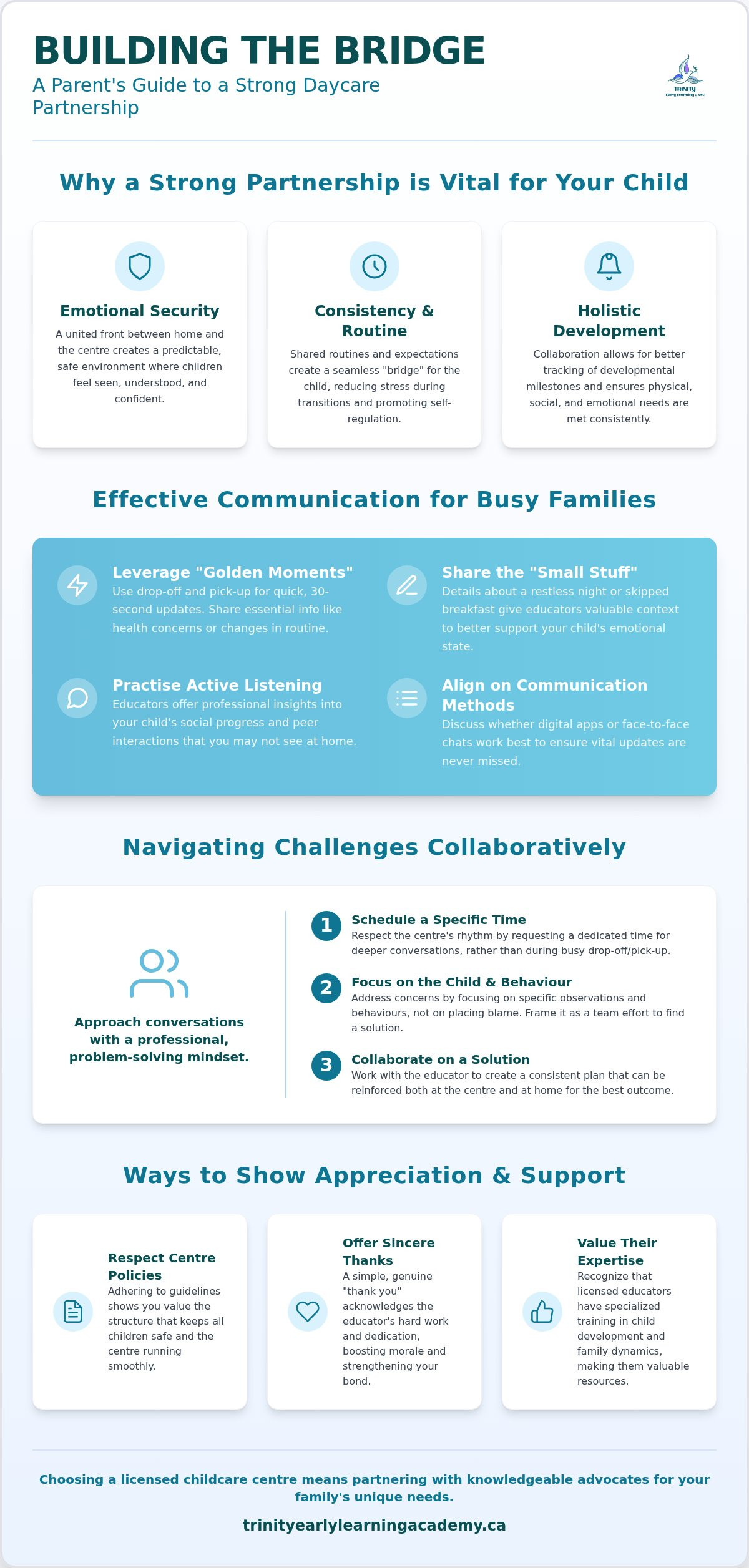
A parent-teacher partnership is more than just a series of daily updates; it's a deliberate, collaborative effort focused on your child's holistic growth. When parents and educators work as a team, they create an environment where the child feels seen and understood in every setting. This synergy is a cornerstone of early childhood development, as it ensures that the child's physical, social, and emotional needs are met consistently. Building a good relationship with daycare teachers allows for a more accurate tracking of developmental milestones. If a teacher notices a new skill or a slight delay, having a strong bond with the parent makes these sensitive conversations much easier to navigate.
Consistency and Emotional Security
Children thrive on predictability. Shared routines create a "bridge" for the child, allowing them to move between home and the centre without feeling a sense of disconnect. Emotional security is the foundational feeling of safety a child experiences when their environment is predictable and their caregivers are responsive. A united front between parents and staff significantly impacts a child's behaviour. When the same expectations for social learning are reinforced in both locations, children develop self-regulation skills more quickly and feel more confident exploring their surroundings.
Professional Standards in Alberta Childcare
Selecting a licensed daycare in St. Albert ensures that your child is under the care of professionals who meet rigorous provincial standards. These regulations require that a high percentage of staff hold advanced certifications, which include specific training in parent communication and family dynamics. This professional background means teachers are equipped to handle the complexities of early learning with expertise and empathy.
Mutual respect is a core tenet of early childhood education in St. Albert. When families and educators value each other's roles, it creates a stable atmosphere for the child. There is also a direct link between educator well-being and the quality of care provided. When teachers feel respected and supported by parents, they are more engaged and energized in the classroom. Building a good relationship with daycare teachers helps sustain this positive cycle, ensuring that staff can provide the highest standard of nurturing care every day.
Effective Communication Strategies for Busy Families
Clear communication acts as the lifeblood of a successful partnership between home and the centre. Building a good relationship with daycare teachers begins by establishing how and when you'll exchange information. Every family has different needs; some prefer the convenience of digital apps, while others value a quick face-to-face chat. By aligning your preferences with the teacher's workflow, you ensure that vital updates never get lost in the shuffle. This consistency allows educators to feel supported and keeps you fully informed about your child's daily experiences.
Sharing "the small stuff" provides essential context for your child’s day. If your toddler skipped breakfast or had a restless night, these details help educators adjust their approach and provide extra comfort when needed. It isn't just about logistics; it's about helping the teacher anticipate your child's emotional state. Active listening is the other half of this equation. When you collaborate with your child's teacher, you gain access to professional insights about their social progress and emotional milestones that you might not see at home. Educators often notice subtle shifts in peer interactions or problem-solving skills that are vital for holistic growth.
Optimizing Drop-off and Pick-up Routines
The transition times at the start and end of the day are often called "The Golden Moments." To make the most of these without disrupting the classroom, prepare a 30-second morning update. This brief check-in allows you to relay essential info quickly, such as changes in pick-up plans or health concerns. If a situation requires a deeper conversation, it's best to schedule a specific time to talk. This approach respects the "centre rhythm" and ensures the teacher can maintain their focus on the children during busy transition periods. Building a good relationship with daycare teachers involves recognizing that their primary attention must remain on the group during these peak hours.
Utilizing Technology and Daily Reports
In many St. Albert centres, digital tools now supplement face-to-face interactions. These platforms provide daily reports that offer a window into your child's activities, meals, and nap times. Instead of just glancing at the screen, use these reports as a tool to spark meaningful conversations with your child during the drive home. Mentioning a specific activity they enjoyed helps reinforce their learning and shows them that you value their time at the centre. Responding to centre-wide notices and newsletters is another simple way to show engagement. It demonstrates that you're an active participant in the community and respect the administrative side of the centre. If you're looking for a centre that prioritizes this level of transparency, consider how quality childcare programs integrate technology to keep parents informed and empowered.
Navigating Challenges and Difficult Conversations Professionally
Disagreements or misunderstandings are a natural part of any long-term partnership. Building a good relationship with daycare teachers requires a commitment to addressing these hurdles professionally and promptly. Waiting too long to speak up often leads to unnecessary stress for both the parent and the educator. When you approach a concern, it's beneficial to view the teacher as an expert in the classroom environment. They balance the needs of many children, and their insights into group dynamics provide valuable context for your child's behaviour that you might not see during one-on-one time at home.
Approaching these discussions with a "problem-solving" mindset rather than a "blaming" one changes the entire tone of the interaction. It signals to the staff that you're still a committed partner in your child's care, even when things aren't perfect. By seeking to understand the dynamics of the whole classroom, you show respect for the teacher's professional expertise and the complexity of their role. This collaborative spirit is essential for maintaining a stable, nurturing environment where your child can continue to grow without sensing tension between the adults in their life.
The 'Observation First' Approach
Framing your concerns through objective observation is a highly effective strategy for conflict resolution. Instead of using "you" statements that might feel like an attack, start with "I noticed." For example, if you're worried about your child's social interactions, you might say, "I noticed Sarah seemed a bit quiet after school yesterday. Can we talk about how she's engaging with her peers during play?" This keeps the educator from feeling defensive and opens the door for a genuine exchange of information. The goal of effective parent-teacher communication is to reach a shared resolution that supports the child's social and emotional learning goals.
When to Involve Management
While most daily matters are best handled directly with the classroom staff, some situations require the support of centre leadership. The director serves as a knowledgeable advocate and mediator who can help navigate complex issues or clarify centre-wide policies. When moving up the chain of communication, ensure the classroom teacher is still included in the process. This maintains the integrity of the primary caregiving bond and ensures the solution is practical for the classroom setting. Keeping your tone calm and professional, even when discussing emotional topics like safety or health, ensures the conversation remains productive. Building a good relationship with daycare teachers is a continuous process that relies on mutual respect, even when you don't see eye to eye on every detail.
Practical Ways to Show Appreciation and Support
Small gestures of gratitude often carry the most weight in a professional childcare setting. While many families focus on seasonal gifts, building a good relationship with daycare teachers is more effectively achieved through consistent, relational support. Educators spend their days managing complex group dynamics and emotional needs; hearing that their efforts are noticed can transform their workday. Providing positive feedback when things go well ensures that your interactions aren't limited to addressing problems or logistics. It builds a reservoir of goodwill that strengthens the partnership over the long term.
The Power of Positive Reinforcement
Sharing specific stories about how your child talks about their teacher at home is incredibly meaningful. If your little one mentions a fun science experiment or a story they heard, pass that information along. It validates the educator's creative efforts and helps them see the impact of their work beyond the classroom walls. Recognition of "invisible work" is equally vital. Educators dedicate significant time to curriculum planning, organizing learning centres, and maintaining rigorous sanitization standards. A simple, heartfelt note of thanks for a specific breakthrough your child had, such as finally feeling confident during circle time, boosts staff morale and encourages long-term retention. When teachers feel valued as professionals, they're more likely to remain deeply engaged with your child's development.
Respecting Professional Boundaries
Respecting the professional nature of the educator's role is a fundamental way to show support. It's important to distinguish between a teacher and a babysitter; these are trained professionals implementing a structured early learning curriculum. One of the clearest ways to show respect is by adhering to the centre's policies and schedules. Following daycare safety checklists regarding outdoor clothing or labeling belongings isn't just about organization; it's a form of active support that allows staff to focus on teaching rather than administrative tasks.
Adhering to pick-up times is another significant sign of respect for the staff's personal time. Just as you value your work-life balance, educators appreciate being able to finish their day on schedule. Supporting the centre's health protocols, such as keeping a sick child at home, protects the well-being of the entire community, including the teachers. When you participate in community events or volunteer for field trips, you reinforce the idea that the centre is a shared space. If you're looking for a centre that values this type of mutual respect, experience our community-focused approach to childcare today.
How Trinity Early Learning Fosters a Collaborative Community
Trinity Early Learning & OSC operates with the belief that we're an extension of your family’s support network. As a family-run centre, we understand the logistical and emotional complexities of modern parenting in St. Albert. Our philosophy centres on being a "Knowledgeable Advocate" for families. This means we don't just provide a service; we actively guide you through the developmental stages of your child's life. Building a good relationship with daycare teachers is easier when the centre's culture prioritizes personal connections over corporate metrics. We pride ourselves on knowing every parent by name and understanding the unique needs of every child in our care.
Part of our role as advocates involves navigating the administrative side of childcare. We help families access the Alberta affordability grant, ensuring that high-quality care remains accessible. By handling these complexities, we allow you to focus on what matters most: your child's joy and growth. We believe that when parents feel financially and emotionally supported, they're better equipped to engage deeply with our educators.
A Nurturing Environment in St. Albert
Our commitment to transparency is reflected in our open-door policy. We encourage parents to share their insights, as this feedback is vital for refining our preschool programs. When parents see their suggestions implemented, it reinforces the sense of community we strive to build. We invite you to tour our facility and meet our dedicated team. Seeing our educators in action provides peace of mind and demonstrates the stable, organized environment we maintain daily.
Next Steps for Your Family
Starting the relationship off right begins during the enrollment process. We use this time to learn about your child’s temperament, routines, and your family's specific goals. Preparing for your child's first week with a collaborative mindset sets the stage for long-term success. Building a good relationship with daycare teachers starts with these first interactions, where we establish the communication channels that work best for you. We encourage you to reach out and learn more about our community-focused approach. Whether you have questions about our curriculum or the registration process, our team is here to help you navigate your childcare journey with confidence and clarity.
Fostering a Bright Future Together
Every interaction you have with your child's educator is an opportunity to strengthen the team supporting your little one's growth. By prioritizing clear communication and approaching challenges with a collaborative mindset, you create a stable environment where your child can truly thrive. Building a good relationship with daycare teachers isn't just about smooth drop-offs; it's about ensuring your child feels secure and understood throughout their entire day.
At Trinity Early Learning & OSC, we're dedicated to holistic child development and acting as a knowledgeable advocate for every family we serve. As a licensed and family-run centre in St. Albert, we prioritize the personal connections that make early learning a joy for both children and parents. We also help families navigate affordability grant options to ensure quality care is within reach. Join our nurturing community at Trinity Early Learning & OSC and schedule a tour today to see our commitment to partnership in action. We look forward to supporting your family as your child embarks on this exciting journey of discovery and learning.
Frequently Asked Questions
How do I bring up a concern about my child's behaviour without offending the teacher?
Use objective "I noticed" statements to keep the conversation focused on your child's needs rather than the teacher's performance. Ask for the educator's professional perspective on what they see in the classroom. This collaborative approach validates their expertise and ensures you're working together toward a shared goal. Addressing concerns early prevents minor issues from escalating into larger frustrations for both your family and the centre staff.
What is the best way to communicate with teachers if I'm always in a rush at drop-off?
Utilize the centre's digital communication app for non-urgent updates or detailed questions that require a thoughtful response. For the morning rush, a quick 30-second summary of your child's night or breakfast is sufficient. This respects the teacher's primary focus on the group during busy transition times while ensuring they have the vital information needed to support your child throughout the day.
Can I ask my child's daycare teacher for advice on potty training or sleep routines?
Yes, educators are experts in early childhood milestones and welcome these discussions. Sharing your home strategies allows for the consistency that is vital for building a good relationship with daycare teachers. They can offer evidence-based tips that have worked for other children in similar settings. This partnership ensures that your child experiences the same expectations and support in both environments, which reduces their anxiety.
How often should I expect formal updates on my child's developmental progress?
You should receive daily digital reports regarding meals, naps, and activities through the centre's official app. Formal developmental assessments or parent-teacher meetings typically occur twice a year in many licensed St. Albert centres. However, you don't have to wait for a scheduled meeting. You can always request a brief, scheduled chat if you have specific questions about your child's social or cognitive progress.
What should I do if I feel my child's teacher isn't a good fit for their personality?
Start by having an open, professional conversation with the teacher about your child's unique temperament and what helps them feel secure. Often, a simple adjustment in communication or approach can bridge the gap. If the disconnect persists after trying collaborative strategies, contact the centre director. They act as a knowledgeable advocate and can help determine the best path forward to support your child's emotional well-being.
Are there specific boundaries I should maintain with my child's educators?
Maintain a professional boundary by using only official communication channels like centre apps, emails, or the centre's landline. Avoid contacting teachers on personal social media or their private phone numbers. This respect for their personal time reinforces the professional nature of the early childhood education field. It also ensures that all communication remains documented and transparent for the centre's leadership team.
How can I help my child build their own good relationship with their teacher?
Speak positively about the teacher and the centre's activities while you're at home. When your child hears you expressing trust and appreciation, they feel safer building their own bond with their educator. Modeling respectful and warm interactions during drop-off and pick-up helps your child view the teacher as a stable, nurturing authority figure. This foundation of trust is essential for their social and emotional learning.
Does the daycare affordability grant in Alberta affect the quality of teacher-parent relationships?
The grant reduces financial pressure on families, which often leads to more relaxed and positive interactions with centre staff. While the grant focuses on fee reduction, the resulting stability allows parents and educators to focus entirely on building a good relationship with daycare teachers and supporting the child's development. It removes administrative hurdles and allows the partnership to centre on the child's holistic growth and joy.


