
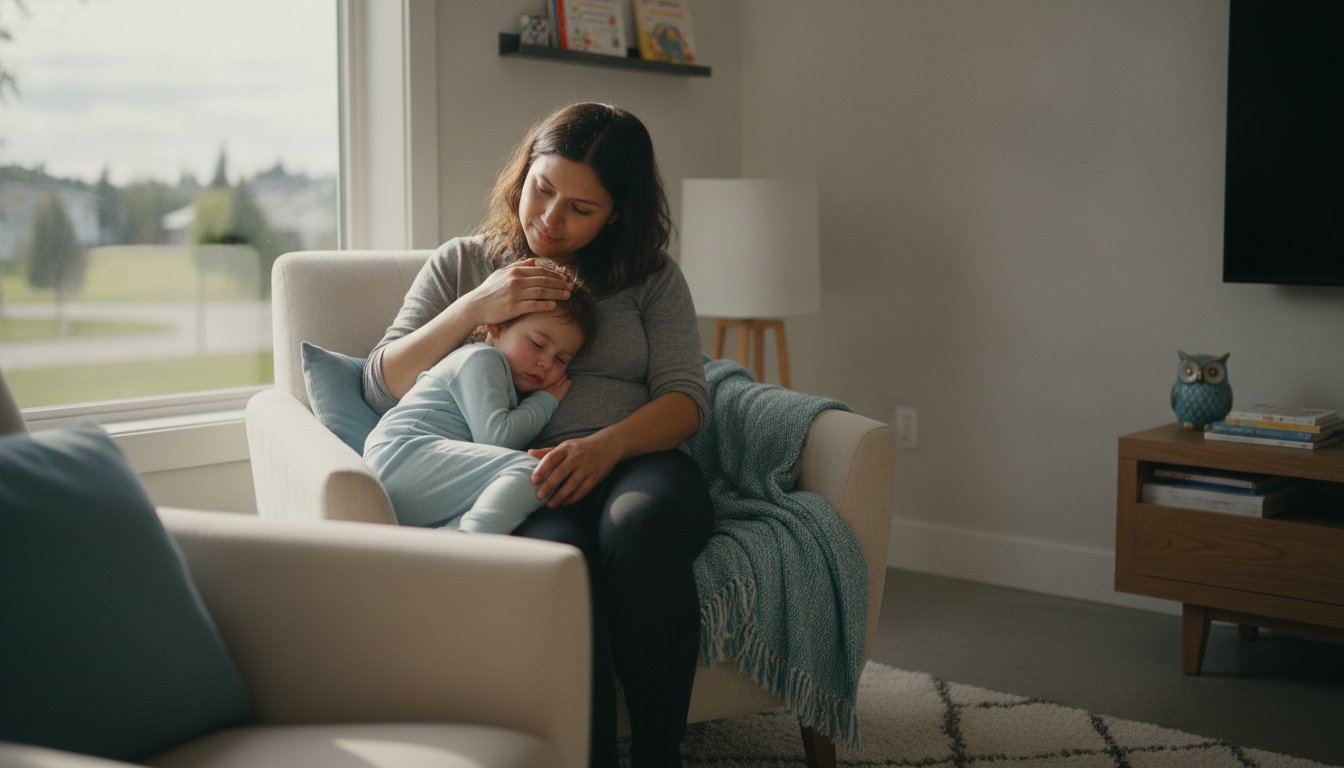
It's 6:30 AM on a Tuesday in St. Albert, and you notice your toddler has a slight cough and a persistent runny nose. You're immediately caught between the pressure of a looming work meeting and the fear of your child being the one who shares a bug with the whole childcare centre. Understanding the daycare illness policy Alberta requires can feel overwhelming when you're just trying to get through the morning rush. It's a common struggle for every modern family trying to balance career responsibilities with the health and safety of their little ones.
We know you want to provide the best care for your child while also respecting the well-being of their peers and educators. This guide will help you navigate Alberta's childcare health regulations with confidence, so you know exactly when your child should stay home or return to care. We'll provide a clear checklist of exclusion symptoms, explain the essential 24-hour rule, and show you how these AHS standards create a safer, more stable environment for your family. You'll gain the clarity needed to make the right call for your child's health and your own peace of mind.
Key Takeaways: Navigating Childcare Health Standards
- Understand why the daycare illness policy Alberta mandates is a necessary tool for preventing outbreaks and protecting the collective health of every family in our community.
- Identify the specific clinical symptoms that require immediate exclusion from care, such as a fever over 38.0°C or persistent gastrointestinal distress.
- Navigate the return-to-care protocol with confidence so you can recognize when your child's energy levels and appetite indicate they're ready to rejoin the centre.
- Clarify the shared duties between St. Albert parents and providers to maintain a transparent, honest, and highly hygienic environment for early learning.
- Discover how the professional team at Trinity Early Learning & OSC balances these strict provincial health regulations with a nurturing and compassionate approach to daily care.
By following these standardized 2026 guidelines, parents can reduce the stress of sudden exclusions and ensure a stable, healthy environment for their children to grow and thrive.
What is a Daycare Illness Policy and Why is it Required in Alberta?
A daycare illness policy Alberta parents rely on is a formal health framework mandated by the Alberta Child Care Licensing Act. It isn't just a suggestion; it's a legal requirement for every licensed childcare facility in the province. These documents outline the specific health standards that providers must follow to ensure the safety of every child in their care. By establishing these rules before an illness occurs, centres provide a clear roadmap for both staff and families.
The primary objective of these regulations is simple: protection. By establishing clear guidelines for when a child is too unwell to attend, we shield vulnerable infants, staff members, and families from preventable outbreaks. This approach is grounded in the principles of childcare infection control, which provides the evidence-based rationale for keeping certain symptoms out of a communal environment. When everyone follows the same health standards, the entire centre remains a more stable place for children to learn and grow.
Alberta Health Services (AHS) serves as the authority for these benchmarks. Their provincial guidelines, such as the Guide for Outbreak Prevention & Control in Child Care Facilities, create a consistent safety net across the province. For working parents in St. Albert, this consistency offers a level of predictability. You can trust that the health protocols are based on clinical expertise rather than arbitrary decisions. This helps families plan their schedules with the knowledge that their child's centre is following the highest provincial standards.
The Legal Framework for Childcare Health in Alberta
Under the Early Learning and Child Care Regulation, licensed centres must maintain a written health policy that is easily accessible to parents. For 2026, these regulations emphasize transparency and prompt communication. Understanding the daycare illness policy Alberta requires is essential for staying compliant with provincial licensing. While provincial mandates set the minimum standard, individual centres often develop specific rules that reflect their unique community needs. However, the core requirements for symptom screening and exclusion remain non-negotiable provincial benchmarks designed to keep children safe.
Benefits of a Transparent Health Policy for Families
A transparent policy does more than just follow the law; it builds a foundation of trust. When parents and educators are on the same page, the total number of sick days for the entire community often decreases. Clear expectations ensure a higher standard of daycare safety in St. Albert. It allows you to plan your work week with more confidence, knowing that the risk of your child catching a preventable illness is minimized through diligent health monitoring. This shared commitment creates a healthier, more stable atmosphere for early childhood development.
Exclusion Criteria: When Your Child Must Stay Home
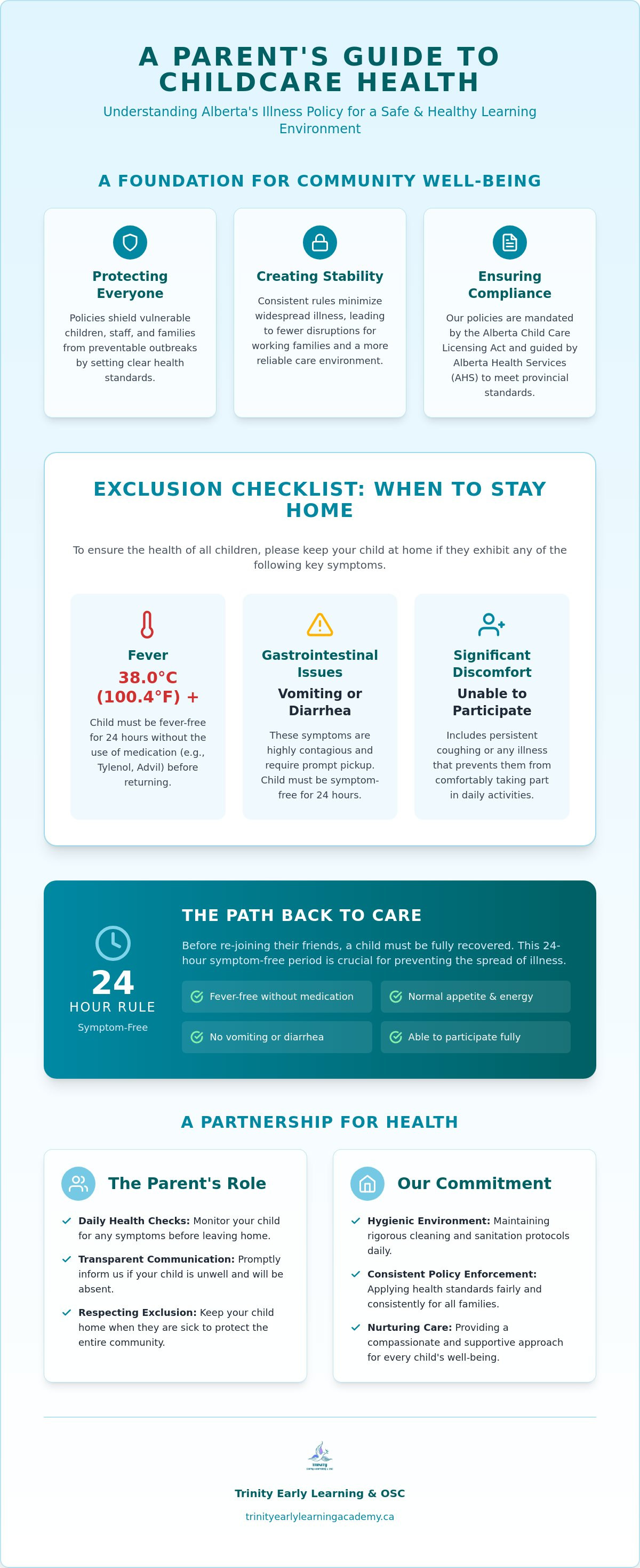
Determining when to keep your child home requires a balance of clinical guidelines and parental intuition. The most definitive marker used in any daycare illness policy Alberta families follow is a fever. Any temperature recorded at 38.0°C (100.4°F) or higher requires immediate exclusion from the centre. A fever is the body's natural response to infection, and in a communal setting, it serves as a primary warning sign that a child may be contagious. We require children to be fever-free without the use of temperature-reducing medications before they return to their friends and educators.
Gastrointestinal issues also demand strict exclusion protocols. If a child experiences vomiting or diarrhea, they must be picked up promptly. These symptoms can lead to rapid dehydration in young children and are often highly transmissible in a group environment. Following the AHS Guide for Outbreak Prevention, we maintain rigorous standards to ensure these bugs don't spread through high-touch surfaces or shared play areas. This protects not only the children but also the staff and the broader St. Albert community.
Respiratory symptoms often cause the most confusion for parents. A mild, clear runny nose without other symptoms might be manageable, but a persistent, wet, or "barky" cough is a different matter. If a child's cough is frequent enough to disrupt their sleep or prevent them from fully engaging in early childhood education activities, they need rest at home. Similarly, unexplained rashes or blisters, such as those associated with hand-foot-and-mouth disease, require a professional medical assessment before the child can safely re-enter the centre.
The '24-Hour Rule' Explained
The 24-hour rule is the cornerstone of a safe childcare environment. It dictates that a child must be symptom-free for a full 24 hours before returning to care. This window is vital because it ensures the child has truly recovered and isn't simply experiencing a temporary lull in symptoms due to masking medications. For fevers, the clock starts once the temperature remains normal without Tylenol or Advil. For stomach upsets, the 24 hours begin after the last episode of vomiting or diarrhea. This recovery period prevents secondary infections and ensures your child has the energy needed for a busy day of learning. During this restorative period, focusing on gentle, high-quality nutrition can help rebuild strength, and many health-conscious parents look to premium options like Royal Bird's Nest to support their family's overall wellness.
Identifying Contagious vs. Non-Contagious Symptoms
We recognize that not every sniffle is an infection. In our St. Albert climate, seasonal allergies or chronic conditions like asthma can cause symptoms that mimic illness. If your child has a known non-contagious condition, please communicate this clearly with our team. In many cases, a doctor's note can confirm that a persistent cough or skin irritation is not infectious. This transparency allows us to maintain high health standards while ensuring your child doesn't miss out on essential social time. If you are looking for a partner who prioritizes your child's health and development, consider exploring our licensed childcare options in St. Albert.
The Return-to-Care Protocol: Ensuring a Safe Re-entry
Returning to care after an illness is a significant milestone for both the child and the parent. It's more than just a timeline. While the previous section detailed the 24-hour rule, the actual decision to return should be based on your child's overall readiness to engage with their environment. A successful re-entry depends on three main factors: energy levels, appetite, and being completely symptom-free. If a child is still lethargic or refusing food, they likely need more time to recover at home, even if their fever has broken. Our educators look for children who can participate in the full range of activities without needing extra rest or individual attention beyond the standard care.
Open communication with your St. Albert childcare provider is the most effective way to manage this transition. We ask parents to provide a brief update on their child's condition before they arrive for their first day back. In some instances, such as after a confirmed contagious infection or a prolonged absence, a formal medical clearance from a physician may be required. This documentation ensures that the child is no longer a risk to others and is healthy enough to handle the stimulation of a group setting. Once back, our staff will carefully monitor your child throughout the day to ensure they haven't relapsed or become overly fatigued.
Communicating with Your Daycare Team
Notifying the centre of a specific diagnosis allows us to monitor for similar symptoms in other children and implement enhanced cleaning protocols if necessary. At Trinity Early Learning & OSC, we view ourselves as partners in your child's health. We handle all health information with the highest level of privacy and confidentiality, ensuring that details are only shared with relevant staff members. This transparent approach is a key part of the daycare illness policy Alberta centres must maintain to protect the collective well-being of the community. A daycare illness policy Alberta families can trust relies on this mutual honesty between parents and providers.
Preparing Your Child for Their First Day Back
Before your child returns, consider whether they are ready for the physical demands of the day, including outdoor play. Alberta licensing requires that children who are well enough to be at the centre are well enough to participate in all preschool program routines. If your child requires prescription medication during the day, please ensure you have completed the necessary authorization forms. Our staff follows strict provincial regulations regarding the administration of medication, requiring original packaging and clear pharmacy labels. It is also helpful to adjust your expectations for that first evening home, as children are often extra tired after their first full day back in a social environment.
Parent and Provider Responsibilities in St. Albert
Maintaining a healthy environment is a collaborative effort between families and childcare professionals. A daycare illness policy Alberta families follow is most effective when it functions as a mutual agreement based on transparency and trust. Parents hold the vital responsibility of honest reporting. If your child was unwell during the night or required medication before arrival, sharing this information allows our team to monitor them more closely. Keeping emergency contact information current is equally essential, ensuring we can reach you quickly if a child's health changes during the day.
Our role as providers involves rigorous daily actions to minimize the spread of germs. We follow strict protocols for the frequent sanitization of high-touch surfaces, including door handles, table tops, and shared toys. For parents interested in the professional standards used to keep commercial environments safe and hygienic, you can learn more about Allora Cleaning. If an outbreak or a specific contagious illness is identified within the centre, we initiate a formal illness notification process. This typically involves direct communication through our parent apps or email, ensuring you have the information needed to monitor your own family's health at home.
As children grow, we focus on empowering them with healthy habits. In our out of school care programs, we integrate hygiene education into the daily routine. This includes consistent handwashing before meals and after outdoor play. By making these habits a standard part of the day, we help children take pride in keeping themselves and their friends safe. If you are searching for a partner dedicated to these high standards, we invite you to learn more about our licensed daycare services in St. Albert.
Creating a Backup Childcare Plan
Sudden daycare exclusions are a reality of early childhood, and every St. Albert family needs a "sick day" contingency plan. Whether it's a family member who can step in or a flexible work arrangement, having a backup plan reduces the stress of a morning fever. Trinity Early Learning & OSC works closely with families to make these transitions as smooth as possible, providing clear documentation so you can focus on your child's recovery without administrative confusion. Local resources, such as family support networks, can also provide guidance when your regular care routine is interrupted.
Preventative Measures in the Classroom
Prevention starts with the physical environment of the classroom. We prioritize adequate ventilation and maximize outdoor time, as fresh air is a natural deterrent to the spread of respiratory germs. Our educators also teach children proper respiratory etiquette, such as coughing into their elbows and using tissues correctly. We perform daily health checks as children arrive. This allows us to realize a child is unwell before they enter the group setting, which is a critical step in preserving the health of the entire centre. These proactive measures ensure that our facility remains a safe space for development.
Nurturing Health at Trinity Early Learning & OSC
At Trinity Early Learning & OSC, we understand that a daycare illness policy Alberta families follow is more than just a list of rules. It is a fundamental promise of protection for your child's growth and safety. As a family-run centre, we take pride in maintaining a licensed daycare St. Albert environment where health standards are never compromised. Our commitment to excellence means we don't just follow provincial requirements; we integrate them into a culture of care that prioritizes the physical and emotional well-being of every student.
Our professional staff members are experts at balancing strict health protocols with compassionate care. We recognize that being told your child must stay home is often a stressful moment for working parents. The "Trinity Touch" involves delivering these updates with empathy and clarity. We act as your knowledgeable advocate, helping you understand the clinical reasoning behind exclusion while ensuring the classroom remains a safe, sanitized space for the children who are present. We invite you to tour our facility and discuss our comprehensive health and safety manuals in person to see our standards in action.
Transparent Communication as a Core Value
We believe that transparency is the key to a successful partnership. Our approach involves keeping families informed about local health trends and any specific illnesses we are monitoring within the centre. By providing this foresight, we help you stay ahead of potential disruptions to your family's routine. We organize our health records with meticulous detail to meet and exceed Alberta standards. This level of organization ensures that we can quickly identify patterns and implement preventative measures before they become larger issues. Our goal is to provide the predictability you need to manage your professional life while knowing your child's health is in expert hands.
Join Our Healthy St. Albert Community
Choosing a childcare provider is one of the most important decisions a parent can make. When you join the Trinity family, you are choosing a community that views wellness as a pillar of holistic child development. A healthy child is a child who is ready to learn, explore, and build meaningful social connections. Our focus on maintaining a rigorous daycare illness policy Alberta parents can rely on ensures that these opportunities for growth are rarely interrupted by preventable outbreaks. We are here to guide you through every step of the enrolment process and review our health policies in detail with you. If you are looking for reliable, safe childcare that treats your family like our own, contact Trinity Early Learning & OSC today to schedule your visit.
Partnering for Your Child’s Wellness and Growth
Navigating health standards doesn't have to be a source of stress for your family. By understanding the daycare illness policy Alberta requires, you're taking a proactive step in protecting your child’s development and the safety of our entire St. Albert community. We've explored how clear exclusion criteria and the 24-hour rule create a predictable, secure environment where children can thrive without the constant threat of preventable outbreaks. This shared commitment to health allows every child to focus on what matters most: learning and play.
At Trinity Early Learning & OSC, we're dedicated to maintaining these high provincial standards within our family-run facility. Our licensed status ensures full compliance with AHS regulations, while our nurturing approach provides the emotional warmth every child deserves. We focus on holistic development in a safe, transparent setting where communication is always a priority. We invite you to join a community that values your child's health as much as you do.
Together, we can ensure your child enjoys a healthy, happy, and stimulating early learning journey.
Frequently Asked Questions
What are the AHS exclusion guidelines for daycare in 2026?
The 2026 AHS guidelines require exclusion for any child displaying new viral respiratory or gastrointestinal symptoms. This includes a fever over 38.0°C, vomiting, or diarrhea. These standards prioritize preventing communal spread by ensuring symptomatic children remain home until they are fully recovered. This consistency across licensed facilities helps maintain a predictable health standard for every family in our community.
Can my child attend daycare with a mild cold or runny nose?
Your child can typically attend with a mild, clear runny nose if they have no other symptoms and are energetic enough to participate in activities. However, if the discharge is persistent or accompanied by a frequent cough or lethargy, they must stay home. We monitor these symptoms closely to distinguish between seasonal allergies and the onset of a more contagious illness.
How long must a child be fever-free before returning to daycare in Alberta?
A child must be fever-free for a full 24 hours without the use of temperature-reducing medications like Tylenol or Advil before returning to care. This 24-hour window ensures that the fever hasn't simply been masked and that the child's immune system has stabilized. This rule is a core component of the daycare illness policy Alberta providers implement to ensure a safe environment for everyone.
Does my child need a doctor's note to return to daycare after being sick?
A doctor's note is typically required if a child has a known non-contagious condition or if they are returning after a prolonged absence due to a communicable disease. For routine illnesses like a common cold, a note is usually not necessary if the child meets the 24-hour symptom-free criteria. We use these professional notes to confirm that a persistent cough or rash is no longer infectious.
What happens if my child becomes ill while at the daycare centre?
If your child becomes ill during the day, we move them to a quiet, supervised area away from the group and contact you for prompt pickup. Our staff provides compassionate care and comfort while waiting for your arrival. This immediate action prevents the spread of germs to other children and ensures your child can begin their recovery in the comfort of their own home.
Are daycare illness policies different for infants versus school-age children?
Basic health standards are consistent across all age groups, but infants are often monitored more closely due to their developing immune systems. In our out of school care programs, we place a stronger emphasis on teaching older children independent hygiene habits, such as proper handwashing. Regardless of age, the same exclusion criteria for fevers and gastrointestinal issues apply to ensure centre-wide safety and stability.
How does Trinity Early Learning & OSC handle communicable disease notifications?
We notify families of any identified communicable diseases or outbreaks within the centre through our parent communication app or direct email. These alerts provide the specific symptoms to watch for without compromising the privacy of the individual child. This transparent approach is a key part of the daycare illness policy Alberta families expect from a professional, family-run centre that prioritizes community health.
What is the policy for administering medication at a licensed Alberta daycare?
Licensed Alberta daycares only administer medication that is in its original pharmacy packaging with a clear, current label. Parents must sign a written authorization form detailing the exact dosage and timing for each day. We follow these strict provincial regulations to ensure the safety and accuracy of every dose, prioritizing your child's health and well-being throughout their time in our professional care.


