

It is 3:00 AM on a Tuesday morning, and you are staring at a thermometer while your toddler coughs in their sleep. You have a critical meeting at work in six hours, and you are already calculating how many sick days you have left this month. This scenario is a rite of passage for many St. Albert families, but it doesn't make the exhaustion or the guilt any easier to manage. Learning how to handle daycare illnesses can turn a week of chaos into a manageable routine for your household.
We understand that you want to be there for your child while also maintaining your professional commitments and keeping your community safe. This guide provides a clear plan for managing the "daycare plague" with practical home preparation and strategies to support your child’s immune system. We will also explain the latest Alberta Health Services (AHS) exclusion rules and how licensed care centres work to minimize the spread of germs. You will gain the clarity you need to decide with confidence when it is time to stay home and when it is safe to return to the classroom.
Key Takeaways
- Understand why the first year of childcare acts as an "immune system bootcamp" that builds your child's long-term resilience and health.
- Develop a proactive backup care plan and home pharmacy so you feel organized and confident when learning how to handle daycare illnesses.
- Learn the specific Alberta Health Services exclusion rules, such as the 24-hour fever-free requirement, to ensure a safe environment for all children.
- Implement a simple post-daycare hygiene routine to reduce the spread of germs within your household and protect your family's well-being.
- Discover how licensed centres like Trinity Early Learning Academy maintain high standards through rigorous sanitization and transparent parent communication.
Why Daycare Illness Happens (and Why It’s Actually Beneficial)
The transition into a licensed childcare setting is an exciting milestone for your family, but it often comes with an unexpected guest: the frequent cold. For many St. Albert parents, the first year of care feels like a revolving door of runny noses and mild fevers. While this period is undoubtedly exhausting, it is helpful to view it as a normal developmental stage. This "immune system bootcamp" is the process of your child’s body learning to recognize and fight off common pathogens. By encountering these germs now, your child is building a library of antibodies that provides long term resilience. This early exposure helps strengthen community immunity within our local classrooms, eventually leading to fewer sick days as children reach school age.
It is common to feel a sense of "sick guilt" when your child catches another bug, but these illnesses are rarely a reflection of your parenting or the cleanliness of the facility. Instead, they are a byproduct of essential social interaction. Learning how to handle daycare illnesses starts with accepting that viruses are a natural part of childhood growth. Every time your child recovers from a minor illness, their immune system becomes more sophisticated and better prepared for the future.
The Science of Social Germs: How Kids Interact
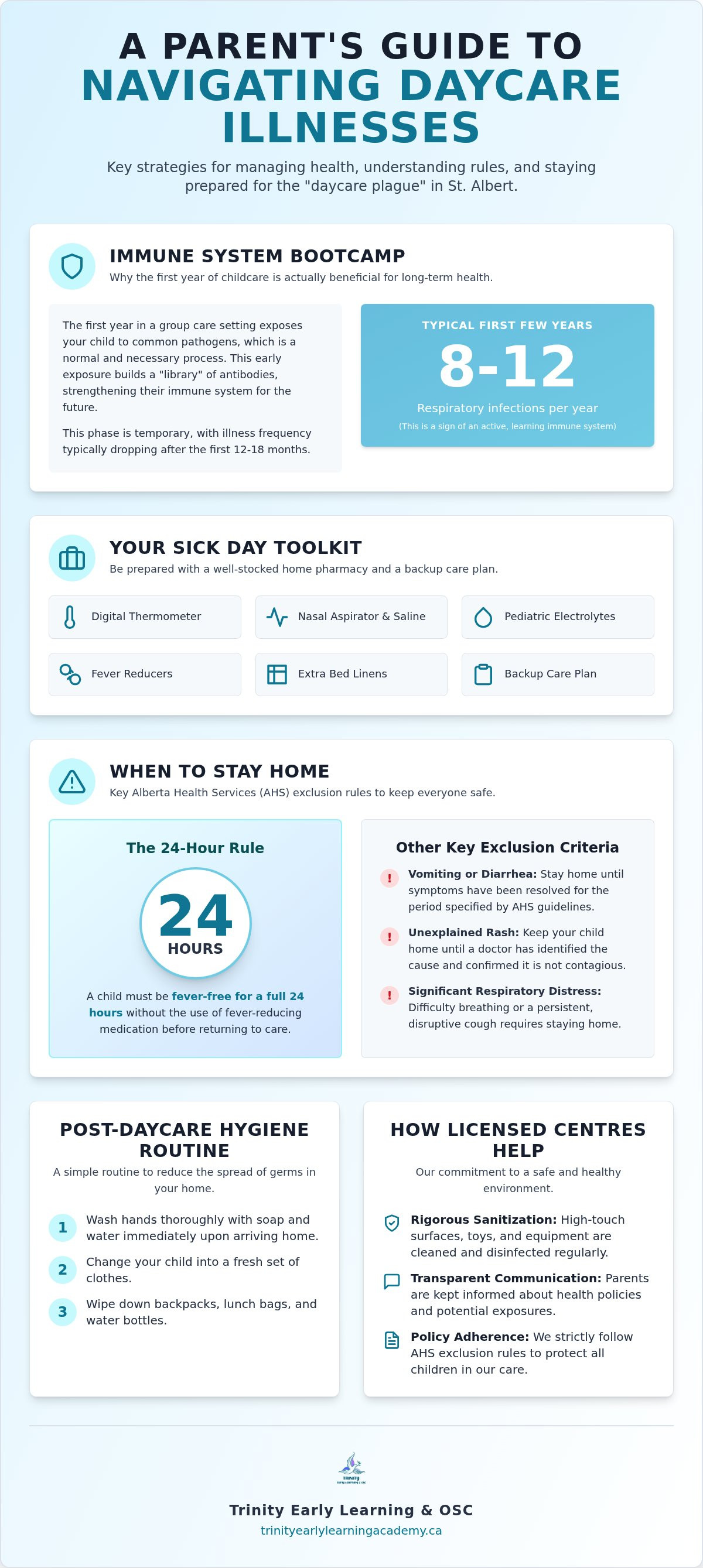
Toddlers explore their world through tactile experiences. They touch everything, share toys, and frequently use their mouths to investigate new objects. In a group setting, this physical curiosity makes the exchange of germs inevitable. Research suggests that children in childcare may experience between eight to twelve respiratory infections per year during their first few years of life. While a "bubble" approach might prevent these colds in the short term, it can delay the necessary strengthening of the immune system. The benefits of social and educational stimulation, such as language development and peer bonding, far outweigh the temporary inconvenience of a stuffy nose.
Normalizing the Sick Cycle: What to Expect
Most families experience a "honeymoon phase" during the first few weeks of care, followed by a more challenging "first winter" in St. Albert. This cycle is driven by the incubation period of common viruses, where a child may be contagious before any symptoms appear. This makes it difficult to stop the spread entirely, even with the most rigorous cleaning protocols. You should realize that frequent minor illnesses are not a sign of a weak immune system; rather, they show that your child's body is actively responding to its environment. This phase is temporary, and most parents find that the frequency of illness drops significantly after the first twelve to eighteen months of group care.
Preparing Your Home Pharmacy and Backup Care Plan
Proactive planning is the foundation of a calm response when your child inevitably brings home a bug. Instead of rushing to a pharmacy in the middle of the night, having a pre-stocked "sick kit" allows you to focus entirely on comforting your little one. A reliable digital thermometer is the most critical tool in your arsenal. Accurate temperature readings are essential for monitoring the progression of an illness and determining if your child meets the criteria to stay home. When you are organized, you can focus on the nurturing care your child needs most.
A well-prepared home environment helps you manage symptoms effectively while following professional guidelines for disease prevention in child care. Knowing how to handle daycare illnesses involves more than just medicine; it requires a logistical strategy that supports your family's daily rhythm. If you are looking for a partner that prioritizes health and safety, our licensed daycare services emphasize clear communication and high hygiene standards to help protect your household.
Essential Supplies for the "Daycare Plague"
Your home pharmacy should be stocked and checked for expiry dates before the winter season begins. Essential items for respiratory relief include high quality nasal aspirators and saline drops to clear tiny airways. Pediatric electrolytes are vital for maintaining hydration during gastrointestinal illnesses. Always keep age-appropriate fever reducers on hand, ensuring you follow the precise dosage instructions provided by your healthcare provider. Comfort is also key to a quick recovery. Consider keeping these items ready:
- Extra sets of bed linens and waterproof mattress protectors for quick middle-of-the-night changes.
- Fragrance-free laundry detergents designed for sensitive skin to prevent irritation during fevers.
- A dedicated humidifier to help soothe coughs and dry nasal passages during St. Albert’s cold winters.
The Working Parent Strategy: Logistics and Backup
Managing a sick child while maintaining professional responsibilities is a common source of stress. To minimize "sick day guilt," establish a clear rotation with your partner or a local St. Albert relative before the first fever hits. Decide who will take the primary care role for the first 24 hours to avoid morning confusion. When communicating with your employer, be direct and professional. Focus on your plan for staying on top of critical tasks and provide an estimated timeline for your return based on health policies.
To make the day more manageable, create a "Sick Day Bin." This is a special container filled with quiet, low-energy activities like new stickers, a fresh colouring book, or simple puzzles. This bin should only appear when a child is unwell, making it a novel distraction that encourages them to rest. This strategy helps keep a resting child engaged while allowing you the brief windows of time needed to manage household or work obligations.
Understanding Alberta Daycare Health Policies and Exclusion Rules
Licensed childcare providers in Alberta operate under a strict regulatory framework designed to ensure the physical well-being of every child in the classroom. These health protocols are not merely suggestions; they are provincial requirements that help maintain a stable and safe environment. When parents understand the logic behind these rules, it becomes easier to navigate the logistics of a sick day. For a broader look at the standards we maintain, you can review our Daycare Safety Checklist St. Albert, which outlines the comprehensive safety measures required in 2026.
The most common policy you will encounter is the "24-hour rule" for fevers. This requires a child to be fever-free without the use of fever-reducing medication for a full day before returning to care. These policies exist to protect the most vulnerable members of our community, including infants with developing immune systems and staff members. Understanding these regulations is a key part of learning how to handle daycare illnesses without unnecessary stress. It ensures that when your child returns, they are truly ready to engage with their peers again.
When to Keep Your Child Home: The Red Flags
Deciding if a child is "too sick" can be difficult, especially when symptoms seem mild. However, certain "red flags" indicate that a child needs to stay home to rest and prevent the spread of infection. We utilize a "participation rule" as a primary guide. If a child is too lethargic or irritable to join in daily activities and outdoor play, they belong at home. Keep an eye out for these specific symptoms:
- Unexplained or spreading rashes that have not been cleared by a professional.
- A persistent, hacking cough that interferes with sleep or play.
- Goopy, yellow, or green discharge from the eyes, which may indicate pink eye.
- Two or more episodes of vomiting or diarrhea.
While a clear runny nose is often just a sign of a minor cold, any change in behaviour or the presence of a fever requires an immediate transition to home care.
Alberta Health Services (AHS) Guidelines for Childcare
Alberta Health Services provides specific exclusion periods for highly contagious conditions. For example, children with Hand, Foot, and Mouth disease must stay home until sores are healed or as directed by AHS. For gastrointestinal illnesses, AHS guidelines stipulate that children should not return to the facility until at least 48 hours after their last episode of vomiting or diarrhea. This 48-hour window is critical for stopping the cycle of transmission in group settings.
When returning to a licensed St. Albert daycare, your child must be symptom-free without the help of medication. In some cases, such as after a prolonged absence or a specific diagnosis, a doctor’s note may be requested. This documentation provides our staff with the professional assurance that your child is no longer contagious and is ready to safely rejoin their friends.
Boosting Immunity and Preventing the Spread at Home
While encountering germs is a natural part of social development, you can take active steps to support your child’s resilience and protect your household. Shifting your focus toward factors you can control, such as nutrition, sleep, and consistent hygiene, empowers you to manage the sick season with greater confidence. Learning how to handle daycare illnesses effectively involves creating a supportive home environment where your child’s body can recover quickly and efficiently.
Sleep is perhaps the most underrated tool in immune function. During deep sleep, the body undergoes cellular repair and produces cytokines, which are proteins that help the immune system respond to infections. Ensuring your child maintains a steady bedtime routine even when they are just a little under the weather provides their body with the energy needed to fight off pathogens. Quality early childhood education in St. Albert supports this by teaching children the importance of listening to their bodies and practice basic hygiene habits that you can reinforce at home.
The "Decontamination" Routine: Simple Home Habits
Establishing a "Hands, Face, Space" rule after pickup can significantly reduce the volume of germs entering your home. As soon as you arrive home, prioritize an immediate change of clothes and a thorough hand washing session. This simple transition helps separate the classroom environment from your living space. Additionally, during a local sick wave, it is wise to sanitize high touch surfaces daily, such as doorknobs, remote controls, and even favourite stuffed animals that have travelled back and forth to care.
- Implement a temporary "no-sharing" rule for cups, utensils, and towels within the family during active illness.
- Wipe down your child’s backpack and shoes with a mild disinfectant to prevent tracking germs inside.
- Encourage frequent hand washing for all family members, not just the child in care, to break the cycle of transmission.
Nutrition and Lifestyle for a Resilient Child
A "rainbow diet" rich in colourful fruits and vegetables provides the essential vitamins and minerals needed for a robust immune response. Focus on foods high in Vitamin C, such as oranges and bell peppers, and Zinc rich options like beans or fortified cereals. Hydration is equally critical, as fluids help flush out toxins and keep mucous membranes moist, which acts as a natural barrier against viruses. Even in the middle of a St. Albert winter, brief periods of outdoor play in the fresh air can be beneficial for respiratory health and mood, provided your child is dressed appropriately and has the energy for it.
If you are searching for a partner that prioritizes your child's holistic growth and physical safety, we invite you to explore our Quality childcare programs in St. Albert today.
How Trinity Early Learning Academy Manages Health & Safety
At Trinity Early Learning Academy, we view ourselves as an extension of your family’s support system. We know that learning how to handle daycare illnesses is one of the most stressful aspects of modern parenting, and we are here to share that responsibility. Our facility maintains rigorous cleaning and sanitization protocols to ensure a safe environment for your little ones. Every toy, high-touch surface, and common area is sanitized daily using hospital-grade, child-safe products. This methodical approach to hygiene is a cornerstone of our commitment to maintaining the highest licensed daycare standards in St. Albert.
If your child becomes unwell during the day, our staff provides a compassionate and professional notification. We understand that receiving a call to pick up a sick child can be disruptive to your workday. Our educators prioritize your child's comfort by providing a quiet, supervised space to rest while they wait for you. This nurturing approach helps alleviate the stress and guilt often associated with childhood illness. We act as a partner in your child's holistic growth, ensuring their physical health is managed with the same care as their educational development.
A Transparent Partnership with St. Albert Families
We believe that transparency is essential for a healthy community. When an illness outbreak occurs within the centre, we inform parents promptly so they can monitor their own children for symptoms. This proactive communication allows families to prepare their sick day plans in advance. Our philosophy of Quality Care means we always put the child’s well-being first. If you have questions about our sanitization routines, we invite you to tour our facility to see our hygiene practices in action.
Nurturing Your Child Through the Sick Cycle
The transition back to care after an illness can sometimes be challenging for a child. Our educators are trained to provide extra emotional support for children who may still feel slightly tired but have been cleared to return. We pay close attention to their energy levels and offer lower-intensity activities if they need a slower pace. By focusing on both the physical and emotional needs of the child, we ensure a smooth return to the classroom routine. If you are looking for a stable and nurturing environment for your child, Contact Trinity Early Learning & OSC today to learn more about our safe environment and our commitment to your family’s well-being.
Navigating the Sick Season with Confidence
Managing the first year of childcare is a journey of building resilience for both you and your child. By preparing your home pharmacy and understanding provincial health rules, you can transform a stressful week into a manageable part of your family's routine. Learning how to handle daycare illnesses involves a shift in perspective; seeing these minor bugs as milestones in a developing immune system rather than just a logistical hurdle. When you are prepared, you can focus on the nurturing care your child needs to recover quickly.
At Trinity Early Learning & OSC, we are committed to being your partner through every sniffle and fever. Our facility is licensed by the Government of Alberta and staffed by experienced, compassionate early childhood educators who prioritize your child's comfort and well-being. We maintain strict adherence to AHS health and safety protocols to keep our community as healthy as possible. You don't have to navigate these challenges alone.
Join our safe and nurturing community at Trinity Early Learning & OSC. We look forward to supporting your child's holistic growth in a space where health and safety are always the top priorities. You've got this, and we are here to help every step of the way.
Frequently Asked Questions
How many days of work do parents typically miss in the first year of daycare?
Most parents find themselves missing between five to ten days of work during their child's first year in a group care setting. This frequency typically decreases as the child’s immune system matures and becomes more resilient to common local viruses. Having a flexible backup plan with a partner or relative can help manage these unexpected absences without excessive professional stress.
What is the "24-hour rule" for fevers in Alberta daycares?
The "24-hour rule" means a child must stay home until they have been completely fever-free for at least 24 hours without the help of fever-reducing medications like acetaminophen or ibuprofen. This provincial standard ensures that the child is no longer in the most contagious phase of an illness. It also gives their body enough time to recover the energy needed for a full day of play.
Can I send my child to daycare with a runny nose if they have no fever?
You can generally send your child to care with a clear runny nose if they are acting normally and showing no other symptoms. Many children have "the sniffles" throughout the winter months due to dry air or minor seasonal allergies. However, if the runny nose is accompanied by a persistent cough, lethargy, or a change in appetite, it is best to keep them home to rest.
How do I know if my child has a common cold or something more serious like RSV?
RSV often presents with more severe symptoms than a standard cold, such as wheezing, rapid breathing, or a deep, barking cough. While a common cold usually stays in the upper respiratory tract, RSV can affect the lower airways and cause visible distress. If you notice your child is struggling to breathe or is unusually drowsy, you should seek medical advice from a healthcare professional immediately.
Do licensed daycares in St. Albert require a doctor’s note for every illness?
A doctor’s note is not usually required for every minor cold, but it is often necessary for specific contagious conditions or after an extended absence. Licensed centres follow Alberta Health Services guidelines to determine when professional medical clearance is required. This practice ensures that the child is no longer a risk to their peers and is healthy enough to return to the classroom environment.
What is the best way to boost a toddler’s immune system for daycare?
The most effective ways to support a child's immune system are through consistent sleep, a nutrient-dense diet, and regular outdoor play. Teaching your child the importance of hand washing at an early age also significantly reduces their germ exposure. Understanding how to handle daycare illnesses through these foundational health habits will help your family navigate the first year of childcare with much more confidence.
What should I include in my "Daycare Sick Day" kit at home?
Your home sick kit should include a reliable digital thermometer, saline nasal drops, a nasal aspirator, and pediatric electrolytes to prevent dehydration. It is also helpful to have extra bed linens and a dedicated "sick day" bin of quiet activities ready to go. Being prepared with these essentials is a practical part of how to handle daycare illnesses and reduces the need for late-night trips to the pharmacy.
How does Trinity Early Learning Academy handle illness outbreaks?
We handle illness outbreaks with total transparency by notifying parents as soon as a contagious condition is identified within our centre. Our educators follow rigorous sanitization protocols and work closely with Alberta Health Services to ensure all safety standards are met. We prioritize the comfort of the ill child while taking immediate steps to protect the health of every other student and staff member in our care.


