
Imagine walking through the doors of your child's centre and feeling an immediate sense of calm, knowing that every lock, camera, and staff member is part of a sophisticated, transparent safety net. You've likely felt that familiar pang of worry about unauthorized access or wondered if staff can truly manage a group during an unexpected emergency. It's completely natural to prioritize your child's physical and emotional protection above all else when choosing a provider. Understanding the specific daycare safety and security policies St. Albert centres must maintain is the best way to replace that anxiety with confidence.
We'll help you decode the complex landscape of 2026 Alberta childcare regulations, including the new incident reporting rules that went into effect on June 1, 2026. You'll discover exactly which safety standards a licensed facility must uphold to protect your little ones while they learn and grow. This guide provides a clear list of must-have policies to verify during your next tour, from updated staff-to-child ratios to mandatory on-site security notices. By the end of this article, you'll have the knowledge needed to ensure your chosen centre is a stable, organized, and truly secure environment for your family.
Key Takeaways
- Learn why a centre's written safety framework is just as vital as physical locks for protecting your child.
- Identify the specific physical standards for daycare safety and security policies St. Albert centres must implement, including controlled entry and secure outdoor fencing.
- Understand the critical role of staff-to-child ratios and mandatory background checks in maintaining a secure environment.
- Discover how to evaluate emergency preparedness by looking at drill frequencies and parent communication protocols.
- Realize how a family-run approach to childcare ensures personal accountability and integrates safety into daily early learning.
Understanding the Daycare Safety and Security Policy Framework
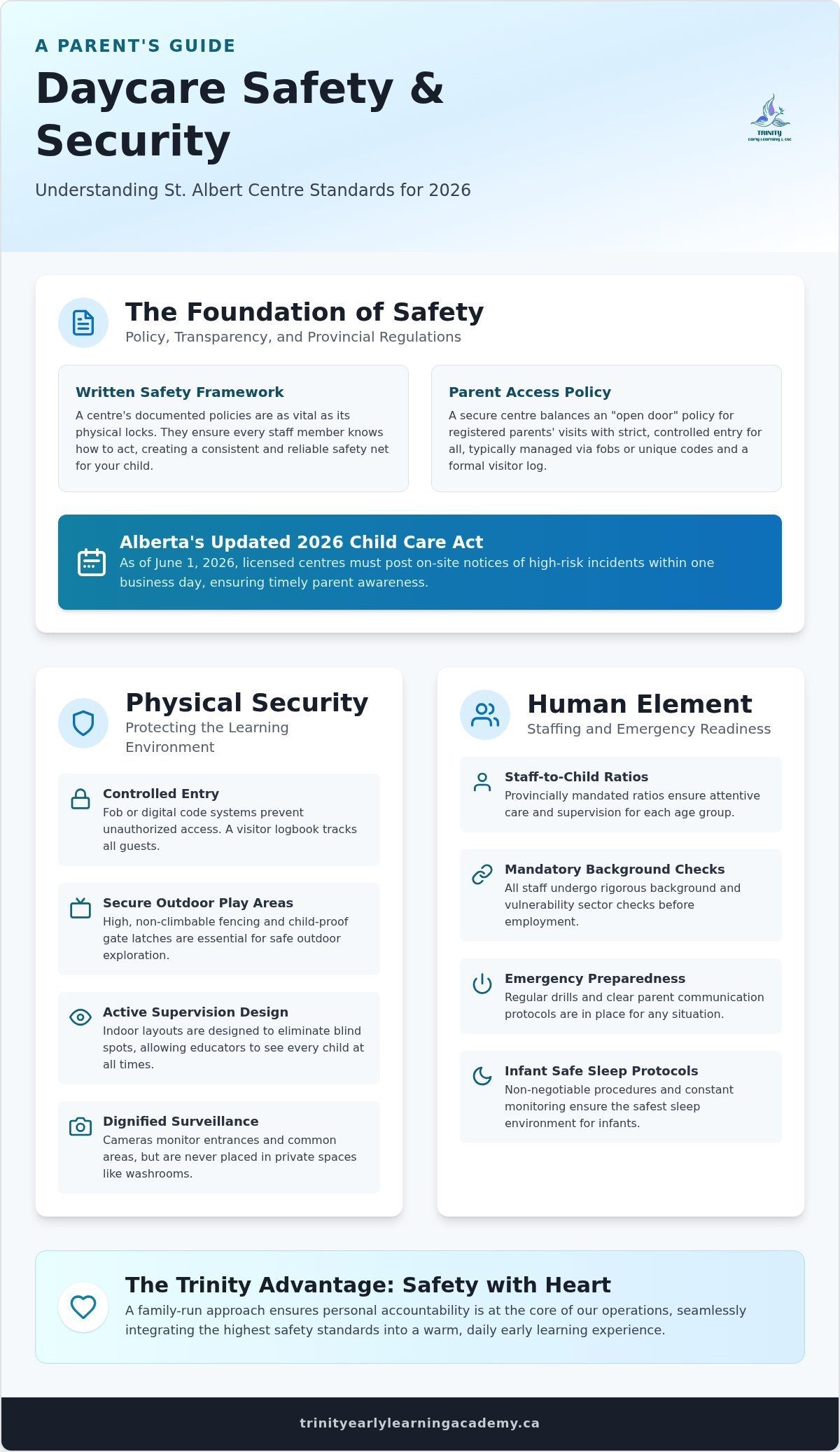
A comprehensive security framework in 2026 involves much more than just installing a sturdy lock on the front door. It's a cohesive system where physical barriers, digital monitoring, and human protocols work together to create a protective bubble around your child. While high-tech equipment provides a vital first line of defence, the most effective daycare safety and security policies St. Albert families should look for are those rooted in clear, written documentation. Equipment can occasionally malfunction, but a well-drilled protocol ensures the staff knows exactly how to respond without hesitation.
Transparency is the cornerstone of a trustworthy centre. You should feel empowered to review any security document at a moment's notice. This openness doesn't just provide peace of mind; it demonstrates that the facility holds itself to the highest possible standards. In the context of modern child care, these policies serve as a blueprint for daily operations, ensuring that every educator and administrator is aligned with provincial safety expectations.
The Role of Alberta Licensing in Local Security
The Early Learning and Child Care Act sets the mandatory baseline for every centre in our community. As of June 1, 2026, Alberta introduced significant updates to incident reporting that prioritize parent awareness. Licensed facilities are now required to post on-site notices of high-risk incidents within one business day of the report. This change ensures you don't have to wait for a formal newsletter to understand what's happening in your child's environment. You can also use the provincial Child Care Lookup tool to verify a centre's compliance history and license status. While St. Albert doesn't have specific municipal bylaws for daycare security, local centres often coordinate with regional emergency services to organize their response plans.
The "Open Door" vs. Secure Access Policy
Finding a balance between a welcoming atmosphere and a secure facility is a delicate task. A "Trusted Nurturer" avoids a cold, institutional feel while maintaining strict control over who enters the building. This is typically managed through a secure access policy where fobs or unique codes are required for entry. However, this shouldn't prevent you from observing your child's progress. A professional centre maintains an "open door" for registered parents, allowing for unannounced visits while still requiring all guests to sign in through a formal visitor log. These expectations should be clearly outlined in a signed Parent Handbook. This document acts as your guide to the daycare safety and security policies St. Albert centres use to keep your family's information and your child's physical well-being protected every day.
Physical Facility Security: Beyond the Front Door
Physical security is more than a single lock. It's a comprehensive layer of protection that follows your child from the moment they arrive until they're safely back in your care. The most effective daycare safety and security policies St. Albert providers use involve a combination of technology and vigilant human oversight. Controlled entry systems, such as fobs or unique digital codes, prevent unauthorized access while allowing parents to enter easily. A guest logbook creates a clear paper trail of every visitor, ensuring administrators know exactly who is in the building at all times.
Play areas require the same level of scrutiny. Outdoor spaces are essential for physical development, but they must be strictly contained. Fencing must be high enough to prevent climbing, and gates should have child-proof latches that only adults can operate. Regular inspections of the play structures and the ground surface prevent injuries and ensure the environment remains a safe space for exploration. Surveillance cameras provide an extra layer of accountability when positioned to cover entrances, hallways, and common play areas. However, professional centres prioritize child dignity. Cameras are never placed in private spaces like washrooms or diaper-changing stations.
Securing the Indoor Learning Environment
Educators carefully arrange furniture and activity centres to eliminate hidden corners or blind spots. This layout ensures that every child is visible from any point in the room, which is a fundamental requirement for active supervision. Daily safety sweeps are performed every morning before the first child arrives. During these checks, staff identify potential hazards like small toy parts or loose equipment. For infants, safe sleep protocols are non-negotiable. Educators monitor sleeping babies at frequent, documented intervals, ensuring they remain on their backs in a clutter-free crib designed for safety.
Digital Security and Photo Privacy Protocols
In 2026, protecting your child's digital footprint is just as important as their physical safety. Many parents worry about photos being shared on social media without permission. Robust policies require explicit, written consent before any images are captured or shared, even on secure communication platforms. Staff should never use personal cell phones while supervising children. This prevents distractions and ensures that no private photos are stored on personal devices. If you're looking for a centre that values these high standards, you can explore our local childcare options to see our commitment to privacy and safety in person.
Staffing Policies: The Human Element of Protection
While cameras and fences provide a physical barrier, the people inside the building are the true guardians of your child's well-being. Robust daycare safety and security policies St. Albert families should demand always place a heavy emphasis on staffing standards. The human element of protection ensures that technology is used correctly and that children are supervised with active, engaged attention. A professional centre is led by a Director who oversees policy compliance every single day, conducting regular audits to ensure every safety protocol is followed to the letter.
Provincial regulations define the minimum staff-to-child ratios, which remain the most critical safety metric in any childcare environment. For children aged 3 to less than 4 years, the ratio is one staff member for every 8 children. For those 4 years and older, it moves to 1:10, and for school-aged children 6 years and older, the ratio is 1:15. These numbers aren't just suggestions; they're designed to ensure that in an emergency, every child has a designated adult to guide them. Beyond ratios, ongoing professional development in first aid and emergency response keeps staff prepared for any situation.
Screening and Background Check Requirements
Security begins before a staff member ever enters a classroom. Every employee and volunteer must undergo a mandatory Vulnerable Sector Check. This screening is more intensive than a standard criminal record check and is designed specifically to protect children. In 2026, centres must maintain up-to-date records for all staff, including substitute teachers and temporary support members. You can verify the expertise of the team by checking their Early Childhood Educator (ECE) certification levels. A program supervisor with a Level 3 certification must be present whenever children are in care, and a Level 2 primary staff member must be on-site between 8:30 AM and 4:30 PM to maintain high standards of professional oversight.
Supervision and Transition Policies
Active supervision is a skill that requires constant practice. Staff use "scanning and counting" protocols, where they frequently count the children in their care and scan the room for potential hazards. These checks are especially vital during transitions, such as moving from the indoor classroom to the outdoor play area. Clear policies ensure that no child is ever left unattended during these shifts. For a deeper look at how these standards fit into the bigger picture of local care, read our Licensed Daycare in St. Albert: The Complete Parent’s Guide to Quality Childcare. This level of organized, compassionate supervision is what defines a truly secure environment.
Emergency Preparedness and Health Safety Protocols
Preparation is the bridge between a potential crisis and a safe outcome. Comprehensive daycare safety and security policies St. Albert centres adopt must include a rigorous schedule of emergency drills. Children participate in monthly fire drills, along with semi-annual lockdown and "hold and secure" exercises. These practice sessions are conducted with a nurturing touch, ensuring children feel capable and safe rather than frightened. When these routines become familiar, the entire centre remains calm and organized during a real event.
Clear communication is essential when every second counts. In the event of a real emergency, centres utilize direct notification systems to alert parents immediately through text or dedicated apps. This transparency extends to daily health and medication management. If a child develops a fever or contagious symptoms, strict illness policies require them to stay home until they're symptom-free for at least 24 hours. For children requiring medication on-site, staff follow a strict double-check and logging system to ensure the correct dosage is administered at the right time. You can contact our St. Albert team to learn more about our specific health logs and safety records.
St. Albert Emergency Service Coordination
Local centres don't operate in a vacuum. They coordinate closely with St. Albert Fire Services and the local RCMP to ensure their evacuation plans meet municipal safety standards. Every facility must have a designated off-site evacuation location where children are taken if the building becomes unsafe. It's vital for parents to keep their "Emergency Contact" cards updated at all times. These cards are the first thing staff grab during an evacuation, ensuring they can reach you the moment the children are settled at the secondary site.
Allergy and Nutrition Safety Policies
Food safety is a critical component of a child's physical security. Centres maintain strict nut-free zones and employ cross-contamination prevention strategies in their kitchens. Staff receive specialized training for anaphylaxis protocols, including the proper administration of an EpiPen. These life-saving measures are documented in detail within the centre's policy handbook. For a practical tool to help you evaluate these standards, refer to our Daycare Safety Checklist St. Albert: A Comprehensive Parent’s Guide for 2026. This checklist empowers you to ask the right questions about nutrition and emergency response during your next visit.
The Trinity Advantage: Implementing Safety with Heart
At Trinity Early Learning & OSC, we believe that safety is the foundation upon which all learning is built. As a family-run centre, the daycare safety and security policies St. Albert families rely on are more than just administrative requirements; they're a personal promise. We don't answer to a distant corporate board. Instead, we answer to you, our neighbours. This personal accountability ensures that our standards for cleanliness, supervision, and security remain at the highest possible level. We treat every child in our care with the same protective instinct we would our own family members.
We integrate safety into our daily holistic learning curriculum. Children don't just follow rules; they learn to recognize hazards and practice safe habits through play and guided exploration. This approach empowers them to understand their environment, which builds confidence and self-regulation. Additionally, we utilize the provincial affordability grants to ensure our facilities remain top-tier. By accessing these grants, we can reinvest in the latest security technology and high-quality equipment while keeping care accessible for local families. This financial stability allows us to maintain a stable, organized, and compassionate environment without compromising on the quality of our protective measures.
Our Approach to Secure Transitions
Transitions are often the most vulnerable times in a child's day. We maintain strict sign-in and sign-out policies that require photo ID verification for anyone not recognized by our staff. This ensures that only authorized individuals can collect your child. For older children, we manage transportation safety with the same level of rigour. Our educators supervise every step of the journey between school and our centre, ensuring a seamless and secure experience. For more details on these protocols, you can view our guide on Out of School Care in St. Albert: A Comprehensive Resource for Families.
Joining the Trinity Early Learning Community
We invite you to see our safety standards in action. During your first facility tour, you'll see our controlled access points, meet our certified educators, and observe our active supervision techniques. We encourage you to ask our Director specific questions about our 2026 policy updates, including our new incident reporting protocols and staff-to-child ratios. We're here to act as a knowledgeable advocate for your family, guiding you through the logistical aspects of childcare with transparency and care. We invite you to book a tour today to experience our nurturing and secure environment first-hand.
Choosing a Secure Future for Your Family
Your journey toward finding the right childcare involves more than checking boxes; it's about finding a partner who values your child's protection as much as you do. We've explored how physical barriers like controlled entry and human factors like staff ratios create a protective net. You now understand how the 2026 Alberta licensing updates ensure transparency through mandatory on-site incident reporting. These rigorous daycare safety and security policies St. Albert centres maintain are the essential foundation of a stable, organized learning environment where your child can truly thrive.
Trinity Early Learning & OSC is a family-run local business that takes this responsibility personally. As a centre licensed by the Government of Alberta and an Affordability Grant participant, we prioritize both high-quality safety standards and financial accessibility. We're committed to acting as a knowledgeable advocate for your family as you navigate these important decisions. Our team is ready to provide the nurturing environment your child deserves while maintaining the strict protocols you expect. Secure your child’s spot at Trinity Early Learning & OSC today. Your peace of mind is our highest priority, and we look forward to welcoming your family into our community.
Frequently Asked Questions
What is the most important daycare safety policy to check for?
The most important policy is active supervision. While physical locks and cameras are helpful, they can't replace the vigilant eyes of trained educators. A strong policy should detail how staff "scan and count" children throughout the day, especially during transitions. This human-centred approach ensures that every child is accounted for and protected during both indoor and outdoor activities.
How often do daycares in St. Albert undergo safety inspections?
Licensed daycares in Alberta typically undergo at least two unannounced inspections every year. These visits are conducted by provincial licensing officers who verify compliance with the Early Learning and Child Care Act. In addition to these provincial checks, local centres must pass annual fire and health inspections to ensure the facility meets all municipal safety and sanitation standards.
Are webcams required for licensed daycares in Alberta?
No, webcams are not a mandatory requirement for licensed daycares in Alberta. While some centres choose to install them, many professional facilities prefer using secure, internal communication apps to share updates. This approach protects child dignity and reduces the digital security risks associated with live streaming, while still providing parents with transparent, real-time information about their child's day.
What happens if someone not on the pickup list tries to collect my child?
Staff will never release a child to an individual who is not explicitly listed on the authorized pickup form. If an unlisted person arrives, the centre will immediately call the primary parents for verification. Even with parental consent, the individual must present a valid government-issued photo ID. This protocol ensures that children only leave the centre with people you have personally vetted.
How does the Alberta Affordability Grant affect daycare safety standards?
The grant allows centres to maintain the high-quality daycare safety and security policies St. Albert families expect without increasing monthly fees. By providing direct financial support to licensed programs, the government helps centres reinvest their operational budgets into advanced staff training, facility upgrades, and modern security technology. This ensures that safety remains a top priority while keeping childcare accessible for local families.
What is the staff-to-child ratio for preschoolers in St. Albert?
The mandatory ratio for children aged 3 years to less than 4 years is one staff member for every 8 children. For children 4 years and older, the ratio is one staff member for every 10 children. These provincial standards are designed to ensure that each child receives the attentive supervision and emotional support they need to stay safe and engaged during their early learning journey.
How do daycares handle severe weather or snow days in St. Albert?
Most local centres follow the closure decisions made by St. Albert school boards during extreme weather events. If the centre must close or delay opening for safety reasons, parents are typically notified through a dedicated emergency communication app or email. These policies prioritize the physical safety of children, parents, and staff when driving conditions in our community become hazardous.
Can I see the centre’s most recent licensing inspection report?
Yes, you have the right to review the centre's most recent report at any time. Licensed providers are required to post their latest inspection results in a visible public area within the facility. You can also use the provincial Child Care Lookup tool to verify the daycare safety and security policies St. Albert centres are upholding and check their history of compliance with provincial regulations.


