
What if the hours between the school bell and dinner time were the most valuable part of your child's developmental day? Many parents in St. Albert feel a sense of stress when the school day ends, worrying that the afternoon will consist of nothing but screen time or restless boredom. You want your child to transition into a space that feels safe and supportive, where the energy of the classroom shifts into something more creative and relaxing. It's natural to seek a balance where your child can recharge while still building important life skills.
This guide will show you how quality activities for kids in after school programs foster holistic growth and social confidence. You'll discover what to look for in a local licensed program to ensure it meets high standards for safety and engagement. We'll explore how intentional play, physical literacy, and quiet decompression zones work together to support your child's well-being. By the end of this article, you'll have the clarity needed to choose a St. Albert childcare environment that helps your child thrive during those critical afternoon hours.
Key Takeaways
- Learn why the hours after school are a vital third space for your child's emotional and social development.
- Discover how physical literacy and outdoor play help children burn energy and improve their mental focus after a structured school day.
- Understand how specific activities for kids in after school programs, such as informal STEM and creative arts, help children build new skills through intentional play.
- Find out why balancing social interaction with dedicated quiet time is essential for helping children recharge and process their daily experiences.
- Gain practical tips on what to look for in a licensed St. Albert centre to ensure your child remains in a safe and nurturing environment.
Beyond the Bell: Why Engaging After-School Activities Matter
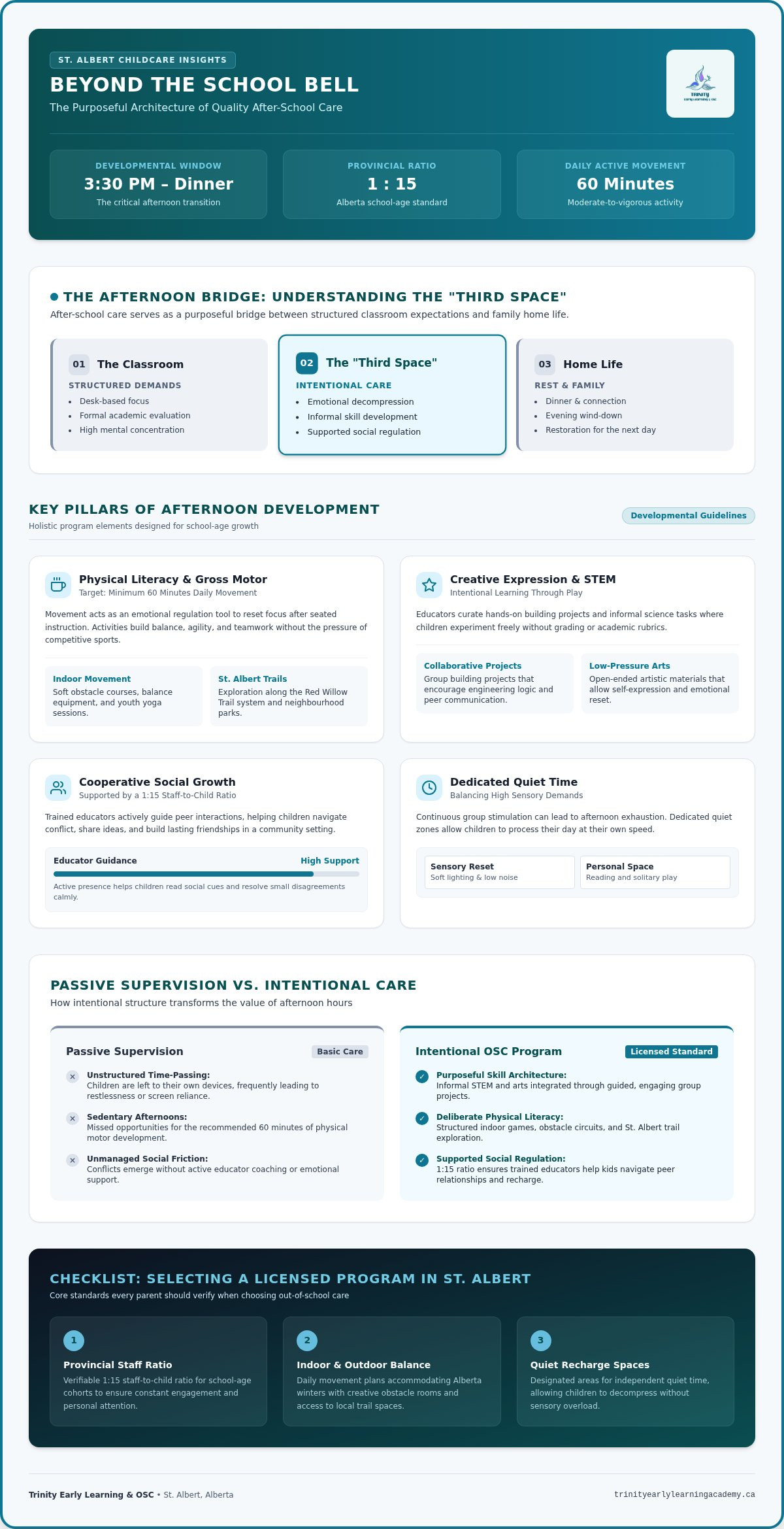
Quality out-of-school care is more than just a safe place for children to wait for their parents. It represents a vital "third space" that exists between the structured academic environment of the classroom and the relaxation of home life. In this space, after-school activities are designed as intentional opportunities for growth rather than just ways to pass the time. For families in St. Albert, choosing a program that prioritizes engagement helps reduce child stress and leads to better social outcomes. Licensed programs in Alberta operate under specific developmental guidelines that ensure children receive more than just basic supervision.
When providers curate specific activities for kids in after school programs, they focus on the whole child. This approach ensures that the energy of the afternoon is channeled into productive social interactions and skill building. By following provincial standards, such as the 1:15 staff-to-child ratio for school-age groups, educators can provide the direct support children need to feel secure and valued. This intentional structure helps bridge the gap between school and home in a way that feels natural and supportive.
The Role of Play in Skill Development
Informal play is a powerful tool that helps children organize their thoughts and decompress after a long day of desk-based learning. There is a clear difference between passive supervision, where children are left to their own devices, and active engagement. In a quality childcare setting, educators facilitate play that encourages holistic growth. This might look like a collaborative building project or a group game that requires problem solving. These moments allow children to practice social cues and emotional regulation in a low-pressure environment. It's about creating a space where learning continues without the pressure of grades or formal testing.
Transitioning from the Classroom to Care
At 3:30 PM, children often experience a mix of physical fatigue and pent-up energy. They need a space that acknowledges these shifting emotional requirements. A predictable routine is essential. It helps children feel grounded. This sense of security allows them to realize their potential for the rest of the day. A warm, nurturing environment in St. Albert programs makes this transition seamless. When a child moves from school to a licensed daycare St. Albert families trust, they are entering a community-focused facility designed to support their specific developmental stage. This stability ensures that the afternoon remains a time of joy and discovery rather than exhaustion.
Physical Literacy and Active Play: Burning Energy After Class
After sitting at a school desk for most of the day, children have a natural need to move. Prioritizing gross motor skill development through both organized and unorganized play is a core part of a healthy afternoon. Physical activity isn't just about burning calories; it's a tool for emotional regulation. It helps kids process the stresses of their school day and reset their focus for the evening. According to daily physical activity guidelines for children, school-age kids should get at least 60 minutes of moderate-to-vigorous movement every day. By providing a variety of movement options, programs ensure that kids stay active regardless of the season.
Indoor Movement and Cooperative Games
When the Alberta winter makes outdoor play difficult, educators focus on creative indoor movement. This often includes obstacle courses that challenge balance and coordination using soft mats and equipment. Yoga sessions designed for school-age children offer a way to build strength and practice mindfulness simultaneously. These specific activities for kids in after school programs emphasize cooperative games rather than intense competition. Unlike school sports, which can sometimes be stressful, these games build teamwork and social bonds in a low-pressure environment. It's a space where every child can participate regardless of their athletic skill level. This inclusive approach ensures that no child feels left out during physical play.
Outdoor Exploration in St. Albert
While many of these activities are found in general childcare, specialized programs can also provide excellent results; for example, you can learn more about Flinn Taekwondo Academy to see how martial arts can be a valuable addition to a child's afternoon routine.
Fresh air and sunshine are vital for a child's mental health and focus. St. Albert provides beautiful local park spaces and trail systems that are perfect for nature-based play. Interacting with the environment helps children develop their senses and curiosity about the world around them. Whether they're exploring the Red Willow Trail system or playing in a secure neighbourhood park, this time outside helps them decompress. Safety is the top priority during these high-energy sessions. Educators provide close supervision while allowing children the independence to explore and test their physical limits. For parents seeking a balanced afternoon, licensed out-of-school care offers the perfect mix of structured play and outdoor freedom. This variety ensures that children remain engaged and happy until they are picked up.
Creative Expression and STEM: Building Skills Through Play
Creative expression and STEM are not just ways to pass the time. They are essential for cognitive growth. When children engage in arts or science after school, they learn to solve problems and think critically. These experiences help them process what happened during their school day. Parents can use the Alberta licensed childcare search tool to find providers that prioritize these developmental areas. Such activities for kids in after school programs support the early childhood education St. Albert framework by encouraging children to investigate their world through hands-on discovery.
Hands-On STEM Projects
In an informal setting, STEM projects don't feel like schoolwork. They feel like discovery. Children might engage in building challenges using recycled materials like cardboard, egg cartons, or plastic bottles. These simple tasks encourage engineering minds to think about structure and stability. Basic science experiments, like creating a baking soda volcano or exploring surface tension with dish soap, feel like magic to a young child. However, they teach real concepts about chemical reactions and physics. These specific activities for kids in after school programs foster a deep curiosity. They help children develop a love for learning that lasts well beyond their elementary years.
Artistic Discovery and Fine Motor Skills
Prioritizing creative freedom is a hallmark of a quality OSC program St. Albert families trust. Instead of focusing on a perfect finished product, educators emphasize process-based art. This means the value lies in the act of creating, not just the final result. Children use different mediums such as clay, watercolours, or textiles to express themselves. Working with these materials helps develop fine motor skills and hand-eye coordination. Many projects connect to community themes or seasonal changes in St. Albert, such as painting the changing colours of the local trees. This connection to the environment makes the art more meaningful. It allows children to reflect on their community while they build their creative confidence.
Social Growth and Quiet Time: Balancing the Afternoon
After a six-hour school day, many children arrive at care feeling cognitively fatigued. For introverted or tired kids, the transition requires a deliberate "recharging" period. Activities for kids in after school programs shouldn't always be loud or high-energy. Licensed facilities in St. Albert provide dedicated quiet zones that serve as a sanctuary from the bustle of the main play areas. These spaces allow children to decompress in a calm environment, which is vital for their emotional well-being. Snack time acts as a natural social hub during this transition. It's a time when children sit together, share stories, and build friendships in a relaxed setting. Educators play a critical role during these moments. They guide social-emotional learning (SEL) by encouraging respectful conversation and active listening. This careful balance between social interaction and restorative rest ensures that children don't leave the program feeling overwhelmed or sensory-overloaded.
Friendship and Conflict Resolution
One unique benefit of out-of-school care is the mixed-age environment. Older children often naturally take on a mentoring role. They help younger peers with games or simple tasks, fostering a culture of kindness. This dynamic builds a strong sense of community within the St. Albert care centre. Disagreements are a natural part of social growth, and they provide valuable learning opportunities. Educators don't just stop conflicts; they help children navigate them with empathy. They teach kids how to express their feelings using "I" statements and how to find fair solutions. This professional guidance helps children develop the resilience and communication skills they need for future social success. To further nurture this spirit of empathy, families can explore ways to give back to the community together, such as using Befriend Cows to find and support vetted animal rescues.
The Importance of Choice and Autonomy
Autonomy is a key driver of positive engagement. When children choose their own activities, they feel a sense of control and personal confidence. This might mean heading to a cozy reading nook with a favourite book or spending an hour working on complex puzzles. Providing these options significantly reduces behavioural issues because children are participating in tasks that match their current energy levels. Quality programs prioritize this freedom of choice as a core developmental pillar. It allows every child to find their own pace for the afternoon, whether they need high-energy play or a quiet moment of reflection. If you are looking for a program that respects your child's individual needs and promotes social growth, consider enrolling in our licensed out-of-school care today.
Selecting a Licensed Out-of-School Care Program in St. Albert
Choosing a provider is a significant decision for any family. In St. Albert, parents have several options, but selecting a licensed facility ensures that the environment meets strict provincial standards for safety and care. A licensed daycare St. Albert families rely on provides peace of mind through regular inspections and qualified staffing. These programs are also eligible for provincial financial supports. For example, the Alberta affordability grant and subsidies help reduce costs for families with a household income under $90,000. This makes high-quality care more accessible for modern families. Beyond the finances, the most important factor is how the program manages its daily schedule and communicates with you about your child's experiences.
Key Questions for Program Directors
When you tour a facility, come prepared with specific questions. Ask about the balance between active play and quiet time. You want to ensure the activities for kids in after school programs aren't just a repeat of a structured school day. Inquire about how educators incorporate child interests into the weekly plan. A program that listens to its students is more likely to keep them engaged. It's also vital to verify that staff have formal training in early childhood development. This expertise ensures they can handle social dynamics and emotional needs effectively. Knowing your child is with trained professionals who understand their developmental stage is reassuring for any parent.
Evaluating the Environment
The physical space should feel organized and inviting. Look for centres that offer a variety of distinct areas, such as a creative station, a reading nook, and a large space for movement. This variety allows for autonomy, which supports better engagement and fewer behavioural issues. Check for safety standards like secure entries and clean surfaces. Pay attention to how the children already in the program interact with each other and the staff. You will realize if a program is the right fit by observing the general atmosphere. Is it calm and supportive? A nurturing environment is one where your child's unique personality can shine and where they feel a true sense of belonging.
Clear communication is the final piece of the puzzle. A quality program often uses digital apps or daily logs to tell you about the activities for kids in after school programs your child enjoyed. Knowing that your child spent their afternoon building a STEM project or playing a cooperative game helps you feel connected to their day. This transparency builds a partnership between the home and the care centre. It ensures your child receives consistent support from a team of dedicated professionals who are invested in their joy and growth.
Supporting Your Child's Afternoon Journey
Choosing the right afternoon environment ensures your child transitions from school to home with confidence and joy. You now understand how a balance of physical literacy, creative discovery, and restorative quiet time supports their well-being. By prioritizing licensed care, you gain access to professional standards and provincial financial supports. These quality activities for kids in after school programs turn the hours after the school bell into a meaningful time for social and cognitive development. It's about more than just supervision; it's about providing a space where children can truly recharge and grow.
As a licensed Alberta childcare provider, we are committed to creating a space where every child feels valued. Our expert educators focus on holistic growth within a supportive community environment. We invite you to see how our program can benefit your family and provide the stability your child needs to thrive. Discover our engaging out-of-school care programs in St. Albert and take the next step in your child's developmental journey. We look forward to welcoming your family into our nurturing community.
Frequently Asked Questions
What are the most popular activities for kids in after-school programs?
Popular activities for kids in after school programs often include a mix of hands-on STEM challenges and creative arts. Children enjoy building with recycled materials or conducting simple science experiments that feel like discovery. Organized group games and outdoor play are also high on the list, especially when they focus on cooperation rather than competition. These choices ensure that every child finds something they enjoy while developing new skills in a supportive environment.
How do after-school activities help with social development?
After-school activities foster social development by providing a structured yet relaxed environment where children can practice communication. Through cooperative games and shared snack times, kids learn to navigate social cues and resolve conflicts with empathy. Mixed-age groups are particularly beneficial as they allow older children to mentor younger peers. This dynamic builds a strong sense of community and helps children develop the emotional resilience needed to form lasting friendships within their care centre.
Is there a difference between activities in licensed vs unlicensed programs?
The primary difference lies in oversight and financial accessibility. Licensed programs in St. Albert must meet strict Alberta provincial standards for safety, staff-to-child ratios, and educator training. These facilities undergo regular inspections to maintain high quality. Additionally, only licensed programs can offer the Alberta affordability grant and provincial subsidies. Choosing a licensed provider ensures your child is in a safe, professional environment that remains affordable through government support systems.
Do after-school programs in St. Albert offer help with homework?
Many out-of-school care programs in St. Albert provide dedicated quiet time where children can focus on their school assignments. While these centres aren't formal tutoring services, educators offer a supportive environment and basic guidance to help children complete their work. Providing a calm space for homework allows kids to finish their tasks before heading home. This balance ensures that family time in the evening can be spent relaxing together rather than rushing through school projects.
What should I look for in a monthly activity calendar for my child?
A quality monthly calendar should show a clear balance between high-energy physical play and restorative quiet time. Look for a variety of activities for kids in after school programs that include STEM projects, artistic expression, and outdoor exploration. The schedule should feel diverse and inclusive, offering different choices that cater to various interests and energy levels. A well-organized calendar is a sign that the program is intentional about supporting your child's holistic growth and daily enjoyment.
How do programs keep kids engaged during the winter months in Alberta?
During the cold Alberta winter, programs move the energy indoors with creative movement sessions and complex building projects. Educators often set up indoor obstacle courses or yoga sessions to help children stay active when the temperature drops. Large-scale art projects and collaborative STEM challenges also keep kids engaged and curious. These indoor activities are designed to burn energy and stimulate the mind, ensuring that children remain happy and active even when outdoor play is limited by the weather.
Are there specific activities for older children in out-of-school care?
Older children in out-of-school care benefit from activities that offer more autonomy and leadership opportunities. They often engage in more complex STEM challenges, such as basic coding or advanced engineering builds. Mentorship is another key component, where older kids help guide younger peers during group games or craft sessions. This responsibility builds their confidence and social skills. Providing age-appropriate choices ensures that older students remain interested and feel like valued members of the care community.
How do these activities align with the Alberta early learning curriculum?
Quality programs in St. Albert align their activities with Alberta's Flight framework, which is the provincial early learning and care curriculum. This framework emphasizes play-based learning and views children as mighty learners and citizens. Activities are designed to support core pillars like well-being, social responsibility, and creative expression. By following these guidelines, educators ensure that the care environment complements the child's formal schooling while focusing on their unique developmental needs and personal interests.


