

Mealtime progress often starts with less pressure, not more persuasion. When managing picky eaters at daycare, educators can offer a familiar food, serve small portions and let children decide whether and how much to eat. Calm, repeated opportunities to explore unfamiliar foods can help children feel more comfortable over time.
It’s understandable to worry when a child eats very little at daycare, especially if mealtimes at home look different. A relaxed shared meal lets children see educators and peers enjoying a range of foods, without making tasting a requirement.
This article shares practical ways to make meals more welcoming, from offering simple choices to introducing new foods gradually. It also explains how families and educators can exchange useful observations and notice small steps forward, supporting a child’s eating experience with patience and consistency.
Key Takeaways
- Make shared meals low-pressure, with familiar foods and gentle chances to explore something new.
- Invite children to help prepare or serve food to build comfort and involvement at mealtime.
- Share clear observations between home and daycare, and notice small steps such as touching or tasting a new food.
- Use steady, supportive childcare routines to help children feel more settled around meals.
2. How group mealtimes at daycare can support food acceptance
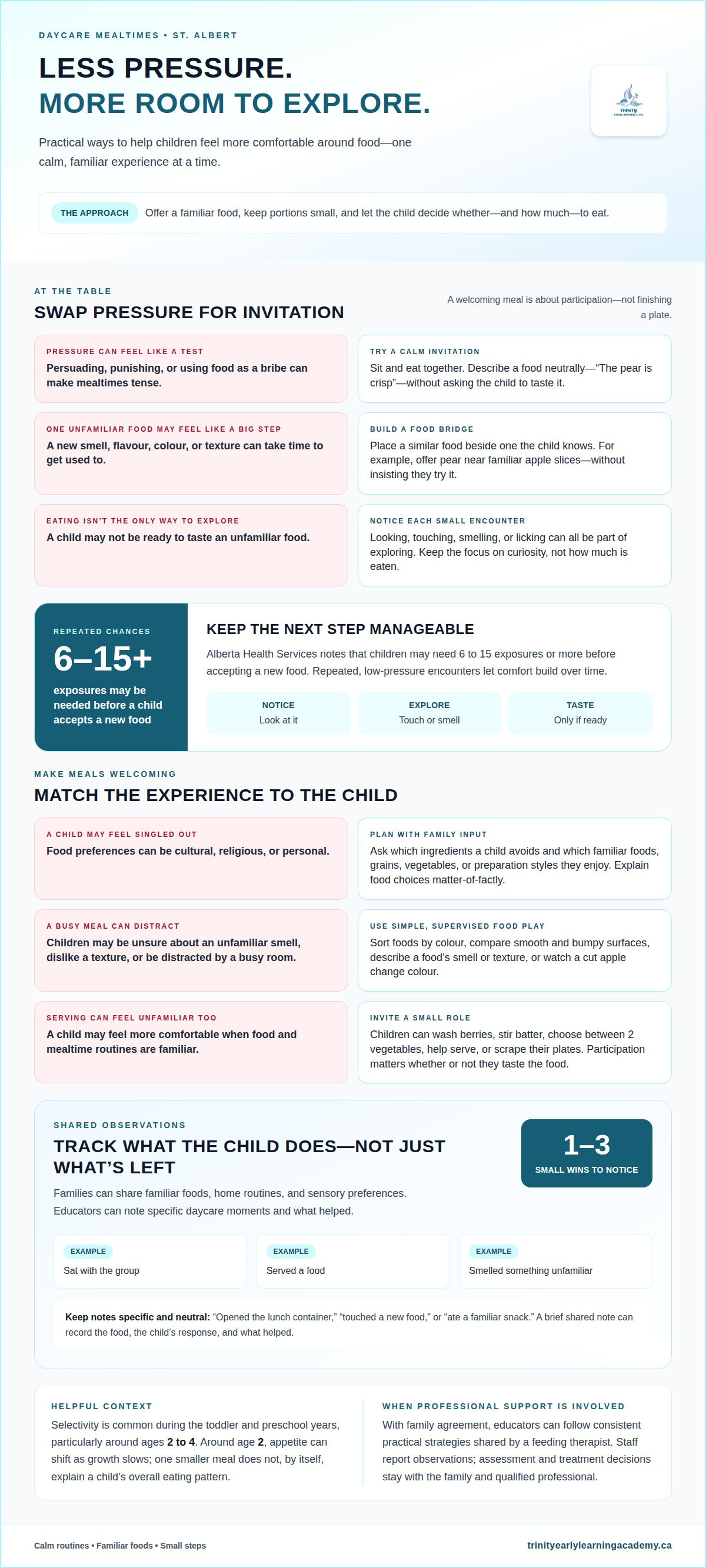
At a relaxed group meal, toddlers can observe educators and peers eating different foods. Alberta Health Services encourages positive meal and snack experiences in Early Learning and Child Care settings to support social connections, learning and healthy eating behaviours. An educator might sit with the children, eat the same food and describe its colour or texture without asking anyone to taste it.
Keep the atmosphere calm by avoiding pressure, punishment or food bribes. Offer a familiar food alongside the meal, serve small portions and let children decide whether to eat. Avoid making dessert a reward for finishing vegetables, which can make a less-preferred food feel like an obstacle. A neutral comment such as “The pear is crisp” invites interest without turning eating into a test.
New foods often take repeated, low-pressure encounters. Alberta Health Services notes that children may need 6 to 15 exposures or more before accepting a new food. A food bridge can make the next step feel manageable: pair a familiar food with something similar in colour, flavour, or texture. If a child enjoys apple slices, for instance, offer pear nearby without insisting they try it. Looking, touching, smelling, or licking can all be part of exploring.
Ask families about cultural and religious food preferences, including ingredients a child avoids and familiar foods they enjoy. Use this information when planning meals and suitable alternatives, and explain choices matter-of-factly so no child feels singled out. Families can also share familiar grains, vegetables or preparation styles that may help make mealtimes more welcoming.
Make food appealing through simple, supervised activities. Children can sort foods by colour, compare a pepper’s smooth skin with a bumpy one, or help arrange fruit into a face. For toddlers, offer age-appropriate bite-size pieces and textures suited to each child’s eating abilities. Focus on exploration, not on how much gets eaten.
Food games can connect curiosity with learning. Invite children to describe a food’s smell, sound or texture, or compare a whole cucumber with a slice. They might watch a cut apple change colour over time. These experiences keep food exploration positive and give children a reason to engage, even when tasting isn’t their next step.
3. How can childcare programs partner with families and track progress?
Useful progress notes begin with shared observations, not judgements about how much a child ate. Parents can tell educators which foods feel familiar, how meals usually go at home, and whether sleep or routine affects appetite. Educators can record what the child did at daycare, such as opening a lunch container, touching a new food or eating a familiar snack.
Young children can be selective for different reasons. Picky eating is common during the toddler and preschool years, particularly around ages 2 to 4. A child may dislike a texture, feel unsure about an unfamiliar smell, or be distracted by a busy room. Around age 2, appetite can also shift as growth slows, so a smaller meal does not by itself explain a child’s overall eating pattern.
Involving children in planning and preparation gives them a role beyond eating. At home or in childcare, invite a child to wash berries, stir batter, or choose between 2 vegetables for lunch. Educators can let children help with serving or scraping their plates. These manageable jobs build familiarity with ingredients and make mealtimes an opportunity to participate, whether or not the child tastes the finished food.
Sharing meals and snacks with peers offers another comfortable way to observe food. A child may notice a friend serving themselves or calmly eating a familiar food. Alberta Health Services notes that positive meal and snack experiences in Early Learning and Child Care settings support social connections, learning and healthy eating behaviours. Keep the focus on a welcoming routine, not comparisons between children’s portions.
If a feeding therapist is involved, parents can ask about sharing practical strategies with childcare educators. With the family’s agreement, educators can follow consistent approaches, such as using a preferred utensil, offering a particular food texture or exploring food gradually. Staff should report their observations and leave assessment and treatment decisions to the family and qualified professional.
Track small changes instead of recording only what remains uneaten. Choose 1–3 wins to notice, such as sitting with the group, serving a food, or smelling an unfamiliar item. A brief shared note can capture the food, the child’s response, and what helped. In Canada, meal and snack requirements for licensed childcare are governed by the applicable provincial or territorial rules; in St. Albert, families and educators should follow Alberta’s requirements for licensed care. For a childcare setting with steady routines, explore licensed daycare services.
4. Communication between parents and daycare educators
Strong communication between parents and educators turns separate observations into a shared picture of a child’s development. Agree on a simple way to exchange updates, such as a pickup conversation or written note. Keep updates specific: “Maya opened the yogurt but declined it” says more than “She ate poorly.” Clear examples help adults respond consistently without making food the child’s main identity.
Parents can describe familiar foods, sensory preferences and routines that affect appetite. For example, explain whether a child avoids crunchy textures or prefers foods served separately. Educators can share what they observe at daycare, including whether the child seems more comfortable eating with peers. These details help both settings introduce foods in ways that respect the child’s experience.
Use neutral language when discussing nutrition and healthy eating. Instead of praising a clean plate, describe what you observed: “Sam smelled the lentil soup” or “Ava asked for more rice.” Parents and educators can then agree on a consistent next step, such as offering a similar texture at home or letting the child help serve it. Avoid comparing siblings or classmates, whose eating patterns may differ. While young children should always explore food without tracking or counting, parents looking to stay mindful of their own wellness and dietary habits during busy family routines can use resources like an AI calorie tracker app Australia to support personal health goals.
A brief shared record can show which conditions support learning. Note the food, how it was presented, the child’s response and relevant context, such as a rushed transition or change in routine. For instance, “Tried cucumber after helping wash it” is more useful than a broad label like “likes vegetables.” Review observations together and adjust one approach at a time.
Agree on what needs prompt discussion, too. Parents should tell educators about known food allergies, dietary restrictions or changes that affect safe eating. Educators should report recurring difficulty chewing or swallowing, or frequent coughing, choking or gagging during meals. Concerns about growth, nutrition or safe eating call for professional advice. Clear observations help families explain concerns accurately.
Keep the conversation respectful and practical, especially when home and daycare experiences differ. A child might eat toast at home but decline it in a busy classroom; compare the setting, timing, and texture before drawing conclusions. End each exchange with a shared action, such as noting the child’s response to a familiar food. For support with consistent care routines, connect with a local childcare team.
Trinity Early Learning & OSC: Licensed Daycare Services
Trinity Early Learning & OSC is a licensed daycare in St. Albert, offering childcare and early learning for local families. If your child is adjusting to group meals, a consistent childcare setting can complement the strategies in this guide. Share your child’s food preferences and mealtime experiences with educators to build a clearer picture together.
Families can explore Trinity’s Affordability Grant Daycare, preschool programming, kindergarten care and out-of-school care. Consider the program that fits your child’s age and care needs, then discuss how observations from home and daycare can inform a supportive routine.
To learn more about care options, visit trinityearlylearningacademy.ca.
Build a Mealtime Partnership That Grows With Your Child
A steady approach to managing picky eaters at daycare can begin with one practical step: agree on what information will help educators support your child. Choose a simple way to share updates, and focus on observations that guide the next day’s care. A child’s comfort can change over time, so keep the conversation open as routines and preferences develop.
Parents don’t need to navigate every mealtime challenge alone. A thoughtful childcare partnership can connect what a child experiences at home with what educators observe during the day. If you’re considering care in St. Albert, explore Trinity Early Learning & OSC’s programs.
Contact Trinity Early Learning & OSC to take the next step. A patient, consistent partnership can help mealtimes feel more manageable for your family.
Frequently Asked Questions
What simple strategies can staff use today to support picky eaters at mealtime?
Make the transition to eating predictable. Give a calm reminder before the meal, then use the same seating and cleanup routine where possible. Keep conversation welcoming and let children help with small tasks, such as passing napkins. If a child declines lunch, record what happened without labelling them difficult. A clear, neutral note can guide the next conversation with family.
How can childcare programs partner with families and track progress?
Use a shared record to compare what a child experiences at home and at daycare. Note the food, its texture, the setting, and the child’s response, then identify 1–3 small wins to follow over time. For example, a child might tolerate a food on the table before showing interest in it. Parents and educators can use those observations to choose a suitable next step.
What causes fussy eating?
Fussy eating can reflect a child’s changing appetite, growing independence, or discomfort with an unfamiliar flavour or texture. It’s common during the toddler and preschool years, particularly around ages 2 to 4; appetite may also shift as growth slows around age 2. A child’s willingness to eat can vary by day and setting. Look for patterns rather than judging a single meal.
What are practical strategies for managing picky eaters in daycare?
Make a simple plan around the child’s needs: note familiar foods, disliked textures and relevant family preferences. Keep expectations consistent across educators, and use neutral descriptions rather than labels such as “fussy.” When managing picky eaters at daycare, review the plan as the child’s response changes. Seek professional advice about concerns related to growth, nutrition or safe eating.
How can daycare staff encourage children to try new foods without pressure?
Invite curiosity without requiring a taste. An educator might describe food as “soft,” “crunchy” or “cool,” then let the child choose whether to look, smell or touch it. Avoid praising eating alone, such as celebrating a finished plate. Respond calmly whether the child tastes or declines; this keeps exploration voluntary and the table from feeling like a test.
How can educators partner with families about a child’s picky eating?
Ask parents what makes meals easier for their child, including familiar serving styles, cultural or religious food preferences and foods they avoid. Agree on what educators should report, such as repeated gagging or a sudden change in eating. If a feeding therapist is involved, families can share relevant strategies with staff. Clear, respectful communication helps everyone support the child consistently.


