

Safer daycare pick-ups rely on clear release procedures and controlled entry, not cameras alone. Effective security measures for daycare pick-up include keeping an up-to-date list of authorized adults, checking identification when an unfamiliar person arrives, and recording each child’s departure. Secure doors, cameras, and alarms can support these steps, while staff supervision remains central.
Families want pick-up to feel calm and welcoming, while knowing children leave only with an approved adult. Consistent security measures for daycare pick-up help staff manage everyday hand-offs and unexpected changes without making the process feel impersonal.
This article explains how access control, cameras, and alarms can contribute to safer pick-ups, along with practical ways to verify approved adults and manage visitors. It also looks at how a daycare can maintain secure boundaries while helping children and families feel comfortable at the door.
Key Takeaways
- Combine controlled entry with cameras and alarms, while keeping staff supervision at the centre of pick-up safety.
- Keep authorized pick-up details current and record each child’s arrival and departure so staff can follow a consistent process.
- Make security procedures predictable and respectful, helping families feel welcome while keeping visitor access controlled.
- Share family-specific safety concerns with the daycare so pick-up arrangements can reflect a child’s needs.
1. Integration of access control, cameras, and alarms
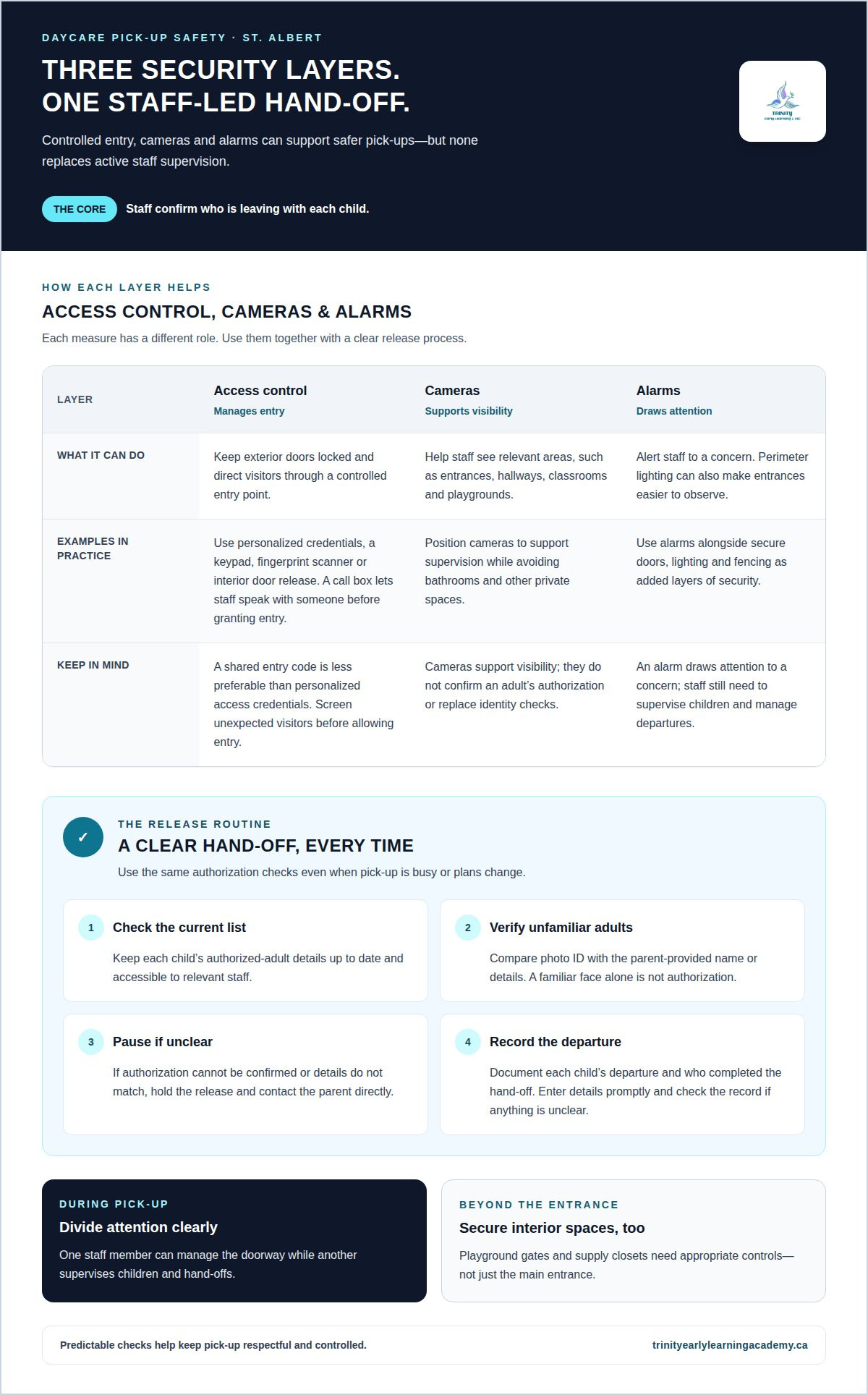
Daycare centres can secure entrances by keeping exterior doors locked and directing visitors through a controlled entry point. During pick-up, one staff member can manage the doorway while another supervises children and hand-offs. These security measures for daycare pick-up help separate visitor access from family arrivals while keeping the welcome warm. A clear policy should explain what staff do when someone arrives without authorization.
Keyless entry may use a keypad, fingerprint scanner, or interior door release. Personalized access credentials are preferable to one code shared with everyone. If a parent forgets a code, a call box lets staff speak with them before granting entry. Staff can also use it to screen delivery people and direct visitors to the appropriate check-in point, keeping access controlled during busy arrivals.
Cameras can support supervision with 24-hour surveillance of entrances, hallways, classrooms, and playgrounds. Their placement should help staff see relevant areas without recording bathrooms or other private spaces. Access control should also cover interior spaces: playground gates and supply closets need appropriate controls, not just the main entrance. This helps reduce opportunities for children to wander beyond supervised areas.
Alarms, perimeter lighting, and fencing can add another layer of security. An alarm can alert staff to a concern, while clear lighting makes entrances easier to observe. These security measures for daycare pick-up work together: controlled doors manage entry, cameras support visibility, and alarms draw attention to concerns. For facilities evaluating broader perimeter safety and physical deterrence, dedicated providers like Northwest Security Services demonstrate how layered protection helps safeguard commercial and institutional properties. None replaces active supervision. Staff still need to know which children are leaving and who is accompanying them.
2. Q: How can I improve security at my daycare?
Pick-up procedures vary by centre and jurisdiction. For St. Albert families, review the centre’s written release policy: how it identifies approved adults, records changes, and responds when details are unclear. Practical security measures for daycare pick-up include keeping an up-to-date authorized-adult record, checking photo ID for unfamiliar people, and documenting each child’s departure.
Keep an accurate authorized-pickup list for every child. Make sure parents have a clear way to update it when arrangements change, and that staff can access the latest version at pick-up. If an adult isn’t on the list, staff should pause the release and contact the parent. A familiar face alone doesn’t replace authorization.
Digital attendance tools can record each child’s arrival and departure, including who completed the hand-off. Specialised management systems like Kinderflow help early learning centres keep attendance logs and authorized contact details accessible in one place. A digital log can make entries easier to find, but it still depends on accurate information and staff following the centre’s security procedures.
For an unfamiliar pick-up person, staff can compare photo ID with the name or details provided by the parent. If the information doesn’t match, or authorization can’t be confirmed, they should hold the release and contact the parent directly. Apply this step consistently, even during a busy transition.
Clear communication with parents can prevent confusion at the doorway. Use the centre’s established channel to document pick-up changes, then ensure relevant staff can see the update. Limit access to digital attendance records to people who need them. Cameras can support visibility, but they don’t replace identity checks or active supervision.
Review the process regularly with staff. A practice scenario, such as an unfamiliar adult arriving with a pickup request, can show whether everyone knows where to find the authorized list and whom to contact. Families exploring licensed daycare services can consider how clear release procedures support an organized hand-off.
Procedures vary by jurisdiction and centre. Families can review the centre’s written release policy to understand how it handles pick-up authorization and unclear cases.
3. Balancing security procedures with a welcoming environment
A warm greeting and a consistent entry routine go hand in hand. Staff can welcome each family, then guide adults through the centre’s sign-in and sign-out steps. Recording each child’s arrival and departure helps maintain an accurate attendance record. A visible check-in point gives families a clear place to pause, speak with staff, and complete the hand-off without interrupting classroom activities.
For visitors, use a simple sequence: ask them to sign in, provide identification, and arrange an escort. Staff can calmly explain each step, including when someone is unfamiliar or has arrived unexpectedly. A visitor badge helps staff recognize who is in the facility. Staying with a staff member helps keep visitors appropriately accompanied, while attentive greetings help identify situations that need closer attention.
Staff preparation helps procedures feel steady rather than abrupt. Train team members in release policies, supervision expectations, security procedures, and emergency response. Practise responding when an adult’s identity raises a concern or a child isn’t where staff expect during a transition. Regular practice helps staff follow consistent steps, share information promptly, and supervise children while assisting a family.
Emergency planning should include clear communication with families. Staff can explain how the centre handles evacuation, shelter-in-place, and lockdown situations, and how updates reach parents during an incident. Keep emergency exit plans accessible to staff and practise drills regularly so everyone understands their role. Visible fire-safety equipment and a known meeting point can make the response easier to follow. Preparation helps children receive calm, direct guidance when routines change.
4. Balancing a welcoming environment with secure boundaries
Secure boundaries feel less disruptive when families understand each procedure. Staff can greet parents warmly, explain a sign-in step, and direct them to the right hand-off point. Consistent routines help create a welcoming environment because families know what to expect, even when a pick-up plan changes. Clear communication supports peace of mind without weakening access procedures.
Family circumstances can require tailored arrangements. If a parent has custody-related concerns or another specific safety need, they should communicate it directly to the daycare. Staff can record relevant instructions, share them discreetly with the people responsible for pick-up, and follow the agreed process. This avoids discussing sensitive details at a busy entrance or in front of children.
Boundaries also apply to adults working in or visiting the facility. Daycare operators can use background checks and staff recommendations when assessing people who may work with children. For vendors, repair technicians, and delivery personnel, staff can verify their identity and reason for visiting. A clear visitor process helps distinguish expected access from an unfamiliar request without making families feel unwelcome.
Camera policies should explain which areas are monitored, who can view recordings, and how families receive updates. Cameras should not record bathrooms or other private spaces. Some centres offer webcam access for parent reassurance, but broad viewing access can raise privacy concerns. Share the policy with families so they understand the purpose and limits of surveillance.
Emergency drills and clear communication complete the balance. Explain how families will receive information during an emergency, and make sure staff know their roles in the relevant procedures. A parent can assess whether protocols feel both caring and consistent by observing how staff greet families, guide visitors, and respond to questions. To explore childcare in a setting built around children’s daily needs, review childcare options.
Trinity Early Learning & OSC: Licensed Daycare Services
Trinity Early Learning & OSC is a licensed daycare in St. Albert, offering Childcare, Preschool programming, Kindergarten care, and Out-of-school care. Its warm, family-centred environment includes CCTV monitoring, an inclusive Childcare Program, approved affordability grant funding, and low child-to-educator ratios. Families can consider how the centre’s daily routines fit their child’s needs and their own schedule.
Clear communication between families and care providers supports children’s transitions between home and daycare. If you’re considering childcare in St. Albert, share any specific pick-up arrangements directly with Trinity Early Learning & OSC. You can pre-register online or book a tour to discuss the programs and see whether the centre suits your family.
Make pick-up expectations part of your care decision
Before choosing a daycare, consider how its routines fit your family’s hand-offs, communication preferences, and safety needs. Write down the questions that matter most, then discuss them with the care team. For example, ask how pick-up changes are shared, how children move from activities to the exit, and how staff handle unexpected situations. Clear answers can help you assess whether the environment feels orderly and welcoming.
Security measures for daycare pick-up work best as part of a shared routine between families and staff. Keep your child’s authorized contacts current, communicate changes through the centre’s established process, and help your child know who will collect them. These consistent actions can make transitions easier while supporting trust.
To discuss your family’s childcare needs with Trinity Early Learning & OSC, contact the team. A thoughtful conversation is a positive next step toward care that feels right for your child.
Frequently Asked Questions
How can I improve security at my daycare?
Review security throughout the facility, not only at the front entrance. Check that ground-level windows have secure locks, hazardous materials are stored safely, and furniture cannot tip easily. Limit access to digital child records to staff who need it, and train employees to recognize phishing emails and suspicious links. Regular system checks and prompt repairs help keep security tools working as intended. These steps complement clear supervision and release procedures.
What are the top safety concerns for daycare centres?
Common concerns include unauthorized entry, a child leaving unnoticed, and confusion about who may collect a child. Also review visitor screening, private camera placement, emergency readiness, and physical hazards such as sharp edges or unsecured furniture. A practical walkthrough can help: inspect doors and windows, note blind spots, and check whether staff can quickly find emergency instructions and contact details.
How should daycare staff verify an authorized person picking up a child?
Staff should compare the arriving adult with the child’s current pick-up record and follow the centre’s identity-check procedure. If the adult’s name differs or the record is unclear, pause the hand-off and contact the parent using the centre’s established contact details. Even a familiar relative arriving under a different name needs confirmed authorization before the child leaves.
What identification should parents and pickup contacts bring to daycare?
An unfamiliar pick-up contact should bring photo identification for staff to compare with the information provided by the parent. The centre’s procedure determines how identification is checked and recorded. Parents can help by telling a new pick-up person to expect this step and submitting the person’s name through the daycare’s accepted process before arrival. This helps avoid a rushed conversation at the doorway.
How should daycare centres manage pickup authorization forms and custody restrictions?
Keep authorization records current, readable, and accessible only to staff who need them. For custody-related restrictions, parents should communicate directly with the daycare and provide clear written instructions and relevant documents. Identify who can answer questions if instructions conflict or seem incomplete. Discreet handling protects family privacy while giving staff a clear process for responding.
What are safe procedures for adding or changing an authorized pickup person?
Use the daycare’s established process instead of relying on a message passed through another adult or a child. Provide the new person’s full name and contact details, say whether the change is temporary or ongoing, and allow staff to acknowledge the update. Ask the pick-up person to bring photo identification on their first visit. If plans change suddenly, contact the centre directly so staff can verify the request.


