

Your parental intuition is a powerful tool, but in a shifting childcare landscape, a "good feeling" isn't always enough to guarantee your child's safety. You deserve to feel absolute peace of mind when you drop your little one off at a centre or day home. It's common to worry about missing subtle red flags to look for in a childcare provider, especially with the complexity of Alberta's updated licensing regulations and the new 2026 incident reporting requirements.
We understand that choosing a partner in your child's development is one of the most significant decisions you'll make. You're looking for more than just a spot; you're looking for a nurturing environment where transparency is the standard. This article will help you identify twelve critical warning signs that suggest a provider might not meet the high standards of care and safety your family requires.
By the end of this checklist, you'll have a clear understanding of non-negotiable deal-breakers and the knowledge to verify a provider's history through official Alberta channels. We'll examine everything from staff-to-child ratios to the way a facility handles communication, giving you the confidence to choose a childcare partner that truly supports your child's holistic growth and emotional well-being.
Key Takeaways
- Learn why your initial sensory observations, such as the difference between a productive hum of play and chaotic noise, are vital indicators of a centre's quality.
- Discover how to spot physical hazards in indoor and outdoor spaces that could compromise your child's safety and well-being.
- Identify the primary red flags to look for in a childcare provider regarding staff interactions, including high turnover rates and a lack of adherence to provincial staff-to-child ratios.
- Understand the importance of clear, written policies and why a rushed or vague intake process serves as a significant warning sign for parents.
- Gain the practical tools needed to verify a provider's history using the Alberta Childcare Lookup tool to distinguish between minor and major non-compliance issues.
The Sensory Tour: Identifying Red Flags with Your Five Senses
When you walk into a potential centre, your senses provide immediate data that a brochure simply cannot capture. Trusting your intuition is a vital part of the search process. While you might feel pressure to focus solely on logistics or fees, your "gut feeling" is often a reaction to subtle indicators of quality child care that your brain processes in real time. If something feels "off" during your initial visit, it warrants closer inspection.
Identifying red flags to look for in a childcare provider often starts with the air you breathe. A high-quality environment should smell clean but not clinical. If you notice a persistent scent of unwashed bedding or neglected hygiene, it's a sign that daily maintenance routines are slipping. Conversely, an overwhelming smell of industrial bleach or heavy air fresheners might be an attempt to mask underlying issues with cleanliness or ventilation.
The Sound of the Room: Engagement vs. Chaos
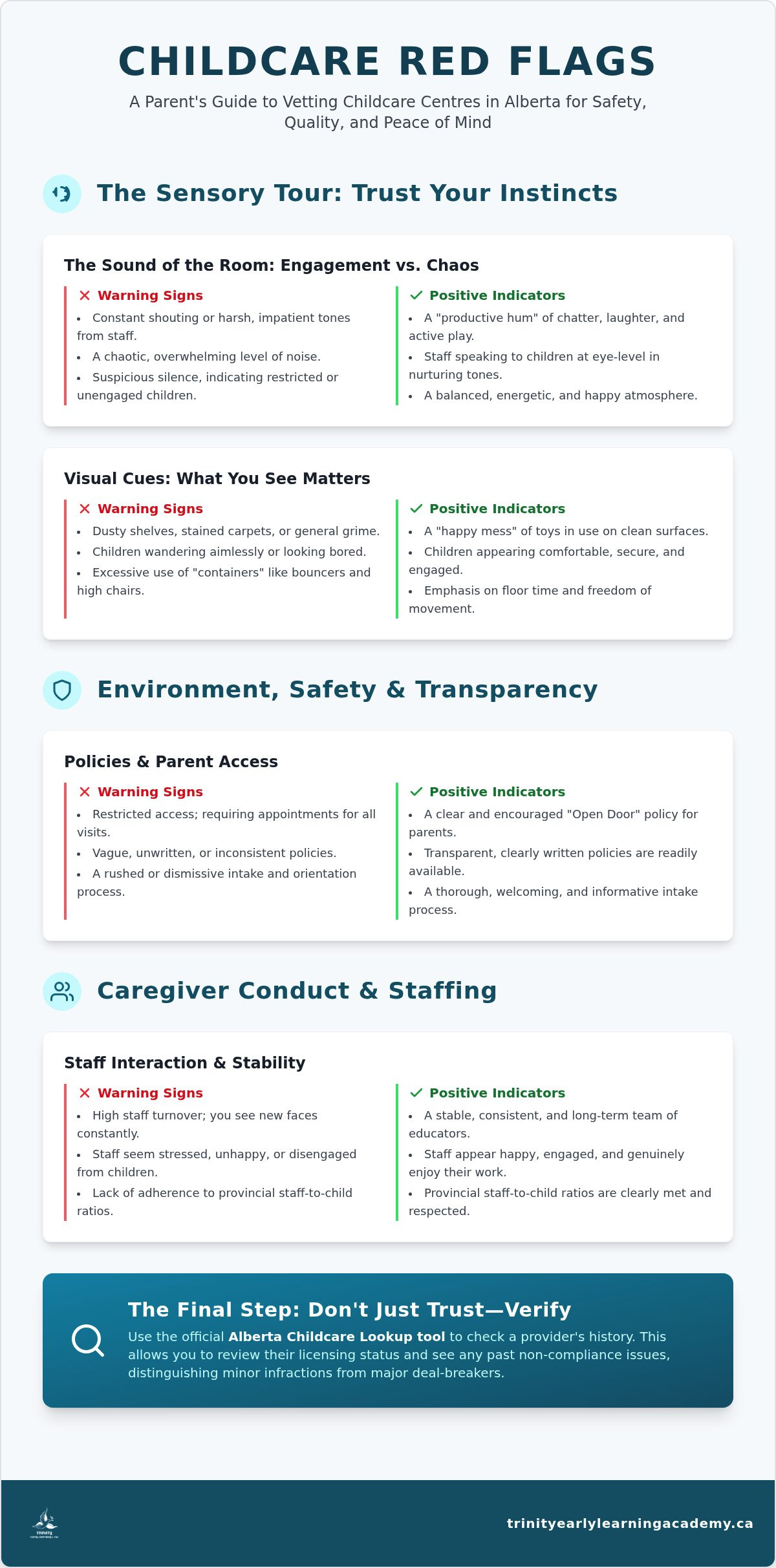
Listen closely to the volume of the room. A professional early learning environment isn't silent; it has a "productive hum" consisting of laughter, chatter, and the sounds of active play. You want to hear a balance of energy. Learning to spot the auditory red flags to look for in a childcare provider helps you understand the emotional climate of the classroom. Watch for these specific signs:
- Educator Interaction: Staff should be speaking to children at eye level. If you hear constant shouting across the room or from a standing position, it suggests a lack of personal connection.
- Tone of Voice: Redirection should be firm but nurturing. A harsh, shaming, or impatient tone is a significant deal-breaker.
- Suspicious Silence: An environment that is too quiet can be just as concerning as one that is chaotic. It may indicate that children are being overly restricted or lack stimulating activities.
Visual Engagement: What the Children’s Faces Tell You
Observe the children's body language and facial expressions. In a stable and organized setting, children appear comfortable and secure in their surroundings. They should be actively involved in their environment rather than wandering aimlessly. Look for a "happy mess" where toys and art supplies are being used; this is a sign of a healthy, functioning program. However, distinguish this from actual grime. Dust-covered shelves or stained carpets are indicators that the facility's standards for safety and care are not being met.
Another visual warning sign is the use of "containers." If you see infants or toddlers spending excessive time in high chairs, swings, or bouncers, it's a major red flag. Children need the freedom to move and explore to support their holistic development. A quality provider prioritizes floor time and active engagement over passive supervision.
Environment and Safety: Visible Warning Signs in the Facility
Environment and safety standards are the foundation of any reputable centre. While your first sensory impressions provide an emotional baseline, a systematic inspection of the physical space reveals the operational reality of the program. One of the most telling indicators of quality is a provider's attitude toward transparency. A professional facility encourages an "Open Door" policy, allowing parents to drop in unannounced. If a centre requires scheduled appointments for every visit or restricts access to certain areas, it ranks high among the red flags to look for in a childcare provider.
A truly safe daycare environment in Alberta should feel organized and intentional. This doesn't mean the rooms must be spotless at all times. You are looking for a space that balances the joy of play with the rigour of safety. A safe mess is a classroom where toys are currently out for active play, yet the floors and surfaces underneath remain sanitized and free of actual grime. This distinction helps you separate a busy, learning-focused room from one that is simply neglected.
Hygiene and Health Protocols
Health policies should be clearly defined and strictly followed to protect every child in the group. During your walkthrough, observe the layout of the facility. A major red flag is a diapering station located in close proximity to food preparation zones. These areas must be distinctly separate to prevent cross-contamination. You should also check for accessible hand-washing stations. Watch whether educators and children use them frequently, especially during transitions. A lax sick child policy might seem convenient at first, but it often leads to frequent outbreaks that disrupt your family's routine and compromise your child's health.
Physical Hazards and Maintenance
Safety requires constant vigilance and a commitment to facility upkeep. Be on the lookout for "deferred maintenance," such as peeling paint, frayed carpets, or cracked window panes. These aren't just aesthetic issues; they are safety risks. Inside the classroom, ensure all electrical outlets are covered and that cleaning chemicals are stored in locked cabinets well out of a child's reach.
Outdoor spaces require equal scrutiny. A safe playground must have secure, high fencing and soft landing surfaces, like rubber matting or deep wood chips, under climbing structures. If you notice broken equipment or inadequate fencing, these are significant red flags to look for in a childcare provider. You can verify a facility's safety record and inspection history by using the Alberta childcare lookup tools. Choosing a provider that prioritizes these physical standards, like the team at Trinity Early Learning & OSC, ensures your child remains in a secure and professional environment.
Caregiver Conduct: Red Flags in Staffing and Interaction
The people caring for your child are the heartbeat of any program. While physical safety is paramount, the quality of interaction between educators and children determines the emotional safety of the environment. When reviewing staffing, the most immediate metric to verify is the staff-to-child ratio. In Alberta for 2026, the required ratio for children aged 3 to 4.5 years is one staff member for every eight children; for those 4.5 years and older, it's one for every ten. If a room appears overcrowded or staff seem overwhelmed, these are significant red flags to look for in a childcare provider.
Frustrated or disengaged staff are another indicator of systemic issues. Watch for educators who are frequently on their phones, congregating in corners to talk to each other, or using a sharp tone with children. Professional early childhood education in St. Albert prioritizes educators who are actively engaged at the child's level, fostering a sense of security and joy. When caregivers are supported and well-trained, they have the emotional capacity to respond to your child's needs with patience and warmth.
The Problem with High Turnover
Frequent changes in staffing are a major operational red flag. Children, particularly infants and toddlers, rely on consistent caregivers to form secure attachments. When staff leave frequently, it disrupts your child's daily routine and emotional stability. During your tour, don't hesitate to ask about staff longevity. Questions like "How long has the lead educator been with this centre?" or "What is your average staff retention rate?" provide insight into the workplace culture. High turnover often suggests poor management or inadequate support for educators, both of which eventually impact the quality of care your child receives. A stable team is a sign of a healthy, well-run facility.
Supervision Red Flags in Out of School Care
Out of school care (OSC) programs require a different approach to supervision than preschool or daycare. A common red flag in these settings is a "hands-off" or "babysitting" mentality where older children are left to their own devices with little engagement. Quality out of school care in St. Albert should offer age-appropriate activities that support social development and academic interests. If you see children sitting idly for long periods or a lack of organized programming, it's one of the subtle red flags to look for in a childcare provider. Supervision for older children should be active and intentional, ensuring they are safe while also feeling respected and challenged during their time outside of the classroom.
Operational Transparency: When Policies and Communication Fail
The administrative health of a centre is often a direct reflection of the care provided in the classroom. Your first real window into this world is the intake process. A professional provider treats this stage as a vital partnership, taking the time to understand your child's unique needs and history. If the process feels rushed, disorganized, or purely transactional, it is one of the most significant red flags to look for in a childcare provider. You should never feel like a burden for asking detailed questions about your child's daily experience.
A quality licensed daycare in St. Albert must prioritize open parent-teacher communication. This includes the use of digital communication tools or daily reports that provide a clear picture of your child's activities, nutrition, and emotional state. Transparency isn't just a buzzword; it's a safety requirement that ensures you remain the primary advocate for your child's well-being.
The Importance of Written Policies
A reputable provider will always offer a comprehensive parent handbook that outlines clear protocols for emergencies, discipline, and nutrition. These written policies serve as the foundation of a stable environment. If a provider gives vague answers to safety questions or lacks a formal document, it suggests a lack of professional organization. Watch for inconsistent enforcement of rules between different families, as this favouritism often leads to confusion and safety gaps. A "Trusted Nurturer" persona is built on the stability that comes from following established, professional standards every single day.
Communication Gaps and Defensiveness
How a director or educator reacts to difficult questions is a major indicator of their commitment to quality. If you ask about a centre's licensing history or past incidents and receive a defensive response, take it as a warning. As of June 1, 2026, Alberta regulations require licensed facilities to post on-site notices of high-risk incidents within one business day. A transparent provider will discuss these matters openly rather than attempting to hide them.
Another subtle but dangerous sign is "The Shush." If a provider discourages parents from talking to one another or seems to isolate families, it prevents the community from sharing vital information. A healthy centre encourages a welcoming, community-focused atmosphere where parents can connect. If you're looking for a partner that values your input and operates with total clarity, we invite you to explore the programs at Trinity Early Learning & OSC, where transparency is our standard.
The Verification Step: How to Use Alberta Licensing Tools
Once you've completed your physical tours and listened to your intuition, the final step is objective verification. The Alberta Childcare Lookup tool is an essential resource for every parent in the province. It moves beyond the "sales pitch" to reveal the public history of a facility. Finding historical red flags to look for in a childcare provider through government records is the best way to ensure your child's safety before you sign a contract. This transparency ensures that the provider's daily operations match their professional promises.
Reading an Inspection Report
To begin, search for your St. Albert provider by name or location on the official government portal. You'll see a list of recent inspections and any associated findings. Pay close attention to sections covering fire safety, criminal record checks, and staff-to-child ratios. It's important to understand the difference between minor and major non-compliance. A minor issue might be an administrative error, such as a missing signature on a form. A major violation involving child safety, hygiene, or supervision is a much more serious concern. A status of "corrected on-site" indicates that while a violation was found during the inspection, the provider addressed the issue immediately while the licensing officer was still present.
Finalizing Your Choice
As you compare your shortlist, look for patterns in the data. A single minor violation over several years might not be a deal-breaker, but multiple repeat violations for the same safety issue are significant red flags to look for in a childcare provider. These patterns suggest a lack of systemic improvement or a disregard for provincial standards. Choosing a licensed preschool in St. Albert provides the highest level of oversight, as these programs must adhere to rigorous provincial regulations that protect your child's holistic growth and emotional well-being.
Transitioning from searching to enrolling should feel like a moment of relief. When you find a provider that meets every safety standard and feels like a true community partner, you can leave your child in their care with total confidence. We invite you to book a tour with Trinity Early Learning & OSC today to see our "Green Flags" in action and experience our commitment to transparency and safety firsthand.
Choosing Your Partner in Early Childhood Development
Identifying the ideal care for your little one requires a blend of parental intuition and objective research. You're now equipped to recognize the critical red flags to look for in a childcare provider, whether they appear as subtle sensory cues or obvious gaps in provincial licensing compliance. By prioritizing transparency and stable staffing, you ensure your child's emotional and physical safety remains the top priority. Remember that a professional environment should always welcome your questions and value your role as an advocate.
A high-quality environment should feel like a community where you're always welcome. We encourage you to Book a Tour at Trinity Early Learning & OSC to Experience Our Transparent Care Firsthand. Our family-run centre is fully licensed and regulated by Alberta Childcare standards, focusing on holistic growth for every child in St. Albert. We proudly maintain an open-door communication policy to give our families absolute confidence in the care we provide every day.
You have the knowledge and the checklist to make an informed decision for your family's future. Trust your judgment and know that the right, nurturing environment is waiting for you. You're ready to find a childcare partner that truly supports your child's journey.
Frequently Asked Questions
What is the biggest red flag during a daycare tour?
The most significant concern is a lack of transparency regarding daily operations. If a centre discourages unannounced visits or restricts access to certain areas, it's a major warning sign. Providers should always welcome parental involvement and be open about their routines. A defensive attitude when you ask about safety policies often indicates that the facility isn't meeting professional standards. Transparency is the foundation of a safe, nurturing partnership for your child's development.
Is a messy daycare always a bad sign?
Not necessarily, as a productive mess often indicates that children are actively engaged in play and exploration. You should distinguish between toys being out for use and actual neglected hygiene. Sticky surfaces, stained carpets, or dirty diapering areas are clear red flags. A high-quality St. Albert facility maintains a safe environment where the floors are sanitized, even if building blocks and art supplies are scattered during a busy morning of learning.
How can I check a daycare’s licensing history in Alberta?
You can verify any facility's history by using the official Alberta Childcare Lookup tool online. This portal provides a public record of inspections, including any minor or major non-compliance issues. It also tracks how quickly a provider corrected specific violations. Checking this record is a vital step in identifying red flags to look for in a childcare provider before you commit to enrollment. It ensures the centre consistently adheres to provincial safety regulations.
What should I do if I suspect my current childcare provider is unsafe?
Your first step should be to document your specific concerns and discuss them directly with the centre director. If the response is defensive or the issue isn't resolved immediately, you should contact Alberta Childcare Licensing to file a formal report. They have the authority to conduct unannounced inspections to ensure the facility meets provincial standards. Your child's safety is the absolute priority, and you shouldn't hesitate to move them if your intuition and evidence suggest a risk.
Why is staff turnover considered such a major warning sign?
High turnover disrupts the stable environment children need to form secure emotional attachments. When caregivers change frequently, it often signals poor management, low staff morale, or inadequate training within the facility. This inconsistency can lead to gaps in supervision and a lack of personalized care for your child. A professional centre in St. Albert prioritizes staff retention to ensure that educators truly know and support every child's unique developmental journey.
Can an unlicensed daycare still be high quality?
While some unlicensed day homes provide care, they lack the rigorous provincial oversight and regular inspections that come with a licence. In Alberta, unlicensed providers cannot access the Affordability Grant, meaning parents often pay significantly more for care. Choosing a licensed centre ensures that the facility must follow strict rules regarding staff-to-child ratios, background checks, and safety protocols. This oversight provides a level of security and accountability that private, unregulated arrangements simply cannot match.
How do I know if the staff-to-child ratio is being followed?
You can observe ratios by visiting the centre during peak transition times, such as early morning drop-off or late afternoon pick-up. In 2026, Alberta requires one staff member for every eight children aged 3 to 4.5 years. If a room feels chaotic or educators seem unable to engage with individual children, the ratio might be compromised. Don't be afraid to ask the director how they manage staff breaks to ensure that proper supervision levels are maintained throughout the entire day.
What questions should I ask to uncover operational red flags?
Focus on questions that reveal the provider's commitment to transparency and safety. Ask about their average staff longevity and how they handle incident reporting under the 2026 provincial guidelines. You might also ask to see their most recent inspection report or inquire about their daily communication methods with parents. These inquiries help you spot red flags to look for in a childcare provider by testing their willingness to share information and their adherence to professional standards.


