
A simple, familiar story can be a meaningful choice for a preschooler. According to the Canadian Children’s Book Centre, children ages 2 to 6 are ready for stories and can follow a simple narrative with characters, a conflict and a resolution. The best age-appropriate books for preschoolers invite them to enjoy the story at their own pace, whether they’re listening, talking about the pictures or joining in with repeated words.
Choosing age-appropriate books for preschoolers can feel like a small decision, but sharing a story creates time for connection and conversation. Your child may want to hear the same tale again and again, or prefer a playful book that encourages them to imagine, laugh and respond.
This guide explores how reading supports early development and offers playful stories, read-alouds and early readers suited to ages 2 to 6. You’ll find ideas for choosing books that match a child’s interests and stage, including options for shared reading and growing independence.
Key Takeaways
- Choose picture books with clear illustrations and simple stories that invite children to notice details and talk about what they see.
- Make reading playful by pausing for predictions, repeating favourite lines and letting your child add ideas to the story.
- For ages 3 and 4, keep shared reading enjoyable and let interest guide how much a child wants to read independently.
- As early reading skills grow, look for familiar language and stories connected to your child’s interests.
- Explore book ideas for ages 2 to 6, from comforting read-alouds to playful stories that encourage curiosity.
1. What kind of books are good to read with preschoolers?
According to the Canadian Children’s Book Centre, children ages 2 to 6 can follow simple stories with characters, a conflict and a resolution. Look for a clear picture sequence, familiar events and language you can read aloud naturally. Illustrations help children follow what happens, notice details and connect the words with the action. A story about getting ready for school, for example, can prompt a child to talk about their own routine.
Are board books or picture books better for preschoolers? Both can be a good fit: board books have sturdy pages, while picture books often offer longer stories and detailed artwork. Choose a format your child can handle and enjoys exploring, then invite them to turn pages or point out details as you read together.
For a read-aloud, choose a story with a rhythm, repeated lines or a funny surprise. The Tiger Who Came to Tea has brought joy to children and adults for over 50 years. Repeat After Me invites children to say affirmations aloud, while How Rocket Learned to Read follows Rocket as a wise, tiny yellow bird helps him learn. These stories give children clear moments to listen, join in and respond.
Favourite stories often deserve another reading. Repetition lets children anticipate what comes next, remember a phrase and notice a new detail in the pictures. Try Sparky!, about a girl making the best of her lazy pet sloth, or Grumpy Monkey, where Jim Panzee’s friends learn not to rush him out of his feelings. For a playful change, The Book That Almost Rhymed lets a younger sister’s imagination interrupt her brother’s rhyming story.
Funny books can make read-aloud time feel like play. No One Likes a Fart follows a smelly fart searching for friendship, while The Book with No Pictures turns spoken words into a comic performance. Classics can also keep children engaged with memorable characters and illustrations. Choose a familiar favourite, then pause to ask what your child notices in the pictures.
How can parents choose books that match a preschooler’s interests and reading level? Start with a topic your child already enjoys, such as animals or family routines, then choose a story they can follow and talk about. For a child drawn to silliness, try No One Likes a Fart; for a child curious about learning, choose Rocket’s story.
Are there Canadian or Indigenous-authored books recommended for preschoolers? Yes. We All Play by Cree-Métis author Julie Flett celebrates animals at play, while Little You by Tlicho Dene author Richard Van Camp offers a warm story to share with a young child.
2. Interactive stories and playful creativity
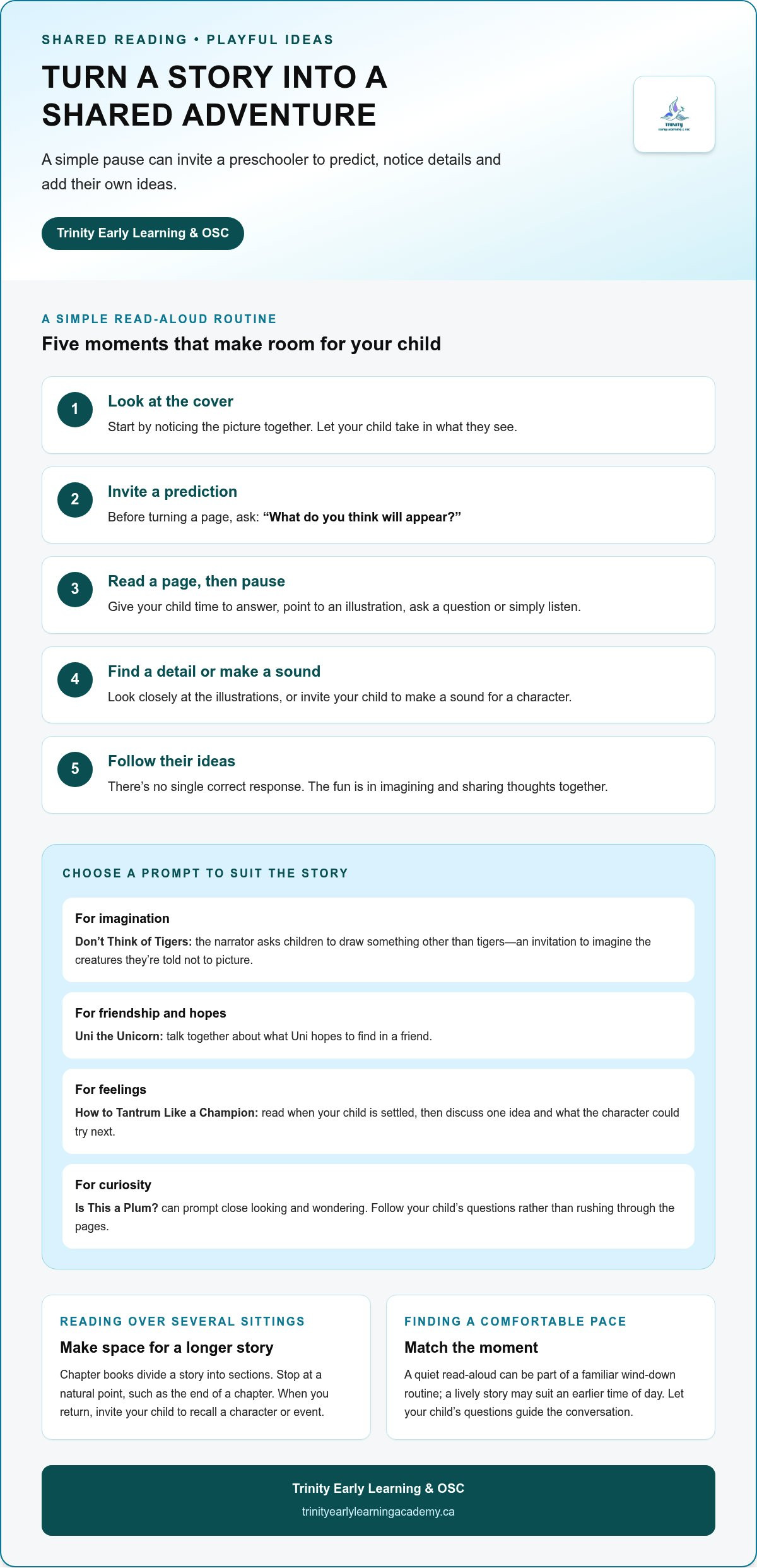
Interactive picture books turn read-aloud time into a shared adventure. In Don’t Think of Tigers, the narrator asks children to draw something other than tigers, inviting them to imagine the very creatures they’re told not to picture. Pause before turning each page and ask, “What do you think will appear?” Children can answer, point to illustrations or add their own ideas. There’s no single correct response; the fun comes from joining in.
Try a simple routine with any title: look at the cover, predict what might happen, then read a page and pause. Ask your child to find a detail in the illustrations or make a sound for a character. With Uni the Unicorn, for example, talk about what Uni hopes to find in a friend. These small prompts support attention and give children a reason to share their thoughts, without turning story time into a test.
Some stories invite children to explore feelings through make-believe. How to Tantrum Like a Champion offers tips intended to help children calm themselves when feelings feel overwhelming. Read it when your child is settled, then discuss one idea together. You might ask what the character could try next. Uni the Unicorn brings friendship and imagination into the conversation. Let your child decide which parts feel exciting, funny or surprising.
Longer stories can become an ongoing family adventure. Chapter books have stories divided into sections, making them suited to reading over more than one sitting. Choose a natural stopping point, such as the end of a chapter, and leave the book somewhere easy to find. When you return to it, invite your child to recall a character or event. This gentle recap helps reconnect with the story without asking them to remember every detail.
For bedtime, pick a title with a pace and mood that suit your child. A quiet read-aloud can become part of a familiar wind-down routine; a lively story may work better earlier in the day. Animal stories offer easy openings for conversation. Is This a Plum?, conceived by Finn Ojari when he was 8, can prompt a child to look closely and wonder what they see. Follow their questions, rather than rushing through the pages.
Keep a small rotation of titles within reach: one playful choice, one gentle story and one longer read. Let your child choose between them, or invite them to act out a favourite scene with toys after reading. Families looking for story-rich early learning can explore preschool learning in St. Albert.
3. Preschool reading recommendations for ages 3–4
For children aged 3 and 4, choose stories that invite conversation rather than test reading skills. The Canadian Children’s Book Centre advises adults not to pressure children in this age group to read independently more than they want to. Read aloud together, pause when a character faces a problem, and let your child comment or ask questions. In The Rabbit Listened, Taylor is having a difficult day, and a rabbit offers a listening ear. The story gives families a gentle way to talk about what listening can feel like.
For a three-year-old, begin with a clear story and one idea to discuss. Just Help! shows small acts of kindness, such as sharing a smile or lending a hand. After reading, ask your child which kind act they noticed, or connect it to something they did that day. A four-year-old may enjoy a story with more humour and a problem to follow. In The Day the Crayons Quit, Duncan finds his crayons have gone on strike and must work out how to make them happy again.
Age labels can help guide your choice, but your child’s interest matters during shared reading. Offer two titles, such as a kindness story and a funny story, and let them choose. If they return to the same book, read it again instead of insisting on something new. Familiar characters and repeated events can help children join in, predict what happens next and notice details they missed before.
For a five-year-old, shared stories can begin to include more text, new vocabulary and longer plotlines. Keep reading aloud even if the child is starting to recognize words. The Canadian Children’s Book Centre recommends repetition in language and stories matched to a child’s interests for beginning readers ages 5 to 8. A child who likes comic mishaps might enjoy The Bear and the Hare and the Fair, which combines phase 5 phonics with comic antics.
Chapter books are another read-aloud option when a child is ready to follow a longer adventure. Their stories are divided into chapters and are generally read over more than one sitting. Choose a stopping point at the end of a chapter, then invite your child to recall a character or event before continuing. This keeps the story connected without expecting a preschooler to remember every detail.
At the library, browse picture books and early readers together. Let your child select a title from a favourite subject, such as friendship, crayons or animals, then read the opening pages aloud. If the story feels too long, pause and return later; if your child wants more, keep reading. For ages 3 to 5, shared enjoyment and a child’s interest are practical guides to choosing the next book.
4. Early and beginning readers
Early reading develops through listening, noticing print and enjoying language together. For beginning readers ages 5 to 8, the Canadian Children’s Book Centre recommends repeated language and stories that match a child’s interests. Preschoolers can enjoy these features before reading independently. Choose a title with a clear pattern, read it aloud, then pause for your child to predict a repeated phrase. Familiar wording gives young readers a chance to join in without needing to decode every word.
Rhymes and playful sound patterns make words easier to notice during story time. In The Bakery Dragon and the Giant Cookie, listed by Common Sense Media as suitable for ages 3 and up, read the title aloud and invite your child to listen for rhyming words. Then ask what they hear at the end of a line. Keep the exchange light: the aim is to enjoy how language sounds, not to quiz children or demand exact answers.
If your child is interested in trying words, follow their attention rather than taking over the page. Point to a familiar word, such as a character’s name, and let them look for it again. If they recognize a repeated phrase, leave space for them to say it. If they lose interest, keep reading aloud or put the book aside. A shared story still counts when the adult reads most of the words.
Classic picture books can offer memorable characters and room for imagination. Where the Wild Things Are was first published in 1963. Its journey into a world of wild creatures can prompt children to describe what they see, wonder how Max feels, or invent a different ending. Ask one open question at a time, such as “What might happen next?” Their answer can lead into a conversation about feelings without requiring a single correct interpretation.
For a gentler classic, Corduroy tells a story about friendship and the comfort of home. Read a few pages together, then invite your child to notice what the characters want or how they treat their friends. For a newer choice, Common Sense Media lists Millie Fleur’s Worst Day Ever as suitable for readers aged 4 and up. Adult guidance can help a child follow unfamiliar words and talk through the story.
Build a small reading routine with one familiar title and one new choice. At the library, let your child choose based on the cover, a character or a favourite subject. Read the first page aloud together, then notice whether they want to continue. A book that sparks questions, laughter or a request to read again can support early literacy while keeping reading enjoyable.
5. Age-appropriate books for children ages 2 to 6
For book recommendations, preschool age depends on the guide’s grouping. Common Sense Media groups preschoolers in the 2–4 age range, while the Canadian Children’s Book Centre describes ages 2 to 6 as ready for stories with simple narratives. These ranges help frame choices, but a child’s interest and ability to follow a story can guide what you read together. When choosing age-appropriate books for preschoolers, consider how your child responds to the story, not just the age label.
For younger preschoolers, look for picture-led stories with concrete subjects to name and explore. Richard Scarry’s What Do People Do All Day? introduces familiar activities and details that can prompt questions. Pause when your child spots someone at work, then talk about what they might be doing. One page can become a conversation instead of a race to finish the book.
For a hands-on reading experience, Pretend Soup is a preschool cookbook described as fun. Read a page together, talk about the ingredients and connect the words to pretend play. It may inspire a child who enjoys cooking alongside a story. Choose an activity that fits your child’s interests, whether that means looking closely at illustrations or acting out an idea.
Stories with a repeating structure can help children anticipate what comes next. The Piñata That the Farm Maiden Hung is a cumulative tale inspired by “The House That Jack Built” and includes Spanish words. Its build-up gives a child a reason to listen for what returns on each page. Read it aloud at a comfortable pace, then let your child join in with a familiar phrase. For parents interested in expanding an early curiosity in new languages or cultural studies, personalized one-to-one online instruction from Eaalim can provide a supportive foundation.
For playful family role-reversal, try How to Babysit a Grandpa or How to Babysit a Grandma. Both are written as instructional manuals for children caring for their grandparents. The premise lets preschoolers imagine taking the lead and notice how the characters handle everyday moments. These titles can suit a child who enjoys make-believe and funny situations.
There isn’t one best book for every child ages 2 to 6. Offer a choice between a detailed book, a cumulative story and an imaginative read-aloud, then notice which one holds your child’s attention. Choosing age-appropriate books for preschoolers can mean following a younger child’s interest in naming pictures or an older child’s questions about the story. To connect shared reading with early learning, explore preschool learning in St. Albert.
Trinity Early Learning & OSC: Licensed Daycare Services
Trinity Early Learning & OSC is a licensed daycare in St. Albert, offering childcare, preschool programming, kindergarten care and out-of-school care. Its warm, family-centred setting includes an inclusive program, CCTV monitoring and low child-to-educator ratios. Approved affordability grant funding helps lower childcare costs for eligible families. Families seeking a supportive early learning setting can pre-register online or book a tour.
Shared reading at home can complement a child’s early learning experience. Choose stories that hold your child’s interest, then let familiar books become part of your time together. To learn more about the programs, visit Trinity Early Learning & OSC online.
Let shared reading grow with your child
Choosing age-appropriate books for preschoolers can be the start of a lasting family ritual. Let your child’s questions guide what happens after the last page. They might draw a favourite character, retell a scene with toys or choose tomorrow’s story. These simple extensions make reading part of everyday conversation without turning it into a lesson.
As your child’s interests change, make room for new stories and familiar favourites. A book about animals may lead to curiosity about nature; a story about friendship may prompt a thoughtful chat. Following that curiosity helps reading feel personal and gives children space to express their ideas in their own way.
Families considering early learning and childcare in St. Albert can take a next step with Trinity Early Learning & OSC. Contact Trinity Early Learning & OSC to discuss your family’s needs. Each shared story can open a new conversation, and each conversation can help your child’s love of learning grow.
Frequently Asked Questions
How important is reading in the Early Years?
Reading gives young children a shared way to hear language, follow ideas and talk with an adult. A short book can introduce words for objects, actions and feelings that come up in everyday life. After a story, invite your child to describe one picture or explain what they noticed. In St. Albert, families can make a library visit part of the routine and let children help choose the next book.
Richard Scarry’s What Do People Do All Day?
Richard Scarry’s What Do People Do All Day? is a picture book with information that can prompt questions. Rather than reading straight through, open to a page that catches your child’s eye and let them point out what they notice. Follow their questions, then describe the details together. This approach can suit children who like browsing illustrations and talking about everyday people and activities.
What kind of books are good to read with preschoolers?
Choose books with a story your child can follow and a topic they want to explore. For a child interested in cooking, Pretend Soup offers a playful book-based activity; a child who enjoys cumulative storytelling might respond to The Piñata That the Farm Maiden Hung. Try reading a few pages aloud before deciding whether to continue. Your child’s attention and interest can guide the choice.
What other booklists for preschoolers are available?
The Canadian Children’s Book Centre offers book recommendations organized around readers’ ages and stages, including guidance for older groups. For more preschool ideas, browse children’s booklists at your local library or ask a librarian for titles related to a favourite topic. In St. Albert, a library visit also gives your child a chance to explore covers and choose a book that sparks curiosity before you read it together.
What makes a book age-appropriate for preschoolers?
A suitable book gives your child a comfortable way into its story, through familiar subjects, clear pictures or a plot they can follow with you. Try reading the opening pages aloud and notice whether your child looks, listens, comments or asks questions. If the story feels confusing, describe the pictures or choose another title. Age labels are a starting point, not a substitute for your child’s interests.
Which picture books are suitable for ages 3 to 5?
The Bakery Dragon and the Giant Cookie is listed by Common Sense Media as suitable for ages 3 and up, while Millie Fleur’s Worst Day Ever is listed for readers aged 4 and up. These age labels can help narrow a library search. Share the first pages together, then decide whether the story and illustrations hold your child’s attention.
What books help preschoolers learn early literacy and language skills?
Books with repeated wording, rhymes or engaging sound patterns give children a reason to listen closely and join in. The Canadian Children’s Book Centre recommends repetition in language and stories that match a child’s interests for beginning readers ages 5 to 8. For younger preschoolers, keep the experience relaxed: read aloud, pause for a familiar phrase and welcome your child’s attempt to repeat it.
What books support social-emotional learning for preschoolers?
Stories about feelings, kindness and listening can give families a natural starting point for conversation. After reading The Rabbit Listened, ask what Taylor might need from a friend on a difficult day. With Just Help!, invite your child to name a small helpful action they could try. These questions connect a story’s ideas with familiar situations without expecting children to give a perfect answer.


