

A preschooler who hits or excludes another child isn’t automatically a “bully in training.” Bullying is aggression that is repeated over time and intended to hurt, and children as young as three can show bullying behaviour. Knowing how to address bullying in preschool starts with recognizing patterns, not labelling a young child after one difficult moment.
It’s understandable to feel worried when your child is hurt or acts aggressively. Preschoolers are still learning how to behave with others, and calm, consistent guidance can help them practise safer ways to interact.
This article explains how to recognize physical, verbal and social bullying, respond when your child is involved, and work with educators to protect children’s emotional and physical safety. It also shares practical ways to build empathy, set clear limits and encourage supportive relationships at home.
Key Takeaways
- Look for hurtful behaviour that is intentional and repeated, rather than labelling a child after one conflict.
- Respond to aggression calmly and promptly, then help children practise safer ways to express feelings and resolve conflict.
- Use clear limits, empathy and consistent guidance at home to support positive relationships with siblings and peers.
- Notice physical, verbal and social behaviours, including exclusion and damaging another child’s friendships.
- Listen without blame, involve educators early and keep communicating as you work together to support your child.
1. Is my preschooler a bully in training?
One impulsive act doesn’t make a preschooler a bully. Young children are still learning how their actions affect others. Look for behaviour that is intended to hurt and happens repeatedly, rather than judging a child by one argument or rough moment.
Teach the difference with specific examples. Say, “You can ask for a turn with the blocks, but you can’t grab them or push.” Name the behaviour, explain its effect, and show an acceptable alternative. When a preschooler acts aggressively, respond calmly and clearly.
A shy child may freeze or stay quiet when someone takes a toy. Practise a short response at home, such as, “I’m still using that,” or, “Please stop. I’m telling the teacher.” Rehearse the words through pretend play, then remind your child to move near an educator if the behaviour continues.
Notice and praise positive actions as they happen. For example, tell your child, “You waited while Sam finished with the truck. That was respectful.” Specific praise helps children connect caring behaviour with its effect, such as making room for a friend or returning a toy after play.
What Canadian preschool and childcare policies or provincial rules address bullying? For families in St. Albert, ask the preschool for its written behaviour-guidance and incident-reporting policies. Find out how staff supervise children, respond to hurtful behaviour, and communicate with families.
When reporting suspected bullying, give staff concrete details: what your child said, what you observed, when it happened, and whether it has happened before. Ask what steps staff will take to support safety and how you can share updates.
Families and preschool staff can build empathy through stories, dolls, and role-play. Act out a child being left out, then practise inviting them to join. Praise children when they show compassion or handle a conflict respectfully.
Raise a concern with the preschool director if harmful behaviour continues, safety remains a concern, or staff haven’t given a clear response. Share the incidents you’ve documented and ask the director to explain the next steps.
Seek advice from a pediatrician or mental health professional if aggression or bullying persists or interferes with a child’s daily functioning. Describe specific changes you’ve noticed, such as difficulty joining play or distress about attending preschool.
A preschool response is working when staff act consistently, communicate with you, and help children practise safer interactions. Keep track of whether the behaviour recurs and whether your child feels able to approach an educator.
2. Protecting children’s emotional and physical safety
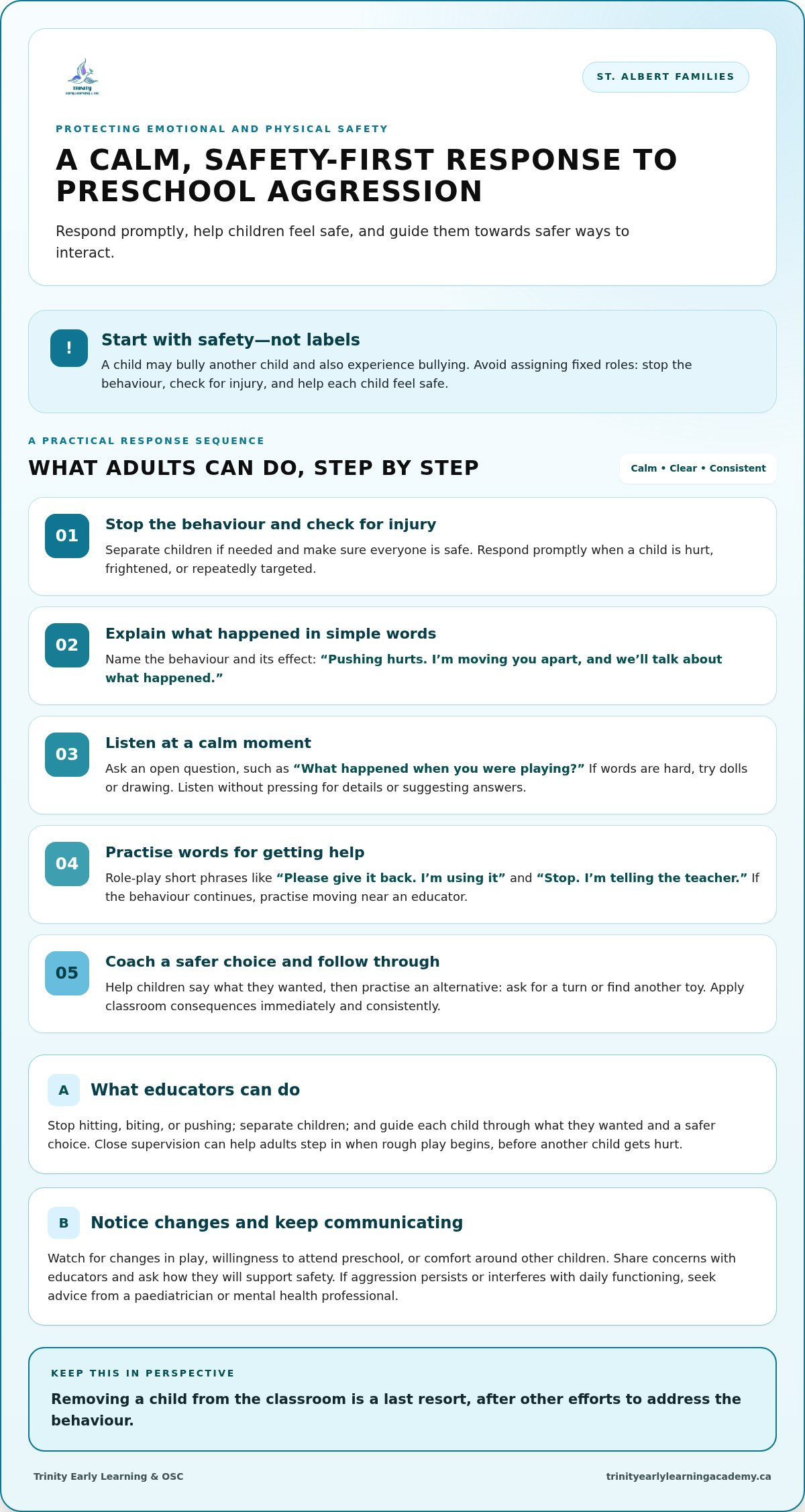
Adults need to respond promptly when a child is hurt, frightened, or repeatedly targeted. A child may bully another child and also experience bullying, so avoid assigning fixed roles. First, stop the behaviour, check for injury, and help each child feel safe. Then explain what happened in simple words: “Pushing hurts. I’m moving you apart, and we’ll talk about what happened.”
A preschooler may freeze or become quiet after mistreatment. Don’t assume silence means the incident caused no distress. Choose a calm moment and ask an open question, such as, “What happened when you were playing?” If your child struggles to explain, use dolls or drawing to help them show what happened. Listen without pressing for details or suggesting answers.
Practise assertive words through short role-play. If another child grabs a toy, coach your preschooler to say, “Please give it back. I’m using it.” If the behaviour continues, practise, “Stop. I’m telling the teacher.” A shy child can move toward an educator and ask for help rather than facing repeated aggression alone.
Educators can coach children through conflicts while keeping play safe. They can stop hitting, biting, or pushing, separate children, and guide each child to explain what they wanted. Then help them practise a safer choice, such as asking for a turn or finding another toy. Apply classroom consequences immediately and consistently, and explain that hurting or frightening others isn’t acceptable.
A child who acts aggressively needs support as well as correction. An educator can speak with the child one-on-one, name the behaviour, and practise an alternative: “You wanted the truck. Ask for a turn instead of taking it.” Close supervision helps adults intervene when rough play begins, before another child gets hurt.
Repeated mistreatment can affect a child’s self-esteem and may contribute to anxiety or depression. Watch for changes in play, willingness to attend preschool, or comfort around other children. If aggression persists or interferes with daily functioning, seek professional help. Removing a child from the classroom is a last resort after other efforts to address the behaviour.
At home, use stories and pretend play to explore feelings and empathy. For example, ask how a doll might feel after being left out, then practise inviting it into the game. Families in St. Albert can also look for a supportive preschool environment where adults help children build safe peer relationships.
3. Creating a supportive home environment
Children learn how relationships work through everyday family interactions. Use ordinary moments, such as choosing a game, to practise listening and taking turns. If your child interrupts a sibling, pause and say, “Let’s hear what they were saying, then you can share your idea.” A calm example gives children words and actions to use in later conflicts. Learning how to address bullying in preschool also means showing children respectful communication at home.
Address unkind behaviour when you see or hear it, including during sibling disagreements or playdates. Stop the action, state the limit, and guide your child towards a safe alternative. For example, say, “Stop hitting. I won’t let you hurt your sister,” then separate the children if needed. Describe the behaviour rather than calling your child mean or bad.
Use consequences that connect clearly to what happened. If your child upsets a friend, help them repair the interaction by returning what they took and offering an apology. Keep your direction brief, then give your child a chance to follow through. Consistent responses help children understand that their actions affect others and that they can make things right.
Plan playdates with an activity that gives children a shared focus, such as building a block tower or making a simple picture. Stay involved by observing how the children take turns, respond to frustration, and include one another. If tension rises, step in early with a clear suggestion: “Let’s make space for both people to add a block.”
Help your child form connections with caring, friendly peers. Notice which children invite others to play or respond kindly when someone makes a mistake. You can encourage another meeting and support a shared activity. Avoid pressuring a shy child to join immediately; offer a small first step, such as watching the game together before taking part.
Model accountability when you make a mistake. If you speak sharply, say, “I was frustrated, but I shouldn’t have raised my voice. I’m sorry.” This shows that everyone can repair harm without excusing it. Praise your child for respectful choices, such as waiting for a sibling to finish or checking whether a friend wants to join a game.
Stay involved by making space for brief conversations about the day. Ask, “Who did you play with?” or “Was anything hard today?” If your child mentions a conflict, listen first and ask what happened next. For parents considering how to address bullying in preschool, sharing clear observations with staff helps connect the guidance children receive at home and in care.
4. Physical, verbal, and social bullying in preschool
Preschool bullying can be physical, verbal, or social. Physical behaviour includes hitting, kicking, biting, taking toys, or destroying another child’s creation. Repeatedly knocking down the same child’s block tower to upset them differs from accidentally bumping it during play. Consider what happened, whether it repeats, and how it affects the child.
Verbal behaviour can include name-calling, mocking, hurtful teasing, or threats. A child might repeatedly tell a peer, “You can’t play with us,” or mock their words during group activities. One unkind remark still needs adult guidance, but a repeated pattern intended to hurt calls for closer attention. Help children express feelings without insults or threats.
Social behaviour targets friendships and belonging. A child may exclude a peer from a game, withdraw friendship to control them, or encourage others to leave someone out. Repeatedly telling classmates not to sit beside one child can damage relationships, even without physical contact. Adults should notice who is included and whether exclusion keeps happening.
These behaviours can appear in preschool classrooms, playgrounds, or on sports teams. Watch transitions and shared activities, such as lining up, choosing partners, or taking turns with equipment. A child may use hurtful behaviour to gain a friendship, exclude someone, or cause harm. The setting can show where a pattern occurs, but it doesn’t establish intent by itself.
When a child describes an incident, record their words as accurately as possible. Note the activity, location, behaviour, and whether they describe similar events. Avoid leading questions like, “Did that child hit you again?” Instead, ask, “What happened next?” This gives educators useful details without suggesting an answer or asking a preschooler to interpret another child’s motives.
Respond to the behaviour you observe, not a label you place on a child. Stop unsafe actions, check on the child affected, and state the limit clearly: “I won’t let you kick. Kicking hurts.” Then guide the children towards a safer next step, such as asking for a turn or choosing another activity. This addresses the immediate action while teaching an alternative.
Finally, consider how each child’s relationships and daily participation are affected. A child who repeatedly avoids the playground, stops joining group play, or becomes distressed around a particular activity may need more support. Share specific observations with preschool staff and ask how they’ll supervise that situation. Consistent observation helps adults recognize patterns across play, routines, and peer interactions.
5. How should parents respond when their preschooler says they are being bullied?
Listen first when your child describes being hurt or excluded. Stay calm, make eye contact, and say, “Thank you for telling me. I’m listening.” Avoid dismissing their account or immediately blaming another child. A preschooler may describe events in fragments, so let them speak at their own pace before asking what happened next.
Use simple, open questions to understand the situation. Ask, “Where were you playing?” or “What did the other child do?” rather than suggesting an answer. If your child finds talking difficult, use dolls or pretend play to help them express what happened. Listen for their feelings and needs, not only the details of the incident.
Write down your child’s specific words and the context they describe. Note the activity, location, behaviour, and whether similar incidents have come up before. These details can help you explain the concern clearly to the teacher. Don’t ask your preschooler to prove intent or decide whether another child is a bully.
Contact the teacher early and share what your child reported. For example, say, “My child says their toys were grabbed during outdoor play several times. What have you observed, and how will staff support safe play?” Ask what immediate steps will protect your child and agree on a practical way to share updates.
Keep communication regular and focused on what happens next. Ask whether staff have noticed the behaviour, how they responded, and whether your child can seek help during play. Share any new information from home. A five-year-old shouldn’t carry the full responsibility for setting boundaries when peers grab, push, shake, or break things.
At home, reassure your child that adults will help, then practise a safe response together. Use a toy or puppet to rehearse saying, “Stop, I don’t like that,” moving away, and telling an educator. These words can support your child, but they don’t replace adult intervention. Parents and preschool staff need to work together.
Bullying concerns involving young children aren’t usually resolved overnight. Watch whether the behaviour continues and whether your child feels safer during the activity or routine involved. If the response doesn’t address repeated incidents, contact the preschool director with your notes and ask for a clear plan. Keep the discussion centred on safety and support.
For families considering a different early learning setting, explore preschool options in St. Albert that support children’s development and peer relationships.
Play can offer a gentle way to understand how your preschooler feels. Notice themes in pretend stories and your child’s reactions without turning play into an interrogation. A young child shouldn’t have to bear the full burden of setting boundaries when other children grab, shake, push, or break things; adults need to provide support.
Intervene early when your preschooler is involved in bullying rather than waiting to see whether the concern passes. Tell teachers and other relevant adults about the situation, and communicate with them regularly. Keeping those adults informed can help maintain a shared focus on your child’s safety and support.
Trinity Early Learning & OSC: Licensed Daycare Services
Trinity Early Learning & OSC offers licensed daycare services, preschool, childcare, out of school care, and Affordability Grant Daycare in St. Albert. Families seeking an early learning setting can consider these options as part of their childcare plans while continuing to address peer concerns directly with educators.
A consistent care environment gives children opportunities to practise sharing, communication, and positive peer interactions. Trinity Early Learning & OSC offers childcare and preschool programming in St. Albert, with a warm, family-centred approach. Families can book a tour or pre-register online to explore the setting and discuss their child’s needs.
Take the next step towards supportive care
Supporting a child through peer difficulties is an ongoing process. Keep making space for honest conversations, and notice which situations help your child feel ready to take part. As you consider how to address bullying in preschool, remember that a steady partnership between families and educators can help children practise confidence and build positive connections.
If you’re exploring care options for your family in St. Albert, contact Trinity Early Learning & OSC to learn more. Each calm conversation and caring connection can help your child feel supported as they grow.
Frequently Asked Questions
Is my preschooler a bully in training?
Not necessarily; one difficult interaction doesn’t define your child. Consider how they respond after an adult explains the impact: do they pause, repair the situation, or repeat the behaviour in another activity? Share concrete examples with the educator, including what happened before and after. Patterns across routines give adults more useful context than a lasting label.
What is preschool bullying?
Preschool bullying is repeated, hurtful behaviour intended to harm another child. It can involve actions, words, or attempts to affect friendships. At this age, the label matters less than what adults observe and how they respond. For example, staff can name the action, protect the affected child, and guide both children towards safe ways to join play or express what they need.
What counts as bullying in preschool, and how is it different from normal conflict?
Repeatedly targeting a child with hurtful actions or words may indicate bullying; a disagreement over a shared toy may be ordinary conflict. For example, two children reaching for the same puzzle piece can be guided to take turns. If one child repeatedly singles out the same peer, adults should record what they see and consider the pattern rather than treating each incident as unrelated.
What signs may indicate a preschool child is being bullied or bullying others?
Look for changes connected to particular people, activities, or parts of the day. A child may avoid a play area, stop choosing a familiar game, or repeatedly report that the same peer interfered with their play. If your child acts aggressively, notice whether similar actions occur with different peers or during specific transitions. Share observations with educators rather than relying on a single incident.
What steps should preschool educators take to address repeated bullying behaviour?
Educators should stop harmful behaviour, attend to the child affected, and apply clear, age-appropriate classroom consequences. They can document what occurred, supervise settings where incidents recur, and teach safer alternatives through stories, dolls, or guided play. Consistent communication with families helps adults reinforce the same expectations. Staff should monitor whether behaviour changes and adjust their support if incidents continue.
What are Canadian preschool and childcare policies or provincial rules for responding to bullying?
Ask the preschool for its written behaviour-guidance and incident-reporting policies, including how staff supervise children, respond to hurtful behaviour, and communicate with families.


