

You're standing at the entrance of your St. Albert daycare, balancing a diaper bag and a coffee while your toddler clings to your leg. You want to tell the teacher about the restless night your child had, but the clock is ticking and other parents are lining up behind you. It's natural to feel a bit disconnected from your child's daily routine when your only interactions happen during these frantic five-minute windows. You might even worry that bringing up a specific concern could be perceived as criticism rather than a helpful update.
Building a positive relationship with daycare teachers is the most effective way to bridge this gap and ensure your child feels supported throughout their early years. When you establish a foundation of mutual respect, you gain the confidence that your child's individual needs are understood and valued. This guide provides practical strategies to help you create a strong, collaborative partnership with your child's educators. We will look at how to maximize communication during pick-up times and how to foster a genuine sense of community within your local childcare centre.
Key Takeaways
- Learn how maintaining consistency between home and the childcare centre reduces child anxiety and fosters a sense of security.
- Discover practical tips for managing communication during busy drop-off and pick-up windows to ensure information flows freely.
- Understand why building a positive relationship with daycare teachers requires addressing concerns privately and assuming a shared goal for your child's development.
- Find simple, professional ways to show appreciation for the hard work and dedication your child's educators provide every day.
- Explore the benefits of an open-door philosophy at your St. Albert daycare to help you stay connected to your child's daily routine.
The Value of a Strong Parent-Teacher Partnership
A high quality childcare experience is built on more than just a safe facility and a structured curriculum. It relies on a collaborative partnership where parents and educators work as a unified team. When you prioritize building a positive relationship with daycare teachers, you are creating a supportive environment that extends beyond the walls of the centre. This relationship is a professional bond focused on your child's holistic growth, ensuring that the care they receive is personalized and effective.
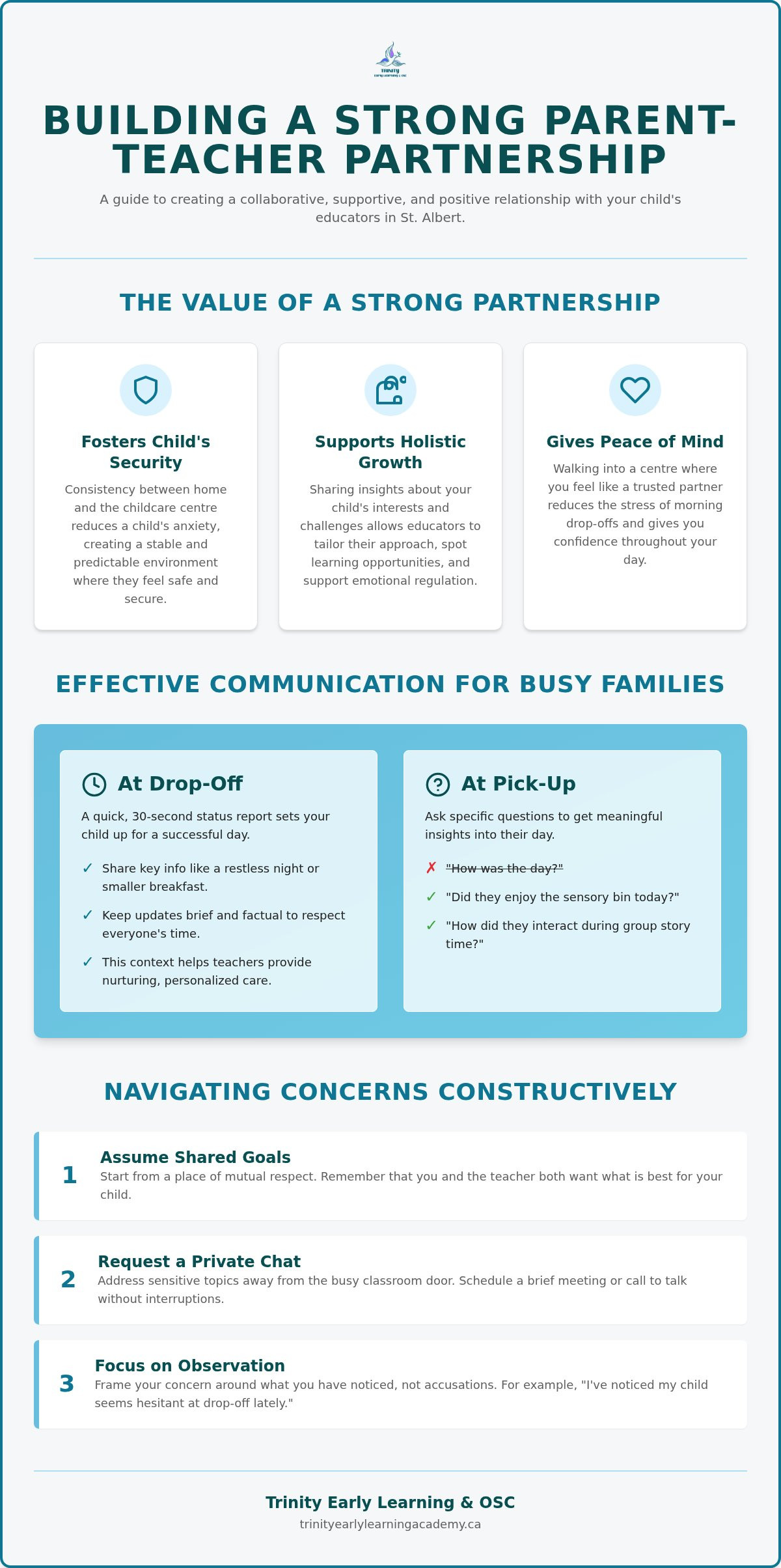
Consistency is the foundation of a child's sense of security. When the expectations at home align with the routines at the centre, children feel a greater sense of stability. This alignment reduces anxiety, as the child knows what to expect regardless of their location. Beyond the benefits for the child, a strong rapport improves the daily experience for you as a parent. Walking into a centre where you feel like a trusted partner reduces the stress of the morning drop-off and gives you peace of mind throughout the work day. For fathers looking for extra guidance during these formative years, you can discover GreatDad.com for specialized coaching and parenting resources.
Supporting Your Child’s Holistic Development
Professional educators possess a deep understanding of Early childhood education and are trained to identify specific developmental milestones. By sharing information about your child's interests or challenges at home, you allow teachers to tailor their instructional approach. Teachers can spot early learning opportunities in social play that might be less obvious in a home setting. For example, a teacher might notice a preschooler's emerging leadership skills during group activities and find ways to nurture that trait. This shared knowledge is vital for emotional regulation; when an educator understands a child's triggers or comfort habits, they can better support them through difficult moments.
Creating a Seamless Transition Between Home and Centre
The transition between home and daycare can be the most challenging part of a child's day. You can make this shift easier by sharing small details about your child’s morning or the previous night upon arrival. If your child had a restless sleep or a rushed breakfast, knowing this context allows the teacher to offer extra comfort or adjust the day's pace. Consistency in language also plays a significant role in making a child feel at ease. Using similar phrasing for routines like naptime, handwashing, or tidy-up time helps the child realize that their world is predictable and safe. Building a positive relationship with daycare teachers ensures these small but significant details are communicated regularly, creating a seamless experience for your little one.
Effective Communication Strategies for Busy Families
Clear communication is the heartbeat of any successful childcare arrangement. From the first day of enrollment, you should establish how you and the educators prefer to exchange information. Building a positive relationship with daycare teachers is much easier when everyone knows what to expect from the start. This professional association works best when you respect the busy nature of the classroom, especially during those high-traffic morning and afternoon windows. Focusing on brevity and clarity during these daily exchanges ensures that essential information is shared without disrupting the flow of the room.
Teachers at a licensed daycare centre appreciate parents who prioritize direct and helpful updates. During drop-off, a thirty-second status report can set the stage for a child's entire day. If your child had a restless sleep or a smaller appetite than usual, let the educator know. This context allows them to provide the nurturing, personalized care your child needs. You can learn more about the foundations of these interactions by reading about Building a Partnership with Your Child's Teacher to strengthen your collaborative efforts.
Best Practices for Daily Drop-off and Pick-up
Instead of a general "How was the day?", try asking one specific question. "Did they enjoy the sensory bin today?" or "How did they interact during group story time?" provides much better insight. These targeted questions help you stay connected to their daily routine without overwhelming the staff during busy transitions. Staying consistent with your arrival and departure routines also helps teachers manage the group effectively, as children thrive on predictable patterns.
Staying Connected Through Digital Tools and Reports
Many modern centres use digital tools to provide real-time updates. Realize the benefit of checking these logs or apps before you arrive for pick-up. This allows you to process the basic information, such as nap times and meals, so you can focus your brief face-to-face time on more meaningful observations about your child's growth. Building a positive relationship with daycare teachers often involves using these tools to handle non-urgent questions.
If you have a concern that requires a longer explanation, send an email or use the centre's preferred messaging app. This gives the educator time to reflect and provide a thoughtful answer after the children have gone home. Additionally, make it a habit to read the monthly newsletter from your St. Albert daycare. These updates are designed to keep you informed about upcoming events, curriculum goals, and community news, ensuring you always feel like an involved member of the centre.
Navigating Concerns and Providing Constructive Feedback
Even in the most nurturing childcare environments, questions or concerns will occasionally arise. When they do, the key to building a positive relationship with daycare teachers is to approach the conversation as a partner, not an adversary. Start every interaction by assuming the educator has your child's best interests at heart. This simple shift in mindset changes the tone from confrontational to collaborative, which is essential for a productive dialogue. To help facilitate these constructive conversations, you can learn more about Toby and Kate McCartney and their training in effective communication and personal growth. Listening carefully to the teacher's perspective is equally vital; they observe your child within a unique social dynamic that differs significantly from the home environment.
Timing is everything when discussing sensitive matters. Avoid bringing up complex issues during the busy morning rush or the hectic afternoon pick-up window. Discussing concerns in front of children can be distressing for the child and prevents the teacher from giving you their full attention. Instead, ask to schedule a private phone call or a brief meeting. During these discussions, use "I" statements to describe your observations. For instance, saying "I feel concerned because my child seems hesitant about the new nap routine" is much more effective than placing blame. This approach keeps the focus on the child's needs rather than the teacher's performance.
When you identify a specific behaviour or event that causes worry, present it clearly and concisely. Rather than just stating the problem, ask the teacher for their professional advice on how to handle the situation together. They may have strategies that have worked for other children or insights into classroom triggers you haven't considered. Once you've discussed potential solutions, agree on a specific follow-up plan. Setting a date to check in ensures that the chosen strategy is working and shows that you are committed to the long-term success of the partnership.
Understanding the Educator’s Perspective in a Group Setting
It is helpful to recognize that teachers must balance the needs of multiple children simultaneously while adhering to strict licensing regulations. Professional educators are trained in Building Positive Teacher-Child Relationships, a process that requires managing group dynamics alongside individual developmental goals. Valuing their expertise in early childhood education demonstrates respect for their professional boundaries. When parents acknowledge the complexities of managing a classroom, it strengthens the trust between both parties. Building a positive relationship with daycare teachers involves respecting these professional constraints while still ensuring your child's individual needs are met with compassion and care.
Simple Ways to Show Appreciation and Support
Educators are the heart of the learning environment. Acknowledging their hard work is a cornerstone of building a positive relationship with daycare teachers. This doesn't require grand gestures; often, a simple "thank you" at the end of a long day is enough to validate their professional commitment. When you notice your child has mastered a new social skill or is excited about a specific classroom activity, share that observation. Expressing gratitude for these specific moments shows the teacher that you recognize the individual attention they provide to your child's holistic growth.
Following the centre's policies is another significant way to demonstrate support. These guidelines are designed to ensure safety and operational efficiency for all families. When parents adhere to these rules, it reduces administrative stress for the educators, allowing them to focus entirely on the children. Engaging with the St. Albert community through fundraisers or seasonal events also fosters a welcoming atmosphere where teachers feel valued as essential members of the local neighbourhood.
Building Professional Mutual Respect
Professional respect is a two-way street that begins with punctuality and preparation. Arriving on time for pick-up is a clear sign that you value the staff's personal time and work-life balance. Likewise, ensuring your child has all the necessary supplies for the day prevents disruptions to the classroom flow. When a teacher doesn't have to search for a spare set of socks or a sun hat, they can stay present with the group. Speaking positively about the educator in your child's presence is equally important. It helps your child realize that their teacher is a trusted adult, which makes the transition from home to the centre much easier for everyone.
Participating in the Early Learning Community
Active participation in the daycare community provides insights that benefit both parents and staff. Make an effort to attend parent meetings or information sessions. These gatherings are excellent opportunities to learn about developmental milestones and the specific curriculum goals of the centre. Sharing your positive experiences with other St. Albert families also contributes to a thriving, stable environment.
Understanding the role of Alberta's provincial standards and the impact of affordability grants can help you appreciate the professional training your educators possess. The provincial government has invested $1.17 billion through 2026 to support accessible childcare, ensuring that staff meet specific certification requirements. By recognizing the framework your educators operate within, you demonstrate a deeper level of support for their role. If you are looking for a partner in your child's early development, consider exploring Quality childcare in St. Albert to see how a collaborative community makes a difference for families.
How Trinity Early Learning Fosters Collaborative Care
Trinity Early Learning & OSC operates as a family-run centre where we view our role as a dedicated partnership with you. We believe that building a positive relationship with daycare teachers starts with absolute transparency and accessibility. Our open-door philosophy ensures that you always feel welcome to discuss your child's progress or share insights from your home life. We invite you to view our licensed daycare in St. Albert as a professional extension of your own family environment. This approach ensures that your child’s emotional well-being remains our primary, shared focus every single day.
Our commitment to excellence includes a heavy emphasis on professional development for our educators. We ensure our staff remains current with the latest research in developmental milestones and group management. This expertise allows our teachers to act as knowledgeable advocates for your child’s growth. When educators feel supported and well-trained, they're better equipped to provide the nurturing, stable care that modern families expect. We realize that a happy, well-informed teacher is the foundation of a successful early learning experience.
Our Approach to Family Engagement
Every family receives personalized attention from the moment they begin the enrolment process. We recognize that administrative tasks and financial applications can be overwhelming for busy parents. Our staff works directly with families to help them navigate the Alberta affordability grant system. This hands-on support ensures that quality care remains accessible and financially predictable for your household. Our focus on teamwork creates a safe, nurturing environment where children feel secure enough to explore and learn at their own pace.
Transparent Communication as a Foundation
We use steady, methodical systems to keep you informed about your child's daily highlights. Whether through digital logs or consistent face-to-face updates, we ensure you never feel disconnected from their daily routine. We encourage you to reach out with any questions about our early childhood education philosophy. Understanding the specific purpose behind our curriculum helps in building a positive relationship with daycare teachers. Our ultimate goal is to provide the joy and stability every child deserves while acting as a helpful guide for parents. We’re here to ensure that the transition between home and our centre is as seamless and reassuring as possible.
Fostering a Collaborative Future for Your Child
Building a positive relationship with daycare teachers is a rewarding investment in your child's early development. By establishing clear communication channels and approaching every interaction with mutual respect, you ensure that your child feels secure and understood. These small, daily efforts create a unified environment where home and the centre work together for the child's holistic growth. Consistency and open dialogue are the most effective tools for navigating the complexities of early learning.
Trinity Early Learning & OSC is a licensed and accredited childcare provider in St. Albert. We are dedicated to holistic early childhood development and provide a supportive, family-focused environment for every student. We believe that professional care is most effective when it's delivered with transparency and nurturing intent. Our team is ready to act as your partner in this important journey.
Book a tour at Trinity Early Learning & OSC to meet our professional team today. We look forward to welcoming you into our community and working together to support your child's joy and stability.
Frequently Asked Questions
How often should I expect to talk to my child’s teacher about their progress?
You should expect to receive brief daily updates during pick-up and more detailed reports periodically. Building a positive relationship with daycare teachers involves these regular touchpoints to ensure consistency between home and the centre. At our St. Albert centre, we prioritize keeping you informed about developmental milestones and social progress. While daily chats are short, they provide essential continuity, helping your child feel secure and supported throughout their early learning journey.
What is the best way to share important information about my child’s morning?
Providing a quick verbal status report during the morning drop-off window is the most effective method. You can mention sleep patterns, appetite, or any unusual morning events in about thirty seconds. If you are in a particular rush, many parents prefer using our centre's digital communication tools to send a brief message. This ensures the educator has the necessary context to tailor their nurturing approach to your child's specific needs for the day.
What should I do if I have a concern about a specific classroom policy?
Schedule a private time to discuss the policy rather than bringing it up in front of the children. Approach the conversation with a solution-oriented mindset and assume the educator has your child's best interests at heart. Using "I" statements helps describe your observations without placing blame. This professional approach is a key part of building a positive relationship with daycare teachers and ensures that classroom dynamics remain stable and supportive for every student.
How can I stay involved if my work schedule prevents me from long chats at pick-up?
Reviewing daily digital logs and reading the monthly centre newsletter are excellent ways to stay connected. You can also send non-urgent questions via email or the centre's messaging app when your schedule allows. These tools provide a thorough overview of your child's activities and developmental progress without requiring a long face-to-face chat. Staying informed through these channels demonstrates your commitment to the partnership while respecting the busy nature of the early learning environment.
Are there specific times I should avoid trying to have a long conversation with staff?
Avoid initiating long or complex conversations during the high-traffic windows of early morning drop-off and late afternoon pick-up. During these times, educators must prioritize the safety and supervision of the entire group. If you need more than a minute of their time, it's best to ask for a scheduled phone call or a brief meeting. This respect for their professional responsibilities helps maintain a calm and organized environment for all the children in our care.
What is the most helpful way to show appreciation for my child’s educators?
Writing a short note or sending an email to acknowledge a specific positive moment is incredibly meaningful for educators. You can also show support by arriving on time for pick-up and ensuring your child has all the necessary supplies for the day. Engaging with the St. Albert community through centre-wide events or fundraisers also fosters mutual respect. These simple gestures validate the hard work and dedication required to provide high-quality childcare every day.
How do teachers at Trinity Early Learning handle feedback from parents?
Teachers at Trinity Early Learning view parent feedback as a vital component of our collaborative care model. We maintain an open-door policy and encourage transparent communication to ensure every child's individual needs are met. Our staff is trained to listen to your perspective and work with you to find solutions that support your child's joy and stability. We value your insights as the primary expert on your child's personality and home routines.
Should I tell the teacher if something is happening at home that might affect my child’s behaviour?
Yes, you should definitely share significant changes or events at home with your child's educator. Knowing about a restless night, a visiting relative, or a change in family routine helps the teacher understand shifts in your child's behaviour. This context allows our staff to provide extra comfort or adjust the day's activities to better support your child's emotional regulation. Providing this information ensures a seamless transition between home and our St. Albert centre.


