

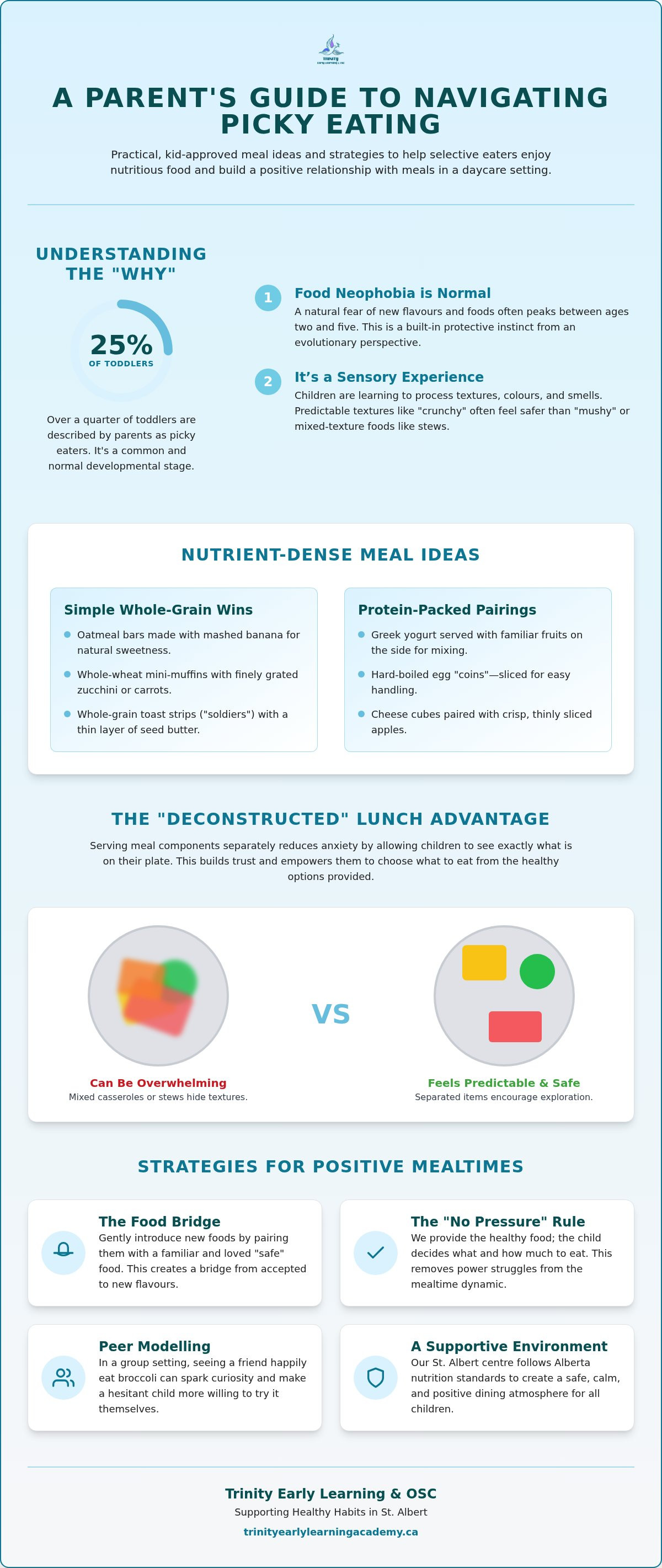
Did you know that over 25 percent of toddlers are described by their parents as picky eaters? It's a common developmental stage, but when you are packing a lunch or reviewing a childcare menu, that statistic doesn't make the sight of an untouched container any easier to handle. Finding daycare menu ideas for picky eaters often feels like a constant struggle between nutrition and what your child will actually accept. You want them to grow and thrive, but the time spent on complex recipes often ends in wasted food and added stress for St. Albert families.
We understand your desire to support your child's health without the weight of mealtime anxiety. This guide provides practical, kid-approved meal ideas and strategies designed to help even the most selective eaters enjoy nutritious food while in care. We will look at a list of "safe" yet healthy meals, explore ways to reduce mealtime pressure, and show how these choices align with Alberta childcare nutrition standards. You can help your child build a positive relationship with food while ensuring they have the energy they need for a busy day of learning and growth.
Key Takeaways
- Understand why food neophobia is a natural developmental stage for toddlers and how sensory processing affects their reaction to different colours and textures.
- Discover creative daycare menu ideas for picky eaters that use whole grains and protein-rich pairings to maintain energy levels throughout the morning.
- Explore the "Deconstructed Meal" approach to lunch, which reduces plate anxiety by keeping familiar bases separate from new flavours.
- Master proven strategies like the "Food Bridge" technique and the "No Pressure" rule to keep mealtimes positive and encourage texture exploration.
- Find out how licensed childcare centres in St. Albert use professional Alberta nutrition standards to create a safe and supportive dining environment.
Why Picky Eating Happens in Early Learning Environments
Many parents feel a sense of frustration when their child refuses a meal they loved just yesterday. This behaviour is often not about defiance; it is a natural part of early childhood development. In a licensed daycare setting, we recognize that children are still learning how to process the world around them. Mealtime is a complex sensory experience where the sight, smell, and feel of food can either invite a child to explore or cause them to retreat. Understanding the "why" behind these choices helps us create better daycare menu ideas for picky eaters that respect their developmental pace.
The Role of Sensory Processing
Sensory processing plays a significant role in how a child reacts to their lunch. Food neophobia is the natural fear of new flavours. This instinct often peaks between the ages of two and five. For many children, a "crunchy" texture is predictable and safe, while "mushy" or mixed textures can feel overwhelming or suspicious. Selective eating often stems from this need for predictability. When planning daycare menu ideas for picky eaters, we find that serving items separately is usually more successful than offering mixed dishes like stews or casseroles. This allows the child to see exactly what they are eating, which builds trust in the meal provided.
Group Dynamics and Peer Influence
The environment of a childcare centre offers a unique advantage called peer modelling. While a child might refuse broccoli at home, watching a friend happily crunch on a floret can spark curiosity. This social influence is a powerful tool for encouraging new habits. Professional educators in St. Albert centres model healthy eating by sitting with the children and enjoying the same nutritious foods. This creates a calm, predictable routine that lowers the stress often associated with trying something new.
Licensed daycare providers also follow the "division of responsibility" in feeding. In this framework, the educator is responsible for providing high-quality, nutritious food at specific times. The child is responsible for deciding which of those foods to eat and how much. This approach removes the power struggle from the table. By maintaining a nurturing and safe environment, we allow children to explore different textures at their own speed. This professional standard ensures that mealtimes remain a positive part of their daily growth and development.
Nutritious Breakfast and Morning Snack Ideas
A child's energy levels in the morning dictate their ability to engage with early learning activities. Providing balanced daycare menu ideas for picky eaters ensures they don't experience a mid-morning crash. We focus on nutrient-dense options that feel familiar and safe. By offering foods that are easy to handle, we help children build confidence in their own abilities while meeting their nutritional needs.
Simple Whole-Grain Wins
Whole grains provide the complex carbohydrates necessary for sustained play and exploration. Oatmeal bars are an excellent choice when made with mashed bananas for natural sweetness instead of refined sugar. This provides a soft texture that is often well-received by children who struggle with coarser grains. Whole-wheat mini-muffins can incorporate finely grated zucchini or carrots. Rather than "hiding" the vegetables, this presentation makes them a normal, predictable part of a favourite snack. For a quicker option, whole-grain toast strips cut into easy-to-grasp "soldiers" with a thin layer of seed butter offer a satisfying crunch. These finger foods encourage independence and help develop fine motor skills as children learn to feed themselves.
Protein-Packed Snacks
Protein is essential for concentration and muscle growth. Greek yogurt parfaits served with a side of familiar fruit allow children to control how much of each item they eat. Hard-boiled egg "coins" are another practical option. Slicing the eggs into rounds makes them less intimidating and much easier for small hands to manage than a whole egg. Cheese cubes paired with crisp apple slices provide a classic combination of flavours and textures that many children find comforting. Proven strategies for picky eaters often suggest that making food accessible and visually simple reduces the anxiety associated with snack time.
These ideas align with the latest Canada’s Food Guide recommendations for preschoolers, which emphasize a variety of protein sources and whole grains. If you are looking for a program that prioritizes these healthy starts, consider how quality childcare programs in St. Albert integrate intentional nutrition into their daily curriculum. By following a predictable routine and offering high-quality ingredients, we help children develop a positive relationship with food that lasts well beyond their time in daycare. This professional approach to mealtime ensures that every child has the fuel they need to grow, learn, and succeed during their most formative years.
Lunch Menu Ideas That Encourage Trying New Flavours
Lunch is a critical time for children to refuel during a busy day of early learning. It is also the moment when many children feel the most pressure to try something new. Our goal is to make this experience positive and low-stress by providing daycare menu ideas for picky eaters that prioritize transparency and choice. When a child knows exactly what is on their plate, they feel more secure and are more likely to explore different tastes at their own pace.
The Power of Deconstructed Plates
Serving food in separate piles rather than mixed together is a simple but effective strategy for reducing plate anxiety. This "deconstructed" approach allows children to identify each ingredient, which builds trust in the meal provided. Many children who refuse a sandwich or a taco will happily eat the individual components if they aren't touching. This method helps children realize which flavours they actually enjoy without the sensory overwhelm of mixed textures. For example, a "Taco Salad" can be served as small, distinct piles of black beans, shredded cheese, and mild salsa next to a soft tortilla. This presentation respects the child's need for predictability while still offering a balanced, nutritious meal.
Warm and Comforting Main Courses
Warm meals provide a sense of stability and comfort in a group setting. We use familiar bases like pasta or rice to introduce new nutritional profiles in a way that feels safe. Red lentil pasta is an excellent choice for a midday meal. It looks and feels like traditional pasta but is naturally higher in iron, which is essential for healthy brain development and energy levels in preschoolers. A smooth, mild tomato sauce keeps the sensory experience predictable while providing essential vitamins.
Other successful warm options include mild chicken and rice bowls with steamed peas served on the side. This follows the 2019 Canada’s Food Guide plate model, which recommends filling half the plate with vegetables and fruits. Turkey sliders on soft whole-wheat buns are another iron-rich choice that children often accept because they resemble a familiar "safe" food. By offering a variety of colours through natural ingredients like orange carrots or green peas, we encourage visual curiosity without overwhelming the child. These professional meal strategies ensure that every child in a St. Albert childcare centre has access to the nutrients they need to grow and thrive throughout the afternoon.
Proven Strategies to Help Children Explore Different Textures
Implementing effective daycare menu ideas for picky eaters involves more than just the food itself; it requires a supportive environment. We use a "No Pressure" rule to keep mealtimes positive. This ensures children feel safe to explore without fear of reprimand or forced bites. It's common for a child to need up to 15 exposures to a new ingredient before they decide to taste it. We remain patient and consistent, offering the same items in different formats over several weeks. This long-term perspective helps reduce the anxiety that parents and educators often feel when a child refuses a meal.
The Food Bridging Technique
The Food Bridging technique is a practical way to expand a child's comfort zone by connecting a "safe" food to a new, similar option. We start with a familiar item and make a small, logical change. For instance, if a child enjoys plain pasta, we might offer it with a very small amount of mild tomato sauce on the side. Familiar dips like hummus or Greek yogurt are also excellent for introducing raw vegetables like bell peppers or cucumbers. Familiarity is the best tool for acceptance. This gradual shift helps children feel in control while reducing the sensory shock of new textures.
Creating a Positive Food Culture
Building a positive food culture in a St. Albert childcare centre means changing how we talk about what we eat. Our educators use neutral, descriptive language to describe food. Instead of saying a carrot is "good for you," we might say it is "crunchy and orange." This shifts the focus to the sensory experience rather than a perceived obligation to eat. We also avoid using dessert as a reward, as this can accidentally devalue nutritious options. Using family-style serving bowls allows children to help themselves. This small act of independence often encourages them to try a little bit of something new because they chose it themselves.
Involving children in the "serving" process or simple preparation tasks, such as washing fruit, increases the likelihood that they will try the food. When children feel like active participants, their curiosity naturally grows. This professional approach to daycare menu ideas for picky eaters fosters a sense of community and shared discovery. If you want to see how we support your child's growth through positive mealtime routines, explore our licensed daycare services. By focusing on autonomy and repeated exposure, we help children develop healthy habits that last a lifetime.
How Trinity Early Learning & OSC Supports Healthy Eating Habits
Trinity Early Learning & OSC focuses on the holistic development of every child. We believe that physical well-being is the foundation for all other types of learning. Our educators implement professional early learning standards to ensure that mealtimes are supportive and educational. By integrating intentional daycare menu ideas for picky eaters into our daily schedule, we help children build a positive relationship with nutrition from an early age.
A Nurturing Approach to Nutrition
Handling selective eating requires a blend of patience and professional care. Our team understands that refusal is often a request for more time or a different sensory approach. In our St. Albert daycare programs, we maintain a steady routine that helps children feel secure. When a child knows exactly when and where they will eat, their anxiety levels drop. Our educators support this by:
- Maintaining a calm, distraction-free environment.
- Offering small, manageable portions.
- Providing positive reinforcement for exploration.
This stability allows them to focus on the social and nutritional aspects of the meal. To learn more about how we structure our environment for success, read our Licensed Daycare in St. Albert: The Complete Parent’s Guide to Quality Childcare.
Partnering with St. Albert Families
Success at the table is a shared journey between the centre and the home. Our educators provide regular updates to parents about their child’s progress with new foods and textures. We celebrate small wins. For example, we might share when a child touches a new vegetable or smells a new fruit for the first time. This transparency ensures that families feel supported throughout the process.
Accessibility is a core value of our program. We want every family in our community to have access to high-quality care that prioritizes nutrition. Our centre actively uses the Alberta affordability grant to keep our services financially reachable for modern families. You can find more details on how this support works in our Daycare Affordability Grant Alberta: A 2026 Guide for St. Albert Families.
Our commitment to your child's health goes beyond the menu. We foster a community of healthy eaters where children feel empowered to make their own choices within a safe framework. We realize that every child develops at their own pace. We invite you to visit our centre to see how we turn mealtime into a moment of joy and growth. By choosing a licensed daycare that follows strict provincial standards, you gain a partner dedicated to your child's long-term health and happiness.
Building Healthy Habits Together in St. Albert
Building a positive relationship with food is a journey that requires patience, routine, and a supportive environment. By focusing on deconstructed plates, repeated exposure, and the food bridging technique, you can transform mealtime from a struggle into an opportunity for growth. Effective daycare menu ideas for picky eaters prioritize transparency and autonomy; allowing children to explore new textures at their own pace. These strategies ensure that your child receives the nutrition they need to thrive during their most formative years.
As a St. Albert family-owned and operated centre, Trinity Early Learning & OSC is dedicated to providing a stable and nurturing atmosphere for your child. Our facility is fully licensed by the Government of Alberta, and our staff is highly trained in early childhood development to ensure every meal follows the highest professional standards. We invite you to see our commitment to holistic care and physical well-being firsthand. Book a tour of our St. Albert centre to see our nurturing environment in action and discover how we support healthy habits every day. You don't have to navigate these developmental milestones alone.
Frequently Asked Questions
How do I know if my child is a picky eater or has a sensory issue?
Picky eating is often a developmental phase where a child avoids new foods but eventually accepts them after several exposures. Sensory issues usually involve a more consistent and intense reaction to specific textures, smells, or colours. If your child gags or experiences extreme distress across multiple settings, it may be sensory-related. Consulting with a paediatrician or occupational therapist can provide clarity. We focus on a low-pressure environment to help all children feel safe during mealtimes.
What should I do if my child refuses to eat anything at daycare?
It's common for children to skip a meal when they are adjusting to a new environment or routine. Our educators stay calm and continue to offer food without pressure. We use a predictable schedule and peer modelling to encourage participation. Often, seeing a friend eat helps a child feel brave enough to try a bite. We keep parents informed about daily intake so you can adjust your evening meal at home to ensure they stay nourished.
Are there specific Alberta health guidelines for daycare menus?
Yes, licensed centres in St. Albert follow the Alberta Nutrition Guidelines for Children and Youth. These standards ensure that meals are balanced and include variety from all food groups. They emphasize whole grains, lean proteins, and plenty of vegetables. Our facility adheres to these professional standards to provide high-quality nutrition that supports physical growth. This oversight ensures that daycare menu ideas for picky eaters remain healthy while meeting provincial safety and wellness requirements.
How can I encourage my child to try vegetables without a fight?
You can encourage vegetable consumption by using the food bridging technique. This involves pairing a familiar "safe" food with a new vegetable. For example, offer carrot sticks with a favourite dip like hummus or Greek yogurt. Avoid making vegetables a chore or a requirement for dessert. Instead, use neutral language to describe their crunch or colour. Repeated exposure is key; it can take up to 15 tries for a preschooler to accept a new vegetable.
Does the Alberta childcare grant cover meal costs at licensed centres?
The Alberta affordability grant is designed to reduce the overall cost of monthly tuition for families in licensed childcare. While the grant doesn't specifically itemize meal costs, it makes high-quality care more accessible by lowering the total fees parents pay. Most licensed centres include snacks and lunches within their daily programming. This ensures that nutritious meals are available to all children without requiring parents to pay additional separate food fees as part of their regular enrollment.
Is it okay to send a "safe" lunch if my child refuses the daycare menu?
We recommend discussing this with your specific childcare provider to understand their policies. At Trinity Early Learning, we encourage children to participate in the group menu because peer influence is a powerful tool for overcoming food neophobia. However, we understand that some transitions require extra support. If a child has specific dietary restrictions or extreme selective eating, we work closely with families to find a solution that ensures the child feels safe and well-fed.
How long does the picky eating phase usually last for preschoolers?
Picky eating typically peaks between the ages of two and five. Research indicates that over 25 percent of toddlers are selective eaters, but this number often drops to about 10 percent by the time they reach age six. It is a normal part of developing autonomy and exploring their environment. Staying consistent with a "no pressure" approach during these years helps prevent mealtime power struggles from turning into long-term habits as the child grows.
Can a group setting really help my child eat better?
A group setting is often the best environment for a picky eater to expand their palate. When children see their peers enjoying a variety of foods, they feel more curious and less defensive. This social dynamic, combined with a professional educator's calm routine, creates a unique form of positive encouragement. Many parents find their children are more willing to try new daycare menu ideas for picky eaters at the centre than they are at home.


