
What if the "playtime" your child enjoys every day is actually a carefully designed lesson plan for their brain? Many parents in St. Albert worry that childcare is simply a form of supervised babysitting while they work. However, when you ask what is the role of an early childhood educator, the answer goes far beyond basic supervision. These professionals act as developmental architects who use intentional play to build social, emotional, and cognitive foundations. They create a safe, stable environment where every interaction is a deliberate opportunity for learning and discovery.
It's natural to feel anxious about whether your little one is hitting their milestones or if they're receiving enough individual attention in a group setting. You want to be certain that your child is in a learning-rich environment that supports their holistic growth. This guide will help you discover how professional educators in Alberta use expert care to shape your child's development. We will explain the specific benefits of licensed centres, clarify the different certification levels you'll see in 2026, and show you how ECEs track and communicate your child's unique progress with clarity and transparency.
Key Takeaways
- Understand what is the role of an early childhood educator by exploring how certified professionals in Alberta use child psychology to design daily learning routines.
- Discover how intentional play serves as a tool to build cognitive pathways and improve motor skills during your child's most formative years.
- Learn to distinguish between basic supervision and quality childcare that uses evidence-based methods to guide child behaviour positively.
- Find out how educators in St. Albert partner with families through daily communication to ensure parents stay informed about developmental milestones.
- Gain clarity on what to look for in a licensed centre, including educator-to-child ratios and the integration of preschool curriculum.
Defining the Professional Role of an Early Childhood Educator
Understanding what is the role of an early childhood educator starts with recognizing them as certified professionals rather than just supervisors. These individuals are specialists trained in child psychology and the critical stages of early growth. By looking at an Early Childhood Education Overview, we see that their work is rooted in proven theories that support a child's social, emotional, and physical health. In a licensed St. Albert centre, an educator creates a predictable yet stimulating environment where children feel secure enough to explore and take risks. This professional foundation ensures that every interaction is purposeful and grounded in developmental science.
The Core Responsibilities of an Educator
An educator's day is filled with intentionality. They spend significant time observing children to identify their unique interests and learning styles. This data helps them design daily schedules that balance high-energy active play with necessary rest periods. Their role also includes social coaching, helping preschoolers navigate complex emotions and peer interactions. They ensure every child in the group feels included and supported, regardless of their specific developmental stage. By acting as a guide, they transform simple moments into valuable learning experiences.
Educational Standards and Licensing in Alberta
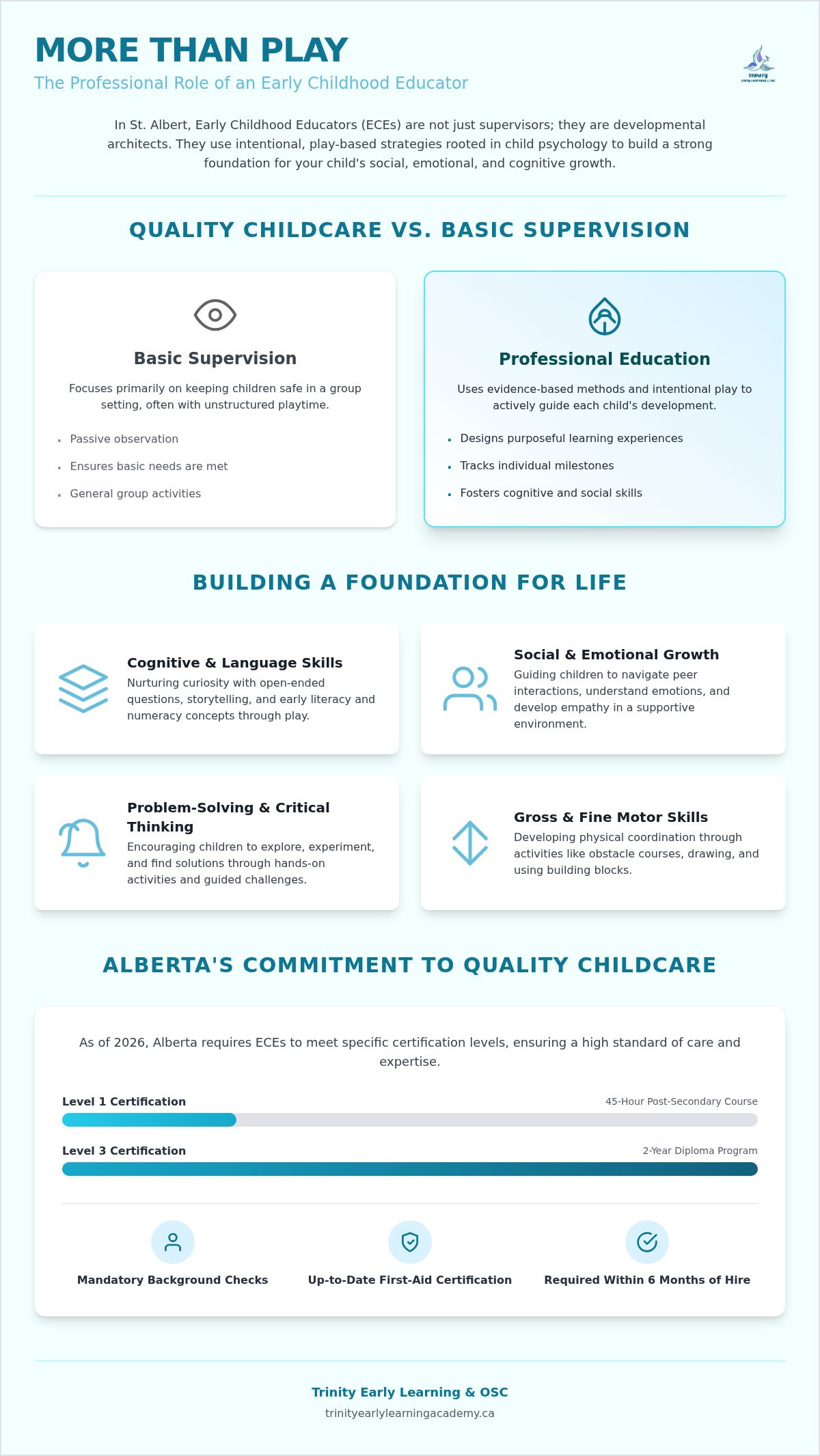
When parents ask what is the role of an early childhood educator in a licensed setting, they're often looking for assurance of quality and safety. Alberta maintains high standards for those working in childcare. As of 2026, there are three distinct levels of certification. Level 1 requires a 45-hour post-secondary course, while a Level 3 educator holds a 2-year diploma in early learning and childcare. Staff in licensed programs must be certified within six months of starting their position. These regulations ensure that your child is cared for by someone who understands safety protocols and developmental needs.
Beyond formal education, licensing mandates strict background checks and up-to-date first-aid certification for all staff. New regulations introduced in June 2026 even require facilities to post notices of high-risk incidents within one business day. These measures reflect a commitment to transparency and safety. When educators meet these professional standards, it leads to better long-term outcomes for children, setting a strong foundation for their future school years. This professionalization of the workforce means your child isn't just being "watched," they're being taught by a knowledgeable advocate for their well-being.
How Educators Support Child Development and Growth
When you examine what is the role of an early childhood educator, you'll find they are much more than caregivers. They are active facilitators who use play as a primary tool to build cognitive pathways. Through intentional activities, they help children develop problem-solving skills that will serve them for a lifetime. This developmental support includes a focus on both gross and fine motor skills. Whether it's guiding a toddler through an indoor obstacle course or helping a preschooler hold a paintbrush, these professionals ensure physical milestones are met through age-appropriate challenges.
Language development is another priority in a professional setting. Educators foster communication by reading engaging stories and encouraging peer-to-peer conversations. They don't just talk to children; they talk with them. This approach helps expand a child's vocabulary during routine daily interactions, like snack time or getting dressed for outdoor play. By modelling clear speech and active listening, they give children the tools they need to express their needs and ideas effectively.
Cognitive and Language Milestones
Professional ECEs introduce early literacy and numeracy concepts through hands-on tasks that feel like games. They might count colourful blocks or point out letters on signs during a walk. By using open-ended questions, they spark curiosity and critical thinking in young learners. Instead of asking "What colour is this?", they might ask "How do you think we could build this tower higher?". This method encourages children to think for themselves and explore different possibilities. Research shared by the U.S. Department of Education emphasizes that these early interventions are vital for long-term academic achievement. If you're looking for a program that prioritizes these milestones, visiting a quality childcare centre can provide more insight into these methods.
Social and Emotional Learning
Teaching children how to manage their feelings is a core part of an educator's day. They help children identify and express their emotions safely using simple, supportive language. This guidance is essential as children learn the complex art of sharing, taking turns, and resolving conflicts with their peers. By celebrating small wins and personal growth, educators build a child's self-esteem and sense of belonging. Social-emotional learning serves as the foundation for future school success. When children feel secure and understood, they are much better prepared to face the social and academic challenges of a formal classroom environment later in life.
The Difference Between Quality Childcare and Basic Supervision
Many parents initially worry that daycare is just a safe place for their child to stay while they work. While safety is the foundation of any licensed centre, there is a vast difference between basic supervision and quality childcare. Supervision is often reactive, focusing on preventing accidents and keeping children fed and clean. In contrast, when you ask what is the role of an early childhood educator, you'll find it's a proactive commitment to helping a child realize their potential. Quality care involves intentionality in every part of the day, from how snack time is used to encourage independence to how outdoor play is structured to build social bonds.
Professional educators use evidence-based methods to guide behaviour positively. Instead of simply stopping a conflict, they use it as a teaching moment to build empathy and communication skills. This structured approach ensures that children aren't just passing time; they're actively developing the tools they need to thrive and grow in a supportive environment.
Intentional Play vs. Unstructured Time
In a professional setting, play is never "just play." ECEs carefully select toys and materials based on Child Development Principles to encourage specific types of learning. A bin of blocks isn't just for building; it's a lesson in physics, spatial awareness, and cooperation. The educator's role is to join the play at the right moment to scaffold a child's understanding, asking questions that stretch their thinking without taking over the activity. This balance between child-led discovery and teacher-guided lessons creates a rich learning environment that unstructured time alone cannot provide.
Preparing for the Transition to School
A significant part of what is the role of an early childhood educator involves preparing children for the formal classroom. High-quality preschool programs in St. Albert focus on building the independence needed for Grade 1. Educators help children master the "soft skills" that kindergarten teachers value most, such as:
- Following multi-step directions and daily routines.
- Managing personal belongings and hygiene independently.
- Navigating group dynamics and resolving peer conflicts with empathy.
- Focusing on tasks for age-appropriate lengths of time.
By establishing consistent routines and fostering a sense of community, educators ensure that children feel comfortable and confident when they finally reach the school doors. This preparation transforms the transition from a source of anxiety into a natural next step in their educational journey. It ensures they don't just enter school, but enter it ready to succeed.
How Professional Educators Partner with St. Albert Families
A professional educator is a vital partner for parents during the formative early years. When you understand what is the role of an early childhood educator, you realize they offer more than just childcare. They provide expert guidance on developmental stages and help explain the often-confusing details of early learning. This partnership allows you to work with peace of mind, knowing your child is in a safe and supportive environment. It's about building a relationship based on trust and shared goals for your child's future.
Daily communication is a hallmark of professional care. Educators ensure you stay informed about your child's mood, appetite, and social interactions. Because they are trained observers, they can often identify developmental delays early. If an educator notices a child is struggling with a specific milestone, they can suggest helpful local resources in St. Albert. This early detection is key to providing the right support at the right time. They act as a knowledgeable advocate for your child's well-being.
Communication and Progress Reporting
Educators document learning in many ways. You might receive photos of your child building a complex tower or notes about a new word they used. Many centres use developmental checklists to track growth over time. Regular parent-teacher check-ins allow you to align goals at home with what's happening at the centre. These professional observations celebrate your child's unique personality and strengths, ensuring they feel seen and valued as an individual. This is a core part of what is the role of an early childhood educator in a high-quality program.
Navigating Childcare Logistics Together
The administrative side of childcare can feel overwhelming for busy families. Professional educators help families understand the Alberta daycare affordability grant and how it impacts their monthly fees. This transparency helps reduce financial stress for St. Albert families. Beyond the paperwork, educators focus on the emotional logistics of the day. They work hard to make morning drop-offs a positive experience, helping children transition smoothly into the classroom routine. This creates a community atmosphere where families feel they truly belong. If you're looking for a supportive partner in your child's development, consider how our licensed daycare services can support your family's needs.
Choosing a Nurturing Learning Environment for Your Child
Finding the right fit for your family requires looking beyond the physical facility. You should prioritize a centre that balances high professional standards with genuine emotional warmth. When you visit a potential site, ask yourself if the environment feels calm and organized. Observe the educator-to-child ratios to ensure your child will receive the individual attention they deserve for their safety and growth. A high-quality licensed daycare in St. Albert will always be transparent about its curriculum and the specific qualifications of its staff.
During your visit, pay close attention to how the staff members interact with the children. Do they get down to the child's eye level? Do they speak with a nurturing tone? Understanding what is the role of an early childhood educator helps you recognize these small but vital cues of professional care. These interactions are the building blocks of the trust your child needs to feel secure in a new environment. A professional who is invested in your child's joy is just as important as one who understands their developmental milestones.
Questions to Ask During a Daycare Tour
Preparing a list of questions can help you feel more confident during your tour. You want to ensure the centre's values align with your own. Consider asking the following:
- What is your philosophy on child guidance and how do you handle discipline?
- How do you incorporate play into the daily learning schedule to meet developmental goals?
- Can you explain how your staff stays current with Alberta's evolving childcare standards?
- How do you communicate daily wins or challenges to parents?
The answers to these questions will reveal what is the role of an early childhood educator within that specific facility. You're looking for answers that emphasize safety, respect, and a commitment to ongoing professional growth, often supported by providers like Education Pathways, LLC.
Our educators focus on creating a supportive space where every child can grow at their own pace. We believe in the power of professional care to build a strong foundation for lifelong learning. By combining a structured preschool curriculum with a nurturing, community-focused atmosphere, we ensure your child feels both challenged and cared for. We pride ourselves on being a stable, organized partner for modern families in St. Albert. Contact us to learn more about our dedicated team and how we can support your child's unique developmental journey.
Investing in Your Child's Early Learning Journey
Choosing the right environment is one of the most significant decisions you'll make for your child's early development. Throughout this guide, we've explored what is the role of an early childhood educator as a professional advocate who transforms daily play into structured learning opportunities. These experts don't just provide supervision; they use evidence-based methods to support cognitive growth, emotional regulation, and social confidence. By focusing on the whole child, they ensure your little one is prepared for the transition to school and beyond.
As a licensed St. Albert childcare provider, we are committed to these high professional standards. Our team of expert educators focuses on holistic growth while helping families navigate practicalities like Alberta's affordability grant options. We invite you to see our nurturing environment in person and meet the professionals dedicated to your child's success. Book a tour at Trinity Early Learning & OSC today to learn how we can partner with your family. Your child's path to lifelong learning starts with a supportive community that values their unique potential and celebrates every milestone along the way.
Frequently Asked Questions
What is the difference between an ECE and a daycare worker?
An ECE is a certified professional with specific post-secondary training in child development. While "daycare worker" is a general term, a certified Early Childhood Educator in Alberta must meet provincial standards for Level 1, 2, or 3 certification. Their focus is on intentional pedagogy and developmental milestones rather than just supervision. This professional distinction ensures your child receives care grounded in educational science and psychology rather than simple babysitting.
Do early childhood educators follow a specific curriculum in Alberta?
Yes, professional educators in Alberta use "Flight: Alberta's Early Learning and Care Framework." This guide helps them design programs that focus on holistic growth and citizenship. Instead of a rigid school-like schedule, it encourages educators to co-construct learning with children. At our St. Albert centre, we use these provincial standards in our daily preschool curriculum to ensure a high-quality educational experience for every child in our care.
Can an ECE help my child with social anxiety or shyness?
Educators are trained to support children through various emotional stages, including shyness. They use gentle social coaching to help children build confidence at their own pace. By creating a safe, predictable environment, the educator allows a child to observe before joining group activities. They might pair a shy child with a supportive peer or use specific play-based tasks to encourage gradual social interaction and improve their self-esteem.
How do educators handle discipline and conflict between children?
We use positive guidance rather than traditional discipline. When you ask what is the role of an early childhood educator in conflict, it's about acting as a mediator. Educators help children identify their feelings and use words to resolve issues. They model empathy and problem-solving, teaching children how to share and take turns. This approach builds long-term self-regulation skills rather than just stopping a temporary behaviour through punishment.
What qualifications should I look for when choosing a daycare in St. Albert?
Look for a centre where staff hold Alberta ECE certification at Level 1, 2, or 3. All educators should have valid first-aid training and clear criminal record checks. In St. Albert, a licensed facility must also adhere to provincial safety and space regulations. Ask about their commitment to ongoing professional development, which allows educators to learn more about the latest child development research and safety protocols through regular vocational training.
Educators prepare children by focusing on independence and soft skills like following routines and managing personal belongings. They introduce early literacy and numeracy through hands-on activities that spark curiosity. By the time your child leaves our preschool program, they'll be comfortable in group dynamics and confident in their ability to follow multi-step directions. This foundation is essential for a smooth and successful transition into the formal school system.
What is the educator's role in a play-based learning environment?
In a play-based environment, the educator is an active facilitator and observer. They don't just leave children to play; they carefully select materials that challenge a child's current abilities. When considering what is the role of an early childhood educator during play, it involves scaffolding learning. They ask open-ended questions that encourage critical thinking and join the play to model social skills or introduce new concepts in a natural, engaging way.
How often will I get updates from my child's educator?
You should receive daily updates regarding your child's basic needs, mood, and activities. Professional centres often use digital apps or journals to share photos and developmental notes. Regular parent-teacher check-ins are also scheduled to discuss long-term progress and align goals between home and the centre. This consistent communication ensures you are a full partner in your child's early education and stay informed about their unique growth and daily wins.


