

What if the preschool that looks best on paper isn’t where your child feels most at ease? If you’re wondering how to choose the right preschool for your child, it’s understandable to have questions about the learning environment, daily routine, and how your child will settle in. The right fit supports your child’s growth and works for your family.
This guide offers a practical, child-centred way to compare preschool options in St. Albert. You’ll learn what to look for in the environment and learning approach, how to compare schedules and communication practices, and what to ask about fees, inclusions, and affordability supports.
We’ll also cover questions to ask during a visit or conversation, so you can understand how a program supports children through the transition into preschool. Trinity Early Learning & OSC provides one local option, with licensed childcare and preschool programs, an integrated early-learning curriculum, and affordability grant options. Confirm current program details, fees, and availability directly with each preschool as you decide what suits your child and family routines.
Key Takeaways
- To decide how to choose the right preschool for your child, compare how each program’s environment, learning approach, and routines suit your child and family.
- Use the same comparison notes for each St. Albert preschool, including daily experiences, communication, schedule, and practical fit.
- Ask direct questions about licensing, supervision, arrival and departure, and how educators share illness or emergency information.
- Prepare questions before a visit, observe the environment, and compare what you see with the program’s answers.
- Discuss transition support with educators, and confirm current eligibility, fees, affordability options, and availability before making a decision.
Start with your child: what should the right preschool provide?
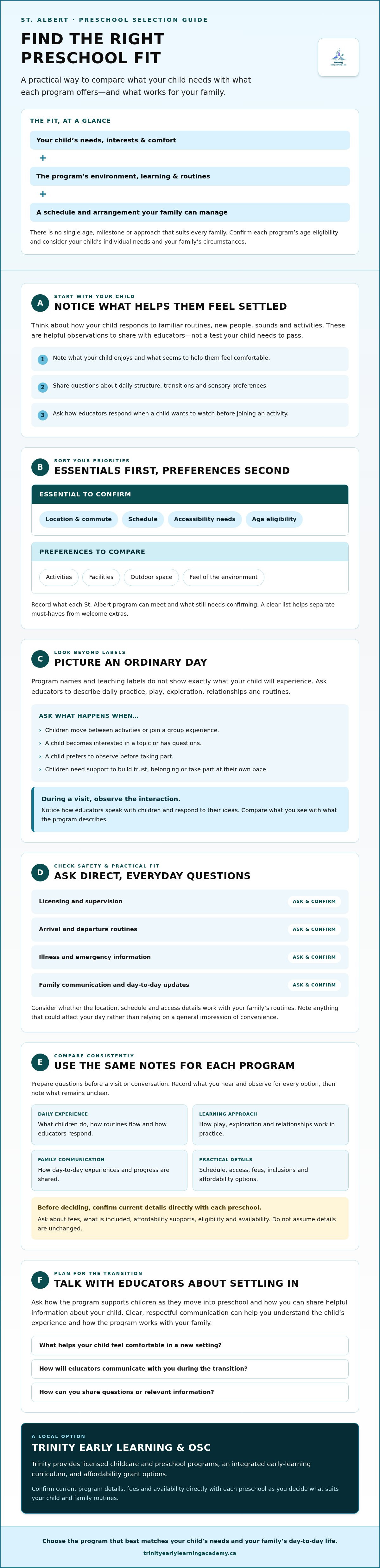
Choosing a first or new preschool can feel personal. You’re weighing practical needs alongside questions about where your child will feel comfortable, what they’ll experience during the day, and how a new routine might fit family life. There isn’t one milestone that determines whether a child is ready for preschool, and no single age or approach suits every family. Confirm each program’s age eligibility, then consider your child’s individual needs and your family’s circumstances.
Preschool fit is the match between a child’s needs and interests, the program’s daily environment and learning approach, and the routines a family can manage. Use this as a starting point when deciding how to choose the right preschool for your child. For general background on what is preschool, you can also review how preschool education is described, while grounding your decision in what each local program actually offers.
Identify your child’s needs, interests, and comfort cues
Think about what your child enjoys and how they respond to familiar routines, new people, sounds, and activities. They might prefer hands-on play, take time to warm up in a new setting, or feel more at ease when they know what comes next. These are observations to share with educators, not a checklist your child has to pass.
Before contacting programs, note what seems to help your child feel settled and what you’d like educators to know. For example, write down questions about the daily structure, support during transitions, or whether the environment can accommodate particular sensory preferences. Bring your notes to a conversation or visit so you can ask about your child’s needs clearly.
Separate essential needs from preferences
Start with your family’s non-negotiables. These may include a location that works with your commute, a manageable schedule, or an accessibility need the program must be able to discuss with you. Then list preferences, such as particular activities, outdoor space, or the feel of the learning environment.
This distinction helps you compare programs without expecting one preschool to meet every preference. Keep a short list to guide your questions:
- Essential: location, schedule, accessibility needs, and confirmed age eligibility.
- Preferred: activities, facilities, and features that would be welcome but aren’t requirements.
For each St. Albert program, record which essentials it can meet and what you still need to confirm. Note any schedule or access details that could affect your day, rather than relying on a general impression of convenience. A clear list makes it easier to focus on a supportive match for your child and a workable arrangement for your family.
Compare preschool learning approaches and everyday experiences
Program names and teaching labels can offer a starting point, but they don’t show exactly what your child will experience. Ask how play, exploration, relationships, and routines shape a typical day. A clear explanation helps you picture whether the approach suits your child’s interests and comfort, rather than asking you to choose a philosophy based on its name alone.
Ask what learning looks like during a typical preschool day
Invite educators to describe an ordinary day, including how children move between activities and take part in play or group experiences. Ask what happens when a child becomes interested in a topic, has questions, or prefers to watch before joining in. If you visit, notice how educators speak with children and respond to their ideas. These everyday interactions can tell you more than a broad program description.
As you prepare questions and plan a visit, Harvard Graduate School of Education offers additional guidance on how to pick a preschool. Use outside advice as a prompt, then ask each St. Albert program how its approach works in practice.
Look for a program that supports belonging and development
Ask how educators build trusting relationships and help children take part in group experiences at their own pace. Find out how the program communicates with families about children’s day-to-day experiences and progress, and how you can share questions or relevant information. Clear, respectful communication helps you understand what your child encounters and how the program works with your family.
Compare observable daily practice, not labels alone. A simple table can keep your notes consistent across programs:
| What to compare | Questions to record |
|---|---|
| Learning approach | How do play and exploration appear in the day? |
| Daily experiences | What activities, routines, and group experiences do children encounter? |
| Communication | How are families updated and invited to share information? |
| Schedule | Do the program’s hours and routine work for your family? |
| Family fit | Does the approach seem responsive to your child’s needs and interests? |
There isn’t one approach that’s best for every child. Consider what you observed, what educators explained, and whether the daily experience feels like a good match. For another local perspective, read this St. Albert preschool programs guide. Trinity Early Learning & OSC offers preschool programs with an integrated early-learning curriculum. Contact the centre through Trinity’s St. Albert preschool information to ask about current program details and fit.
Assess safety, licensing, communication, and practical fit in St. Albert
A preschool may suit your child’s interests, but families also need confidence in its safety practices and day-to-day arrangements. When considering how to choose the right preschool for your child, verify the program’s current details directly and think through how its routines would work for your household.
What should parents ask about safety and licensing?
Ask the program who can answer questions about its licensing status and how you can review relevant information. You can also check current information through appropriate Alberta government sources. If anything is unclear, ask the program to explain it rather than relying on an assumption or an old listing.
Questions about everyday practice can help you understand how the program supports children and keeps families informed. Ask:
- How are children supervised during activities and transitions?
- What are the arrival and departure procedures, and who may pick up a child?
- How will staff contact families about illness, an incident, or an emergency?
- Who should a parent contact with a concern, and how will the program respond?
Notice whether answers are clear and consistent. Harvard Graduate School of Education’s advice on how to pick a quality preschool also points families toward observing educator-child relationships and the atmosphere of the setting.
Verify a preschool’s current licensing status and program details directly before enrolling.
Will the program work for your family’s routine?
Practical details matter every day. Confirm current operating days and schedule, how arrival and pickup work, and which communication methods the program uses. Consider the journey from home, work, or other regular commitments, and whether the routine is manageable for your family.
Ask for a clear explanation of fees, what is included, and whether affordability options apply to the program. Don’t assume that a grant or support applies automatically. Confirm eligibility and how the option affects your fees directly with the provider. Program details and availability can change, so check them before making a decision.
For additional prompts to guide a safety conversation, see this daycare safety checklist for St. Albert. Trinity Early Learning & OSC provides licensed childcare and preschool programs in St. Albert, with affordability grant options. Families considering its preschool can ask the centre directly about current licensing information, schedule, fees, affordability options, and availability through Trinity’s preschool information.
Visit preschool programs and compare your options with confidence
A simple process can make preschool visits easier to manage. Prepare the same questions for each program, arrange a visit, observe the environment and interactions, record the answers, then follow up on anything unclear. This gives you a fair basis for comparing St. Albert options instead of relying on whichever visit is freshest in your memory.
Questions to bring to a preschool visit
Ask educators to describe the daily routine and learning experiences, how they communicate with families, and how they support children as they adjust to preschool. Confirm current program details, age eligibility, schedule, fees, availability, and any affordability supports directly with each provider. Write down answers as you go, and mark details you’ll need to check later.
If it feels appropriate, bring your child along. Let them look around or join in at their own pace. A quiet or uncertain response during one visit doesn’t have to decide the matter. Note what you observe and ask educators how they support children who need time to become comfortable. Pay attention to how staff speak with children and respond to everyday needs.
How to compare answers without overthinking the decision
Use the same headings in your notes for every program. Separate confirmed facts, such as a schedule or fee explained by the provider, from your impressions, such as whether the environment felt calm or welcoming. If an answer is vague, follow up rather than filling in the gaps yourself.
Review essential needs first. Consider whether the schedule and location work for your household, whether the program can discuss your child’s needs, and whether you understand the fees and any applicable affordability options. Then weigh preferences, such as particular activities or facilities. A short checklist can help:
- Child comfort: Did your child have space to observe or participate at their own pace?
- Learning experience: Could educators explain what children do during a typical day?
- Logistics: Do the location, schedule, and arrival and pickup arrangements fit your routine?
- Affordability: Have you confirmed fees, what’s included, and any available supports?
This process turns how to choose the right preschool for your child into a set of practical questions, not a search for a perfect program. If Trinity Early Learning & OSC is on your list, contact Trinity about preschool details, including current program fit, fees, affordability options, and availability.
Choose a preschool that fits and plan your child’s next steps
A decision doesn’t need to be based on finding a program that checks every box. Look at the whole picture: your child’s needs and comfort, what you observed about the daily experience, whether the location and schedule work for your family, and whether key details such as fees and availability are confirmed. The best fit is the program that meets your essential needs and feels supportive for your child and household.
Prepare for a gradual, informed transition
Before you enrol, ask what families can expect before the first day and how educators communicate during the transition. Share useful context about your child’s familiar routines, interests, or comfort strategies through the program’s usual process. Ask how the team responds when a child needs time, reassurance, or a different way to join an activity.
Children can respond differently to change, so avoid expecting a particular reaction or adjustment timeline. Keep communication open with educators and share questions as they arise. Their answers can help you understand what support may be available and how your family can prepare.
Explore preschool options in St. Albert
Before making a final choice, confirm the current program details directly with the preschool, including eligibility, schedule, fees, what’s included, affordability options, and availability. Trinity Early Learning & OSC is one local option for families to explore. Its St. Albert services include preschool programs with an integrated early-learning curriculum and affordability grant options. Discuss these details with the centre, then decide based on your child’s needs and your family’s circumstances.
If broader childcare considerations are part of your decision, this licensed daycare parent guide may help you think through related questions.
Before you decide, check that you have:
- Compared your child’s needs with the program’s daily environment and approach.
- Confirmed schedule, logistics, fees, affordability options, and current availability.
- Discussed transition questions and relevant routines with educators.
- Verified any details that remain unclear directly with the program.
Choosing a preschool is a considered family decision, not a test with one right answer. Explore Trinity Early Learning & OSC and ask about its current preschool program, fees, availability, and affordability options.
Make your next preschool decision with confidence
Choosing a preschool is easier when you keep your child’s and family’s needs at the centre of the decision. Consider how your child responds to the environment, what you observed about the daily learning experience, and whether the schedule and location fit your household. Comparing the same details across programs helps you focus on what matters instead of getting caught up in labels or first impressions.
As you decide how to choose the right preschool for your child, confirm key details directly with each program, including current licensing information, fees, availability, and any affordability options. Ask how educators communicate with families and what support they can discuss as your child prepares for the transition.
Trinity Early Learning & OSC provides licensed childcare and preschool services in St. Albert, with affordability grant options available. Contact the centre to confirm current program details, fees, availability, and eligibility for affordability support. Explore Trinity Early Learning & OSC and ask whether its preschool program could suit your family.
With thoughtful questions and clear priorities, you can take the next step at a pace that feels right for your child and your family.
Frequently Asked Questions
How do I know if my child is ready for preschool?
There isn’t one milestone or age that determines whether a child is ready for preschool. Consider how your child responds to new settings, group activities, familiar routines, and time with educators, while remembering that readiness varies. Ask each St. Albert program about age eligibility and how it supports children who need time to feel comfortable. Your observations and a conversation with educators can help you decide whether the timing and environment suit your child.
What should I look for when visiting a preschool?
Look for an environment where children are supervised and educators communicate with them respectfully. Notice how staff respond to children’s questions, interests, and everyday needs, and ask what a typical day includes. Check whether routines, learning experiences, and family communication match your priorities. A visit offers useful observations, but ask direct questions too. Promotional descriptions alone may not explain how the program works in practice or whether its approach suits your child.
How many preschools should I compare before choosing one?
There’s no set number of preschools you need to compare. Focus on enough St. Albert options to understand which programs meet your essential needs, such as schedule, location, eligibility, and your child’s comfort. Use the same questions and notes for each conversation or visit. If one program seems promising but an important detail is unclear, follow up before deciding. A consistent comparison can be more useful than visiting many programs without recording what matters.
What questions should I ask a preschool before enrolling?
Ask about age eligibility, the daily routine, learning experiences, supervision, arrival and pickup arrangements, and how the program communicates with families. Confirm current fees, what’s included, availability, and whether affordability options apply. Ask how educators support children during the transition into preschool and who to contact with questions. In St. Albert, confirm important details directly with each provider, since program schedules, fees, and enrolment availability can vary.
How much does preschool cost in St. Albert?
Preschool fees in St. Albert vary by program, and Trinity Early Learning & OSC’s current prices aren’t published in the information available here. Contact each preschool directly for its current fees and a clear explanation of what’s included. Also ask whether affordability supports apply to that specific program and what eligibility or participation details you should confirm. Don’t assume another provider’s fees or supports will be the same; request current information before comparing costs.
What happens if my child feels upset about starting preschool?
A child may feel uncertain or upset about a new setting, and families can discuss that response with educators. Before the first day, ask what transition support the program can provide and how staff communicate with families. Share useful information about familiar routines, interests, or comfort strategies through the program’s usual process. Children respond to change differently, so avoid expecting a fixed adjustment timeline. Keep communication open and ask questions as your child begins preschool.
Is a licensed preschool always the right choice for every child?
A program’s licensing status is an important detail to verify, but it doesn’t by itself determine whether the preschool is the right fit for your child. Consider the daily environment, learning approach, communication practices, schedule, and your child’s needs alongside verified licensing information. Ask the provider how to review its current status and clarify any questions directly. The decision should reflect both your family’s practical requirements and what you observe about the program.


