

Imagine you are standing at the daycare entrance, watching your toddler wave goodbye through the window. As you walk back to your car, a flurry of "what ifs" might begin to circle. You might wonder if the front door is truly secure, or if the staff knows exactly what to do if an unexpected emergency occurs. It's completely natural to feel this way when you entrust your child’s well-being to others. You want to be certain that the facility's daycare safety and security procedures are robust enough to handle any situation. Fears regarding unauthorized access or the spread of illness are common for every parent seeking a licensed centre in St. Albert.
This guide will help you understand the essential security protocols and safety standards that ensure your child remains protected and nurtured in a professional childcare environment. We will explore the mandatory staff-to-child ratios in Alberta, the importance of vulnerable sector checks, and the enhanced food safety regulations that keep your little ones healthy and thriving. By the end, you'll feel confident in choosing a space that acts as a stable, organized partner in your child's early development.
Key Takeaways
- Understand how Alberta licensing standards provide a foundational layer of protection for every child in a professional care setting.
- Discover why secure entry systems and visitor management protocols are essential components of modern daycare safety and security procedures.
- Learn to identify the rigorous health and hygiene standards, including allergy management plans, that prevent illness and ensure well-being.
- Gain confidence by learning about the mandatory vetting processes, such as Vulnerable Sector Checks, required for all professional childcare staff.
- Access a practical tour checklist designed to help you evaluate facility integrity and emergency preparedness during your next visit.
Understanding Daycare Safety and Security Procedures in Alberta
Security is more than a locked door; it's a promise of protection that allows parents to go about their day with peace of mind. In Alberta, this protection is built on a multi-layered approach that blends physical barriers with professional vigilance. Alberta Children’s Services establishes the safety benchmarks that every provider must follow to maintain their license. For families in St. Albert, choosing a facility that strictly adheres to daycare safety and security procedures is the first step in ensuring a child’s well-being. There is a vital difference between having policies on a shelf and maintaining an active safety culture where staff are constantly aware and engaged.
The Alberta Licensing Advantage
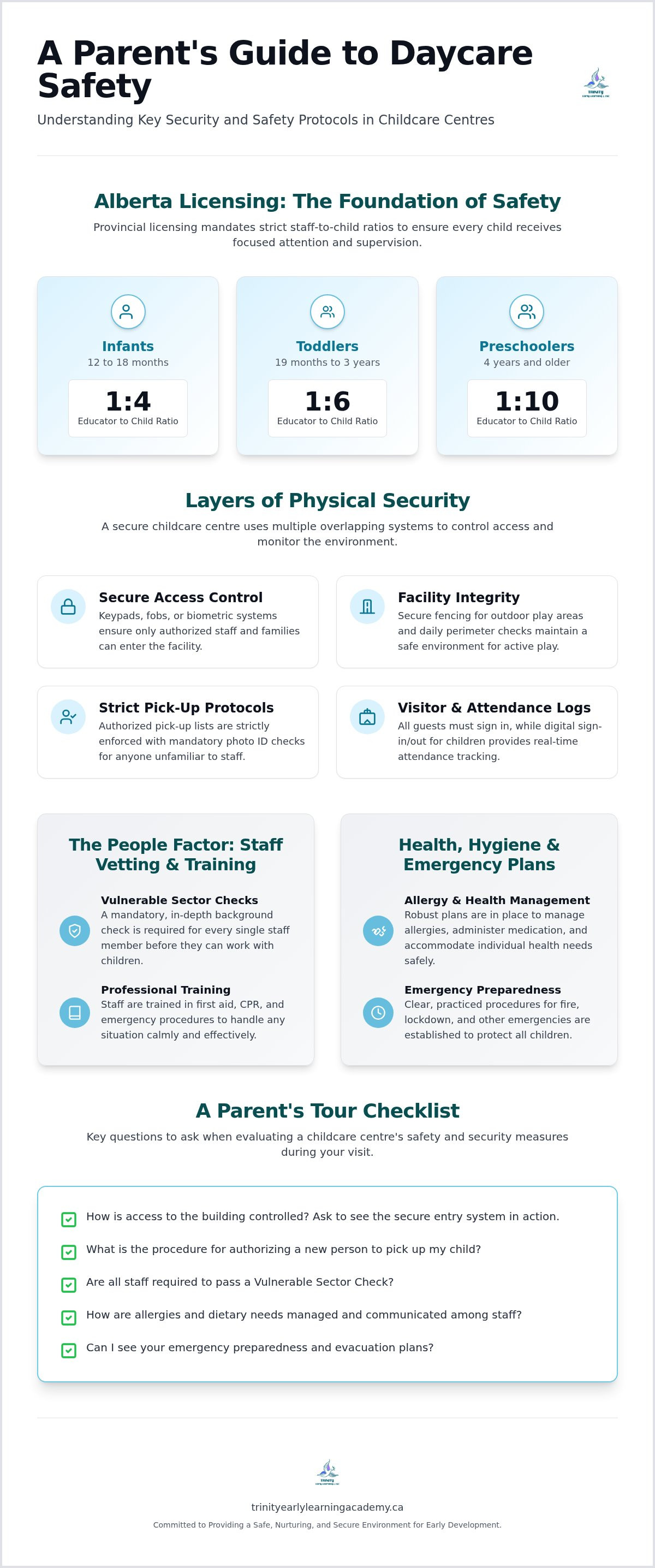
A provincial license provides a foundational layer of defence for your family. It mandates specific staff-to-child ratios that ensure optimal supervision at all times. For example, infants aged 12 to 18 months require one educator for every four children. Toddlers aged 19 months to under three years require a one-to-six ratio, and preschoolers aged four and older move to a one-to-ten ratio. These standards prevent educators from becoming overwhelmed and allow them to focus on each child's immediate needs. A licensed daycare St. Albert parents choose must also comply with mandatory space requirements and floor plan safety to prevent overcrowding and minimize the risk of accidental injuries.
Holistic Safety: Physical vs. Emotional
Safety isn't just about preventing falls; it's about fostering emotional security so a child feels free to learn. A "safe-to-explore" environment is designed with child-centric features that encourage curiosity without unnecessary risk. Professional supervision is the most effective tool for preventing accidents before they happen. Educators who are experts in understanding child care know how to anticipate a child's next move and guide them safely through their play. This holistic approach ensures that the environment is both physically secure and emotionally nurturing, allowing children to grow with confidence.
Active safety cultures also prioritize transparency and accountability. As of June 1, 2026, Alberta facilities are required to post on-site notices of high-risk incidents within one business day. This ensures that parents remain fully informed about the environment where their children spend their time. When daycare safety and security procedures are woven into the daily routine rather than treated as a checklist, the result is a stable, organized space where children can truly thrive.
Physical Security: Controlled Access and Facility Integrity
Physical security is the visible foundation of a childcare centre's commitment to protection. Robust daycare safety and security procedures begin at the perimeter and the front door. Modern facilities utilize secure entry systems such as keypads, fobs, or biometric access to ensure that only authorized individuals enter the building. This technology prevents unauthorized access while allowing families to move efficiently during busy morning drop-offs. Beyond the front door, visitor management protocols require every guest to sign in and provide identification. Surveillance cameras often monitor common areas and hallways, providing an extra layer of oversight that balances child privacy with the need for constant protection. Outdoor play areas also require high-quality fencing and daily perimeter checks to ensure the space remains a safe sanctuary for active play.
Strict Pick-Up and Drop-Off Protocols
The transition periods at the start and end of the day require the highest level of vigilance. Professional centres maintain strictly managed authorized pick-up lists and enforce mandatory photo ID checks for anyone unfamiliar to the staff. This "No-Exception" policy is a critical component of keeping children safe in daycare environments. Digital sign-in and sign-out systems provide real-time attendance tracking, ensuring that educators know exactly which children are on-site at any given moment. These digital records create a transparent log that supports administrative accuracy and child safety. If you are looking for a facility that prioritizes these physical safeguards, you might consider touring a quality childcare centre in St. Albert to see these measures in action.
Perimeter and Interior Safety Standards
A secure environment involves the ongoing integrity of the facility itself. Inside the building, safety standards include anchoring heavy furniture to walls and using soft-surface flooring in play zones to minimize injury risks. Secondary exits and windows are secured to prevent unauthorized entry, yet they are designed to open easily from the inside during a fire emergency. Regular inspections for wear and tear help maintain these high standards over time. Educators conduct daily walk-throughs to identify potential hazards, such as loose equipment or blocked pathways. This proactive approach ensures that the physical environment remains a stable and predictable place where children can focus on growth and exploration without unnecessary risk. When these physical barriers are combined with attentive supervision, the result is a truly secure learning environment.
Health, Hygiene, and Emergency Preparedness
While physical barriers keep the outside world at bay, health and hygiene protocols protect the community within. Comprehensive daycare safety and security procedures must account for invisible risks like illness and unexpected environmental emergencies. A professional centre doesn't just react to problems; it prepares for them through rigorous sanitization routines and documented emergency plans. This proactive stance ensures that every child remains healthy and that staff can act with calm authority if a crisis arises. From managing life-threatening allergies to conducting regular fire drills, these measures create a predictable and stable environment for early learners.
Emergency Response Planning (ERP)
A well-practiced Emergency Response Plan is the backbone of facility safety. Staff don't just know the exits; they participate in a structured three-step approach to crisis management:
- Step 1: Clear Evacuation Routes. Evacuation plans are tailored to developmental stages. For infants, this includes specialized evacuation cribs that allow one educator to move multiple babies quickly. Older children practice walking in "chains" to designated safe zones.
- Step 2: Parent Notification. Transparent communication is vital. Centres use digital platforms or emergency call trees to notify parents immediately during an event, ensuring families aren't left wondering about their child’s status.
- Step 3: Essential "Go-Bags." Every classroom maintains a bag packed with emergency contact records, first aid supplies, and water. In Alberta, these bags also include extra blankets and warm gear to account for extreme winter weather during an outdoor evacuation.
Health and Hygiene Daily Routines
Maintaining a healthy environment requires a partnership between the centre and families. Strict sick child policies are in place to prevent the spread of infection, requiring children with fevers or contagious symptoms to stay home until they are cleared to return. This protects the most vulnerable members of the community. Inside the facility, professional cleaning schedules ensure that high-touch toys and surfaces are sanitized throughout the day. Following the Alberta Public Health Act amendments that took effect on September 30, 2025, centres also adhere to enhanced food safety standards in their kitchens to prevent foodborne illnesses.
Staff competence is equally important. All childcare educators must maintain valid First Aid and CPR certifications, with a specific focus on infant and child emergency care. Additionally, for children with severe sensitivities, an Anaphylaxis Action Plan is kept on file and shared with every educator in the room. This plan outlines specific triggers and the immediate steps required for treatment, ensuring a rapid response to allergic reactions. These daycare safety and security procedures work together to ensure that your child’s health is never left to chance.
The People Factor: Staff Vetting and Professional Training
While physical barriers and digital logs are essential, the most vital component of daycare safety and security procedures is the team of professionals inside the building. Security is a human responsibility. It requires educators who are not only trained to respond to emergencies but who also possess the emotional intelligence to nurture a child’s psychological safety. For parents, knowing that every adult in the facility has been rigorously vetted provides a layer of comfort that technology alone cannot offer. This human element ensures that vigilance is constant and that every child feels emotionally secure while in our care.
Vetting and Hiring Best Practices
A secure environment begins with a thorough hiring process. This goes beyond reviewing a resume. It includes multi-stage interviews designed to assess a candidate's "nurturing fit" and their ability to remain calm under pressure. Reference verification is a deep dive into an applicant's history, ensuring their previous experience aligns with our high standards. Once hired, new staff undergo a probationary period and are paired with senior mentors. This mentorship ensures that the facility's specific safety culture is passed down effectively. In Alberta, staff requirements are strict. For instance, any staff member under the age of 18 must obtain at least a Level 1 Early Childhood Educator certification within six months of being hired. They also require a standard criminal record check, which transitions to a mandatory Vulnerable Sector Check once they turn 18.
Continuous Safety Education
Safety is not a static goal; it is a continuous process of education. Ongoing professional development in early childhood education St. Albert educators participate in ensures they stay current with the latest safety research. This includes specific training for preschool programs St. Albert families rely on, where educators learn to identify age-specific risks. Staff are trained in "active supervision," which involves constant scanning and proximity to children, rather than "passive monitoring" from a distance. Regular staff meetings are dedicated to reviewing daycare safety and security procedures, ensuring that everyone knows their role in child welfare and protection. If you want to see how our dedicated team puts these safety standards into practice, we invite you to learn more about our licensed daycare services today.
The "Vulnerable Sector Check" remains the non-negotiable Canadian standard for all childcare employees. This screening identifies record suspensions for sexual offences and other high-risk indicators that a standard background check might miss. In the Edmonton and St. Albert region, this process is handled with extreme care. For example, while some local police services may not charge their own fee for fingerprints for employment purposes, a $25 fee is typically collected on behalf of the RCMP. This thorough vetting ensures that the persona of our staff is backed by verified security clearances, creating a stable and organized environment for every family.
Choosing a Safe Daycare: A Parent’s Final Checklist
Selecting the right childcare environment is one of the most significant decisions you'll make for your child’s early years. While understanding the theoretical daycare safety and security procedures is vital, seeing these protocols in action during a physical tour is the best way to gain peace of mind. A facility that prioritizes safety will be proud to show you their systems and answer your questions with transparency. This final stage of your search is about verifying that the centre's active safety culture matches the promises made in their parent handbook. You're looking for a partner that understands the practical needs of modern families while maintaining the highest standards of care.
The Tour Checklist
When you walk through a facility, your observations should be methodical and thorough. Start with the practical safeguards found on a daycare safety checklist St. Albert families use to evaluate quality. Look for essential items like socket covers in all classrooms and the presence of clearly marked, well-stocked first aid kits. Observe the front door: is it actively monitored or locked with a secure entry system? You should also look for posted emergency exit maps in every room. These small details indicate a stable, organized environment where safety is a daily priority rather than an afterthought. If the physical space feels cluttered or exits appear blocked, it may suggest a lapse in facility integrity that needs to be addressed.
The Transparency Test
A safe daycare is a transparent daycare. During your meeting with the Director, ask critical questions about how they handle the unexpected. You should inquire about the frequency of fire and lockdown drills and how they communicate daily incidents or minor accidents to parents. Ask if they have an "Open Door" policy that allows you to visit or call at any time. A professional centre will also have their most recent licensing inspections and safety reports available for your review. This level of openness is a hallmark of a knowledgeable advocate for your child’s well-being. It ensures that you remain practically informed about the operations and emotionally connected to the mission of the centre.
It's equally important to perform an "Emotional Safety" check. Watch the staff-child interactions closely during your visit. Do the educators speak to the children with warmth and respect? When a child is upset, is their distress met with a nurturing and prompt response? Security isn't just about fences and locks; it's about the psychological comfort a child feels in their environment. A centre that balances rigorous daycare safety and security procedures with a compassionate, community-focused atmosphere creates the ideal foundation for holistic growth. By using this checklist, you can move forward with confidence, knowing you've chosen a partner that values your child's joy and safety as much as you do.
Building a Secure Foundation for Your Child’s Future
Choosing a childcare provider is about more than finding a convenient location; it's about finding a partner that prioritizes the physical and emotional well-being of your family. You now understand how Alberta's licensing standards and rigorous staff vetting create a protective shield around early learners. Implementing robust daycare safety and security procedures ensures that every day is spent in a stable, organized environment where growth is the primary focus. By looking for transparency and active supervision, you can feel confident that your child is in the best possible hands.
At Trinity Early Learning & OSC, we take our role as a knowledgeable advocate seriously. As a facility licensed by Alberta Children’s Services, we maintain high standards that go beyond basic requirements. Our staff are fully trained in First Aid and CPR, providing community-focused care right here in St. Albert. We invite you to see our commitment to safety firsthand. Please Book a Tour of Our Secure St. Albert Facility to explore our classrooms and meet our dedicated team. We look forward to supporting your family’s journey with compassion and professional excellence.
Frequently Asked Questions
What are the most important daycare safety and security procedures?
The most essential daycare safety and security procedures include secure entry systems, rigorous staff vetting, and strict adherence to provincial ratios. These layers ensure that only authorized individuals enter the facility while maintaining a high level of adult supervision. In St. Albert, licensed centres must also prioritize health and hygiene protocols to prevent the spread of illness. A multi-layered strategy protects the physical safety and the emotional well-being of every child in our care.
How often should a daycare perform fire and emergency drills?
Licensed facilities in Alberta typically perform fire drills once per month to ensure children and staff are familiar with evacuation routes. Lockdown and weather-related emergency drills are usually conducted quarterly or as part of a comprehensive safety schedule. These regular practices help children remain calm during a real event. In our St. Albert facility, we document every drill to identify areas where our response time or communication can be improved for better protection.
What is a Vulnerable Sector Check and why is it required for daycare staff?
A Vulnerable Sector Check is a specialized criminal record search that includes a review of the pardoned sex offender database. This is a non-negotiable requirement for any staff member working in an early learning environment in Canada. It ensures that every adult interacting with your child has been thoroughly screened by local police services. This check provides an essential layer of security that standard background checks cannot offer, helping to maintain a safe and stable environment.
Can I visit my child at any time under standard daycare security procedures?
Most quality childcare centres in St. Albert maintain an "Open Door" policy that allows parents to visit their children at any time. While we encourage parental involvement, you must still follow the centre's daycare safety and security procedures by signing in and presenting identification if requested. This ensures that our staff can account for every adult in the building at all times. Maintaining this balance allows for a welcoming atmosphere without compromising the facility's overall integrity.
How does a licensed daycare handle food allergies and medical emergencies?
Licensed centres manage medical needs through detailed Anaphylaxis Action Plans and mandatory First Aid and CPR certifications for all educators. If your child has a life-threatening allergy, their triggers and treatment steps are documented and shared with every staff member in their room. Centres also maintain secure storage for EpiPens and other necessary medications. In the event of a medical emergency, staff follow established protocols to provide immediate care while contacting emergency services and parents.
What happens if someone not on my authorized list tries to pick up my child?
If an individual who is not on your authorized pick-up list attempts to collect your child, our staff will not release the child under any circumstances. We enforce a strict photo ID policy for all unfamiliar faces. Educators will immediately contact the primary parent or guardian to verify the situation. This "No-Exception" rule is a vital part of our security culture, ensuring that children only leave the facility with those you have explicitly trusted.
How do daycare staff balance security with a welcoming environment?
Our educators act as "Trusted Nurturers" who blend professional vigilance with emotional warmth. We use organized daily routines and child-centric facility designs to make security measures feel like a natural part of the day. For example, secure entry systems are handled by staff with a friendly greeting, and safety drills are introduced through age-appropriate stories. This approach ensures that children feel nurtured and joyful while remaining protected by the highest professional standards in the industry.
What should I do if I notice a safety concern at my child’s daycare?
If you notice a safety concern, you should immediately bring it to the attention of the centre Director. A professional facility will have a transparent process for addressing parent feedback and reviewing safety reports. You can also refer to your parent handbook for specific protocols regarding incident reporting. If the issue is not resolved to your satisfaction, you have the right to contact Alberta Children’s Services to ensure the facility continues to meet provincial licensing benchmarks.


