
It is 6:30 AM on a Tuesday, and you notice your toddler has a slight cough and a warm forehead. You find yourself caught between the pressure of a busy workday and the desire to keep your little one comfortable at home. We understand that distinguishing between a mild cold and a reason for exclusion is stressful for any parent. You want to protect your child’s health while also respecting the well-being of their peers and teachers. Understanding the daycare sick policy Alberta families must follow is the first step in maintaining a healthy community.
This guide simplifies the health regulations for 2026, so you can make informed decisions with total confidence. We will provide a clear checklist of exclusion symptoms, explain the updated 48-hour recovery timelines for gastrointestinal illness, and discuss how these standards create a safer learning environment for everyone. By understanding these provincial health guidelines, you can gain peace of mind knowing your child is in a secure, transparent, and professional care setting. Our goal is to act as your knowledgeable advocate, ensuring your family feels supported through every seasonal sniffle and cough.
Key Takeaways
- Identify the legal requirements under the Alberta Early Learning and Child Care Act that shape every daycare sick policy Alberta providers implement to protect children.
- Access a clear checklist of exclusion symptoms to help you distinguish between a mild sniffle and a contagious illness that requires a day at home.
- Master the "symptom-free" clock with specific 2026 guidelines for 24-hour fever-free periods and 48-hour gastrointestinal recovery timelines.
- Understand the difference between Alberta Health Services minimum standards and the more rigorous sanitization protocols used at a professional childcare centre.
Why Alberta Daycares Have Strict Health and Sick Policies
Maintaining a healthy-first environment is the foundation of quality childcare. When many children interact in a shared space, a robust daycare sick policy Alberta parents can rely on becomes essential for everyone's safety. These policies aren't meant to be hurdles for working families. Instead, they serve as a protective shield for your child's developing immune system. Understanding how infections spread in childcare settings shows that clear exclusion rules significantly reduce the frequency of illness for every family in the centre. We prioritize wellness because a healthy child is a child who is ready to learn, play, and grow.
The Alberta Early Learning and Child Care Act provides the legal framework for these standards in 2026. This legislation ensures that every licensed facility operates with a primary focus on the well-being and safety of children. Licensed centres must maintain much higher standards than private sitters or unlicensed arrangements. While a private sitter might allow a child with a mild fever to stay, a licensed centre follows provincial protocols to ensure that one child's illness doesn't lead to a facility-wide outbreak. This commitment to high standards is what defines a professional learning environment.
Alberta Health Services (AHS) and Licensing Regulations
Alberta Health Services (AHS) inspectors work closely with childcare providers to monitor health compliance. A mandatory requirement for all licensed daycares is the daily health check. Upon arrival, staff must observe each child for signs of illness. This isn't a medical diagnosis; it's a screening to ensure no child is struggling with symptoms that could spread to others. These regulations protect the children and the educators who provide care. When staff stay healthy, the centre remains stable and operational for your family. Licensing isn't just a piece of paper; it's a promise of accountability and safety.
The Benefit of Consistency for St. Albert Families
Clear health rules create a predictable environment where children can realize their full potential without the interruption of frequent illness. For families in St. Albert, consistency is vital. When the rules are transparent, it reduces conflict and confusion between parents and educators. You don't have to wonder if your child will be sent home because the guidelines are already in your hands. Trinity Early Learning & OSC remains committed to this transparency. We view ourselves as your partners in health, providing regular updates and clear communication so you can plan your work week with confidence. A healthy centre is a happy centre where every child can thrive in a secure, nurturing space.
The 'Stay Home' Checklist: Recognizing Exclusion Symptoms
Deciding whether to keep your child home is often the most difficult part of a parent's morning. A clear daycare sick policy Alberta parents can follow helps remove the guesswork during those early hours. By adhering to a standardized checklist, you ensure that your child receives the rest they need to recover. This collective effort also protects the health of the entire group. Following these guidelines is a shared commitment to keeping our learning environment safe and operational for every family.
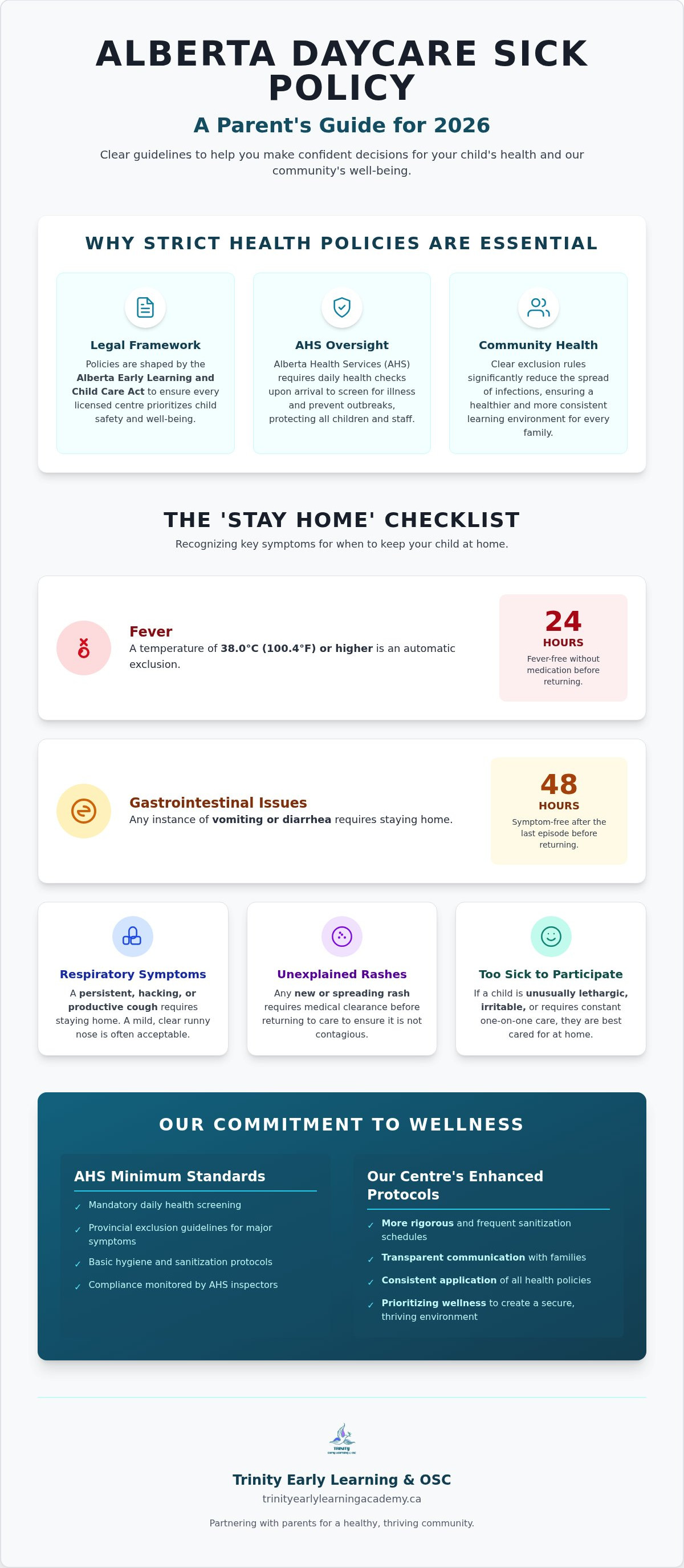
- Fever Thresholds: A temperature of 38.0°C (100.4°F) or higher is an automatic exclusion. Children must remain home until they have been fever-free for at least 24 hours without the use of fever-reducing medications.
- Respiratory Symptoms: While a mild, clear runny nose is often acceptable, a persistent, hacking, or productive cough requires a child to stay home. They may return once symptoms have improved and they feel well enough to participate in all activities.
- Gastrointestinal Issues: According to 2026 Alberta health standards, children with vomiting or diarrhea must stay home until 48 hours after their last episode. This timeline is critical for preventing the rapid spread of stomach viruses.
- Unexplained Rashes: Any new or spreading rash requires medical clearance. A doctor's note may be necessary to confirm the condition is not contagious before the child returns to care.
When a Child is 'Too Sick' to Participate
Sometimes a child's behaviour is a clearer indicator than a thermometer. If your child is unusually lethargic, irritable, or simply cannot join in regular activities like outdoor play, they aren't ready for a group setting. We also consider the "one-on-one care" rule. If a child requires constant individual attention from an educator due to illness, they are best cared for in the comfort of their own home. It's also vital to avoid "masking" a fever with medication before drop-off. While fever reducers manage the temperature, the child remains contagious and often feels much worse once the medication wears off. This transparency is a hallmark of licensed childcare where safety and communication go hand in hand.
Communicable Disease Reporting in Alberta
Certain illnesses like Pink Eye or Hand, Foot, and Mouth disease require specific reporting to Alberta Health Services. Under current provincial guidelines, we must report outbreaks when two or more children from different households show similar symptoms within a specific timeframe. For respiratory issues, this threshold is within seven days. For gastrointestinal issues, it's 48 hours. When an outbreak or a high-risk incident occurs, our daycare sick policy Alberta mandate requires us to post a notice on-site within one business day. We notify all parents of the potential exposure while strictly protecting the privacy of the affected families. Trinity Early Learning & OSC follows these professional reporting standards to ensure you are always informed about the health of the environment your child inhabits.
Alberta Health Services Guidelines vs. Centre-Specific Policies
Alberta Health Services (AHS) establishes the minimum safety threshold for all childcare facilities in the province. However, a daycare sick policy Alberta parents trust often exceeds these basic requirements to ensure a more robust shield against illness. AHS guidelines focus on broad public health, while centre-specific policies address the unique needs of a specific community and facility layout. In St. Albert, high-quality centres recognize that provincial rules are a starting point, not the final word in child safety. We believe that setting a higher bar for wellness is a direct investment in your child's developmental consistency.
Mandatory exclusion periods are non-negotiable rules for conditions like confirmed influenza or specific communicable diseases. Recommended periods are guidelines for milder symptoms where a centre might exercise professional discretion based on the child's ability to participate. Trinity Early Learning aligns with the highest provincial standards by choosing the most protective interpretation of these rules. This proactive stance ensures that we remain a stable partner for working families. Preventing one outbreak saves dozens of parents from the stress of missed work days and unexpected childcare gaps.
Licensed vs Unlicensed Care Health Standards
The distinction between Licensed vs Unlicensed Daycare Alberta families must consider often comes down to accountability. Licensed facilities undergo regular, unannounced inspections by AHS health officers and provincial licensing staff. These inspectors verify that sanitization logs are current and that health policies are being followed strictly. Unlicensed care providers don't have this third-party oversight, meaning there is no guarantee that health protocols are being met. This safety net provides parents with the confidence that their child is in a professionally monitored environment where health is never left to chance.
Sanitization and Prevention Strategies
Modern facility standards in 2026 place a heavy emphasis on proactive prevention rather than just reactive exclusion. High-quality centres utilize colour-coded cleaning systems to prevent cross-contamination between food preparation areas, playrooms, and washrooms. We also integrate health education into our daily curriculum. By teaching children proper respiratory etiquette and thorough handwashing habits, we empower them to protect their own wellness. Additionally, advanced air filtration and ventilation systems are now a standard feature in professional facilities. These systems work silently to improve indoor air quality, reducing the concentration of airborne pathogens and creating a fresher, healthier space for early childhood development.
Managing the Return to Care: Logistics and Clearance
Watching your child regain their energy after a few days of rest is a relief for every parent. However, the transition back to a group setting requires careful timing to ensure the illness has fully passed. A consistent daycare sick policy Alberta families follow relies on the "symptom-free clock" to determine when it's safe to return. This clock doesn't start when your child begins to feel better. It starts when the very last symptom disappears without the help of fever-reducing medications or cough suppressants. Adhering to this timeline prevents the frustrating cycle of a child returning too early, only to be sent home again by midday.
Clearance sometimes requires more than just a waiting period. For specific communicable diseases like pink eye, or for unexplained rashes, Trinity Early Learning & OSC requires a formal doctor's note for re-entry. This documentation provides an extra layer of security for other families. It confirms that the condition is no longer contagious. If your child has a chronic condition like seasonal allergies or asthma that mimics cold symptoms, providing a medical note once can prevent unnecessary exclusions later. Open communication with your child's educator during their absence is vital. It allows us to prepare for their return and ensures we are aware of any lingering fatigue they might experience.
The Return-to-Care Timeline
The process for returning to care follows three specific steps to maintain a healthy environment. First, the child must be entirely symptom-free without the use of medicine. Second, the mandatory waiting period must be observed. For respiratory illnesses, this is 24 hours after the fever breaks. For gastrointestinal issues, Alberta standards in 2026 require a full 48-hour period after the last episode of vomiting or diarrhea. Finally, staff perform a brief health check upon arrival. If a child appears lethargic or symptoms have returned, we may ask that they take one more day of rest. These steps are designed to protect your child's recovery and the health of their peers.
Working Together as a Community
Honesty is the most important tool we have in managing community wellness. Sharing exactly when symptoms first appeared helps us track potential outbreaks and notify other parents quickly. We understand that missing work is difficult. This is why we encourage St. Albert families to organize backup care plans before the flu season begins. As a nurturing childcare provider, our role is to support your family's routine while keeping the environment safe for everyone. If you have questions about a specific symptom or timeline, please explore our licensed daycare programs to learn more about our commitment to health and safety.
How Trinity Early Learning Academy Prioritizes Wellness
At Trinity Early Learning & OSC, we believe that a healthy environment is the foundation for every child’s growth and joy. Our professional approach to wellness goes beyond simply following a daycare sick policy Alberta mandate; it is about acting as a stable partner for your family. We conduct thorough health screenings every morning to ensure that our learning centre remains a safe space for exploration. By maintaining these high standards, we provide St. Albert parents with the confidence that their children are surrounded by peers and educators who prioritize community health.
We understand that children can sometimes become ill during the day, even if they seemed perfectly healthy at drop-off. When this happens, our team follows a nurturing and organized protocol. We provide a quiet, comfortable area where the child can rest under close supervision while we contact you for pick-up. This supportive approach ensures that the child feels secure and cared for during a vulnerable moment, while also protecting the rest of the group from potential exposure. We balance educational stimulation with physical health, ensuring that our daily routines allow for plenty of rest and hydration during peak flu and cold seasons.
A Safe and Supportive Environment
Our commitment to excellence is reflected in our adherence to a comprehensive daycare safety checklist. This list guides our daily sanitization efforts and facility maintenance, ensuring we meet and exceed provincial expectations. To stay ahead of seasonal health trends, our staff participate in continuous training on the latest Alberta Health Services updates. For example, we strictly follow the 2026 transparency rules regarding incident reporting and health notices. This dedication to professional development means we are always prepared to act as a knowledgeable advocate for your child’s well-being, even on their "off" days.
Next Steps for St. Albert Families
Transparency is a core value of our centre, and we encourage all families to review our full parent handbook for detailed policy breakdowns. This document outlines exactly how we manage everything from mild sniffles to mandatory exclusion periods. If you are looking for a childcare environment that values health as much as you do, we invite you to explore our St. Albert daycare enrollment options. You can join our waitlist or contact us directly to discuss your child's specific health needs or chronic conditions. We are here to provide the clarity and support you need to navigate the logistical aspects of childcare with total peace of mind.
Building a Healthier Future for Your Child in St. Albert
Navigating the nuances of a daycare sick policy Alberta families follow doesn't have to be a source of stress. By mastering the 2026 health guidelines and recognizing when a day of rest is necessary, you help maintain the safety and stability of our entire learning community. You've learned how to identify exclusion symptoms, the importance of the symptom-free clock, and why licensed care provides a level of accountability that unlicensed settings simply can't match. These protocols aren't just rules; they're a collective commitment to your child's holistic growth and long-term wellness.
As a trusted, family-run academy, Trinity Early Learning & OSC is proud to be licensed by the Government of Alberta and fully compliant with all AHS health and safety protocols. We invite you to see our nurturing environment firsthand and discuss how we support your family's unique needs. Book a tour of our St. Albert learning centre today to learn more about our quality childcare programs. We look forward to partnering with you to create a vibrant, healthy, and joyful early learning experience for your little one.
Frequently Asked Questions
Can my child go to daycare with a runny nose in Alberta?
A child can generally attend daycare with a mild, clear runny nose provided they feel well enough to participate in all indoor and outdoor activities. However, if the nasal discharge is heavy or accompanied by a persistent cough, lethargy, or a fever, the child must stay home. This distinction helps maintain a healthy environment for everyone while acknowledging that minor sniffles are a common part of early childhood development.
How long must a child be fever-free before returning to a St. Albert daycare?
A child must be fever-free for at least 24 hours without the use of fever-reducing medications like acetaminophen or ibuprofen before returning to care. This 24-hour waiting period ensures that the illness has truly passed and the child is no longer contagious. Rushing a return before this window closes often leads to a relapse or the unintentional spread of illness to other children and staff members.
What happens if my child becomes sick while at Trinity Early Learning?
If a child develops symptoms during the day, we move them to a quiet, supervised area to rest comfortably while we contact a parent or emergency contact for pick-up. Our educators provide nurturing care and reassurance until you arrive. This protocol is a key part of the daycare sick policy Alberta families trust, as it balances the child's immediate comfort with the health and safety of the entire group.
Does Alberta law require a doctor's note for every daycare absence?
No, Alberta law does not require a formal doctor's note for every routine absence or minor cold. Notes are typically only required for specific communicable diseases, unexplained rashes, or to confirm that a chronic condition like seasonal allergies is not contagious. Providing a medical note for chronic issues can actually help prevent unnecessary exclusions by clarifying your child's baseline health for our administrative staff.
Is the daycare sick policy different for preschool vs out of school care?
The core health standards set by Alberta Health Services are consistent across all licensed childcare programs, including preschool and out of school care. While the age of the children differs, the biological timelines for contagion and recovery remain the same. Every program within our facility adheres to the same rigorous sanitization and exclusion protocols to ensure a safe, predictable learning environment for children of all ages.
What are the AHS exclusion rules for vomiting and diarrhea in 2026?
Under the 2026 AHS guidelines, children must stay home until 48 hours after their last episode of vomiting or diarrhea. This 48-hour rule is strictly enforced because gastrointestinal illnesses can spread very rapidly in group settings. Even if a child seems to have regained their energy after one day, they may still be shedding the virus, making the full waiting period essential for protecting community wellness.
How does Trinity handle medication administration for recovering children?
We can administer prescribed medications to children who are recovering and no longer contagious, provided we have received written parental consent. All medications must be in their original pharmacy packaging with a clear label showing the child's name and dosage instructions. This organized approach ensures safety and accuracy while supporting your child's transition back into their regular learning routine after an illness.
Why is my child being sent home if they don't have a fever?
A child may be sent home without a fever if they are too lethargic to participate in daily activities or require constant one-on-one care from an educator. We monitor for signs of distress, such as persistent crying, unusual irritability, or an inability to join in outdoor play. If a child's health prevents them from comfortably benefiting from the program, they are best cared for in a quiet home environment.


