

You have spent months building a secure world for your child at home, and now the morning of the first drop-off in St. Albert has arrived, leaving you with a knot of guilt and a toddler clinging to your leg. It's one of the most emotional milestones a parent faces. You likely worry about separation anxiety, disrupted nap schedules, and whether your little one will feel safe in a new environment. We understand that these feelings are a natural part of being a dedicated caregiver.
The good news is that you don't have to manage this change alone. This guide helps you master a stress-free start by implementing a professional daycare transition plan for toddlers, designed specifically for the needs of Alberta families. We will walk you through a structured schedule and share practical tips to build confidence in your chosen licensed centre. You will learn how to leverage the stability of high-quality care to create a predictable routine that ensures your toddler feels settled and your whole family feels supported.
Key Takeaways
- Understand why a phased approach is essential for supporting a toddler’s emotional development and reducing separation anxiety.
- Learn how to implement a structured 5-day daycare transition plan for toddlers that uses incremental visits to build trust and security.
- Discover home preparation strategies to align your child’s nap and meal routines with the daycare centre’s schedule before the first day.
- Master practical techniques for managing parental guilt and executing a confident, tear-free drop-off.
- Explore the benefits of licensed care in St. Albert, including access to Alberta affordability grants and high standards of safety.
Understanding the Toddler Transition: Why a Phased Approach Works
A daycare transition plan for toddlers is a structured, gradual introduction to a new childcare environment. It is not simply a list of dates. Instead, it is a purposeful strategy that allows your child to build trust with new caregivers at a manageable pace. Many families feel pressured to start full-time care immediately due to work commitments. However, rushing this process can lead to heightened stress for everyone involved. A professional daycare transition plan for toddlers acts as a gentle bridge between the safety of your home and the new, exciting world of their childcare centre.
The Science of Attachment in Early Childhood
Toddlers are in a unique developmental stage where they are still mastering the concept of object permanence. When you leave the room, they don't always realize you will return. This is why Understanding Separation Anxiety is vital for parents. To a two-year-old, a goodbye can feel permanent until a consistent routine proves otherwise. By using a phased approach, we allow the child to see that you leave, but you always come back.
During this time, a primary educator begins to step in as a secondary secure base. Secure attachment in a childcare setting is the emotional bond between a child and their educator that provides a sense of safety, enabling the child to explore and learn with confidence. This bond doesn't replace the parent. It simply provides the child with a safe harbour while they are away from home, which is essential for their emotional growth and long-term happiness.
Benefits of a Gradual Entry for St. Albert Families
Dropping a child off for a full eight-hour day on the first try is often a shock to their system. It can spike cortisol levels, the body's primary stress hormone, for both the toddler and the parent. A gradual entry reduces this physiological impact. It gives the child's nervous system time to regulate and accept the new sights, sounds, and smells of the classroom without feeling overwhelmed. When stress is minimized, the child can focus on making friends and exploring new activities.
This period also allows our educators to learn your child's unique cues and "love language." Whether they need a specific stuffed animal to feel brave or a certain way of being comforted during a transition, these details are easier to spot during shorter, focused visits. Building this foundation is a critical step toward long-term licensed daycare St. Albert success. When a child feels known and understood, they are much more likely to settle into a happy, productive routine quickly.
The 5-Day Daycare Transition Schedule: A Sample Timeline
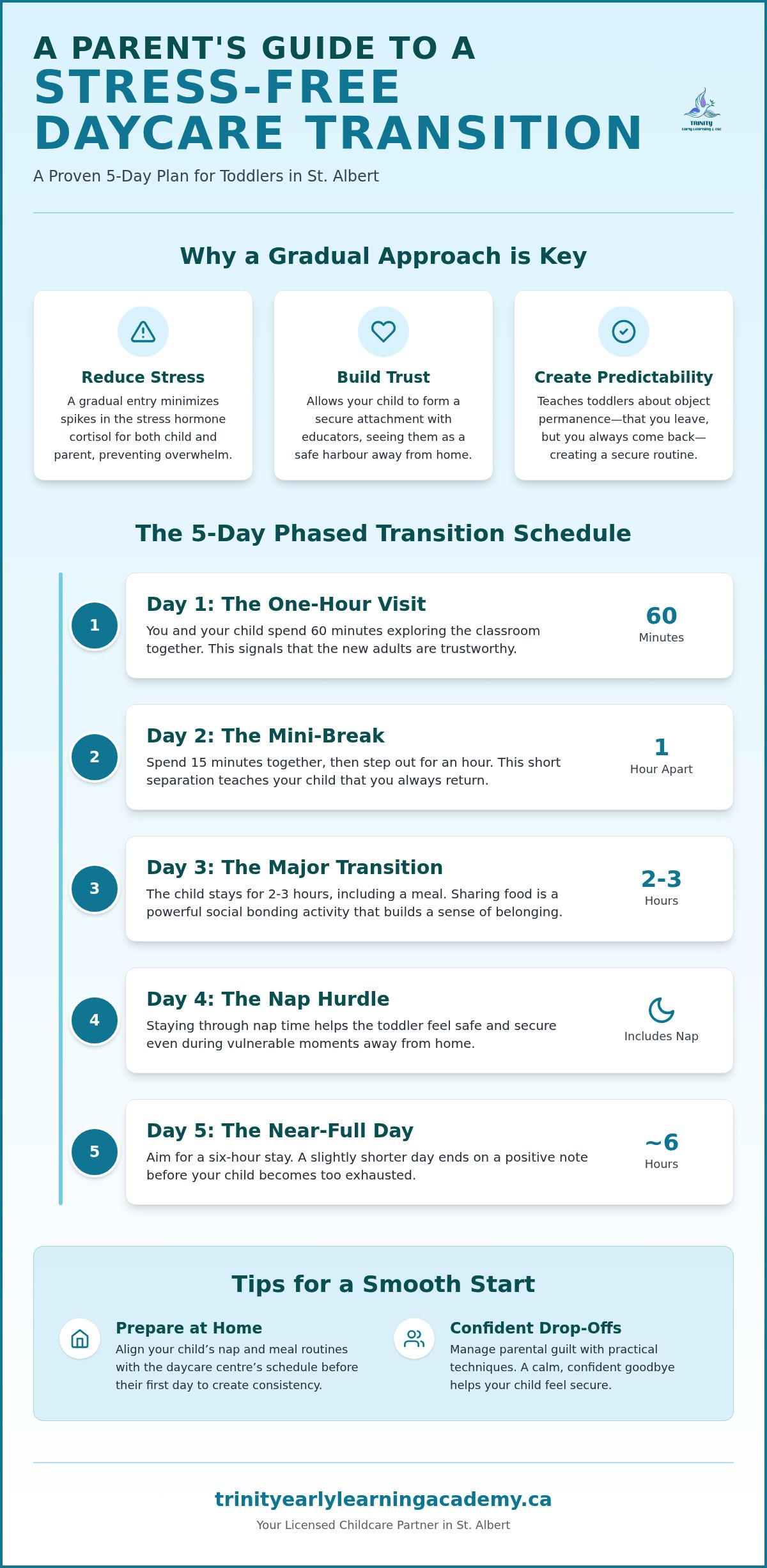
A structured daycare transition plan for toddlers provides a predictable roadmap for both you and your child. While every family's needs differ, a five-day phased approach is generally considered the gold standard for licensed care in St. Albert. This timeline allows the child to acclimatize to new faces and routines without feeling overwhelmed by a sudden change. By starting slowly, you're teaching your child that the centre is a safe, welcoming extension of their home.
- Day 1: The One-Hour Visit. You and your child spend sixty minutes exploring the classroom together. This allows the toddler to see you interacting comfortably with the educators, which signals that these new adults are trustworthy.
- Day 2: The Mini-Break. Spend fifteen minutes together, then step out for one hour. Stay on-site or nearby. This short separation teaches your child that you leave, but you always return.
- Day 3: The Major Transition. Your child stays for two to three hours, specifically during a morning snack or lunch. Sharing a meal is a powerful social bonding activity that helps them feel part of the group.
- Day 4: The Nap Hurdle. Sleep is a vulnerable time for any child. Staying through the afternoon nap helps the toddler realize they are safe even when they are tired and away from home.
- Day 5: The Near-Full Day. Aim for a six-hour stay. Pick up your child before the late afternoon rush to ensure the day ends on a calm, positive note before they get too exhausted.
Adapting the Schedule for Individual Needs
Some children require more than five days to feel secure. If your toddler shows intense distress or refuses to eat, it's perfectly acceptable to repeat a day. A 10-day alternative is often best for highly sensitive children or those who have had difficult experiences with change in the past. Our early childhood education St. Albert professionals are trained to recognize these cues and will adjust the daycare transition plan for toddlers to match your child's comfort level. If you're ready to begin this journey, our team is here to help you explore our nurturing daycare environment and find the right fit for your family.
The Importance of Consistency During the First Fortnight
Skipping days during the first two weeks can reset the "anxiety clock." Toddlers rely on repetition to build confidence. When Managing Separation Anxiety, it's helpful to have the same person handle drop-off and pick-up for the first few days. This creates a stable routine that the child can anticipate. We recommend coordinating with your employer for a flexible return to work; this reduces your own stress, which your child can often sense. A calm parent helps create a calm child.
Preparing at Home: Bridging the Gap Between House and Centre
Transitioning to childcare starts long before the first morning drop-off. A successful daycare transition plan for toddlers relies heavily on the emotional and physical environment you create at home during the weeks leading up to the start date. By using positive, reassuring language, you help your child view the new centre as an exciting opportunity for growth rather than a place of abandonment. Use the centre's actual name in daily conversation so it becomes a familiar part of your family's vocabulary.
One of the most effective ways to ease the shift is by aligning your home nap and meal schedule with the daycare's routine. If the centre serves lunch at 11:30 AM and begins nap time at 12:30 PM, start shifting your weekend and home schedules to match this rhythm. This physical preparation ensures your child isn't fighting hunger or exhaustion while trying to process a new environment. You should also select a "comfort object," such as a small blanket or a favourite stuffed animal, if the centre's licensing allows it. This item acts as a tangible link to home, providing security during quiet moments or nap times. Couple this with a "Quick Goodbye" ritual. Whether it's a special high-five or a specific phrase like "I'll be back after snack," a consistent signal tells your child exactly what to expect.
Practical Logistics for Parents
Organization is a quiet but powerful tool for reducing toddler frustration. Labelling every item, from water bottles to spare socks, ensures that your child's belongings don't get lost or mixed up with others. When a child can easily identify their own gear, they feel a greater sense of ownership and control in their new space. When packing the daily bag, include at least two full changes of clothes and weather-appropriate outdoor gear for St. Albert's changing seasons. Before you finalize your supplies, review our daycare safety checklist St. Albert to ensure you aren't accidentally including prohibited items like certain small toys or common allergens.
Roleplaying and Social Stories
Toddlers process complex emotions best through play. Use dolls or stuffed animals to act out a typical day at the centre. Narrate the process clearly: "Teddy goes to the centre, plays with blocks, eats a yummy snack, and then Mommy comes back to give him a big hug!" This makes the unknown feel predictable and safe. We also recommend reading Canadian children's books that normalize starting a new program. If you've been given the names of your child's new educators, start using them early. Saying "You'll get to play with Miss Sarah today" helps your child feel they are visiting a friend rather than a stranger. This small step is a vital part of a comprehensive daycare transition plan for toddlers.
Managing Separation Anxiety and Parental Guilt
The emotional weight of the first week often falls more heavily on the parent than the child. It's vital to recognize that toddlers are exceptionally intuitive. They often mirror the emotions of their caregivers. If you approach the drop-off with visible hesitation or sadness, your child may interpret the new environment as a place of concern. Part of a successful daycare transition plan for toddlers involves managing your own emotional state to project a sense of security and confidence.
The "Window Wave" is a highly effective technique for the first few weeks. It involves a brief, loving goodbye followed by a quick departure. While it may feel heart-wrenching to leave while your child is crying, lingering often prolongs their distress. It sends a confusing signal that you might stay if they cry long enough. Most educators report that children settle into play within minutes of a parent leaving. A swift, confident exit actually helps your child realize that the centre is a safe place to be.
You might also experience the "Afternoon Meltdown" during the first fortnight. This occurs when a child who has been perfectly settled all day suddenly bursts into tears upon seeing you at pick-up. This isn't a sign of a bad day. It's often a sign of "restraint collapse," where the child finally feels safe enough with their primary caregiver to release the emotional energy they held together during the day. Reframing this as a developmental opportunity for social growth rather than a loss of home time helps reduce parental guilt.
Building Trust with Your Childcare Team
Open communication is the best remedy for parental anxiety. Don't feel like a bother for asking for updates. Many high-quality centres use digital apps or daily logs to share photos and milestones, keeping you connected to your child's day. This transparency is a hallmark of a licensed preschool St. Albert environment. These professional settings prioritize holistic development and ensure that every transition is documented for your peace of mind. If you have questions about our communication style, we invite you to contact our St. Albert childcare team to learn more.
Self-Care for the Transitioning Parent
Managing your own emotions is a key component of a daycare transition plan for toddlers. On that first full day, plan a specific treat for yourself, such as a coffee with a friend or a quiet walk. Trusting the professional expertise of your educators allows you to focus on your own well-being. A happy, regulated parent leads to a more confident and settled child who feels secure in their new routine.
Choosing the Right Licensed Partner in St. Albert
Selecting a childcare provider is one of the most significant decisions you will make for your family. In Alberta, choosing a licensed facility is essential for ensuring your child’s safety and developmental progress. Licensing guarantees that the centre adheres to strict provincial standards, including specific staff-to-child ratios and rigorous health and safety protocols. Beyond these requirements, being in a licensed program allows you to access the Alberta childcare grant St. Albert, which significantly reduces monthly fees and makes high-quality care more accessible for local parents.
When you tour a potential centre, pay close attention to the "vibe" of the classroom. You want to see educators who are actively engaged with the children, sitting on the floor at their level rather than just supervising from a distance. Cleanliness and organization are important, but the emotional warmth of the staff is the best indicator of how well your child will settle. A professional team will welcome your questions about their specific daycare transition plan for toddlers and should be able to explain how they handle everything from nap time struggles to emotional outbursts.
The Trinity Difference: Nurturing Your Child’s Growth
At Trinity Early Learning & OSC, we view ourselves as your partner in your child's holistic growth. As a family-run facility, we provide a community-focused atmosphere that corporate centres often struggle to replicate. We are committed to a gentle, child-led transition process that respects each toddler's unique personality and emotional needs. Our integrated curriculum is designed to spark curiosity and build the foundational skills necessary for future preschool success. We invite you to book a tour of our St. Albert facility to meet our educators and see firsthand how our nurturing environment supports a confident start for every child.
Final Checklist for Your First Week
The logistics of the first week can feel overwhelming, but staying organized helps keep the focus on your child's emotional well-being. Before the big day, ensure all your paperwork is in order. This includes up-to-date immunization records and a comprehensive list of emergency contacts. Having these details finalized allows our staff to focus entirely on your child’s comfort during those critical first hours. On the morning of the first day, take a "First Day" photo at home to capture the milestone without adding the stress of a photoshoot at the centre's door. A calm, predictable morning at home is the best way to kickstart your daycare transition plan for toddlers. We are here to guide you through every step of this journey. Contact Trinity Early Learning & OSC today to discuss your toddler’s transition plan.
Building a Bright Future for Your Toddler in St. Albert
Moving your child into a new care environment is a significant journey of growth for the entire family. By implementing a structured daycare transition plan for toddlers, you transform a potentially stressful milestone into a series of small, successful victories. A phased schedule allows your child to build trust at their own pace. At the same time, aligning your home routines with the centre’s rhythm ensures your little one feels physically and emotionally secure during the change.
Choosing a licensed, family-run centre provides the high standards and emotional warmth your child deserves. Trinity Early Learning & OSC is proud to be a licensed facility by the Government of Alberta and is fully eligible for the Affordability Grant. Our dedicated early childhood educators are committed to supporting your family through every step of this transition. We invite you to Book a Tour at Our St. Albert Licensed Daycare to experience our community-focused environment firsthand. You have done the hard work of preparing your child. Now, let’s work together to make their first day the start of a wonderful adventure.
Frequently Asked Questions
How long does a typical daycare transition plan for toddlers take?
A standard daycare transition plan for toddlers typically spans five to ten business days. This timeframe allows for a gradual increase in the child's hours at the centre while they build trust with their educators. Some children feel settled within a week, while others benefit from a slower, ten-day approach. Consistency during this initial period is essential for helping your child understand the new routine and realize that you will always return.
What should I do if my toddler cries every time I leave?
Establish a brief and consistent goodbye ritual to signal safety and confidence. While it's difficult to leave while your child is distressed, lingering often increases their anxiety and makes the separation harder for everyone. Trust that our experienced educators are trained to comfort your child and engage them in play quickly. Most toddlers stop crying within minutes of their parent's departure once they become distracted by toys or their peers.
Can I stay with my child for the entire first day of daycare?
We recommend spending the first hour together to explore the classroom, but staying for the entire day can be counterproductive. Your constant presence prevents the child from forming a necessary bond with their new educators. A phased daycare transition plan for toddlers uses short separations to teach your child that the centre is a safe space even when you aren't there. This approach builds their confidence and independence more effectively.
Is it better to start daycare part-time or full-time for a toddler?
Gradual entry is the most effective method regardless of whether your child will eventually attend part-time or full-time. Starting with shorter days helps prevent the toddler from becoming overwhelmed by the new environment. If your schedule allows, a part-time start for the first fortnight can ease the emotional shift. Once the transition period ends, maintaining a consistent weekly schedule is vital for helping your child anticipate their routine and feel secure.
What are the signs that a daycare transition is not working?
Look for signs of prolonged distress that don't improve after the first few weeks, such as significant changes in sleep patterns or regression in toilet training. While some tears are normal, a child who remains inconsolable for hours or becomes extremely withdrawn may need a modified transition approach. We encourage open communication with our staff to discuss these behaviours. Often, a small adjustment to the drop-off routine can resolve these challenges.
Does the Alberta childcare grant apply to the transition period?
The Alberta affordability grant applies to all children enrolled in a licensed program, including those currently in the transition phase. This grant is a universal reduction in fees for children from birth to kindergarten age. As long as your toddler is registered in a licensed St. Albert centre, the funding is applied to your monthly costs based on the hours of care provided. This support helps make high-quality childcare more accessible for local families.
How do I handle my own guilt about putting my toddler in daycare?
Reframe the transition as a valuable opportunity for your child to develop social skills and independence in a safe, nurturing environment. It's natural to feel guilty, but licensed care provides structured learning and peer interaction that is difficult to replicate at home. Focus on the quality of the time you spend together after pick-up. A happy, fulfilled parent is a wonderful role model, and your child will benefit from the stable routine.
What items should I include in a daycare "comfort kit" for my toddler?
Include a small kit with items that smell like home, such as a favourite stuffed animal or a small blanket. A laminated family photo is also a great tool for educators to use when comforting your child during quiet moments. Ensure all items are clearly labelled with your child's name to prevent them from being lost. These familiar objects act as a bridge between home and the centre, providing a sense of security during the first few weeks.


