

The best flexible work arrangements for parents of young children are those that fit both your family’s care routine and your job’s demands. Options include part-time hours, job sharing, a compressed workweek, or a hybrid schedule, such as working remotely three days a week and in the office two. These arrangements can create more room for family responsibilities, but the right fit depends on how your work is organized.
Balancing work commitments with a young child’s changing needs can be challenging, and flexibility may make it more manageable. A request for a different schedule is not the same as an approved arrangement, so understand your options and explain how the proposed change could work.
This guide compares part-time work and job sharing, outlines other schedule options, and explains how parents and caregivers can approach a request for flexibility in Canada. You’ll find practical points to weigh, from dividing responsibilities with a job-sharing partner to aligning work hours with your family’s care needs in St. Albert.
Key Takeaways
- Compare changes to your hours, work location and weekly schedule to find an arrangement that fits your job and family routine.
- Prepare a clear flexibility request that explains the schedule you need and how you’ll manage your responsibilities.
- For part-time work or job sharing, map out how duties, handoffs and team coverage would work before proposing the change.
- Separate work-from-home expenses from childcare costs, and consider how each may affect your household budget and tax records.
1. What Are the Best Flexible Work Arrangements for Parents?
Flexible work arrangements for parents of young children work best when hours, location, and care routines align. Start by mapping fixed responsibilities, such as school drop-off, a child’s appointment, or a recurring team meeting. Then identify which work hours can shift without delaying essential tasks.
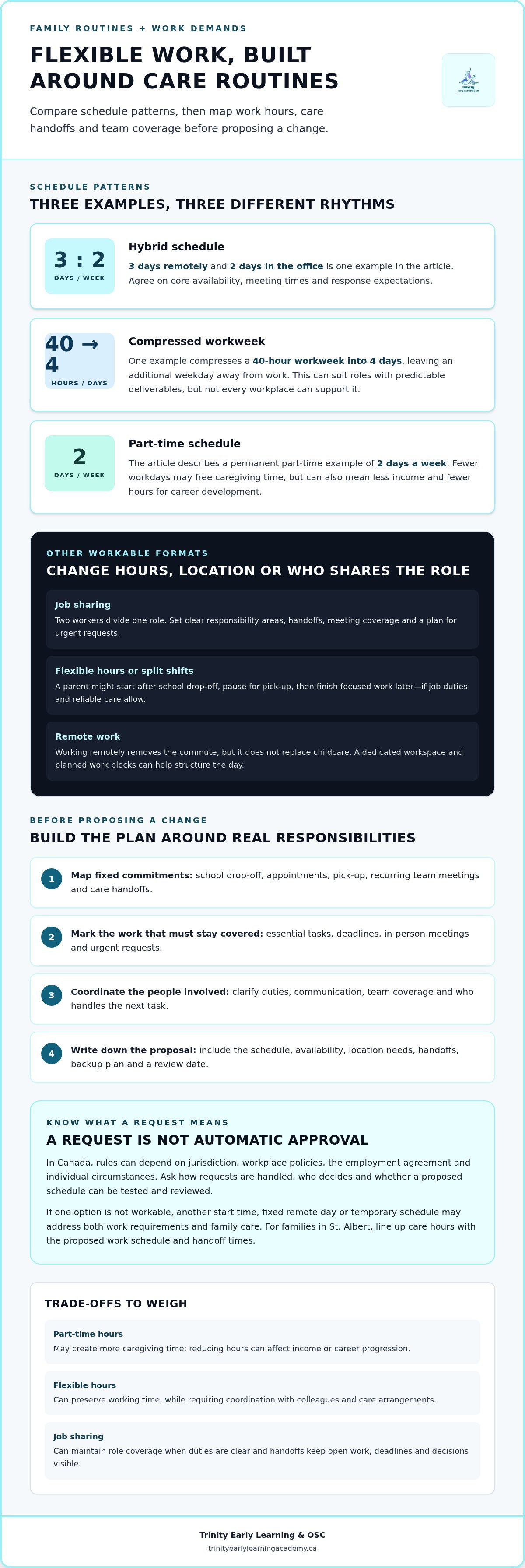
A hybrid schedule is one option: work in the office two days each week and remotely three days. Another example is compressing a 40-hour workweek into four days, creating an additional weekday away from work. These patterns suit roles with predictable deliverables, but not every workplace can support them. Agree on core availability, meeting times, and response expectations before changing locations or hours.
School schedules can shape start and finish times. A parent might begin work after drop-off, take a planned break for pick-up, then complete focused tasks later. This depends on job duties and reliable care during working hours. A rigid roster or unpredictable shift changes can make pickups and childcare handoffs difficult, even with remote access.
Remote work removes the commute and can make household transitions easier, but it doesn’t replace childcare. A dedicated workspace helps separate work from family activity, while planned blocks or split shifts can structure the day. Part-time work may create more caregiving time, but reducing hours can affect income or career progression. Flexible hours preserve working time but require coordination with colleagues and care arrangements.
In Canada, maternity and parental leave provide time away from work, while flexible scheduling changes when or where work is done. Childcare needs can shape a flexible schedule rather than time away from work. Parents can plan their return from leave around a proposed schedule, with care needs and job duties determining what is practical. Write down available hours, location needs, handoff times, and a backup plan, then discuss the proposal with your employer.
2. Parents’ and caregivers’ right to request flexibility
In Canada, asking an employer for a flexible schedule is different from having an automatic right to receive one. Applicable rules can depend on your jurisdiction, workplace policies, employment agreement, and circumstances. Review those documents to understand the process for your role.
Make your request specific. A parent managing school pick-up could propose starting and finishing earlier on selected days. A caregiver supporting a family member might request a predictable remote-work day for scheduled appointments. Explain the responsibilities involved, the hours or location change you’re seeking, and how essential tasks and team coverage would continue.
Before meeting your employer, prepare a short written plan outlining the proposed schedule, duties, communication arrangements, and a review date. Identify meetings that require in-person attendance and explain how urgent work will be handled when you’re away from your desk. Concrete details give your employer something to discuss beyond a general request for flexibility.
Ask how your employer handles requests, who makes the decision, and whether the arrangement can be tested and reviewed. Keep a record of your proposal and the response. If the answer is no, ask which work requirements create the difficulty and whether another option could address them. A different start time, a fixed remote day, or a temporary schedule may meet both sets of responsibilities.
Clear planning can reduce stress for employees and help organizations retain experienced workers facing caregiving challenges. It also makes expectations easier to manage: agree on availability, deadlines, and how schedule changes will be communicated. If dependable care is part of the plan, consider how childcare in St. Albert fits your work hours and family routine.
3. Part-time work and job sharing
Part-time work reduces an employee’s scheduled hours, while job sharing divides one role between workers. A Knight Frank employee works permanent part-time, two days a week, illustrating how a role can have a defined reduced schedule. For parents, fewer workdays may free time for caregiving, but can also mean less income and fewer hours for career development. Review workplace policies and clarify how workload, pay, benefits, and advancement are handled before deciding.
Job sharing can maintain coverage when each partner owns a clear portion of the role. One person might handle client requests early in the week, while the other manages later tasks. Some duties may overlap during handoffs, so plan how you’ll communicate. A dedicated handover document can track open work, deadlines, decisions, and who is responsible next, helping reduce the risk of missed tasks.
Prepare a proposal before speaking with your employer. Describe each person’s hours, how responsibilities will be divided, and how colleagues can reach the right partner. Include coverage plans for meetings, urgent requests, and planned absences. Explain how the arrangement could support team needs and workplace culture, not just personal freedom.
Childcare planning matters under either option. Put workdays, care days, and handoff times in a shared calendar, then identify gaps before agreeing to a schedule. A parent working fewer days may need care on those days, while a job-sharing pair needs reliable coverage during each person’s work hours. A written schedule makes expectations clear to both workers, the employer, and caregivers.
4. What are the costs and tax implications of working from home while caring for young children in Canada?
Working from home can reduce commuting expenses, but it doesn’t remove the cost of caring for a young child. Build a household budget with separate lines for childcare, internet, equipment, utilities, and travel to occasional workplace meetings. Compare those expenses with any commuting costs that may disappear when you work remotely.
Care during work hours matters. A parent caring for a toddler while leading video calls may have limited uninterrupted time, even at home. Consider whether paid childcare, a relative’s help, or another care arrangement fits your work tasks and schedule. In St. Albert, childcare options can be part of planning a workday that requires focused time.
Keep tax records organized. Save receipts for work-related purchases and records of employer reimbursements, separate from childcare receipts. A desk, office chair, or internet bill may have personal and work uses, so record the work purpose and how the expense was paid. Don’t assume a household or childcare cost qualifies for a tax claim simply because you work from home.
Your employment arrangement can affect which documents you need. An employee and a self-employed worker may keep different expense records, and an employer reimbursement may be treated differently from an out-of-pocket purchase. Keep your work agreement, receipts, and reimbursement statements together for tax preparation. If your hours or pay change, update your household budget and review payroll deductions with your employer.
Before accepting remote work, list the costs that will continue and those that may change. Include childcare coverage for meetings, deadlines, and focused work blocks. Compare the total with your expected take-home pay, not just your gross salary. This check can show whether remote work alongside childcare is financially workable for your family.
Trinity Early Learning & OSC: Licensed Daycare Services
Trinity Early Learning & OSC is a licensed daycare in St. Albert, providing childcare for families balancing work schedules with children’s care needs. A dependable care routine can help separate work responsibilities from caregiving, whether you work at home or on site. The centre also offers out-of-school care for families coordinating care around school hours.
Trinity’s Affordability Grant Daycare supports families seeking accessible childcare. Consider your child’s age, care needs, and expected work schedule when deciding what type of care fits your household. A clear plan can help align work hours, care arrangements, and family routines, without expecting remote work to replace childcare.
To discuss childcare options for your family, contact Trinity Early Learning & OSC or visit trinityearlylearningacademy.ca.
Build a care plan that supports your next step
Your work plan and your child’s care routine can take shape together. Before making a change, consider what a steady week should look like for your family, including time for focused work, transitions, and family connection. That picture can guide your conversation with your employer and help you choose care that fits your routine.
For families in St. Albert, Trinity Early Learning & OSC offers licensed daycare, Affordability Grant Daycare, and childcare. These options can help you plan dependable care alongside flexible work arrangements for parents of young children.
Take the next step by sharing your family’s care needs and exploring the available program information. Contact Trinity Early Learning & OSC to start a conversation about childcare for your family. With a thoughtful plan in place, you can move forward with greater clarity and confidence.
Frequently Asked Questions
What Are the Best Flexible Work Arrangements for Parents?
The right fit depends on the pressure point your family most needs to ease. If commuting disrupts the morning routine, changing your work location may help; if care coverage is the main challenge, changing hours may matter more. Consider whether the arrangement also preserves enough uninterrupted time for essential duties. Comparing family needs, job tasks, and income priorities can clarify which trade-off feels manageable.
What Are Family-Friendly Employment Policies?
Family-friendly employment policies describe workplace supports for employees with caregiving responsibilities. Alongside scheduling practices, they may explain parental leave, dependent-care resources, benefits, or how employees return after leave. The details can vary between organizations. Read the policy for eligibility, application steps, and any conditions that affect your role, then note which provisions relate directly to your current family situation.
What flexible work arrangements are available to parents of young children in Canada?
Available arrangements may change your work location, hours, weekly workload, or how a role is shared. Some workplaces may also allow predictable shift patterns or shift exchanges. Practical options depend on the position: a worker serving customers in person may need a different adjustment from someone whose tasks are completed online. Compare choices with your actual duties, not just your job title.
Can parents in Canada request flexible hours, remote work, compressed workweeks, or job sharing?
Yes, parents can raise these options with their employer. The right choice depends on the work setting and the tasks that need coverage. Before deciding, consider whether the request changes your availability, location, or responsibility for shared work. Job sharing, for example, may require colleagues to know who handles each client file, while remote work may affect access to in-person equipment.
What Canadian employers offer flexible work arrangements for parents, and what are typical policies?
There is no single employer list or standard policy that applies across Canada. Practices can differ by organization, team, and role, even within the same workplace. Review written policies and job information for terms about work location, schedule changes, and caregiving support. During a hiring conversation, ask how those policies apply to the specific position and its daily responsibilities.
How can parents request a flexible work arrangement from their employer in Canada?
Raise your request when you can calmly discuss its practical impact, such as during a planning conversation with your manager. Explain which family need has changed and what outcome would help. If circumstances later shift, such as a change in care arrangements or job duties, revisit the discussion with the new details so the plan can be reconsidered.


