

For a child under two in a less competitive area, begin searching three to six months before care is needed; for a child over two, start one to four months ahead. If you’re deciding how far in advance to look for childcare in St. Albert, allow more time when demand is high. In highly competitive areas, baby daycare waitlists can reach a year, so expectant parents are advised to start looking as soon as they learn they’re expecting.
Starting later than planned can feel stressful, especially if your preferred daycare has no immediate space. Joining its waitlist may still be worthwhile while you explore other options, since a place could open sooner than expected.
This guide explains how timing can vary with your child’s age, what to expect from waitlists and what you can do if your first choice is full. Use these steps to plan your search and find care that fits your family.
Key Takeaways
- For children under two, begin looking three to six months before care is needed; for older children, one to four months can be a useful lead time in non-competitive areas.
- Join a preferred daycare’s waitlist while considering other options, since a space may open sooner than expected.
- Use recommendations from families with children of similar ages and explore different care arrangements if your first choice is full.
- Trinity Early Learning & OSC offers licensed daycare, childcare, and out of school care for families exploring care in St. Albert.
Childcare options when a preferred daycare has no availability
If your first-choice daycare has no space, join its waitlist and explore other care settings at the same time. In St. Albert, the right option depends on your child’s age, your schedule and the type of care your family needs.
Touring programs and asking questions
A tour lets you see the space and observe how educators interact with children. If possible, visit during active hours, when children and staff are present. Ask about the daily schedule, meals, routines, age groups, fees and waitlist process. Alberta licensed childcare programs aren’t required to provide meals, so ask what food families should plan for. Notice how the environment supports play and learning.
Comparing care settings and availability
A daycare centre cares for multiple children in a group setting, while a family day home offers care in an educator’s home. A nanny cares for children in the family’s home, so their availability depends on finding someone whose schedule fits yours. Alberta family day home educators can care for up to six children, not including their own. A nanny arrangement may have different costs from group care; compare the care hours, number of children and responsibilities included rather than assuming one option costs less.
Age and schedule also affect the type of program to consider. In Alberta, licensed daycare serves children kindergarten age and younger for four or more consecutive hours per day. Licensed preschool serves children from 19 months to kindergarten age for less than four hours per day per child. Out-of-school care serves children in kindergarten up to age 12; some programs may also serve 13- to 14-year-olds with special needs.
Starting the search and subsidy applications
In less competitive areas, begin searching three to six months before care is needed for a child under two, or one to four months ahead for a child over two. If you’re wondering how far in advance to look for childcare, start sooner when local demand is high. Handle a provincial subsidy application alongside your search: applying does not reserve a daycare space. Continue exploring care options while your application is being processed.
If your preferred daycare is full
Join the waitlist even if you need care soon, since a place may open earlier than expected. At the same time, ask families with children of similar or older ages for recommendations. Consider a licensed daycare, preschool or out-of-school care if it suits your child’s age and schedule. Exploring options in parallel means you’re not relying on a single opening.
Finding providers through directories and recommendations
Directories and personal recommendations can help St. Albert families build a broader list of childcare options. Compare location, type of care and operating hours before arranging visits.
Search a directory for St. Albert, then narrow the results by your child’s age and required schedule. Treat each listing as a starting point: note the provider’s name, care setting, location and contact details. A comparison list makes it easier to spot gaps, such as a program that fits your commute but closes before your workday ends.
- Save listings that match your child’s age and the days care is needed.
- Contact each provider to ask about current openings and waitlist steps.
- Note the hours, location and care arrangement beside every name.
Hours can differ substantially. Alberta licensed childcare programs may operate 24 hours a day, while daycare programs typically run during regular business hours, such as 7 am to 6 pm. Schedules vary by provider, so compare the actual drop-off and pick-up times with your family’s routine. For example, a program’s listed hours may not cover a commute after work.
Recommendations can add useful context to directory results. Ask St. Albert families whose children attend a similar program what they value about its routines, communication and location. Their experience can help you decide which programs to contact first, but your child’s age and required hours still determine what may fit. Update your notes as you hear back.
As you compare options, review childcare options in St. Albert alongside your directory results. A consistent shortlist helps you weigh schedules and settings without losing track of promising choices.
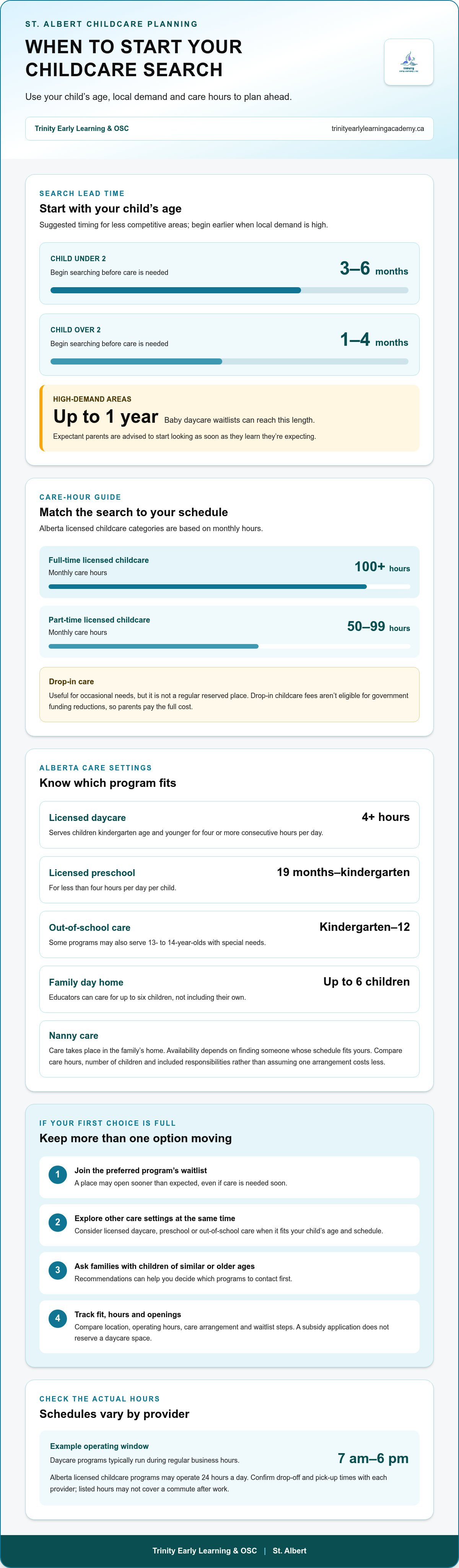
How long before care to start searching by child’s age
In less competitive areas, start searching three to six months before care is needed for a child under two. For a child over two, the suggested search window is one to four months. These timelines offer a starting point for St. Albert families planning childcare in Canada.
Age matters because families seeking infant care may face longer waits. In highly competitive areas, baby daycare waitlists can reach a year. When deciding how far in advance to look for childcare, consider local demand, your child’s age and the schedule you need. Starting early gives you more time to compare programs and join waitlists.
Care hours also help define the type of space to search for. In Alberta, full-time licensed childcare means 100 or more hours per month. Part-time licensed childcare means 50 to 99 hours per month. Use your expected weekly routine to decide which category fits, then ask programs how their schedules align with the hours your family needs.
Drop-in care may work for occasional needs, but it differs from a regular reserved place. In Alberta, drop-in childcare fees aren’t eligible for government funding reductions, so parents pay the full cost. If your family needs recurring care, compare a regular part-time arrangement with drop-in use before relying on occasional bookings.
Apply directly to suitable daycare programs as you search, rather than waiting until your preferred start date is close. For example, a family seeking infant care can contact programs as soon as they begin planning. Record application dates, requested start dates and each program’s process. This makes follow-ups easier and helps coordinate applications with your family’s schedule.
Waitlists and planning ahead
Joining a waitlist keeps a preferred St. Albert daycare in consideration while you explore other care options. Planning early gives you time to understand each program’s process and weigh alternatives.
Joining a waitlist during pregnancy
Expectant parents planning to use baby daycare are advised to start searching as soon as they find out they’re expecting. In highly competitive areas, baby daycare waitlists can reach a year, so early inquiries are useful when you have a preferred start period in mind. Ask how the program records your expected start date and what information it needs to add your family.
Join the waitlist even if you would rather not wait for a place. An opening may come sooner than expected, and staying listed keeps that option open while you pursue other arrangements. Keep your contact details current and note each program’s instructions so you can respond if circumstances change.
Waitlist rules and deposits
Waitlist and deposit details depend on each program’s stated terms, so don’t assume one provider’s process applies to another in Canada. Before paying a deposit, read the written conditions and understand what the payment covers, when it is due and what happens if plans change. These details help you compare options accurately.
When considering provincial rules, distinguish applicable requirements from a program’s own waitlist process. A program’s terms explain its application steps and any deposit conditions; they are not universal rules for every province. Keep a copy of the terms and record when you joined each list, the expected start date and any instructions you receive.
For example, a family waiting for infant care can stay on its preferred program’s list while contacting other options. Track each response separately, including any change to the anticipated opening. This helps distinguish a waitlist from a confirmed place and supports clear decisions as your care needs approach.
Trinity Early Learning & OSC: Licensed Daycare Services
Trinity Early Learning & OSC offers licensed daycare services and childcare for families comparing care options in St. Albert. If your search is moving from waitlists to choosing a program, its Affordability Grant Daycare may also be relevant. Families planning care for school-age children can consider its out of school care offering.
Use this timing guidance to begin your search early, then identify the care arrangement that fits your child’s age and family routine. Licensed daycare and out-of-school care serve different stages and needs, so choosing the right type can help focus your next steps.
Contact Trinity Early Learning & OSC or visit trinityearlylearningacademy.ca to learn more about its childcare offerings.
Choose a childcare option that fits your family
Your search notes can help clarify what matters most for your child’s daily experience. Consider the routines, communication and environment that feel right for your family, then use those priorities to guide your decision.
Knowing how far in advance to look for childcare can help you plan, but your family’s needs should shape the final choice. If you’re ready to discuss your childcare plans, get in touch and take the next step at a pace that feels right.
Frequently Asked Questions
What should I do if I’m late to the daycare search?
Contact programs directly and share your intended start date, your child’s age and the days you need care. Separate essentials, such as care on workdays, from preferences, such as a particular location or routine. This distinction can help you assess potential openings quickly. If your plans allow, consider a temporary family arrangement while you continue searching for a long-term fit.
What should I do if there’s a waitlist at my chosen daycare?
Ask how the program will contact you if a place becomes available and whether you need to follow up periodically. Keep your phone number and email current, and respond promptly to messages. A waitlist is not an enrolment confirmation, so keep exploring other possibilities until you receive clear details about a start date and the steps to accept a place.
How long are daycare waitlists in major Canadian cities?
There isn’t one waitlist duration that applies across major Canadian cities. Demand varies between neighbourhoods and programs, and your child’s age and desired start date can affect which openings are relevant. For a family in St. Albert, the most useful estimate is the one provided for the specific program and care arrangement you’re considering, rather than a broad city-wide comparison.
How early should parents book a licensed home daycare or nanny in Canada?
If you’re considering home daycare educators or nannies, begin conversations as soon as your care needs take shape. Share the schedule and duties you’re seeking, then discuss how the arrangement would work, including meals, routines and communication with your family. Before committing, review the written terms, start date and payment expectations so everyone understands the arrangement.
What steps should parents take to find and secure childcare in Canada?
Write down your priorities, contact suitable programs and keep notes on each conversation. Before accepting a place, confirm the start date, daily routine, required paperwork and how updates will be shared with your family. Check that the arrangement works with your commute and pickup plan. These details turn a promising conversation into a clear, practical childcare plan.


