

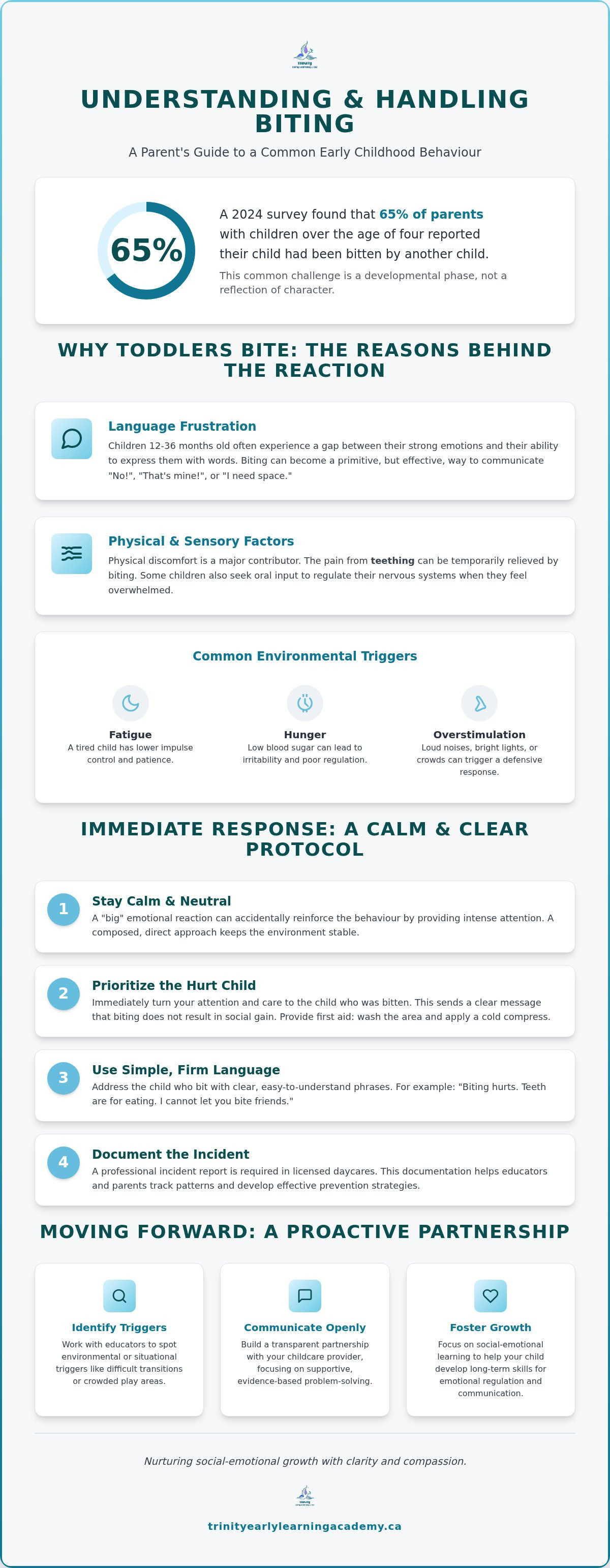
Did you know that a 2024 survey found 65% of parents with children over the age of four reported their child had been bitten by another child? It's a startling statistic that highlights just how common this challenge is in early childhood settings. If you've received a phone call regarding a biting incident, you likely felt a mix of embarrassment, worry, and confusion while wondering how to handle biting in daycare effectively. It's natural to feel judged or to wonder why your normally gentle child is suddenly acting aggressively toward their peers.
We recognize that these moments are difficult for every family involved. Our guide provides professional, developmental-based strategies that maintain a nurturing environment for your child while addressing these incidents with clarity and compassion. Instead of focusing on shame, we look at the message behind the action to ensure your child feels supported and safe during their time in childcare.
You'll learn about the social-emotional reasons for this behaviour and gain a clear action plan to restore trust between your home and your childcare centre.
Key Takeaways
- Understand the developmental roots of biting to move from a place of judgement toward supportive, evidence-based problem-solving.
- Learn the professional protocol for how to handle biting in daycare by maintaining a calm presence and prioritizing the safety of the child who was bitten.
- Identify environmental triggers and proactive shadowing techniques used by educators to prevent future incidents before they occur.
- Discover how to build a transparent partnership with your childcare provider while respecting the essential confidentiality of all families at the centre.
- Explore how social-emotional learning and positive guidance create a secure environment that fosters long-term growth and emotional regulation.
Understanding Why Toddlers Bite: Developmental Roots and Triggers
Biting is one of the most challenging behaviours parents and educators encounter, but it is rarely an act of malice or "bad" character. In the early years, children are still discovering how their bodies work and how to interact with their peers. For many toddlers, biting is simply a primitive form of communication. When you are learning how to handle biting in daycare, the first step is recognizing that this behaviour is a common developmental phase. Research into the developmental aspects of biting suggests that most children experiment with this action as they explore cause and effect or struggle with big emotions they cannot yet name.
Language Frustration and Social Learning
Children between 12 and 36 months of age experience a significant gap between their emotional intensity and their verbal abilities. They may feel a strong desire for a specific toy or a need for personal space, but they lack the words to express those needs. When a peer gets too close or takes a desired object, the child's impulse control is often overridden by a physical reaction. Biting becomes a quick, effective way to say "no" or "that's mine" when "please stop" isn't yet part of their vocabulary. This is a key part of social learning; they are testing boundaries and discovering the impact of their actions on others in a social setting.
Physical and Sensory Factors
Beyond social triggers, physical discomfort often plays a major role in these incidents. Teething is a primary culprit. The pressure of a new tooth can cause significant gum pain, and applying pressure through biting provides temporary relief. Other children may be sensory seekers who crave oral input to help regulate their nervous systems. These children might need more oral stimulation than their peers, leading them to bite objects or, occasionally, people when they feel overwhelmed.
Common physical triggers include:
- Fatigue: A tired child has much less patience and lower impulse control, making outbursts more likely.
- Hunger: Low blood sugar can lead to irritability and a lack of emotional regulation.
- Overstimulation: Loud noises, bright lights, or crowded play areas can overwhelm a toddler's senses, triggering a defensive response.
Understanding these triggers helps educators and parents anticipate incidents before they happen. If a child is transitioning from a high-energy activity to a quiet one, they may feel unsettled or anxious. By identifying these patterns, we can better understand how to handle biting in daycare through environmental adjustments and proactive support rather than just reactive discipline. Recognizing the sensory needs of a child allows us to provide safe alternatives, such as teething toys or quiet corners, to help them manage their impulses effectively.
Immediate Response: How to Handle a Biting Incident in the Moment
When a biting incident occurs, the atmosphere in a classroom or home can quickly become tense. Your immediate reaction sets the tone for how both children process the event. Maintaining a calm, neutral expression is vital. A "big" emotional reaction, even if it is out of frustration or shock, can accidentally reinforce the behaviour by providing the child with a high level of intense attention. Professional educators focus on Understanding and Responding to Children Who Bite by staying composed and direct. This approach ensures the environment remains stable and secure for everyone involved.
Your first priority must always be the child who was bitten. By turning your back to the child who bit and focusing entirely on the "victim," you send a clear message that biting does not result in social gain or extra attention. Use simple, firm language to address the act. Phrases like "Biting hurts," or "Teeth are for eating; I cannot let you bite your friends," are effective because they are easy for a toddler to understand. Once the immediate situation is managed, ensure the event is recorded in a professional incident report. This documentation is a requirement for any licensed daycare service, as it helps track patterns and informs future prevention strategies.
Caring for the Child Who Was Bitten
Start by providing immediate first aid to the affected area. Wash the site with soap and warm water, and apply a cold compress to reduce swelling or bruising. It is essential to follow Alberta health and safety guidelines, which include monitoring the skin for any breaks or signs of infection. Beyond physical care, validate the child's feelings. Offer a quiet space and a comforting presence to help them realize they are safe. This nurturing response helps restore their sense of security within the group.
Addressing the Child Who Bit
Once the injured child is cared for, address the child who bit with a calm but serious demeanour. Move them to a quiet area nearby to de-escalate their emotions. Avoid using "shame" or traditional "time-outs," as these often lead to further resentment rather than learning. Instead, help them realize the effect of their actions. You might say, "Look, your friend is crying because that hurt." Once they have reached a state of calm, redirect them to a different activity or a sensory-rich task, like playdough or water play, to help them reset their focus and energy.
Proactive Strategies: Preventing Future Biting Episodes
Moving from reaction to prevention is the most effective way to ensure a safe classroom environment. When educators and parents collaborate on proactive strategies for biting, they shift the focus from the incident itself to the specific needs of the child. One of the primary methods used in a professional setting is "shadowing." This involves an educator staying close to a child who has been biting to identify specific antecedents. These are the triggers, such as a specific toy or a time of day, that precede the behaviour. By catching the impulse early, we can intervene before a bite occurs.
For children who bite due to sensory seeking or teething, introducing teethers or silicone sensory chewies provides a safe outlet for oral-sensory needs. Providing these tools helps the child realize they can satisfy their urge to bite without hurting others. We also use social stories and model "gentle hands" during group play. These stories use simple illustrations to show children how to interact kindly with their peers. It reinforces the idea that our bodies are for helping, not hurting. When considering how to handle biting in daycare, environmental changes are often the most effective long-term solution.
Teaching Alternative Communication Skills
Teaching toddlers how to handle biting in daycare often involves giving them the tools to speak up. Since many bites happen out of frustration, we encourage the use of simple signs or words like "stop" or "my turn." When a child learns to use their hands to signal "no" or their voice to ask a teacher for help, their reliance on biting decreases. We reinforce these successes with specific praise. Instead of a general "good job," we say, "I like how you used your words to ask for that block." This clear feedback builds confidence and emotional regulation.
Environmental and Routine Adjustments
The physical layout of a room can influence behaviour. Crowded areas or a lack of duplicate popular toys can lead to competition and stress. By providing extra space during high-energy times and ensuring transitions between activities are well-signalled with songs or timers, we reduce the anxiety that often leads to biting. We also evaluate the daily schedule to identify "fatigue zones." These are times, often just before lunch or nap, when children are most likely to lose impulse control. Adjusting the routine to include a quiet story or a small snack during these windows can significantly improve classroom harmony.
The Parent-Provider Partnership: Navigating the Conversation
Receiving a report about a biting incident can trigger feelings of embarrassment or intense worry. Whether your child was the one who bit or the one who was bitten, the quality of communication with your provider makes all the difference. In a licensed daycare St. Albert families rely on, educators prioritize transparency while maintaining a supportive atmosphere. The goal isn't to assign blame. Instead, it's about forming a partnership to ensure every child feels safe and understood.
A common point of confusion involves confidentiality. You might wonder why a centre cannot share the name of the child who bit your son or daughter. This policy exists to protect the privacy of all families and to prevent the social shaming of young children who are still learning impulse control. By focusing on the behaviour rather than the individual child, educators can objectively discuss how to handle biting in daycare without creating conflict between parents. This professional boundary helps maintain a welcoming, community-focused environment for everyone.
Understanding Incident Reports
Professional Alberta childcare incident reports are more than just paperwork. They are essential tools for safety and pattern recognition. A standard report includes the time of the event, the location, the specific triggers observed, and the first aid provided. Educators use these documents to see if incidents happen more often during certain activities or times of day. This data-driven approach allows us to make the environmental adjustments mentioned earlier, ensuring the classroom remains a stable place for growth. Parents are always asked to review and sign these reports to stay fully informed about their child's day.
Collaborative Goal Setting
Effective solutions require a unified front. When parents and providers share the same message, children learn faster. We recommend scheduling a brief meeting to align your strategies and create a consistent plan for how to handle biting in daycare and at home. Share observations about your child's recent sleep patterns, diet, or any transitions happening at home, like a new sibling or a move. These factors often influence emotional regulation. By keeping the conversation non-judgmental and focused on developmental needs, we preserve the trust that is vital for a successful childcare experience.
If you have questions about our communication policies or reporting procedures, we invite you to contact our team to discuss how we support your family's unique needs.
The Trinity Approach: Nurturing Social-Emotional Growth in St. Albert
At Trinity Early Learning & OSC, we believe that every developmental challenge is an opportunity for growth. Our philosophy centers on the idea that children thrive when they feel secure, understood, and respected. When families ask us how to handle biting in daycare, we point to our commitment to holistic development. We don't rely on traditional punishment or exclusionary tactics. Instead, our educators are trained in positive guidance techniques that help children understand their emotions and learn better ways to interact with their peers. This approach ensures that your child’s daycare experience remains a source of joy and stability.
We integrate social-emotional learning into our early childhood education St. Albert curriculum to build essential life skills. By teaching children how to identify their feelings, we give them the tools to manage impulses before they lead to physical actions. As a family-run centre, we provide a stable, reassuring atmosphere where children feel like they belong. Our educators undergo rigorous professional training to maintain high standards of safety and care, ensuring that our licensed environment exceeds Alberta’s health and safety requirements.
A Supportive Community for Every Family
We recognize that developmental hurdles like biting can be incredibly stressful for parents. Our team acts as a knowledgeable advocate for both you and your child, offering a non-judgmental space to discuss your concerns. We help you navigate these moments by providing consistent strategies that you can use at home. This partnership builds a child's self-regulation skills more effectively than isolated efforts. When you choose Trinity, you aren't just choosing a childcare provider; you're joining a community that is deeply invested in your family’s well-being.
Preparing for Success in Preschool and Beyond
The lessons a child learns today about empathy and conflict resolution form the foundation for their future academic and social success. Handling biting correctly in the toddler years is a critical step in preparing children for preschool programs St. Albert families trust. By teaching children how to respect personal boundaries and use their words, we help them transition into more structured learning environments with confidence. A safe, licensed setting provides the ideal backdrop for these vital life lessons. We are dedicated to ensuring that your child develops the resilience and social intelligence needed to thrive in preschool and beyond.
Understanding how to handle biting in daycare is a journey we take together. Through patience, professional guidance, and a nurturing environment, we ensure that every child at Trinity feels safe to learn, play, and grow.
Building a Foundation for Social Success and Emotional Safety
Understanding the "why" behind a child's actions is the first step toward a more peaceful classroom experience. By recognizing biting as a form of communication rather than a character flaw, you can approach these moments with the patience they require. We've explored how a calm, neutral response and proactive environmental adjustments create a safer space for everyone. Maintaining an open dialogue with your educators ensures that your child receives consistent support at home and at their centre.
Learning how to handle biting in daycare is much easier when you have a knowledgeable advocate by your side. As a family-run St. Albert business, we focus on holistic childhood development to help every child reach their full potential. Our licensed and Affordability Grant approved daycare provides the stable, nurturing environment your family deserves. We are committed to fostering a sense of security and confidence for both you and your little one.
With the right strategies and a supportive community, these developmental hurdles become valuable lessons in empathy and resilience. You don't have to navigate these challenges alone.
Frequently Asked Questions
Is it normal for a 2-year-old to bite at daycare?
Yes, biting is a normal developmental stage for two-year-olds. At this age, children are still developing the language needed to express strong emotions like frustration or excitement. When they can't find the words, they may use their bodies to communicate. Understanding how to handle biting in daycare involves recognizing this as a temporary phase rather than a sign of a behavioural problem. Most children outgrow this habit as their verbal skills improve.
Will my child be expelled from daycare if they bite another child?
Most licensed centres do not expel children for biting. Professional educators view these incidents as learning opportunities rather than reasons for dismissal. Instead of expulsion, we work closely with families to implement a positive guidance plan. We track patterns through incident reports and adjust the classroom environment to support the child. Expulsion is an extremely rare last resort only considered if the safety of the group cannot be maintained despite intensive intervention.
What should I do at home if my child bites someone at daycare?
Maintaining consistency between home and your childcare centre is the most effective approach. Use the same firm, calm language your educators use, such as "Teeth are for eating, not for biting." Don't punish your child hours after the event, as toddlers cannot easily connect a past action with a current consequence. Instead, focus on reading social stories about gentle hands and reinforcing positive interactions during play at home to build their emotional toolkit.
Why won't the daycare tell me which child bit my son or daughter?
Confidentiality policies protect the privacy and well-being of every family in the centre. Sharing the name of a child who bit could lead to social stigmatization or conflict between parents. Our focus remains on the incident itself and the steps taken to ensure the safety of all children. By keeping these details private, we maintain a supportive, non-judgmental community where every child is given the space to learn and grow from their developmental mistakes.
How long does the biting stage usually last in toddlers?
The biting stage typically peaks between 12 and 36 months of age. Most children stop biting once they gain the verbal fluency to express their needs and the cognitive ability to understand social boundaries. This transition usually occurs around the age of three. If the behaviour persists beyond this window, it may be helpful to look for other triggers, such as sensory needs or specific stressors in the child's daily routine.
When should I be concerned that biting is more than just a developmental phase?
You should consider professional consultation if the behaviour persists past age three or becomes significantly more frequent. If biting is accompanied by other intense physical outbursts or if the child seems unable to calm down after an incident, it may indicate a need for additional support. In these cases, we recommend speaking with your paediatrician or a developmental specialist to explore if there are underlying sensory or emotional needs that require a specific plan.
How do teachers at Trinity Early Learning prevent biting during group play?
Our educators use a combination of shadowing and environmental management to maintain a safe space. We identify high-traffic areas or popular toys that might cause conflict and ensure there are duplicates available. By staying in close proximity to children who are struggling with impulse control, we can intervene with a gentle redirection before a bite happens. This proactive approach is a key part of how to handle biting in daycare while fostering a nurturing atmosphere.
Does biting mean my child is going to be aggressive as they grow up?
Biting in the toddler years is not a predictor of future aggression. It is a primitive form of communication used by children who haven't yet mastered social-emotional skills. As children learn to identify their feelings and use their words to resolve conflicts, the urge to bite naturally disappears. Providing a supportive environment and teaching empathy early on helps ensure that this developmental phase remains a temporary challenge rather than a long-term personality trait.


