

A pickup that is only a few minutes late can still fall outside a centre’s policy. If you’re wondering what to do if you are running late for daycare pickup, contact the centre as soon as you know, share your estimated arrival time, and follow its sign-out instructions. Some programs allow a 5-10 minute grace period after closing, but there is no single late threshold for every daycare.
Traffic, work and unexpected changes can disrupt even a well-planned pickup. If you are running late for daycare pickup, notify staff promptly so they know what to expect and can follow their care procedures while your child waits.
This guide explains how closing time, scheduled pickup and sign-out affect whether you may be considered late. You’ll learn what to look for in the centre’s fee policy, what details to share when you call, and how staff may handle a delay. Clear communication and understanding the policy can make a stressful moment easier for you, your child and the staff caring for them.
Key Takeaways
- Contact the daycare as soon as a delay becomes clear, and share your estimated arrival time.
- Read the pickup policy to understand when lateness begins, how fees are calculated and whether a grace period applies.
- Allow time for sign-out, since the centre’s policy may treat pickup and departure as separate steps.
- Learn how staff handle delayed pickups and what communication helps them care for your child while you’re on the way.
Balancing policy enforcement with flexibility
There is no single late-pickup fee used by every Canadian daycare. Treat examples as examples, not a national rate: the centre’s written policy sets the terms for your family.
- Read the policy before signing. Find the exact point when lateness begins, whether the clock starts at scheduled pickup or closing, and how staff calculate the fee. For example, a per-minute charge differs from a flat fee, even when the delay lasts the same amount of time.
- Confirm how the fee is calculated. These examples show why the calculation matters more than assuming one standard amount.
- Keep a copy of the agreed terms. A sample policy recommends giving families two copies: one for the parent to sign and return, and one to keep. Check that the document explains the fee, payment process and how staff record the pickup time.
- Ask about flexibility before a delay happens. If traffic, work or another situation could affect pickup, learn how the centre handles notice and occasional lateness. A clear process can distinguish communication about an unexpected delay from repeated late arrivals, while keeping staffing and closing responsibilities visible.
- Use written terms consistently. A documented policy helps parents and staff understand expectations and provides a record of the agreement. Keep any changes in writing and communicate them to all families. Clear wording supports fair administration, but the policy should not imply that a late fee replaces safe care or sign-out procedures.
Defining closing time, sign-out time, and grace periods
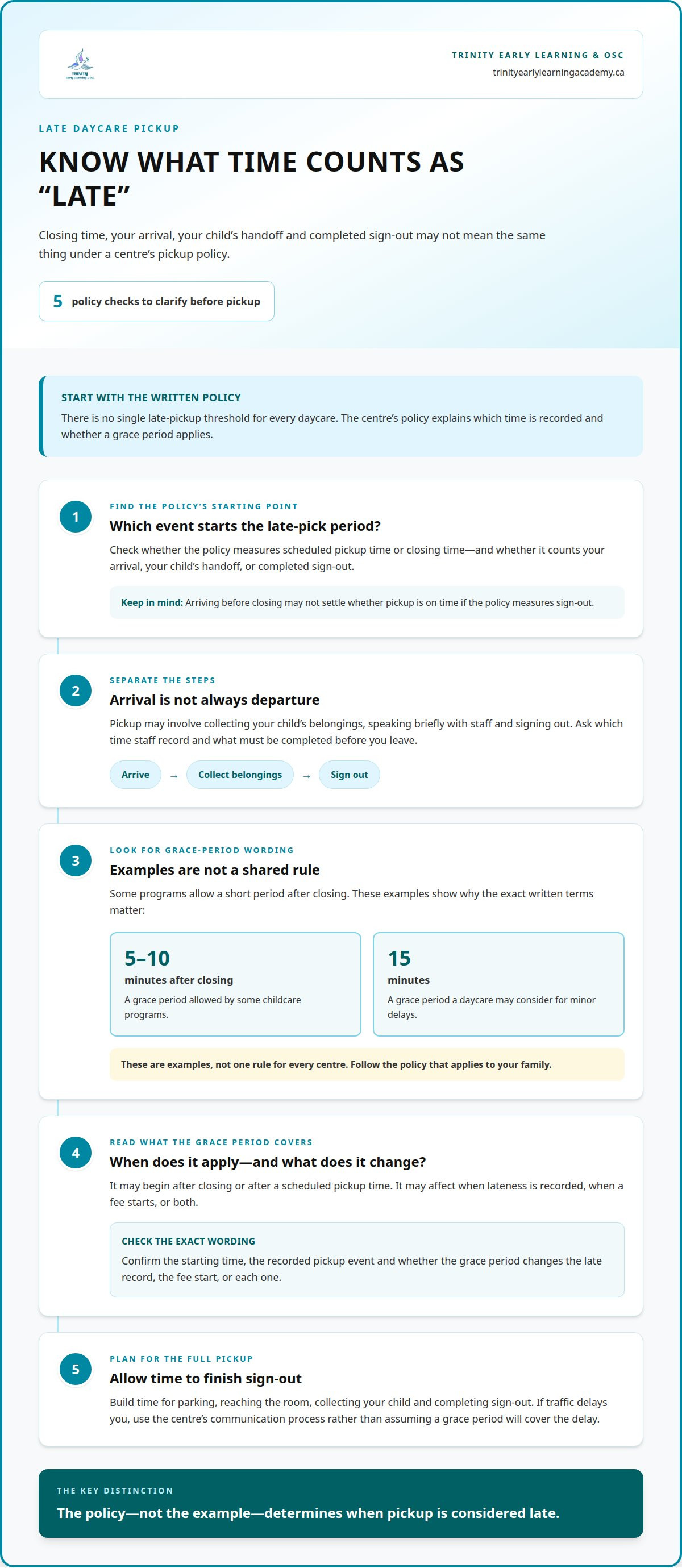
- Find the exact time that starts the late-pick period. A centre’s closing time may differ from the time families are expected to complete pickup. Read the policy for the event that counts: your arrival, your child’s handoff, or completed sign-out. For example, arriving before closing may not settle whether pickup is on time if the policy measures sign-out.
- Separate arrival from departure. Ask what staff record as the pickup time and which steps must be completed before you leave. A parent may arrive, collect belongings, speak briefly with staff, and sign out. Knowing how the centre defines the recorded time helps prevent confusion about whether a delay falls within the policy.
- Look for a grace period in writing. Some childcare programs allow 5-10 minutes after closing before considering pickup late. A daycare may also consider a 15-minute grace period for minor delays. These are examples, not one shared rule. The written policy determines whether a grace period applies and when the late-pick fee begins.
- Check what the period covers. A grace period might apply after closing or after a scheduled pickup time, depending on the policy. It may affect when lateness is recorded, when a fee starts, or both. Read the wording carefully, since the benefit of extra time depends on what the centre counts and how staff record it.
- Plan to arrive before the applicable deadline. Build time for parking, reaching the room, collecting your child, and completing sign-out. If traffic delays your arrival, use the centre’s communication process rather than assuming the grace period will cover the situation. Additionally, note whether the policy explains how staff handle a late pick when the grace period has passed.
Late-pickup approaches for home daycares and multi-site centres
If you’re running late, call the centre promptly, explain the situation and give your estimated arrival time. This helps staff plan for your child’s care while you travel.
Call the Centre When Running Late
- Call as soon as you expect a delay. Some childcare programs ask families to notify them at least 15 minutes before closing. If traffic makes that impossible, call when it’s safe and practical rather than waiting until you arrive.
- Share useful details. Explain why you’re delayed, your estimated arrival time, and whether an authorized emergency pickup contact can come instead. Give staff a clear update if your estimate changes, so they aren’t relying on outdated information.
- Use the centre’s usual contact method. A phone call allows staff to clarify who is coming and when. Don’t assume a message has been received unless the centre confirms it; keep driving safely and avoid using your phone on the road.
Consider the Centre’s Late-Pickup Approach
- Understand the setting’s practical limits. A home daycare may have one caregiver responsible for children, while a multi-site centre may coordinate staffing across rooms or locations. Ask how its pickup procedure works, who receives late-arrival updates, and how staff record the delay.
- Read how the policy handles charges. Some centres apply a late-pickup fee for the first 10 minutes after the designated pickup time. The policy explains when a charge begins and how it is calculated. Don’t assume every centre uses the same approach or that a call automatically removes a fee.
- Consider the effect on care and staffing. Late pickups can add overtime wages, utility costs, and facility-use costs. Staff must also continue caring for children after closing. If delays are recurring, ask whether extended care is an option; some programs offer it for as little as 30 minutes.
- Plan an emergency backup. Identify an authorized person who can collect your child if you can’t arrive. Make sure the centre has the person’s details and knows how staff should confirm the pickup.
Late pickup contact and care procedures
The person collecting your child should be authorized in the centre’s records and follow its identification procedure. If the centre is closed or staff don’t answer, follow its listed emergency contact process and keep your child with you.
- Check the handbook before assigning pickup. Confirm how to add or change an authorized person, and whether staff require photo identification. Tell the pickup person the centre’s sign-out process and share any instructions they’ll need to collect your child.
- Give the authorized person advance notice. If a family member or other approved adult will arrive instead, tell staff who is coming and when. The person should bring identification if the centre’s policy requires it. Don’t assume staff can release your child to someone absent from the authorized list.
- Use the centre’s listed contact steps if staff are unreachable. Try the usual phone number, then use any alternate number or emergency contact recorded in the handbook. Leave a concise message with your name, your child’s name, your location, and the next safe pickup plan. Avoid repeatedly calling while driving.
- Keep your child with you if the centre is closed. Don’t leave them at the entrance or with someone who hasn’t been authorized. Contact the designated emergency person and follow the centre’s instructions for arranging a safe handoff. If there’s an immediate safety emergency, contact local emergency services.
- Clarify the record after the handoff. Note who picked up your child and when, then ask staff how the late pickup was documented. Review the handbook for how late fees are recorded and handled. Clear records help families and staff understand what happened and address any confusion about the circumstances.
For families choosing care in St. Albert, review the centre’s daycare information and its pickup procedures before enrolment.
Trinity Early Learning & OSC
Trinity Early Learning & OSC is a licensed daycare in St. Albert, offering childcare, preschool programming, kindergarten care and out-of-school care. If pickup routines and late-arrival procedures are shaping your childcare decision, talk with the centre about how its care arrangements fit your family’s needs. Understanding expectations before care begins can help you plan pickup, choose an authorized backup person and know how to communicate if traffic causes a delay.
Families considering childcare can also ask about Trinity’s approved affordability grant funding, which helps lower childcare costs. Discuss your family’s routine and pickup needs to decide whether the centre is a suitable next step.
Contact Trinity Early Learning & OSC to discuss your childcare needs.
Make pickup planning part of your family routine
A dependable pickup plan is easier to follow when it is part of your weekly routine. Save the centre’s contact details, agree on a backup person and add pickup time to shared calendars. Decide in advance what to do if you are running late for daycare pickup, so everyone knows who will contact the centre and who can collect your child if plans change.
Knowing what to do if you are running late for daycare pickup also starts with choosing care that fits your family’s routine. If you’re considering childcare in St. Albert, discuss how the centre’s arrangements fit your day-to-day needs. A thoughtful conversation can help you make a confident choice for your child and family.
Connect with Trinity Early Learning & OSC to discuss your childcare needs. With a clear plan in place, you can approach busy pickup days with greater confidence.
Frequently Asked Questions
What is considered tardiness when it comes to parents picking up their children?
Tardiness begins at the point defined in the daycare’s pickup policy, which may be scheduled pickup time or closing. Some policies describe a parent as tardy after more than 15 minutes, but the threshold varies by centre. For example, check whether the policy measures when you arrive, when your child is handed over, or when sign-out is complete.
Who should I call or message at the daycare if I’m delayed?
Contact the centre using the phone number or communication channel it designates for pickup updates. If its handbook names an on-duty staff member or director as the contact, follow that process. Save the correct number in your phone before a busy day. If you can’t reach staff, use the centre’s alternate contact instructions rather than relying on an unconfirmed message.
What information should I provide when notifying daycare about a late pickup?
Give staff your name, your child’s name, your estimated arrival time and a brief explanation if it affects your plan. If another authorized adult will collect your child, provide their name and estimated arrival time. For example, explain if a work delay means your approved backup is coming instead. Update staff if the plan changes.
What happens if a parent is late for daycare pickup repeatedly?
Repeated lateness may be recorded and handled under the centre’s written policy. Depending on its terms, staff may apply late fees or discuss the pattern with your family. A practical next step is to arrange a conversation, explain the circumstances and agree on a workable pickup plan. Review the handbook so everyone understands how future delays will be handled.
What are Canadian daycare rules or provincial regulations for late pickup and supervision?
There is no single late-pickup time or fee that applies to every daycare across Canada. Childcare licensing and supervision requirements are set provincially or territorially, while each centre’s written policy explains pickup procedures and any late charges. In Alberta, read the centre’s policy alongside its care agreement to understand how staff handle late pickups and maintain supervision.
How can I prevent late daycare pickups, including backup childcare and scheduling options?
Build a routine around the centre’s stated pickup time: add travel time to your calendar, set a reminder before departure, and identify an authorized backup adult. Share the pickup plan with everyone involved, including who will notify staff if plans change. If your work schedule regularly conflicts with pickup, discuss care arrangements and scheduling options with a childcare program in St. Albert.


