

What if keeping daycare familiar is one of the most reassuring things you can do for your older child when a new baby arrives? Introducing a new sibling to the daycare routine can feel like one more change for a child who’s already adjusting at home. You may worry that they’ll feel displaced or that drop-offs, naps and other familiar rhythms will become harder.
Your child may need time to adjust, and their responses can change from day to day. Calm, age-appropriate explanations and steady routines can help them feel secure. A simple conversation with daycare educators also gives everyone a chance to offer consistent support.
This guide shares practical ways to prepare your child before the baby arrives, keep familiar daycare routines where possible and let educators know what may help. You’ll also find ways to respond with reassurance if your older child’s needs or behaviour shift during this family transition.
Key Takeaways
- Learn how familiar daycare patterns, from arrival to pickup, can help your child feel more settled during a family transition.
- Recognize possible changes in your child’s feelings or behaviour without treating them as a checklist or diagnosis.
- Use simple, age-appropriate conversations to prepare your child and share relevant changes with daycare educators.
- Build a flexible plan for introducing a new sibling to the daycare routine, with familiar cues to support drop-offs and pickups.
- Share brief observations with educators so you can notice what’s helping and respond consistently as your family adjusts.
Introducing a New Sibling to the Daycare Routine: What May Change?
Welcoming a baby can bring excitement, curiosity and uncertainty for an older child, sometimes all at once. The daycare day may stay much the same, but your child’s feelings about leaving home or reuniting with family can shift as everyone adjusts.
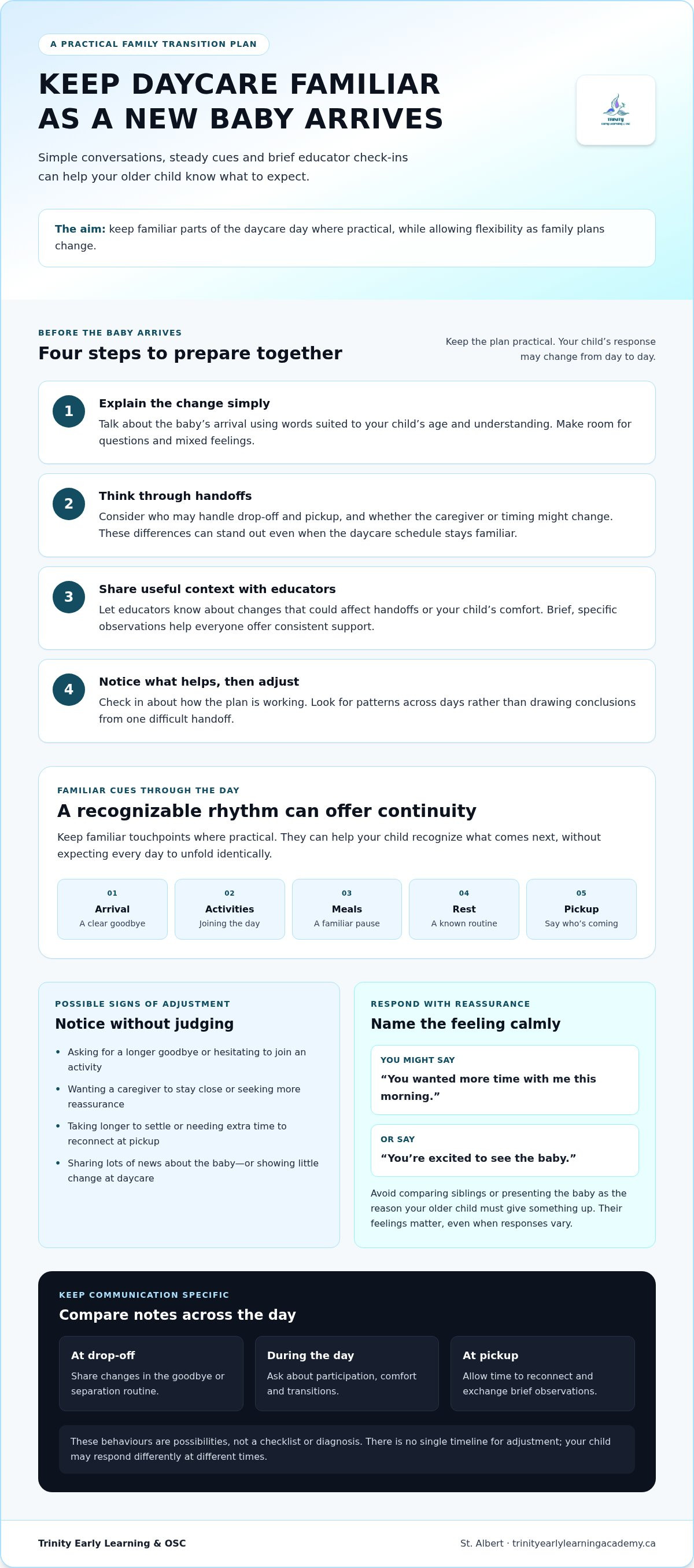
A daycare routine is the familiar sequence of daily events, such as arrival, activities, meals, rest and pickup. These patterns can provide continuity while home life changes, but they won’t make every day feel the same or guarantee a particular response.
Routine continuity during a family transition means keeping familiar parts of the daycare day where practical, so a child can recognize what comes next while adjusting to changes at home.
Which parts of daycare may feel different to an older child?
Changes at home can affect how a child experiences separation and reunion. For example, a parent who usually handles drop-off may be resting with the baby, while another caregiver takes the older child to daycare. Pickup may also happen with a different family member or at a different time than the child expects.
Even if the daycare schedule stays familiar, these changes to handoffs may stand out. A child might ask questions, seem excited to tell educators about the baby or want extra reassurance at goodbye. Feelings can be mixed and may change over time. These are possibilities, not signs that something is wrong. For general background, see this overview of sibling relationships.
Why familiar routines can help during a family transition
Predictable sequences give children cues about what comes next: saying goodbye, joining an activity, having a meal, resting and being picked up. These touchpoints can make the day feel more recognizable even as family roles and plans change. For St. Albert families, Trinity Early Learning & OSC provides licensed daycare and early learning, with preschool and out of school care options.
Keeping a routine doesn’t mean expecting every day to unfold identically. A child may need more time at drop-off, or the pickup plan may change. The goal is to keep a few familiar cues steady, such as a consistent goodbye or a clear explanation of who will collect them. Those points of predictability can sit alongside the flexibility a growing family needs.
How a New Baby Can Affect Your Child’s Feelings and Daycare Behaviour
A new baby can bring joy and curiosity, but an older child may also want extra reassurance or have questions about how family life will change. They might talk proudly about the baby one moment, then seem frustrated or clingy the next. Some children show little change at daycare, while others need more support during familiar parts of the day.
These are possible adjustment responses, not a checklist or diagnosis. Changes in behaviour can offer clues about how a child is feeling, but each child’s responses and support needs are individual. Their response may vary from day to day and situation to situation.
What changes might parents notice at drop-off or pickup?
At drop-off, a child who usually separates easily may ask for a longer goodbye, hesitate to join an activity or want a caregiver to stay close. At pickup, they may need extra time to reconnect before talking about their day, or they may have lots to say about the baby. These moments can be useful signals, not proof that daycare is no longer working for them.
Educators may notice changes in participation, comfort or transitions. A child might take longer to settle into an activity, seek more adult reassurance or seem especially eager to share news about home. Rather than judging one difficult handoff, look for patterns across days and compare notes with educators. There’s no single timeline for adjustment, and children may respond differently at different times.
How to respond without comparing siblings
Use calm, simple words that recognize the feeling without telling your child how they should feel. You might say, “You wanted more time with me this morning,” or, “You’re excited to see the baby.” Avoid comparisons, such as saying the baby is easier or more difficult, and don’t present the baby as the reason your older child must give something up. Reassure them that their feelings matter and that they can talk about them.
Children differ in how they understand change and communicate what they need. Your child’s own words and behaviour can guide the conversation. Sharing specific observations with daycare educators can also help you understand whether a change is happening at drop-off, during the day or at pickup.
For St. Albert families, Trinity Early Learning & OSC offers licensed daycare and early learning services. Explore Trinity Early Learning & OSC in St. Albert to learn about its childcare and early learning programs.
How to Prepare Your Child and Daycare Educators Before the Baby Arrives
A little planning can help your older child know what to expect without making the baby’s arrival feel like a test they need to pass. When introducing a new sibling to the daycare routine, focus on a few practical steps: talk with your child, identify likely changes, share useful context with educators and check in afterwards about how the plan is working.
- Talk with your child: Explain the baby’s arrival in simple language suited to their age and understanding.
- Identify routine changes: Consider who may handle drop-off or pickup and whether familiar plans at home will shift.
- Share relevant context: Let educators know about changes that could affect handoffs or your child’s comfort.
- Review and adapt: Notice what seems to help, then adjust the plan without adding unnecessary changes all at once.
You don’t need to explain every detail in advance. A calm, brief conversation, repeated as needed, can help your child build a clear picture of what will happen. Keep the plan flexible: family circumstances can change, and children may need different support as the transition unfolds.
What to tell your child about daycare after the baby arrives
Use concrete explanations your child can connect to their day. For example: “Grandpa will take you to daycare, and I’ll pick you up after afternoon snack.” If familiar activities will continue, mention them: “You’ll still have time to play and rest with your group.” Invite questions, but don’t expect your child to feel excited, confident or ready. Listening is enough; you can answer simply and revisit the conversation later.
What to share with daycare educators
Tell educators the expected timing of major household changes if it will help them understand your child’s day. Mention likely changes to drop-off or pickup, disrupted sleep, or signs your child may need extra reassurance. Share only personal details that are relevant to care, and respect your child’s privacy. A brief check-in at an agreed time or a short exchange at handoff can help you and educators compare observations without making every conversation feel like a formal report.
Keep the exchange specific and respectful. You might say, “We’ve been talking about who will do pickup,” then ask what educators have noticed about your child’s transitions or comfort. Together, you can decide which familiar cues to maintain and what to adjust. This communication supports a plan that responds to your child, rather than expecting them to adapt on a set schedule.
A Practical Daycare Routine Plan for the First Weeks with a New Sibling
A plan for introducing a new sibling to the daycare routine should make busy days easier, not add pressure to get everything right. Family schedules may shift around the baby’s arrival, so choose a few familiar cues to keep steady, such as the usual goodbye phrase or a clear explanation of pickup. Adapt these steps to your child and household.
- The evening before: Tell your child who will take them to daycare and who will pick them up. Set out what you can together, while allowing for changes if the baby or family needs extra attention.
- At morning handoff: Keep the goodbye warm and clear. Use a familiar phrase, then follow through with the handoff if a longer goodbye seems to increase uncertainty.
- During the daycare day: Let familiar activities and the usual sequence provide continuity where possible. If plans at home have changed, share relevant details with educators.
- At pickup: Remind your child who is coming and when, using language they understand. Make room for a calm reconnection before asking about their day.
Making drop-off and pickup feel predictable
Clear, brief handoffs help your child understand what is happening next. A goodbye such as “I love you, and I’ll see you after rest time” can offer a familiar cue if it fits your daycare’s routine. At pickup, greet your child and give them time to reconnect. They may want to talk, play quietly or simply stay close before sharing details about the day.
What to do when the routine does not go to plan
A difficult morning isn’t a failed transition. Offer reassurance, keep your message simple and continue with the next practical step. If a change persists or begins to affect your child’s comfort or participation during the day, compare notes with educators. Together, you can consider whether a familiar cue needs reinforcing or the plan needs adjusting. No single routine has to work perfectly for every family.
Keep the plan manageable: focus on what can stay familiar, and change other parts as family circumstances require. If you’re looking for licensed childcare in St. Albert, explore Trinity’s local childcare information.
Working with Daycare Educators as Your Family Welcomes a New Baby
Parents and daycare educators each see different parts of a child’s day. Brief, regular exchanges can bring those observations together and help everyone notice what’s supporting the child during this family change. As you work through introducing a new sibling to the daycare routine, share useful details without expecting educators to compare your child with the baby or with other children.
How to keep communication with educators useful
Focused questions make a quick conversation more helpful. You could ask whether your child seemed comfortable at arrival, how they moved between activities or what helped them settle when they needed reassurance. Share relevant changes at home too, such as a caregiver change or disrupted sleep, so educators have context for what they observe. Keep the exchange centred on your child’s needs and privacy.
Agree on a simple communication rhythm that fits your family and the childcare setting. A short conversation at pickup or another agreed check-in may be enough to compare notes. Useful observations can include:
- What your child said about the baby, daycare or changes at home.
- When they seemed comfortable, hesitant or in need of reassurance.
- Whether transitions or handoffs felt different from their usual pattern.
These details can help you identify what’s working and adjust support. Your child may feel proud, uncertain or both. Their needs are individual, so avoid assuming they should react like a sibling or follow a particular adjustment pattern.
When to seek more support for the transition
If a concern continues or seems to affect your child’s comfort or participation, raise it with the educators who know their daycare day. A shared picture of what happens at home and in care can help clarify which situations feel difficult and what responses are reassuring. If concerns persist or significantly affect family life, consider seeking guidance from a qualified professional who can discuss your child’s individual needs.
Support can be responsive and practical. Keep communication open, note changes without judging them and review the approach as your child and family adjust. For families in St. Albert, Trinity Early Learning & OSC offers licensed childcare and early learning services, including preschool and out of school care. Explore Trinity’s local childcare programs to learn more about its early learning options.
Keep the Next Steps Calm and Flexible
Introducing a new sibling to the daycare routine doesn’t require every day to go perfectly. A few familiar cues, clear explanations about drop-off and pickup, and respectful communication with educators can help your older child feel supported as family life changes.
Notice your child’s individual responses rather than comparing siblings or expecting adjustment to follow a set timeline. Share useful observations with educators, keep what works and adapt the plan when your family’s needs shift. Small, steady steps can make the transition feel more manageable for everyone.
For families in St. Albert, Trinity Early Learning & OSC provides licensed daycare, preschool and out of school care. Affordability grant programs support accessible childcare. Explore Trinity Early Learning & OSC to learn about its local childcare and early learning services.
With patience and a consistent partnership between home and daycare, your family can find a rhythm that feels reassuring for your older child and welcoming for the new baby.
Frequently Asked Questions
How do I introduce a new sibling to my child’s daycare routine?
Prepare your child with simple explanations and keep familiar parts of the daycare day steady where practical. Tell them who will take them, who will pick them up and which familiar activities will still be part of their day. A consistent goodbye phrase can be reassuring. Introducing a new sibling to the daycare routine is a gradual adjustment, so notice what helps your child and adapt the plan as family needs change.
Should I tell daycare educators that my child is getting a new sibling?
Yes, sharing relevant information can help educators understand changes in your child’s comfort, transitions or behaviour. You might mention when the baby is expected, whether drop-off or pickup plans may change, or if your child has had disrupted sleep. Share only details that are useful for care and respect your child’s privacy. Brief check-ins can help you and educators compare observations and respond consistently.
Can a new sibling cause daycare separation anxiety?
A new baby may coincide with changes in how a child feels about separating from a parent, but children respond in different ways. Your child might want a longer goodbye, ask for extra reassurance or show no noticeable change at daycare. Look for patterns across days rather than drawing conclusions from one difficult handoff. If you’re concerned, share what you’ve noticed with the educators who know your child’s daycare day.
How can I keep my older child’s daycare routine consistent after the baby arrives?
Keep a few familiar cues where possible, such as the usual goodbye, the order of morning steps or a clear explanation of pickup. Family schedules may change, so consistency doesn’t mean every day must be identical. Tell your child who is collecting them in language they understand, and give educators useful updates if plans shift. Families in St. Albert can work with their childcare educators to keep communication clear as routines evolve.
What should I do if my child’s behaviour changes at daycare after the baby arrives?
Respond with calm reassurance and share specific observations with daycare educators. Note what changed, when it seems to happen and what helps your child feel comfortable. Ask whether educators have noticed differences in participation or transitions, then compare notes to decide what support may help. Avoid comparing your children or treating a temporary behaviour change as a diagnosis. If concerns persist or significantly affect family life, consider guidance from a qualified professional.
When should I start preparing my child for a new sibling and daycare changes?
Begin talking with your child when you can explain the changes clearly and answer questions in a way they understand. Focus on practical details that affect their day, such as who may handle drop-off or pickup. You can revisit the conversation as plans become clearer; there’s no need to explain everything at once. Invite questions and let your child know their feelings are welcome, even if they aren’t excited.
Should I change my child’s daycare routine before the baby arrives?
There’s no need to change familiar daycare patterns just because a baby is on the way. If a practical change is expected, such as a different caregiver handling pickup, explain it simply and prepare your child for what will happen. Where possible, avoid introducing several changes at once. Keep the parts of the day that work, and adjust the plan if family circumstances or your child’s needs shift.


