
Quality care is strengthened by the people who provide it. A specific thank-you can remind daycare staff that their efforts matter. Showing appreciation for your daycare staff might mean a handwritten note describing a thoughtful classroom moment, a gratitude board, or sincere recognition from a colleague. These small gestures can help educators feel seen and supported, contributing to a positive workplace where children receive attentive, consistent care.
It’s natural to value the patience, creativity, and care staff bring to each day. Appreciation doesn’t have to be costly or elaborate to feel meaningful. A few genuine words can recognize the difference an educator makes for children and families.
This article offers practical ways to express thanks, support a welcoming team culture, and address some pressures that can contribute to burnout. You’ll also find ready-to-share messages for notes, cards, or conversations, making it easier to put your gratitude into words.
Key Takeaways
- Make thanks more meaningful by naming a specific action or strength you appreciate.
- Build a supportive team culture with regular recognition and appreciation staff can help shape.
- Invite families and children to share gratitude through simple, thoughtful gestures.
- Use the sample messages as a starting point, then add a personal detail to make your note feel genuine.
1. How does staff appreciation improve the quality of care?
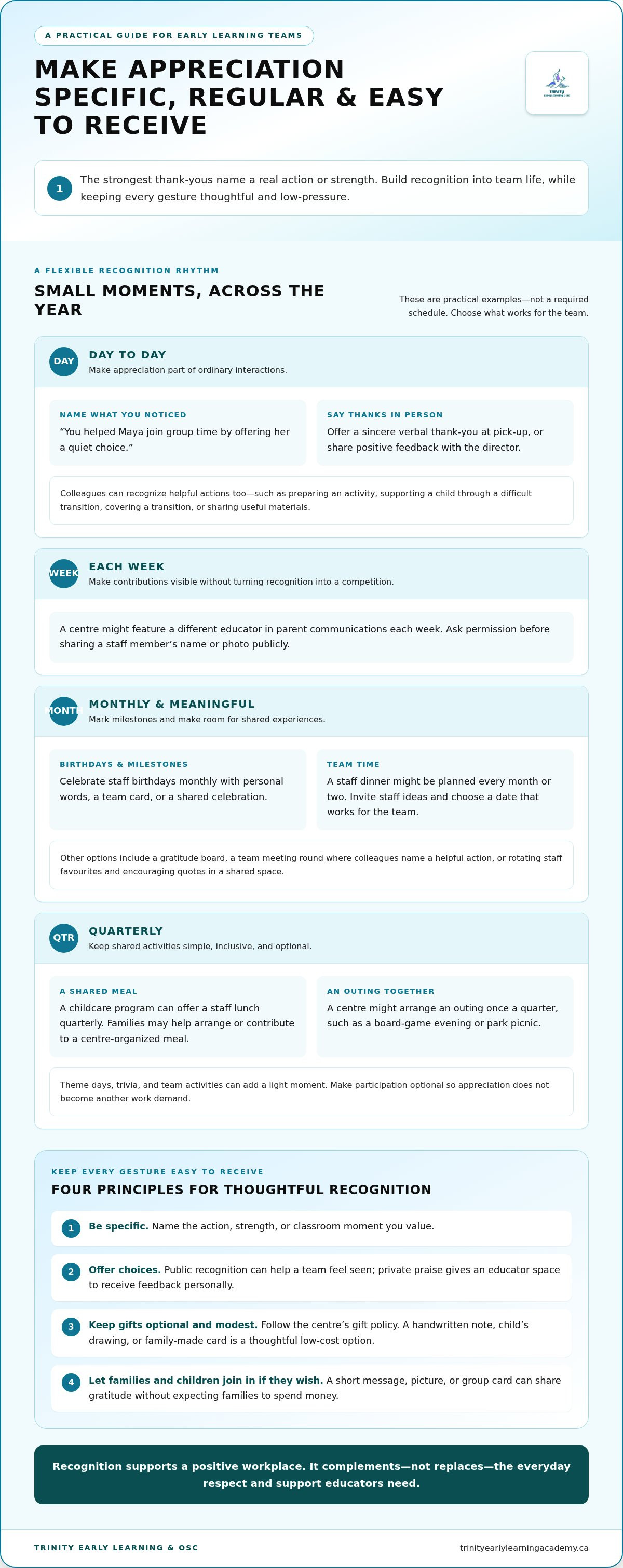
Showing appreciation for your daycare staff can reinforce the attentive practices children experience each day. Name the action: “You helped Maya join group time by offering her a quiet choice.” Specific feedback shows an educator which approaches families value, rather than offering general praise. Recognition can also prompt educators to share helpful routines with colleagues, supporting consistency for children.
At Canadian childcare centres, follow the centre’s gift policy instead of assuming every employee can accept the same item. Keep a token modest and optional. If you’re unsure what to give, choose a handwritten note.
Low-cost, handmade ideas include a child’s drawing, a family-made card, or a note about a particular classroom moment. For example: “Thank you for helping Leo feel welcome during his first week.” Children can add their own words or pictures. These personal details make a simple gesture thoughtful without making families feel expected to spend money.
You can show appreciation without giving gifts. Offer a sincere verbal thank-you at pick-up, share positive feedback with the director, or describe an educator’s patience in a message to families. A gratitude board also lets colleagues recognize one another’s strengths with short, specific acknowledgements.
Public recognition can help a team feel seen, while private praise gives an educator space to receive feedback personally. A centre might feature a different educator in parent communications each week or create an employee-of-the-month board with a few fun facts. Ask permission before sharing a staff member’s name or photo publicly.
Mark birthdays, holidays, and work milestones with personal words, a team card, or a shared celebration. Childcare programs can celebrate staff birthdays monthly, and a note can mention a skill or moment that made a difference. Regular recognition helps staff feel valued and can support job satisfaction and a positive workplace. It complements, rather than replaces, the everyday respect and support educators need.
2. How does appreciation create a positive work environment?
A positive workplace grows from everyday actions, not praise reserved for special occasions. A director can thank a teacher who helps a colleague prepare an activity or calmly supports a child through a difficult transition. Naming the action shows that hard work matters and gives the team a clear example of respectful practice.
Consistency matters. Pair recognition with fair, considerate communication: share schedule changes clearly, listen when staff raise concerns, and acknowledge contributions across classrooms. For example, a team meeting can include a brief round where colleagues name one helpful action they noticed. This makes peer support visible without turning recognition into a competition.
Shared experiences can also strengthen relationships. A centre might plan a staff dinner every month or two, or arrange an outing once a quarter. Choose an activity that suits different preferences, such as a board-game evening or park picnic. Ask staff for ideas, then choose a date that works for the team.
Keep events inclusive and low-pressure. Theme days, such as Taco Tuesday, can add a light moment to a busy week. A door-decorating contest or trivia game gives coworkers a shared task, while a small prize or gift card can recognize the winning team’s effort. Make participation optional so appreciation doesn’t become another work demand.
Small environmental choices help reinforce respect between events. Display staff favourites or encouraging quotes in a shared space, and rotate the contributions so every classroom is represented. Recognize actions such as covering a transition or sharing useful materials. These habits can support job satisfaction and a more welcoming team culture. Families seeking a setting that values supportive care can explore quality childcare in St. Albert.
3. How Does Early Childhood Educator Appreciation Prevent Workplace Burnout?
Parents can help early childhood educators feel that families notice their daily effort. A brief, specific thank-you at pick-up can name a meaningful moment: “You helped Sam settle into the block area after drop-off.” That recognition connects an educator’s care with a child’s growing confidence. It also reminds staff that their work means more than completing routines.
Children can take part in ways that suit their age and abilities. Invite them to draw a picture, dictate a short message, or make a card together. A child might say, “Thank you for reading my favourite book.” These activities support early learning through language, creative expression, and kindness, while giving educators a tangible reminder of the relationships they build.
Transitions into care can be tiring for children and families. After a child adjusts to a new room or routine, share a specific observation with the educator. For example, tell them how your child now waves goodbye or talks about a play activity at home. This feedback recognizes the educator’s role in building trust without adding a gift or extra task.
A shared meal is another way families can show appreciation. Parents can help arrange a staff lunch or contribute to a centre-organized meal, keeping the plan simple and voluntary. Childcare programs can offer a staff lunch quarterly. A coordinated meal gives the team a chance to connect, while practical support helps educators feel valued beyond a single thank-you.
Make each gesture easy to receive. Ask the centre about suitable timing before organizing food, and keep children’s artwork or messages optional. A group card can include brief notes from families, while a child-made collage can celebrate shared classroom experiences. These thoughtful acts can build connection and recognition, alongside the workplace practices needed to address staff fatigue.
4. Messages of appreciation for daycare staff
A meaningful thank-you note names an educator’s action and its effect. Try: “Thank you for helping Ella feel comfortable joining morning circle. She now tells us which song the classroom sang.” This connects the educator’s care with a moment families can recognize and celebrate.
How much should you spend on daycare staff gifts in Canada? Spend only what feels comfortable for your family; a thoughtful message does not require a purchase. Childcare programs can collect five-dollar gift cards from families for staff appreciation throughout the year, making small contributions one possible approach.
Appropriate gifts can include a handwritten card, child-made artwork, or a modest gift card. Keep any gesture optional, and focus on what you genuinely value about the educator’s communication or care. A note can be especially meaningful when it describes a classroom moment rather than offering general praise.
Are cash gifts or gift cards appropriate for daycare staff? Either can be a considerate, optional token, while a personal note offers thanks without a monetary gift. Practical tokens that support personal wellness and grooming, such as a visit to Sam's Scissors Barbershop, can offer educators a welcome chance to relax. If you choose a gift card, include a few words explaining why you appreciate the educator’s effort.
For a thank-you note, write the educator’s name, describe a specific action, and share its impact on your child. For example: “Thank you, Jordan, for patiently helping Max practise putting on his boots. He felt proud showing us what he could do.” Close with your name and your child’s name to make the message personal.
Short messages work well in a card, email, or family communication book. You could write, “We appreciate how you make story time welcoming,” or, “Your calm support helped Ava enjoy her first week.” Choose words that sound like your family. If you’re considering care in St. Albert, explore childcare options as a next step.
Trinity Early Learning & OSC: Licensed Daycare Services
Trinity Early Learning & OSC is a licensed daycare in St. Albert, offering childcare and preschool programming for local families. Its warm, family-centred environment includes low child-to-educator ratios, CCTV monitoring, and an inclusive childcare program. Families can also explore kindergarten care and out-of-school care.
Trinity’s approved affordability grant funding helps lower childcare costs for families. The right program depends on your child’s age and the type of care your family needs. Reviewing the childcare, preschool, kindergarten, and out-of-school care options can help you find a fit for your routine.
To learn more about childcare options, visit Trinity Early Learning & OSC online.
Make appreciation part of your family’s routine
A thoughtful message can be the start of an ongoing relationship between families and educators. The next time an educator helps your child feel included or curious, notice the moment and share what it meant to your family. This kind of communication makes appreciation personal and keeps the focus on the care children experience each day.
Showing appreciation for your daycare staff doesn’t need to be reserved for holidays or special occasions. A sincere thank-you at the right moment can help an educator feel recognized without adding another task to their day. Choose words that sound like you, and let your child take part if they’d enjoy it.
If you’re considering childcare in St. Albert, take the next step at a pace that feels right for your family. Contact Trinity Early Learning & OSC to learn more about its programs. A respectful partnership between families and educators can help children feel supported as they learn and grow.
Frequently Asked Questions
How does staff appreciation improve the quality of care?
Recognition helps educators see which care practices families value and encourages teams to share what works. A centre can invite families to share feedback about communication, routines, or a child’s growing confidence, then pass relevant comments to the educator. This creates a useful connection between home and classroom. Keep feedback specific, respectful, and focused on actions staff can understand and repeat.
How Does Early Childhood Educator Appreciation Prevent Workplace Burnout?
Appreciation can help educators feel seen, but it works best alongside practical support. If a staff member seems fatigued, a supervisor can arrange classroom coverage or time to recover. Leaders can also ask educators what would make demanding routines easier. A sincere thank-you matters, but manageable workloads, needed supplies, and recovery time address pressures more directly.
How can you give your staff the recognition they deserve?
Ask educators what forms of recognition feel comfortable, then make recognition fair and specific. A director could acknowledge preparation, teamwork, or thoughtful communication, including contributions that happen outside family-facing moments. Share public praise only when the educator welcomes it; otherwise, offer a private note or conversation. Follow through consistently, so recognition reflects real contributions rather than visibility or popularity.
How can you tailor appreciation ideas for different team sizes?
In a small team, personal conversations can help ensure each educator receives individual recognition. In a larger centre, a shared appreciation board or rotating staff feature can make contributions visible across rooms. In St. Albert, centres can adapt these approaches to their team structure and communication habits. Invite staff to suggest options, then make participation easy for every classroom.
How does appreciation create a positive work environment?
Regular, fair recognition can strengthen respect and cooperation among colleagues. Pair praise with clear expectations and fair pay, so appreciation feels genuine rather than like a substitute for workplace support. For example, a team meeting can include a short moment to recognize a helpful action, then invite colleagues to share practical ideas. This builds a culture where people notice and value one another’s contributions.
What are the best holiday and event-based appreciation ideas?
Choose celebrations that suit staff preferences and don’t make anyone feel pressured to participate. A centre might plan a seasonal meal, a team activity, or a small holiday gesture. One option is adapting the 12 days of Christmas idea with a modest daily surprise before a holiday gathering. Ask the team what feels welcoming, and consider different traditions when planning.


