

What if the brightly coloured playrooms and polished tour scripts are actually masking systemic issues that could impact your child's daily well-being? It's a question that keeps many Alberta parents awake at night. Choosing a licensed provider is an emotional journey; it's completely natural to feel anxious about missing critical red flags to watch for in a childcare center during a brief facility walkthrough. You want to ensure your child is in a stable, nurturing environment where safety is the absolute priority, not just a line in a brochure.
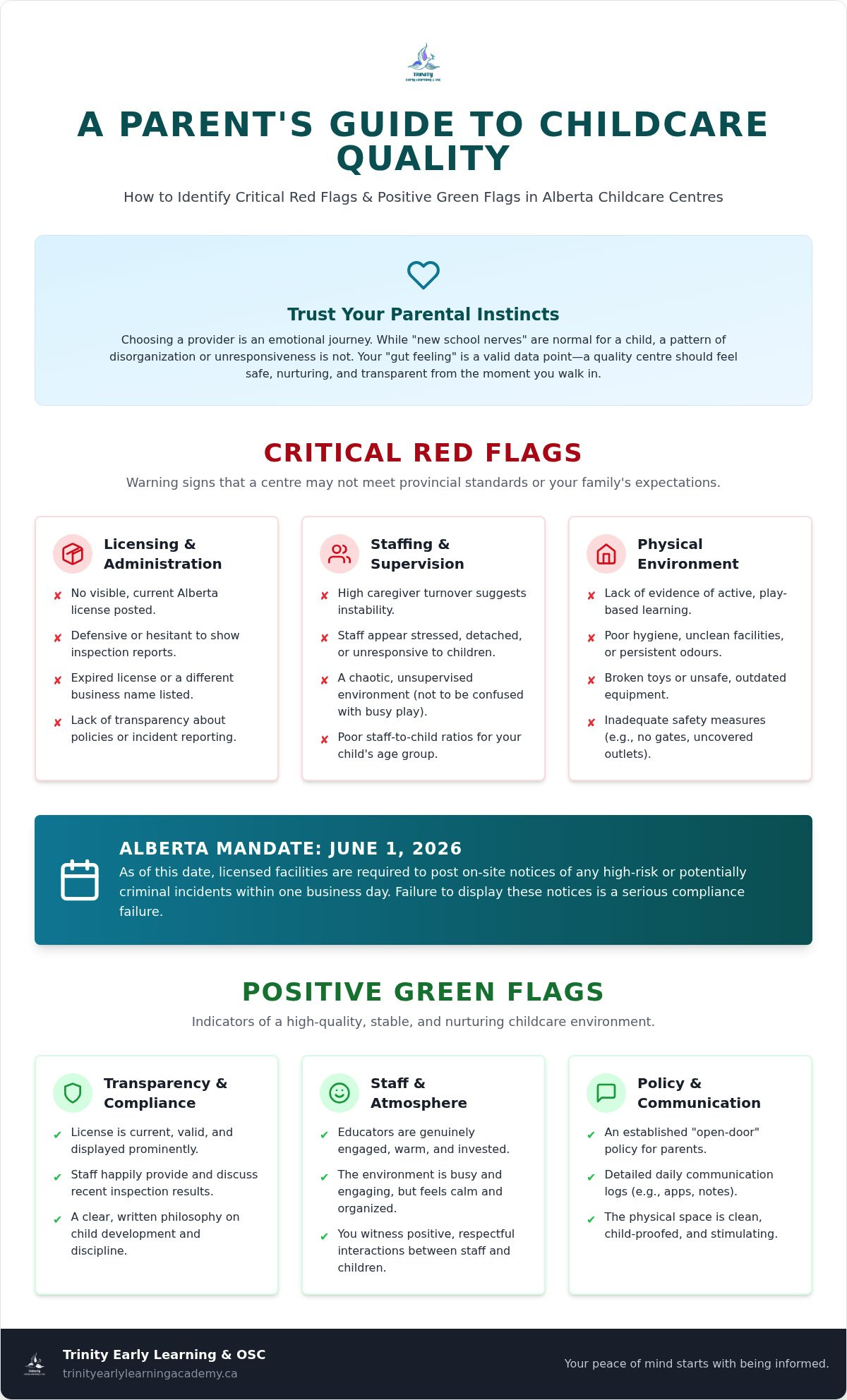
This article will help you transition from feeling overwhelmed to feeling like a knowledgeable advocate for your child's early education. You'll learn how to identify both subtle and overt warning signs to ensure your child's safety and developmental success. We'll provide a concrete 2026 checklist that covers essential vetting points, including how to verify compliance with the June 1, 2026, incident reporting mandate and how to interpret provincial inspection results to find a truly high-quality centre.
Key Takeaways
- Recognize that identifying systemic issues in safety and philosophy is the first step toward securing your peace of mind and your child's well-being.
- Understand the critical importance of visible Alberta licensing and why a lack of transparency regarding provincial standards is a significant administrative warning sign.
- Learn how to assess staff-to-child ratios and recognize the impact that high caregiver turnover has on your child’s emotional and developmental stability.
- Identify specific physical red flags to watch for in a childcare center, including environments that lack evidence of active, play-based learning or robust safety measures.
- Gain confidence in your search by learning to spot "green flags" like open-door policies and detailed daily communication logs that define high-quality St. Albert providers.
Why Spotting Childcare Red Flags is Essential for Your Peace of Mind
Choosing the right environment for your child is one of the most significant decisions you'll make as a parent in St. Albert. It's a choice that carries immense emotional weight, as you're looking for a space that mirrors the safety and warmth of your own home. However, it's easy to feel overwhelmed by the polished appearance of a facility during a brief tour. This is why understanding the specific red flags to watch for in a childcare center is vital for your peace of mind. These indicators often point toward systemic issues in safety, staffing, or the underlying educational philosophy that might not be immediately obvious to the casual observer.
A childcare red flag is a warning sign that a centre may not meet provincial standards or your family’s developmental expectations.
While some issues are overt, many are subtle and require a keen eye to spot amidst the excitement of a new facility. By learning to identify these signs, you can differentiate between a high-quality environment and one that merely looks good on the surface. Understanding various Childcare Quality Indicators will help you evaluate whether a program truly supports holistic growth or if it's struggling to maintain basic standards of care. Being proactive now ensures your child enters a space where they can thrive emotionally and academically.
The Difference Between "New School Nerves" and Real Warnings
It's common for children to experience transition anxiety when starting a new program. Tears at drop-off don't always mean there's a problem with the provider. However, you should distinguish this natural phase from genuine caregiver neglect. A busy classroom filled with the sounds of play is a sign of engagement, but a chaotic environment where children are unsupervised or wandering aimlessly is a major concern. If you notice a consistent pattern of disorganization or a lack of response to children's emotional needs, it's likely a management issue rather than just a "bad day" for the staff. Recognizing these red flags to watch for in a childcare center helps you protect your child's developmental success.
Trusting Your Parental Instincts During the Search
Your "gut feeling" is a valid data point when you're evaluating a nurturing childcare environment. You'll often sense the emotional climate of a centre before you even finish the tour. Pay close attention to the "vibe" between staff and children; do the educators seem genuinely invested, or do they appear stressed and detached? To keep your observations clear, document your thoughts immediately after leaving the facility. Writing down your impressions prevents you from second-guessing your instincts later and ensures you have a concrete record of any concerns regarding the atmosphere or safety of the space. A stable, organized centre will always welcome your questions and transparency.
Licensing and Administrative Red Flags in Alberta Centres
In Alberta, the legal framework for safety is built upon the Early Learning and Child Care Act. This legislation sets the baseline for everything from physical space requirements to staff qualifications. When you walk into a facility, the presence of a current, valid license isn't just a formality; it's your primary assurance of government oversight. One of the most significant red flags to watch for in a childcare center is the absence of this document in a prominent location, typically near the main entrance. Choosing between a licensed vs unlicensed daycare Alberta matters because licensed centres are subject to at least two unannounced inspections every year to ensure they remain compliant with provincial safety standards.
Transparency is the hallmark of a trustworthy provider. If a director seems defensive or hesitant when you ask to see their most recent inspection report, consider it a major warning sign. Since June 1, 2026, Alberta facilities have been mandated to post notices of high-risk or potentially criminal incidents on-site within one business day. A centre that hides its history or fails to display these mandatory public notices is not prioritizing your child's safety or your right to make an informed decision.
Expired or Hidden Licensing Postings
Check the expiry date on the physical posting immediately. An expired license or a document that lists a different business name suggests administrative disarray or a change in ownership that hasn't been properly vetted. You should also look for "conditional" or "probationary" licenses. While these don't always mean a centre is unsafe, they indicate that the provider is currently under increased scrutiny to correct specific non-compliance issues. If you find these red flags to watch for in a childcare center, don't be afraid to ask for a detailed explanation of the steps being taken to return to full standing.
Lack of Transparency Regarding Affordability Grants and Fees
Administrative clarity should extend to your monthly invoice. A major red flag is a centre that cannot clearly explain how the daycare affordability grant Alberta reduces your out-of-pocket costs. You should receive a clear, written breakdown of all fees before signing any agreement. Watch out for providers who surprise you with "hidden fees" for basic supplies or routine activities that weren't disclosed during the tour. A professional centre will provide a comprehensive contract and a predictable fee schedule upfront. For families seeking a provider that values this level of integrity, exploring licensed daycare services in St. Albert can provide the administrative transparency you deserve.
Staffing and Supervision: Indicators of a Poor Learning Environment
While provincial licensing provides the legal framework for a facility, the educators themselves are the heart of any high-quality program. The daily interactions between staff and children determine whether a centre is a place of growth or merely a place of supervision. One of the most critical red flags to watch for in a childcare center is a consistent failure to maintain mandated staff-to-child ratios. These ratios are not suggestions; they are safety requirements designed to ensure every child receives adequate attention and rapid response during emergencies. In Alberta, as of 2026, you should expect the following minimum standards:
- Infants (Under 12 months): 1 staff for every 3 children
- Toddlers (12 to 18 months): 1 staff for every 4 children
- Toddlers (19 months to 3 years): 1 staff for every 6 children
- Preschool (3 to 4.5 years): 1 staff for every 8 children
- Preschool (4.5 years and older): 1 staff for every 10 children
- Out-of-School Care (Kindergarten and older): 1 staff for every 15 children
Beyond the numbers, observe the emotional climate of the staff. Educators who appear visibly unhappy, overwhelmed, or constantly stressed may struggle to provide the nurturing support your child needs. High-quality caregivers engage with children at their eye level, sitting on the floor or at small tables rather than standing and observing from a distance. This physical proximity fosters a sense of security and encourages more meaningful developmental interactions.
High Staff Turnover and Its Impact on Continuity
Consistency is vital for a child's emotional security. When you tour a facility, ask how long the current lead teachers have been with the centre. A significant red flag is a revolving door of staff, which often indicates poor management or a lack of workforce support. If you notice a centre is constantly advertising for new positions on local St. Albert job boards, it suggests a lack of the "continuity of care" necessary for healthy bonding. Frequent changes in caregivers can disrupt a child's routine and hinder their ability to form the stable attachments required for holistic growth.
Disengaged Caregivers and Weak Supervision Habits
During your tour, look for signs of "passive supervision." This occurs when staff are physically present but mentally disengaged, perhaps talking to one another or checking their phones instead of interacting with the children. In a thriving environment, caregivers provide purposeful guidance throughout the day. For parents of older children in out-of-school care (OSC) programs, a common red flag is a "hands-off" approach where children are left to navigate social conflicts entirely on their own. Additionally, listen to the language used by staff; the use of harsh, punitive, or loud tones to manage classroom behaviour is a clear indicator that the centre lacks a positive, child-centred philosophy.
Physical Environment and Health Standards to Evaluate During a Tour
The physical layout of a facility provides the framework for your child's daily safety and stimulation. While a shiny exterior is appealing, you should look deeper into the functional reality of the space. Utilizing a daycare safety checklist St. Albert helps you systematically audit the environment for essential features that protect your child. One of the most counterintuitive red flags to watch for in a childcare center is an environment that feels "too quiet" or "too clean." A centre that looks like a sterile museum may indicate a lack of active, play-based engagement. Healthy learning is often messy and filled with the joyful sounds of children interacting with their surroundings.
Pay close attention to the sensory experience of the facility. A well-maintained centre should smell fresh and clean but shouldn't be overpowered by heavy chemical masking agents or artificial fragrances. Strong bleach smells can sometimes hide underlying hygiene issues or poor ventilation. During your walk-through, look for these basic safety indicators:
- Secured, buzz-in entryways to prevent unauthorized access.
- Covered electrical outlets and tucked-away cords in all classrooms.
- Fenced outdoor play areas with self-closing, child-proof gates.
- Clean, organized kitchen facilities that follow provincial food safety guidelines.
If you have concerns about how a facility manages its physical space, you can always contact our licensed daycare in St. Albert to learn more about our commitment to rigorous health and safety standards.
Unsafe or Unclean Facilities and Play Spaces
Inspect the condition of the materials children use every day. Broken toys with sharp edges, peeling paint on walls, or unwashed surfaces in high-touch areas are immediate warning signs. The outdoor playground requires equal scrutiny. A major red flag includes playgrounds with visible trash, broken equipment, or a lack of proper fall surfacing like rubber mats or deep wood mulch. Additionally, verify that the kitchen or food prep areas appear organized and meet basic Alberta health standards for sanitation and storage to prevent illness.
A Non-Stimulating Environment Lacking Age-Appropriate Materials
A high-quality program prioritizes active engagement over passive entertainment. A "screen-heavy" environment where televisions or tablets are used as digital babysitters is a significant red flag. You want to see a wealth of play-based learning preschool materials such as building blocks, diverse art supplies, and accessible book corners. If the toys on the shelves appear dusty, neglected, or clearly out of reach for the children, it suggests that the environment is not designed for independent exploration or developmental growth.
Choosing the Right Fit: Green Flags in St. Albert Childcare
Once you understand the red flags to watch for in a childcare center, you can shift your focus toward the positive indicators that signal an exceptional environment. A high-quality licensed daycare St. Albert will prioritize transparency and open communication above all else. These "green flags" provide the ultimate peace of mind, ensuring that your choice is based on visible evidence of care and professional stability. Trust is earned through consistency, and a premier centre will always welcome your involvement in your child's early education journey.
While identifying red flags to watch for in a childcare center is a necessary precaution, recognizing these positive attributes helps you find a true partner in development:
- Open-Door Policies: A centre that welcomes parents to visit at any time demonstrates confidence in their daily operations and safety protocols.
- Daily Communication Logs: Comprehensive updates regarding your child's nutrition, nap schedule, and developmental milestones ensure you remain connected to their day.
- Active Engagement: Educators who are physically present on the floor with children, participating in their play and learning, indicate a high level of professional dedication.
For families with older children, a professional OSC program St. Albert should offer a thoughtful balance between academic support and necessary rest. After a structured school day, children need an environment that provides a quiet space for homework alongside opportunities for supervised physical activity and social interaction.
What a Quality Licensed Daycare in St. Albert Should Offer
A reputable facility provides more than just supervision; it offers a structured curriculum that supports holistic early childhood development. When you walk through the halls, the atmosphere should feel welcoming and purposeful. You should see children who appear happy, engaged in age-appropriate activities, and safe in their surroundings. Transparent communication is the foundation of this environment. If a centre proactively shares both the successes and the challenges your child faces, it shows they are deeply invested in your child's long-term growth and well-being.
Taking the Next Step with Trinity Early Learning & OSC
At Trinity Early Learning & OSC, we realize that the "family-run" advantage makes a significant difference for St. Albert families. Our approach ensures higher accountability and lower staff turnover compared to large corporate centres. We prioritize the "continuity of care" that is so essential for a child's emotional security. We invite you to tour our facility to see our commitment to transparency and our "green flags" in action. Our current enrolment process is open for daycare, preschool, and out of school care programs. We are here to answer your questions and help you secure a nurturing, stable environment where your child can truly thrive.
Securing Your Child's Brightest Future in St. Albert
Identifying the right environment for your child requires a careful balance of logical vetting and parental intuition. By staying alert to the specific red flags to watch for in a childcare center, you ensure that your child is placed in a setting that prioritizes safety, stability, and holistic growth. A high-quality provider will always display their valid Alberta license prominently and offer clear, transparent information regarding affordability grant integration. These standards aren't just administrative hurdles; they're the foundation of a secure early learning experience.
At Trinity Early Learning & OSC, we take pride in being a family-run, licensed Alberta childcare provider deeply rooted in the St. Albert community. We maintain the highest levels of transparency to give you absolute peace of mind. We invite you to book a tour at Trinity Early Learning & OSC to see our high standards in person and experience a nurturing, community-focused environment firsthand. Choosing the right care is a significant step, and you deserve a partner that values your child's joy and development as much as you do.
Frequently Asked Questions
What is the number one red flag I should look for in a daycare?
The most significant warning sign is a lack of transparency regarding facility operations or safety incidents. If a provider is hesitant to answer direct questions or limits your access to certain classrooms, it suggests they may be hiding systemic issues that could impact your child's well-being. A professional centre will always welcome your inquiries and provide clear, honest responses about their care standards.
How can I check the licensing history of a childcare centre in Alberta?
You can verify a provider's history through the Government of Alberta's official online childcare lookup tool. This resource provides up to 18 months of inspection results, including any non-compliance issues or high-risk incidents reported at the facility. Reviewing these records helps you understand if a centre has a pattern of meeting provincial safety requirements or if they struggle with recurring violations.
Is a long waitlist a sign of a good daycare or just a lack of options?
A long waitlist often reflects a centre's reputation for quality, but it shouldn't be your only measure of excellence. Some facilities have long lists simply due to a lack of licensed spaces in the St. Albert area. You must still conduct a thorough walkthrough to identify potential red flags to watch for in a childcare center rather than assuming popularity equals safety.
What should I do if I notice a safety concern during a daycare tour?
Address the issue with the director immediately to see how they respond to your observation. A quality provider will take your concerns seriously and explain their plan for correction. If the response is dismissive or the hazard is severe, document the concern and contact Alberta Children's Services to ensure the safety of all children in the program is maintained.
How do I know if the staff-to-child ratio is being followed?
You can verify ratios by performing a quick head count of both children and staff during your walkthrough. Every room should have the mandated Alberta staff-to-child ratios clearly posted for parents to see. If a classroom appears overcrowded or if one educator is left alone with a large group, it's a clear indicator that the centre is not following provincial safety mandates.
Can a daycare refuse to show me their provincial inspection reports?
No, licensed providers are legally required to make their inspection reports available to parents and the public. A refusal to share these documents or a failure to post recent incident notices is a major red flag. It indicates a centre may be failing to meet administrative standards or is attempting to obscure past non-compliance issues from families.
Why is staff turnover such a big deal in early childhood education?
High turnover disrupts the "continuity of care" that is essential for a child's emotional security and developmental progress. Stable relationships with caregivers allow children to feel safe enough to explore and learn. When staff members change frequently, it can lead to inconsistent routines and prevent the formation of the trusting bonds required for holistic growth.
What are the red flags specific to out of school care (OSC) programs?
Specific red flags to watch for in a childcare center offering out of school care include "passive supervision" and a lack of age-appropriate materials. If older children are left entirely to their own devices without structured support for homework or social development, the program may lack the professional oversight needed to balance rest and academic success effectively.


