

When a sudden downpour keeps your family indoors and your child starts treating the living room sofa like a trampoline, you are likely asking yourself how to keep the peace. Finding meaningful rainy day activities for preschoolers should not feel like an exhausting battle against wet-weather cabin fever or digital screen guilt.
Most parents know the frustration of preparing an elaborate social media craft, only to spend forty minutes scrubbing paste and food colouring off the counter after five minutes of play. It is natural to want simple, practical ways to help your preschooler burn physical energy indoors without creating an overwhelming mess or relying on the television.
In this guide, you will discover purposeful indoor games and low-mess sensory projects that keep preschoolers active, calm, and learning using everyday supplies you already own. We share intentional gross motor play ideas, quiet sensory provocations, and predictable daily rhythms that transform gloomy Alberta afternoons into positive early learning experiences.
Key Takeaways
- Channel pent-up physical energy through indoor gross motor games that calm the nervous system and protect your living room furniture.
- Set up purposeful rainy day activities for preschoolers using simple sensory materials that build fine motor skills with minimal cleanup.
- Encourage critical thinking and early scientific discovery using everyday household items and open-ended process art.
- Establish a balanced indoor schedule alternating active bursts with quiet tasks to prevent midday tantrums and reduce screen dependency.
- See how licensed early learning centres organize purposeful indoor play spaces to keep children engaged during inclement weather.
High-Energy Gross Motor Games to Burn Energy Indoors
Preschoolers naturally require substantial daily physical movement to stay emotionally balanced and calm. When wet weather keeps children inside, restricting their instinct to run often leads to frustration and chaotic climbing. Intentional gross motor play regulates the nervous system by providing deep pressure and vestibular input, turning restless physical energy into purposeful exploration. Integrating active movement games into your rainy day activities for preschoolers protects your home environment while supporting healthy physical development.
Living Room Obstacle Courses and Movement Tracks
You can set up a purposeful physical track using simple household supplies without scratching floors or damaging furniture:
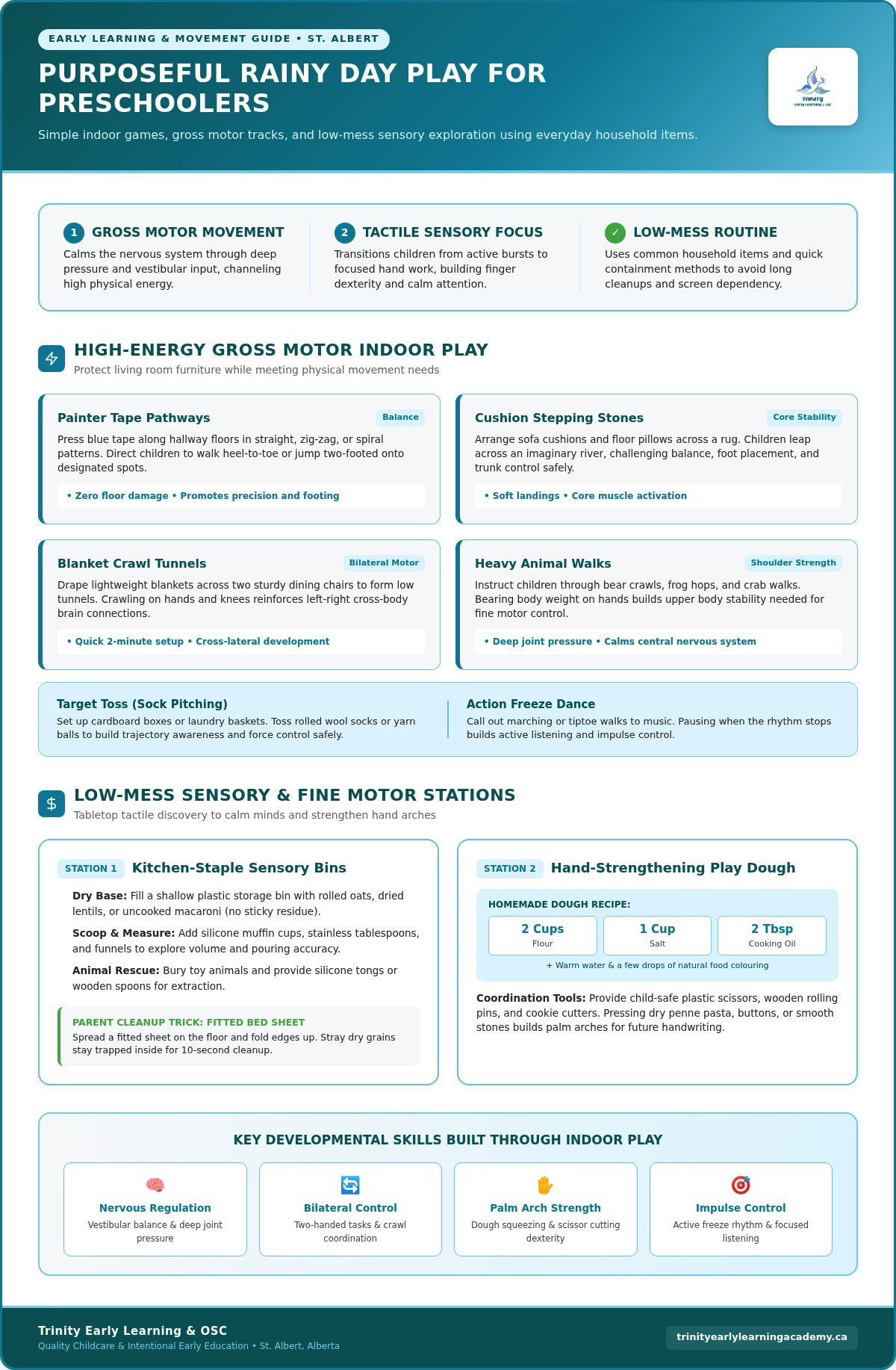
- Painter tape pathways: Press blue painter tape along a hallway floor in straight, zig-zag, or spiral patterns. Encourage your child to walk heel-to-toe or jump with two feet onto designated tape spots.
- Cushion stepping stones: Arrange sturdy couch cushions and floor pillows across a rug to challenge balance and core stability as children leap across an imaginary river.
- Blanket crawl tunnels: Drape a light blanket over two stable dining chairs to create a crawl space that encourages bilateral coordination.
- Heavy animal walks: Guide your child through bear crawls, frog hops, and crab walks. These poses build shoulder stability, which directly supports lifelong gross motor skill development.
Indoor Target Toss and Action Games
Target games help young children practice trajectory, force control, and spatial awareness within compact spaces. Set up sturdy cardboard boxes or empty laundry baskets at varied distances across the room. Roll pairs of wool socks or soft yarn balls into compact spheres, allowing your child to pitch them safely toward each target without risking broken items.
To help children transition from high physical excitement toward calm focus, introduce gentle rhythm games like action freeze dance. Play soothing or upbeat music, calling out specific physical instructions like giant marching steps or tiny tiptoe walks. When the music stops, children pause in place, practising impulse control and active listening. These intentional movement games ensure that rainy day activities for preschoolers remain fun, safe, and developmentally productive.
Low-Mess Sensory Play and Fine Motor Exploration
After children burn off initial energy through movement, their central nervous systems require balancing input to settle. Tabletop sensory play provides deep tactile exploration that calms busy minds while building small muscle strength. When choosing rainy day activities for preschoolers, parents often fear chaotic cleanup. You can keep materials contained easily by using a single shallow storage bin directly on the kitchen floor or table.
Balancing high-movement games with focused hand work aligns well with broader movement recommendations, including the CDC physical activity guidelines for young children, which highlight the importance of varied play styles throughout the day. Hand manipulation also develops the finger dexterity and palm arches children need for writing and cutting tasks later in school.
Kitchen-Staple Sensory Bins
You do not need expensive kits to set up an inviting sensory station. Everyday kitchen ingredients offer rich tactile discovery with rapid cleanup:
- Dry pantry staples: Pour rolled oats, dried lentils, or uncooked macaroni into a broad plastic tub. The dry textures offer gentle sound and touch sensations without sticky residue.
- Scooping and measuring tools: Add silicone muffin cups, stainless steel tablespoons, and funnels. Children naturally explore volume, pouring accuracy, and cause and effect.
- Hidden animal rescue: Bury small plastic farm or zoo animals under dry grains. Hand your child a wooden spoon or silicone tongs to extract each figure, prompting early problem-solving.
- The fitted sheet trick: Spread a spare fitted bed sheet under the bin and fold the elastic edges upward. Any stray grains remain trapped inside the sheet for instant cleanup.
Hand-Strengthening Play Dough Stations
Homemade play dough remains one of the most reliable rainy day activities for preschoolers. Combine two cups of flour, one cup of salt, two tablespoons of cooking oil, and warm water with a few drops of natural food colouring to form a soft, workable dough.
Provide child-safe plastic scissors, a wooden rolling pin, and cookie cutters so children can practise two-handed coordination. Pressing dried penne pasta, buttons, or smooth stones into the dough works the small muscles in the thumb and index finger, strengthening the pincer grip. If you appreciate intentional, tactile routines that support early developmental milestones, discover how our educators facilitate daily discovery through our licensed childcare programs in St. Albert.
Creative Arts and Simple STEM Activities for Rainy Afternoons
Stormy afternoons offer a wonderful opening to invite creative exploration without the pressure of rigid instructions. Traditional craft projects often require parents to assemble the pieces while children watch passively. By contrast, process art and child-led inquiry allow young learners to experiment with cause, effect, and colour relationships independently. Meaningful learning through play happens when children control the materials and discover their own outcomes. Integrating open-ended experimentation into your rainy day activities for preschoolers supports both artistic confidence and foundational science readiness.
These practices closely reflect high-calibre early learning programs across Alberta, where intentional exploration forms the core of daily routines. Families looking to understand how purposeful inquiry shapes developmental readiness can read more about early childhood education in St. Albert to see these concepts in action.
Open-Ended Process Painting
Process painting shifts the focus entirely from the finished product to the physical act of creation. You can set up an inspiring studio space with simple prep:
- Floor paper canvas: Tape a long strip of butcher paper or the blank back of leftover gift wrap directly to the kitchen floor using painter tape.
- Alternative paint applicators: Skip traditional brushes and offer cut kitchen sponges, cardboard paper towel tubes, and toy car tires. Rolling wheels through washable paint produces fascinating tracks and patterns.
- Colour mixing discoveries: Dollop primary colours, like warm yellow and sky blue, side by side on wax paper. Let your child blend them with their fingers or spoons to watch green appear naturally.
Easy Kitchen Science Experiments
Early scientific inquiry relies on curiosity, simple predictions, and careful observation. You can introduce exciting chemistry and physics concepts using ordinary pantry items:
- Sink or float testing: Fill a clear storage bowl with water. Gather a metal spoon, an apple, a dry leaf, and a plastic building block. Ask your child to guess whether each item will float before dropping it in.
- Fizzy colour trays: Spread a thin layer of baking soda across a rimmed baking sheet. Provide small cups of white vinegar tinted with food colouring and plastic medicine droppers to create bubbling chemical reactions.
- Water cycle observations: Watch raindrops collect on windowpanes together. Pour warm water into a clear jar, cap it with a small plate holding ice cubes, and watch moisture condense inside like indoor rain.
These engaging science challenges transform everyday items into dynamic rainy day activities for preschoolers, keeping children intellectually stimulated while gloomy weather passes.
Creating a Balanced Indoor Daily Schedule to Avoid Screen Overuse
Young children thrive when their waking hours follow a clear, predictable flow. When pouring rain cancels visits to outdoor spaces like Rotary Park, the sudden loss of an open horizon can disorient a young child. Without a structured rhythm, parents often encounter behavioral challenges, boundary testing, or the urge to rely on tablets out of sheer exhaustion. Establishing a deliberate daily flow alternates energetic exertion with quiet concentration, ensuring rainy day activities for preschoolers remain refreshing rather than tiring.
Spacing out periods of intense movement and quiet tactile tasks in forty-five to sixty-minute intervals protects your child from overstimulation. Clear verbal warnings, such as letting them know there are five minutes left before lunchtime, ease these changes smoothly. This steady pacing eliminates the sudden afternoon meltdowns that happen when active play runs unchecked.
The Four-Block Indoor Rhythm
Adopting an intentional four-block routine mirrors early childhood best practices and maintains balance at home:
- Morning gross motor burst: Discharge early morning restlessness immediately through hallway obstacle courses or indoor animal marches before sitting down.
- Mid-morning focused inquiry: Transition into low-mess tabletop discovery, fine motor bins, or process painting while attention spans are at their peak.
- Early afternoon decompression: Reserve the immediate post-lunch hour for picture books, calming audio stories, or cot rest to recharge sensitive nervous systems.
- Late afternoon social creativity: Finish the day with dramatic pretend play, cooperative dress-up, and an active cleanup race.
Managing Toys and Preventing Overwhelm
A cluttered floor leads directly to scattered attention. When preschoolers see dozens of open toy bins, they often bounce rapidly between toys without engaging deeply with anything. You can prevent this sensory overload by storing most play kits out of sight and rotating small sets each week. Presenting just two distinct choices, such as wooden blocks or play dough, invites sustained, creative concentration.
Make cleanup a playful ritual rather than a disciplinary struggle. Ring a gentle kitchen timer or singing chime, challenging your preschooler to race and return ten items into their proper storage tub before the chime stops. If you want your child to thrive within structured, enriching schedules guided by certified early childhood educators, explore our preschool programs in St. Albert.
How Quality Childcare Programs Handle Rainy Days and Indoor Play
Licensed childcare programs approach bad weather as an opportunity for discovery rather than a disruption. While prolonged wet spells can feel restrictive at home, professional centres use these shifts to teach environmental science. Children observe cloud density, examine precipitation on window ledges, and measure indoor temperature shifts. In early childhood environments, intentional rainy day activities for preschoolers help children build cooperation and self-regulation skills through shared play with peers.
Families researching early learning spaces often look for facilities that balance indoor physical safety with developmental stimulation. When considering care, reviewing a detailed daycare safety checklist shows how certified classrooms use cushioned zones and wide pathways to protect active children while they move freely indoors.
Purposeful Learning Centres in Early Education
High-calibre classrooms do not rely on passive entertainment when weather keeps children inside. Instead, licensed environments rely on dedicated play spaces that meet children where they are developmentally:
- Clear functional zones: Children navigate between dramatic play areas, quiet reading corners, construction mats, and sensory water tables, giving them control over their sensory input.
- Social negotiation: Indoor group games encourage preschoolers to take turns, resolve mild conflicts, and express their feelings when space is shared with others.
- Emotional comfort: Reliable schedules give children security, reducing anxiety and midday behavioral tension on stormy mornings.
Supporting Families Throughout the Year in St. Albert
Weather in St. Albert can shift rapidly, bringing sudden rain or cold snaps that limit visits to municipal parks or outdoor splash pads. Licensed centres provide working parents with stability by maintaining consistent daily learning schedules regardless of what is happening outside. Educators also partner closely with families, sharing practical motor exercises and sensory setups that bridge classroom discoveries with home routines.
Through provincial funding programs like the Affordability Grant, local families can access these structured environments more affordably. Choosing dedicated preschool programs in St. Albert ensures your child benefits from purposeful indoor spaces, trained educator guidance, and enriching peer socialization all year long.
Nurturing Early Learning Through Every Rainy Day
Inclement weather does not have to mean long hours of screen fatigue or restless afternoons indoors. By pairing active gross motor tracks with calming kitchen sensory bins, you can balance physical release with deep mental focus. Establishing a predictable rhythm helps your child build confidence, refine coordination, and navigate bad-weather days with joy and stability.
Intentional rainy day activities for preschoolers turn gloomy days into rich developmental milestones. When your home routine mirrors the structured care of a licensed environment, your family gains calm and consistency no matter how hard it rains outside.
At Trinity Early Learning & OSC, our licensed educators guide play-based discovery within dedicated, safe indoor learning spaces tailored for St. Albert families. We foster social, emotional, and motor growth throughout every season. Schedule a visit with Trinity Early Learning & OSC to explore our nurturing classrooms and supportive early learning community today.
Frequently Asked Questions
How can my preschooler burn energy indoors on a rainy day without breaking furniture?
Direct your child's physical energy through proprioceptive "heavy work" that works large muscle groups safely on floor surfaces. Pushing a laundry basket weighted down with board books, crawling through tight spaces under dining tables, and doing animal walks give the nervous system intense exertion. These intentional games protect your living room furniture while fulfilling their natural physical needs.
What are simple sensory bin ideas that do not create a huge mess to clean up?
Dry kitchen staples like rolled oats, dry lentils, and uncooked elbow pasta make excellent sensory bases that sweep up easily with a broom. Place materials inside a broad, shallow plastic storage container set over a large bed sheet. Adding silicone muffin cups and wooden spoons keeps children engaged in pouring and scooping without sticky residue or water damage to floors.
How much screen time is reasonable for a preschooler on bad weather days?
The Canadian 24-Hour Movement Guidelines recommend capping sedentary screen time at one hour per day for children aged three to four. When bad weather traps everyone inside, rely on structured rainy day activities for preschoolers to break up the afternoon. Alternating physical challenges with quiet tactile play prevents the behavioral meltdowns that often follow extended tablet use.
What household items work best for last-minute preschool indoor games?
Painter tape, cardboard delivery boxes, rolled wool socks, and plastic food storage containers offer endless entertainment with zero special shopping. Tape lines become balance beams or roadways across rugs, while rolled socks serve as soft target projectiles into cardboard bins. These common household staples keep your child engaged through creative, child-led problem solving.
How do licensed daycares keep children active when outdoor playtime is cancelled?
In St. Albert, licensed daycares design indoor learning environments to exceed provincial indoor space minimums, offering plenty of unobstructed room for active movement. Educators rotate groups through dedicated interest centres, gross motor zones, and quiet literacy corners. This systematic circulation keeps group energy calm and purposeful during long stretches of wet Canadian weather.
Can indoor rainy day play support kindergarten readiness milestones?
Indoor games provide excellent practice for kindergarten readiness when planned with intention. Tearing painter tape, squeezing homemade play dough, and gripping small droppers build the pincer strength necessary for pencil control. Following multi-step obstacle paths and waiting for a song to freeze build executive functioning and listening skills essential for early elementary classrooms.
How do I help my child transition from loud active games to quiet rest time?
Offer clear five-minute countdown warnings, then shift lighting and auditory cues gradually to signal that high-energy play is ending. Introduce calming sensory rainy day activities for preschoolers, such as kneading warm dough or listening to a quiet audiobook while snuggled with a blanket. Lowering room stimulation allows their elevated heart rate to return to resting levels smoothly.


